Every devastating hurricane remains in memory in a unique way. Hurricane Katrina in 2005 is remembered mainly for the breached levees in New Orleans and the paralyzing chaos that followed. The Galveston hurricane of 1900 is remembered for a terrifying number: 6,000. Six thousand people died. It was the deadliest natural disaster in United States history.
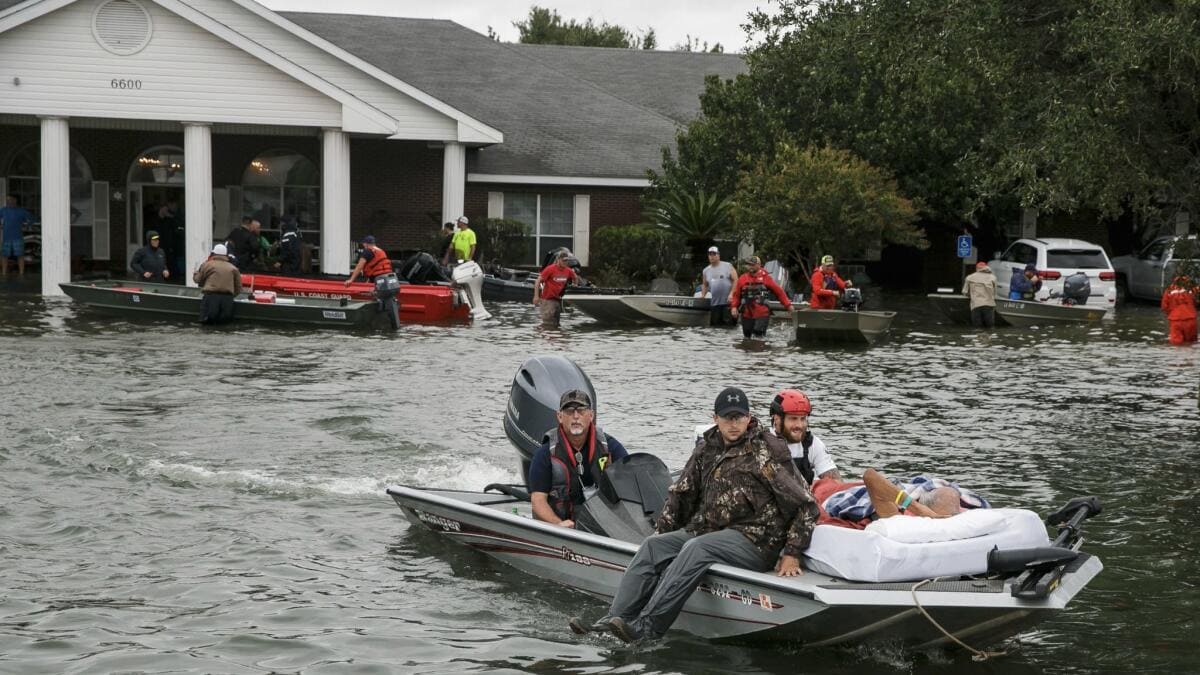
I think people will remember Hurricane Harvey in 2017 primarily because it dumped more water on a major metropolitan area—Houston—than any other storm in U.S. history. But I believe it will also be remembered for the heroes in bass boats.
Someone on social media suggested that we should erect a monument to “two ordinary guys in a bass boat.” Tens of thousands of people supported the idea.
Even where I live in deep South Texas, I saw dozens of trucks towing boats north on U.S. Highway 77: bass boats, swamp boats, pontoon boats, skiffs, and military-style Zodiac inflatable boats. The call for help spread across the state, and Texans answered it. They came from San Antonio, San Angelo, Austin, Waco, Dallas, Fort Worth, and Tyler; even, I heard, from the Panhandle and El Paso.
From every corner of the state, they streamed toward the floods, spontaneous convoys racing to the coast. It was amazing to see them: Texas flags bent by the speed and flying proudly from their trucks and trailers, a true ride to the rescue. Those men and women asked for no money, mileage reimbursement, or any kind of reward. They did not ask for whom the bell tolled; they simply decided it tolled for them—and set out.
And they did not come only from Texas. The Cajun Navy, as they so beautifully call themselves, poured across the state line from Louisiana in large numbers, as did others from Arkansas and Oklahoma, and undoubtedly from other states as well.
I spoke to a man at a gas station near my house who was filling up his GMC. He was towing a fifteen-foot bass boat with a trolling motor. I asked him if he was heading to Houston. He said, “My brother and I thought we might head that way. You know, I have a truck and a boat. Maybe we could help someone. I know they would do it for us if the situation were reversed.”
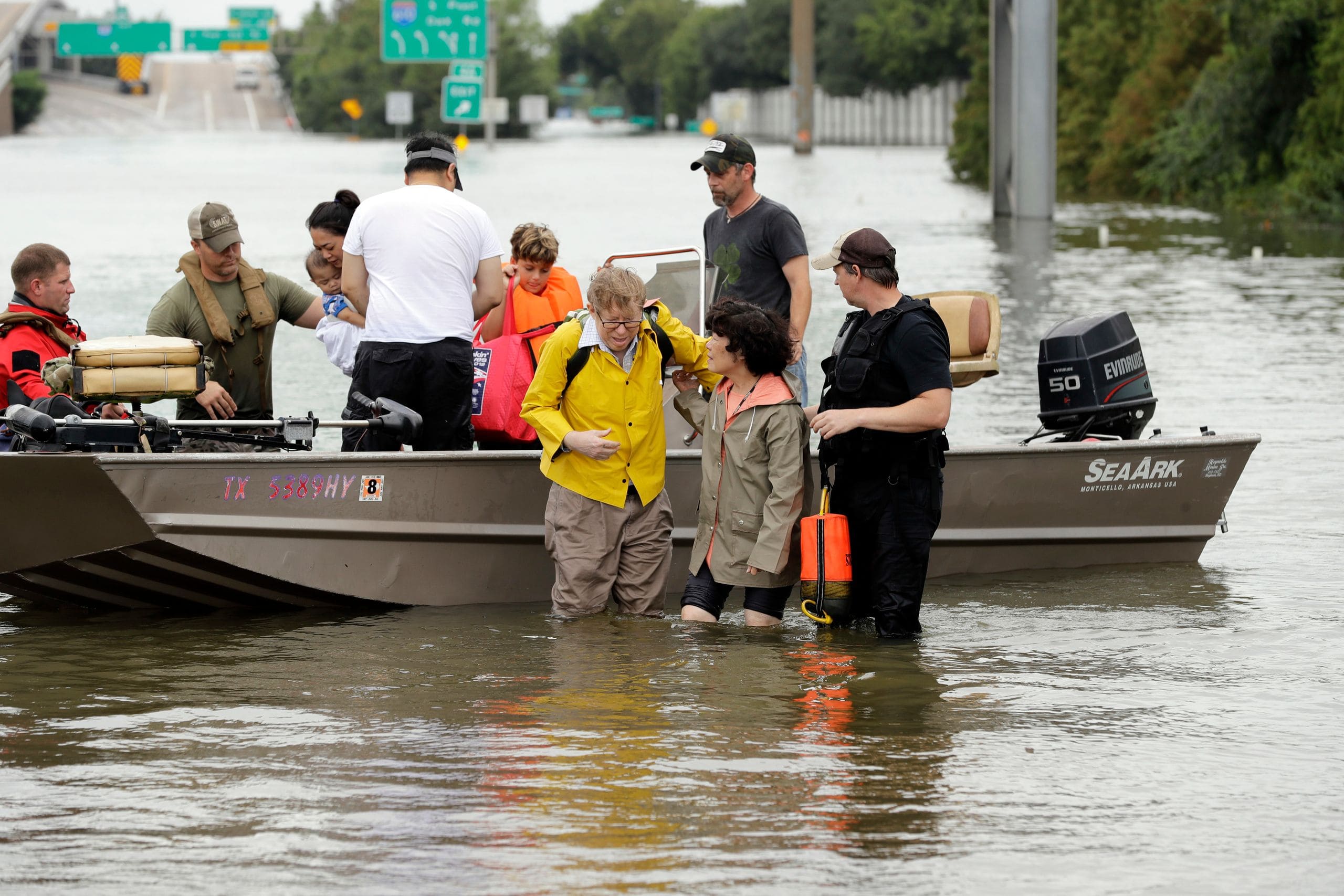
“These people are showing up with airboats, swamp boats, and jet skis,” a National Guard officer said on the Weather Channel. “They go out, rescue people, and bring them to us. I don’t know where these people are coming from, but it’s the most amazing thing I’ve ever seen.”
My old friend Matt Carr answered the call from Central Texas: “Driving to Houston in the middle of the storm was surreal,” he recalls. “I-10, 290, and 610 were empty of cars. It was apocalyptic. Fields full of water, cows huddled on small islands above the rising water. We felt completely alone. We got there in a brief moment before the world reappeared.”
He said the police were overwhelmed with emergency calls and told the rescuers they could go wherever they wanted and help however they could. So they did. Once the National Guard arrived, the process became more efficient. “It felt like the Texas version of Dunkirk,” he said. “Less dangerous, but with the same spirit.”
Matt rescued a ninety-year-old woman named Hazel. She lived alone in the Greenspoint neighborhood on the northern edge of Houston; she had no one in her life. She did not want to leave her home, but she was cold. Matt persuaded her to go.
“I took her to a bus so they could take her to a shelter,” he said. “She was terrified. So I knelt beside her in the aisle of the bus, and we prayed together. And then I went back to work.”
Matt’s story was one of thousands like it from that night. My friend Manny, who is the head of the Houston bureau in New York, had several of his own. He rode with many of these rescuers and was amazed by their instinct for navigating what had now become an urban bay. It was dark, except for the lights on their helmets. Dangerous work.
Manny asked many of these rescuers why they had come so far and taken these risks. Almost all of them, he said, answered with three words: “This is Texas!”