This story comes from the dark secrets of Masonic tradition. The Masonic lodge in Fort Worth traces its roots back to 1854, when Texas’s first Masonic Lodge No. 148 was founded there, also becoming the city’s very first fraternal organization. Since then, the Ancient Free and Accepted Masons have maintained a reputation as the most respected and secretive of all fraternal organizations. Members of Lodge 148 included such figures as Ephraim Daggett, John Peter Smith, Julian Feild, brothers Addison and Randolph Clark, B. B. Paddock, and W. P. Burts. Membership was not only a privilege but also a valuable connection to other respected, like-minded men. All the best people were Masons. And it certainly did no harm that the brothers in the lodge wished one another prosperity and invested in each other’s businesses. According to the recollections of Captain Joseph C. Terrell, the Masons erected the first substantial building in the city, a two-story brick structure that served both as the only public hall and as the first school. In 1855, Lodge 148 also transported the remains of Major Ripley Arnold from Fort Graham so that he could be buried on the grounds of the community he himself had founded.
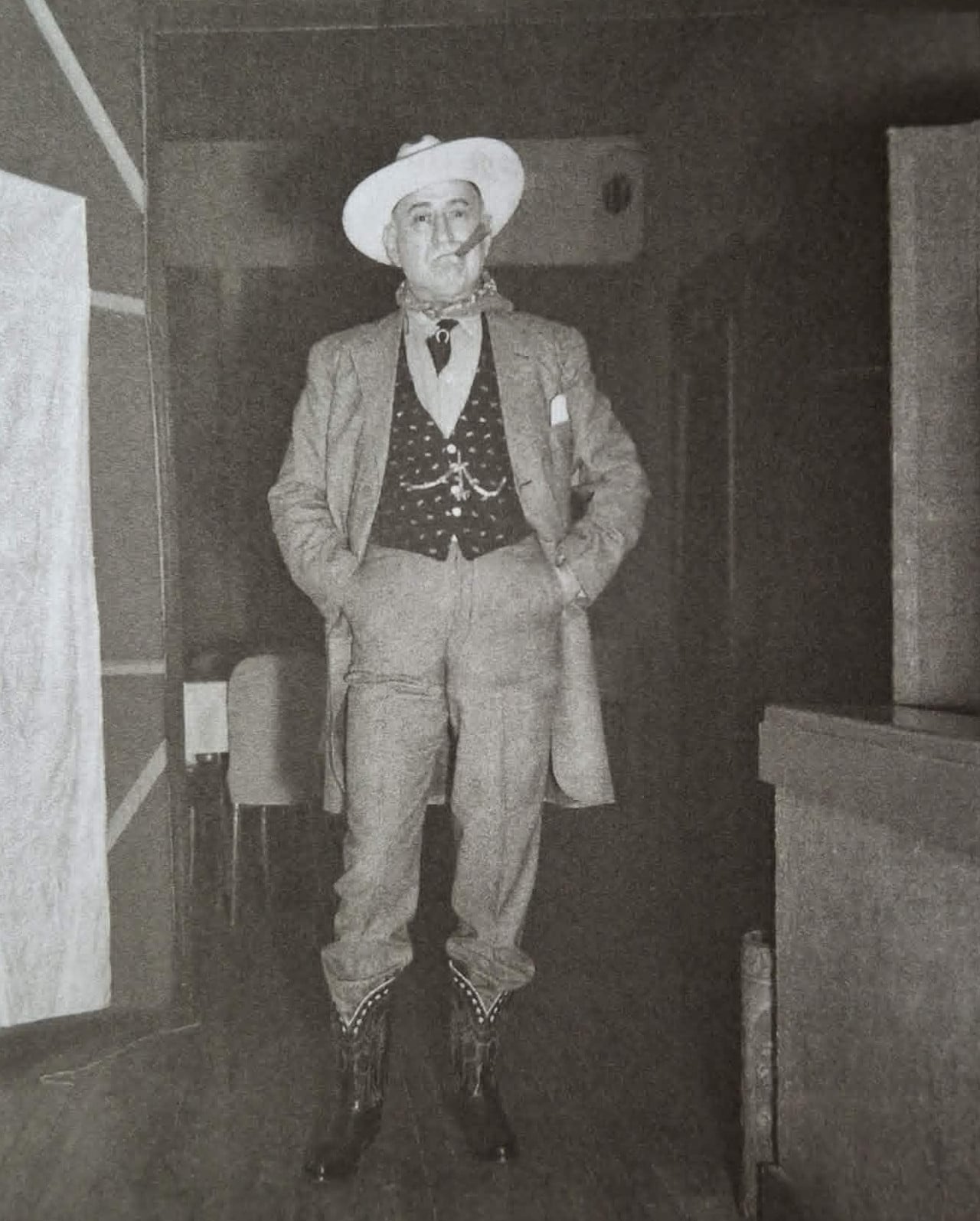
Amon G. Carter was born in 1879 in Grafton, Texas. At the age of eleven, he left school and began working. His first job was washing dishes in Bowie for $1.50 a week. From that moment on, his path in life continued to rise. He was a naturally gifted businessman and was soon drawn to advertising. In 1905, he moved to Fort Worth, where he opened an advertising agency. When the Fort Worth Star began publication in 1906, he secured the position of advertising manager. As the newspaper grew and gradually absorbed the Evening Telegram and the Morning Record, Carter also rose through the ranks, advancing from business manager and vice president to general manager and co-owner of the Star-Telegram. He thus became both the face of the newspaper and the greatest promoter of the city of Fort Worth.
Carter was an enthusiastic member of all sorts of clubs, which formed part of the social network that kept him informed about everything happening in “his city.” He was a full member of several fraternal organizations and a founding member of the Advertising Men’s Club and Rotary International in Fort Worth. Although he did not attend meetings regularly, he knew everyone. And merely being an ordinary member was not enough for Carter; he had to hold high office, or membership held no meaning for him. He therefore became president of the Chamber of Commerce, Exalted Ruler of the Elks, secretary of the Advertising Men’s Club, and president of the University Club. He was also a devoted Democrat throughout his life, which likewise brought him considerable benefits.
His habit of joining an organization and then failing to attend its meetings once caused him trouble with the leadership of the local Fort Worth branch of Rotary International. Among the items on the agenda at the August 1922 board meeting was a letter from Carter explaining his frequent absences. He cited frequent business trips out of town as the reason. The letter was more of a polite notice than a plea for forgiveness. The board excused him and merely asked that he notify the secretary in advance of any planned absences in the future. A month later, at the next directors’ meeting, the minutes recorded that Carter had been absent four times “without a proper excuse,” and the members voted to expel him. Three days after the secretary met with him personally, the directors “reconsidered” their decision and readmitted Carter. That was how things worked in Amon’s world.
The only major fraternal organization to which Carter did not belong was the Freemasons. It was entirely natural that “Mr. Fort Worth” should wish to join the city’s most prestigious fraternal order. He undoubtedly met all the necessary qualifications: an impeccable reputation, social standing, and dedication to public service. In addition to publishing the Star-Telegram, he established the Amon Carter Foundation, served on the board of the Southwestern Exposition and Fat Stock Show, and was president of the Fort Worth Club. He was a living legend, largely of his own making.
What objection, then, could the Masons have had to accepting him? Carter submitted an application to Lodge 148 with the necessary recommendations, and it seemed that only the formality of a vote remained. As was customary, several lodge members came to visit him. The traditional interview included the question of why the applicant wanted to become a Mason. There is almost no “wrong” answer to that question, whether it involves a family connection, social ties, a desire to help others, or anything else. It was a perfectly natural question that every prospective member expected in advance. The surprise was therefore all the greater when Carter replied with blunt candor: he did not really want to be a Mason, he explained; he merely wanted to join the Shriners so that he could bring more conventions and conferences to Fort Worth. The Shriners were the Ancient Arabic Order of the Nobles of the Mystic Shrine, an organization open only to Masons of the highest degree. Membership in the Shriners would help him attract Masonic events to Fort Worth. It was an honest answer from a man unaccustomed to being truly denied anything.
The committee returned to the Masonic temple and delivered its report on the interview. Then came the vote. Traditionally, voting was conducted with black and white balls. At the time, a single black ball was enough to reject an application, but the usual vetting process generally prevented such unpleasantness. Not this time. Someone, no one knows who, cast a black ball, and Amon Carter was rejected. Who would want to be the person who had to go to Mr. Carter and break the news to him? The story is undated, so it is impossible to say exactly when it took place. Most of his other memberships dated from before the First World War. By the 1920s, Carter was already bigger than any fraternal organization. They themselves would have approached him and asked him to become a member just so they could have his name on their roster. His ever-expanding list of organizations included the board of Texas Technological College (1923 to 1927), the American Petroleum Institute, and the Fort Worth Club.
Amon Carter died on June 23, 1955. He left behind the legacy of a man who succeeded at virtually everything he set his mind to, with one exception. The story of his rejection by the Masons became part of the tradition of Lodge No. 148 and was passed on in whispers to other Masons under strict secrecy. Because all Masonic votes are secret, no one could ever confirm the story, not even through the records of the Grand Lodge in Waco. Amon’s humiliation was buried with him, shielded from the public, except, of course, for those usual “loose lips” that sooner or later tend to sink ships and reveal secrets.