
Think back to the last RPG you played. The villager at the gate kept saying the same thing, and the villain had a prewritten monologue. And the choices? They were usually just an illusion. No matter what you chose, the story ended the same way. And that is exactly what Voyage from the startup Latitude is trying to change.
What is the Voyage platform, and who is behind it?
The new Voyage gaming platform comes from the American startup Latitude, a seasoned veteran in the gaming world. Back in 2019, it launched AI Dungeon, a game without a fixed script in which the story was generated by artificial intelligence. This gaming project became an outright phenomenon and attracted millions of players, who were able to experience limitless gameplay for the first time.
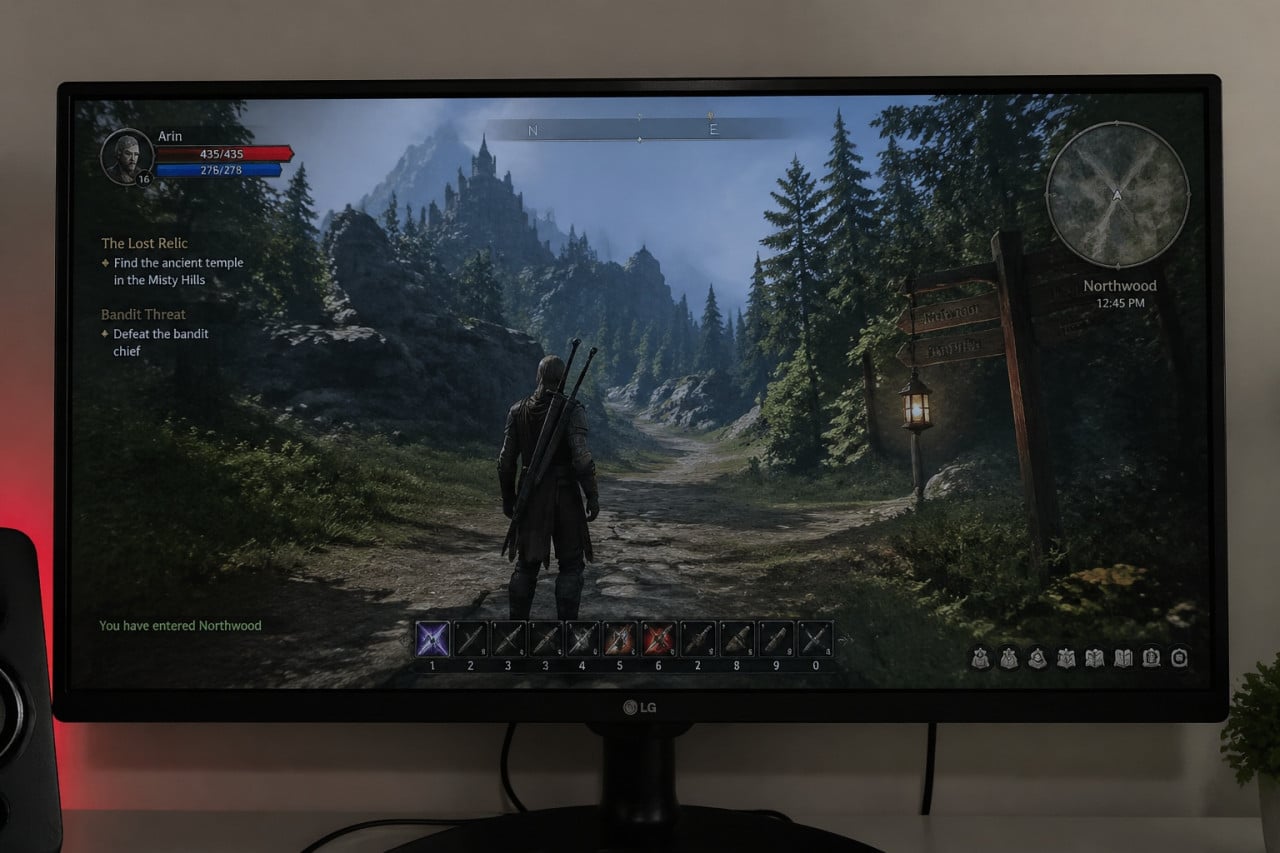
Voyage, however, is intended to be far more ambitious. The platform allows players to play without a prewritten script, while individual interactions with non-player characters (NPCs) are generated by AI in real time. And that is not all! The platform also lets players build their own worlds using AI. Players can design everything from regions and cities to landmarks and side quests. All they need to do is imagine a world, describe it, and AI will generate the necessary code and content. They can then share the finished world with others.
No script, no prewritten lines
Voyage’s greatest appeal lies in how its characters behave. In most RPGs, NPCs have prewritten lines that repeat over and over again. Voyage does away with that.
Every interaction with non-player characters takes place without a predetermined script. Characters remember what happened before, have their own personalities and backstories, and respond in a way that feels real. The website TechCrunch, for example, reports that during testing, a troll who had imprisoned the main character suddenly began complaining about marital problems. Although this may sound absurd, this is precisely the kind of spontaneity that traditional games cannot offer.
Five years of development
Behind it all is Latitude’s World Engine technology, which the company spent five years developing. It is not a single AI model, but a collection of multiple systems that work together. One tells the story, another manages the game mechanics, and a third remembers relationships between characters and tracks where everything is located. So if you betray someone in the game, it is best to avoid that character next time. In the world of Voyage, they will remember it.
The platform has already launched in beta testing and has recorded more than 160,000 unique AI characters, while the average player has made nearly 3,000 in-game decisions. This simply illustrates that people genuinely enjoy these authentic scenarios.
Voyage is currently free and text-based. Players read the story and write how they want to respond. Paid plans ranging from 15 to 50 dollars per month for more advanced features will be added soon. The open beta is planned for the end of 2026.
What potential does AI have in gaming?
Voyage is just the first sign of a much larger trend. For decades, the gaming industry has repeatedly run up against the same limitation. The richer the game world developers want to create, the more writers, actors, and programmers they need. AI is completely breaking down this barrier.
It is now possible to create cities where every resident has their own life story, where the plot changes based on your decisions, and where two playthroughs of the same game look completely different. It is no longer just a dream, but the direction in which the industry is heading.
If you think games are merely entertainment for teenagers, it may be time to reconsider. AI in gaming is completely changing the rules. And it is not just about better graphics, but about virtual worlds truly beginning to come alive.