Firefighters are heroes. Everyone knows that. But few people realize what that means in practice: entering a burning building where temperatures exceed the limits of human endurance, where the ceiling could collapse at any moment, and where thick smoke robs you of both your sense of direction and your breath. Over the past decade, more than 1,700 firefighters have been injured or killed during emergency operations in South Korea.
Hyundai Motor Group decided to change this story. And it came up with a solution that looks like something out of science fiction but actually works.
From military terrain to the fire station
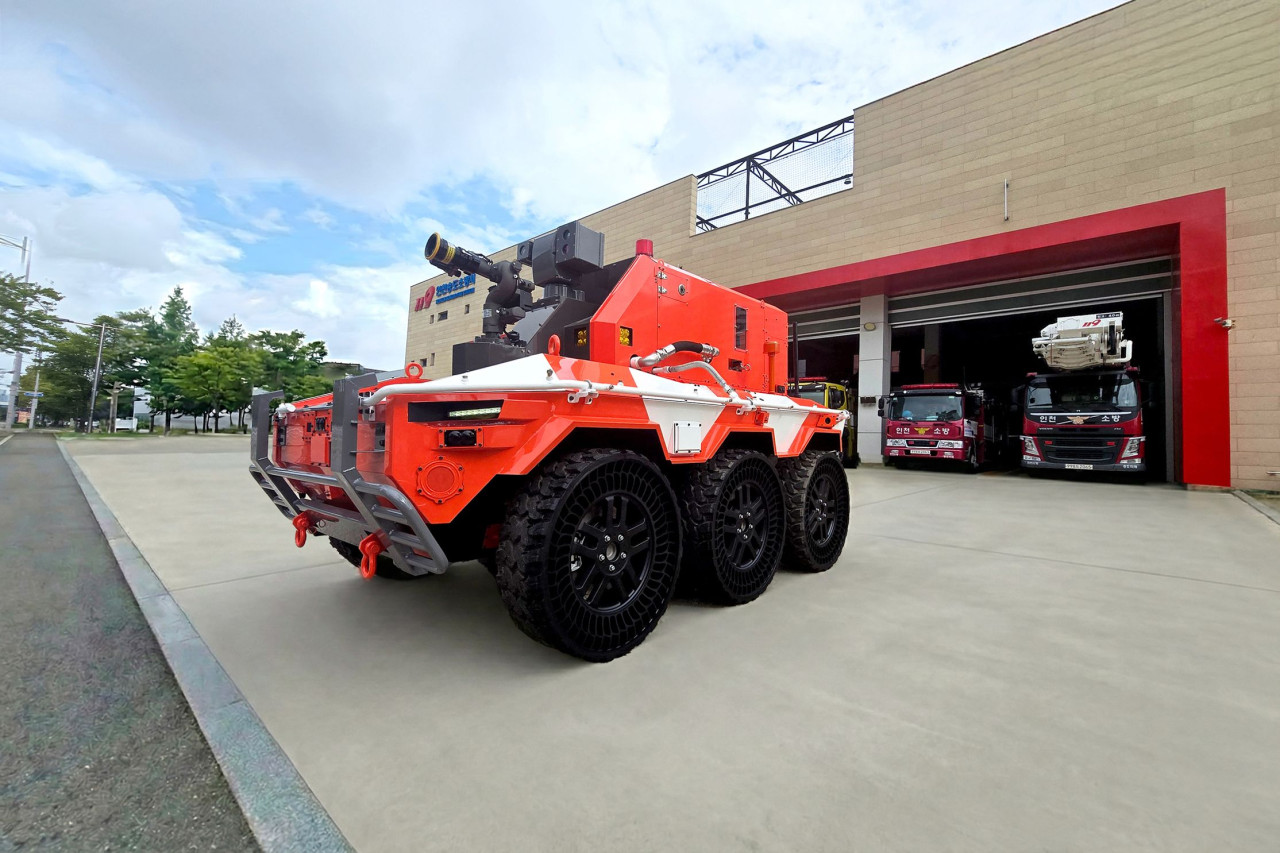
The project did not emerge overnight. The Unmanned Firefighting Robot is based on the HR-SHERPA platform from Hyundai Rotem, the Hyundai Group division responsible for manufacturing military equipment, rail vehicles, and heavy industrial equipment. It was originally a multipurpose unmanned vehicle for the military. But engineers took it and rebuilt it for an entirely different kind of battlefield.
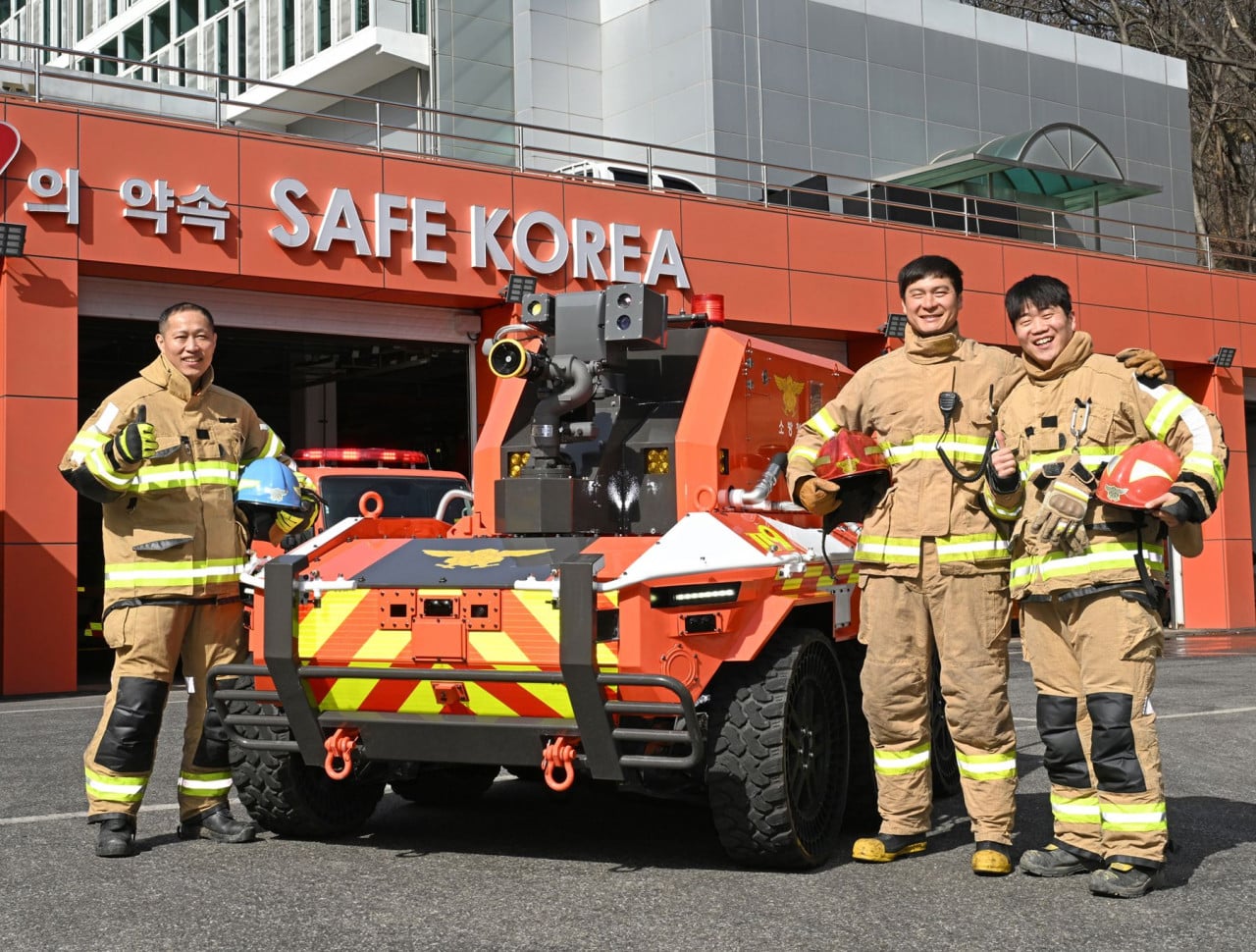
Four organizations collaborated on its development: Hyundai Motor Company, Kia, Hyundai Rotem, Hyundai Mobis, and Korea's National Fire Agency. The result was officially handed over in February, and four robots were sent to fire stations across South Korea. Two are already in operation, while the other two are heading to additional stations.
The robot goes first, the firefighters follow
The logic is straightforward yet ingenious. The robot enters places humans cannot. Burning warehouses, underground parking garages, factories filled with toxic gases, buildings on the verge of collapse. The machine goes in first, remotely maps the situation, locates the source of the fire, and begins extinguishing it. Only then do the firefighters enter, equipped with much better information and facing far less risk.
In January, the robot was deployed for the first time at an actual factory fire in North Chungcheong Province in South Korea. It was the first real emergency deployment of its kind, and the machine performed exactly as intended. Rescue commander Im Pal Soon of the 119 Central Rescue Headquarters, who operates the robots directly, became the face of the promotional campaign. Her words in the "A Safer Way Home" campaign are not advertising slogans. They are the experiences of someone who knows what it means to walk into a fire.
Robot features
The robot is not just an armored cart with a hose. It is a sophisticated machine packed with technology, each component addressing a specific problem firefighters face every day.
Resistance to extreme temperatures is a fundamental requirement. The robot has its own cooling system that sprays a curtain of water over its surface. This keeps its body temperature between 50 and 60°C even when the surrounding environment reaches 800°C. Its batteries and electronic control systems can therefore continue operating without interruption.
An advanced driving assistance system enables the robot to recognize terrain and obstacles and minimize the risk of collisions in narrow, curved, or debris-filled spaces. The machine can travel at up to 50 km/h, handle gradients of 60% longitudinally and 40% laterally, and cross obstacles up to 300 mm high. Underground parking garages and warehouse ramps pose no problem for it.
An AI-powered visibility enhancement camera uses both short-wave and long-wave infrared thermal sensors. It can see through dense smoke and transmit an accurate image in real time. This allows the operator to know what is happening inside a burning building even when the human eye would be unable to see anything at all.
The high-pressure self-luminous hose may be the cleverest detail of all. The hose has photoluminescent properties, so it emits light even in the dark. Firefighters traditionally follow the hose as a guide when entering a building and as a lifeline when escaping. This hose provides them with that guidance even in a completely impenetrable cloud of smoke.
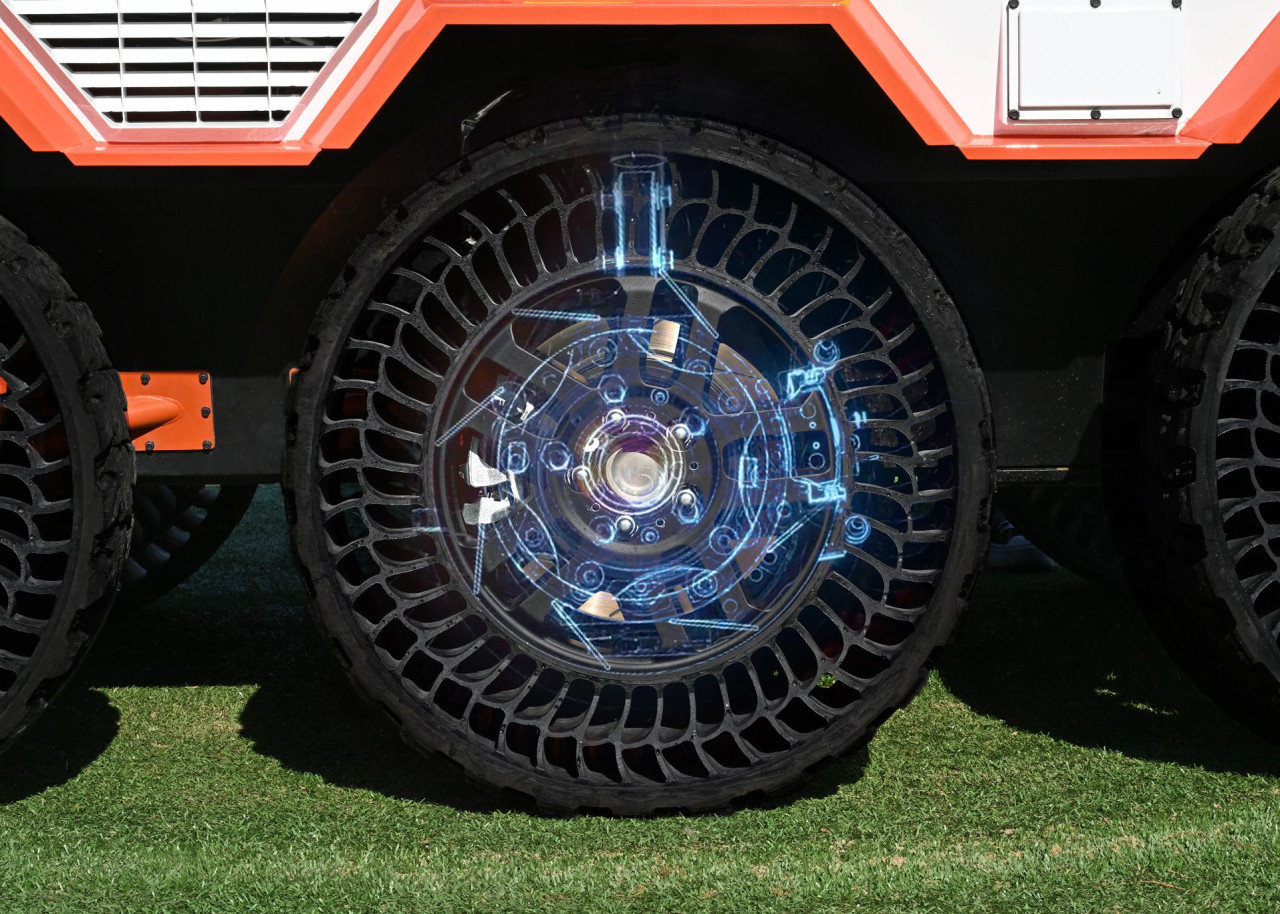
The six-wheel system with dedicated motors (6x6 In-wheel Motor System) from Hyundai Mobis is a technological marvel. Each of the six wheels has its own electric motor directly in the hub. This allows the robot to turn 360 degrees in place and navigate even the tightest spaces. It eliminates the need for a conventional drive shaft, improving drive efficiency and control precision. Interestingly, this technology also has potential beyond firefighting, for example in logistics robots or autonomous minibuses.
Physical artificial intelligence
The robot is not just a tool; it is a platform for collecting data from real-world disasters. Every deployment generates data on smoke density, fire extent, temperatures, and fire behavior. This information is continuously processed, and the robot learns from it. The goal is clear: to develop a fully autonomous system that, once deployed, assesses the situation on its own, identifies the source of the fire, determines firefighting priorities, and selects the most effective course of action without human intervention.
Seung-ryong Kim, acting commissioner of the National Fire Agency, put it precisely: "The true value of this robot lies not only in its resistance to heat or its firefighting power, but in its role as 'physical artificial intelligence' operating at actual disaster sites. In extreme environments that firefighters cannot enter, it will collect and learn from real-world operational data and evolve into a sophisticated disaster response platform." And this is exactly the shift that has been discussed in robotics for years. Not a robot as a machine, but a robot as a colleague that improves with every experience.
The "A Safer Way Home" campaign: When technology gets a human face
Hyundai took an unusual approach to the entire project. Instead of a technical presentation full of charts, it made an emotional campaign film. "A Safer Way Home" shows real firefighters, their photographs, their voices, and footage from actual emergency operations. Commander Im Pal Soon speaks directly to the camera about what every callout means.
It is a smart move. The technology itself is excellent, but only when you see the individual whose life the robot could save do you understand what is truly at stake.
Hyundai Executive Chair Euisun Chung commented as follows: "The unmanned firefighting robots we are donating embody Hyundai Motor Group's core technologies and represent a new form of mobility built around our shared goal of 'technology that saves lives.' We hope they will serve as reliable teammates, entering dangerous places first to protect the safety of firefighters."
Rescue work in a new guise
Are you wondering whether this is merely a Korean experiment or the beginning of something bigger? The answer is quite clear. Robots in hazardous environments are not a new idea, but Hyundai has raised the bar significantly. The combination of military-grade robustness, civilian precision, and artificial intelligence creates a machine with genuine potential to save lives around the world.
Hyundai plans to continue developing the technology and expanding its cooperation with the National Fire Agency and the National Fire Research Institute. The path toward a fully autonomous firefighting robot is well underway. And the first stop, an actual fire at a Korean factory in January 2026, was a success.
Firefighters deserve to come home. And it seems that someone is finally helping them do so.
Sources: newatlas.com and interestingengineering.com