This is the biography of a word. It is about a word that was born in Texas as a simple noun, grew up and achieved success here, and eventually became famous throughout the world.
That word is “maverick,” and it originated in San Antonio, Texas, more than 150 years ago.
It is a word firmly rooted in American culture: James Garner played Maverick in the popular television Western series of the 1950s and 1960s; Tom Cruise’s fictional pilot in the film Top Gun had the nickname “Maverick,” as did the real-life Senator John McCain; in Texas, we have the world-champion basketball team the Dallas Mavericks. The word means someone who shuns convention, a lone wolf, a person who blazes their own trail and is willing to go against the crowd, an independent thinker.
Those are the more figurative meanings of the word maverick, but most people know that its original meaning referred to unbranded cattle. Any cow without a brand was a maverick. Fewer people know that the original herd of unbranded cattle that gave rise to the term belonged to a man named Samuel Maverick. Those unbranded cows were Maverick’s cows. That is how the term originated.
Some say it was his clever way of claiming all unbranded cattle as his own.
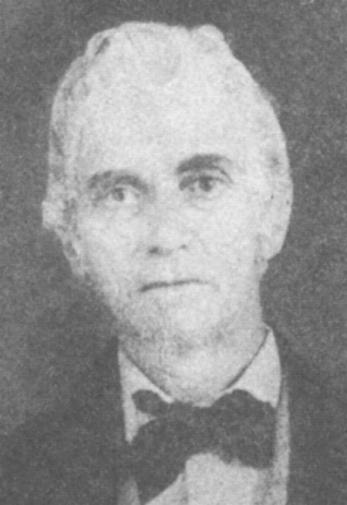
But in fact, Samuel Augustus Maverick was not very interested in cattle, according to his grandson, New Deal-era congressman and progressive San Antonio mayor Maury Maverick Sr. Samuel Augustus was a gentleman landowner, real estate investor, and lawyer who also frequently held elected office. He was more interested in acquiring land than in actively farming or raising cattle. At one point, he owned so much land in Texas that he ranked alongside Richard King and Charles Goodnight. A county is even named after him—Maverick County. The county seat is Eagle Pass.
The cattle in question were a herd he reluctantly acquired from a neighbor as payment of a debt. His grandson explained it on the floor of the U.S. House of Representatives in 1938: “Many people have written me asking about the origin of the term 'maverick' as applied to unbranded cattle. It was not only one of his smallest achievements, but a mere accident. There is no romance in the story—he simply had about 400 head of cattle that he allowed to roam freely in the Texas wilderness under the supervision of a slave who never branded them. So people called them 'Maverick’s cattle'; eventually they called them 'Mavericks' and then 'mavericks.' Sam Maverick was never a cattleman and had no interest in cattle, but it is true that a great legend grew up around his name. That is all.”
I think it is a shame that Samuel Maverick became the namesake for unbranded cattle, because there are dozens of far more impressive ways in which he demonstrated his maverick nature. He was a rare and underappreciated hero of the Texas Revolution, not to mention that he served his adopted state as a legislator and judge. Through it all, he often lived up to what his name would later come to mean, and did so very impressively.
Samuel was a maverick from an early age. In his native state of South Carolina, everyone in the wealthy Maverick family expected Samuel, who had already begun a legal career with a degree from Yale, to take over one of his father’s many businesses. But he did not. In 1830, he ran for the state legislature and lost; his unpopular views opposing nullification and secession—he did not believe a state had the right to nullify federal decisions—made him enemies. In 1833, he left South Carolina, and by 1835 he had arrived in Texas to seek his fortune in a land where there was plenty of land to be acquired.
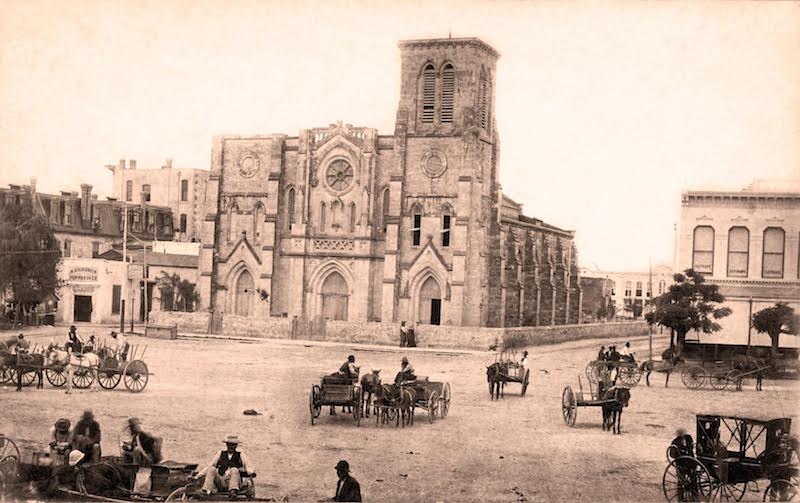
He arrived in San Antonio in 1835, as war was brewing. The Texas Revolution was about to begin. No one was buying land at the time because no one was sure they would be able to keep it—Texas was still part of Mexico, but for how long? Maverick went against the tide. He quickly plunged in and bought vast tracts of land around San Antonio and farther east along the Brazos River. He seemed to believe in the old folk wisdom that you should buy land when no one wants it and sell it when everyone does.
He was soon swept into the revolutionary maelstrom when troops under General Perfecto de Cos, acting on the orders of Mexico’s Santa Anna, laid siege to San Antonio. According to Maverick’s journal, he was placed under house arrest but was released after promising to leave San Antonio and return to the United States. Once outside the city, he joined the Texan resistance forces gathering beyond the city and helped Ben Milam lead the assault to retake it, which succeeded and drove the Mexican troops out for several months. Maverick then became a trusted and admired man in San Antonio and joined the militia at the Alamo.
In fact, he would have died at the Alamo had his fellow fighters not chosen him as their representative to sign the Texas Declaration of Independence in March 1836. He traveled to Washington-on-the-Brazos as Mexican troops were gathering and arrived at the convention after the other delegates had signed the document. So he was a maverick when, a few days later, he added his signature to what Mexican General Antonio López de Santa Anna—who had just annihilated all of Maverick’s fellow fighters back at the Alamo—considered a treasonous document.
After independence was won, Samuel Maverick served as mayor of San Antonio, once again putting a target on his back as a leading citizen of the rebellious city. Santa Anna had not given up on the idea of reclaiming Texas and kept a list of his enemies.
And indeed, in 1842, six years after Texas gained independence, Santa Anna struck again. He sent General Adrián Woll across the Rio Grande with orders to recapture San Antonio and kill anyone who resisted. As soon as word reached San Antonio that Mexican forces had crossed the river, Maverick moved his family to safety near La Grange. He himself, however, returned to the city to fulfill his civic duties. When Woll’s troops attacked, Maverick organized a resistance group on the roof of his house. It numbered 53 men. Although they killed 14 and wounded 27 in the initial skirmish with the Mexicans, they were soon surrounded by 900 Mexican soldiers and forced to surrender.
Fortunately for Maverick and his companions, Woll did not carry out the execution order, probably because they were more valuable alive. Instead, he took many of these prominent Texans prisoner and marched them 1,000 brutal miles back to Perote Prison in the state of Veracruz. One of them died along the way. Today, at the Witte Museum in San Antonio, you can see the gourd water bottle that kept Sam Maverick alive during that grueling march across Texas and Mexico.
The prisoners were kept in chains in dark cells when they were not being subjected to forced labor. Maverick, as his men’s representative, asked for better conditions and was placed in solitary confinement for doing so.
After several months, Maverick was told that Santa Anna would offer him freedom in exchange for signing a document stating that Texas had been seized illegally and should be returned to Mexico. Maverick refused. He wrote that he could not imagine any terms the Mexicans might offer being advantageous to Texas, and that his loyalty to the country had to prevail over his desire for freedom. “I regard falsehood as a crime, and one which I cannot commit even to secure my release; I must therefore continue to wear my chains, however painful they may be.”
While Maverick was in the dungeon, the people of San Antonio, without his knowledge, elected him as their congressional representative in the Republic of Texas.
Finally, in 1843, his release was negotiated by General Waddy Thompson, a relative by marriage and the U.S. minister to Mexico. When Maverick left the prison, according to Paula Mitchell Marks’s book Turn Your Eyes Toward Texas, he took with him the chains that had bound him during all those long months as a lifelong reminder of the value of freedom.
FOR FURTHER READING: Turn Your Eyes Toward Texas: Pioneers Sam and Mary Maverick, by Paula Mitchell Marks.