Google has released Robotics, an open-source plugin for Antigravity that uses Gemini 4 Hydrogen to work with robot arms. Developers can use it to set up supported hardware, create MuJoCo simulations and issue tasks through chat. As it executes those tasks, the system adjusts the arm’s movement using camera feedback.
From arm setup to simulation
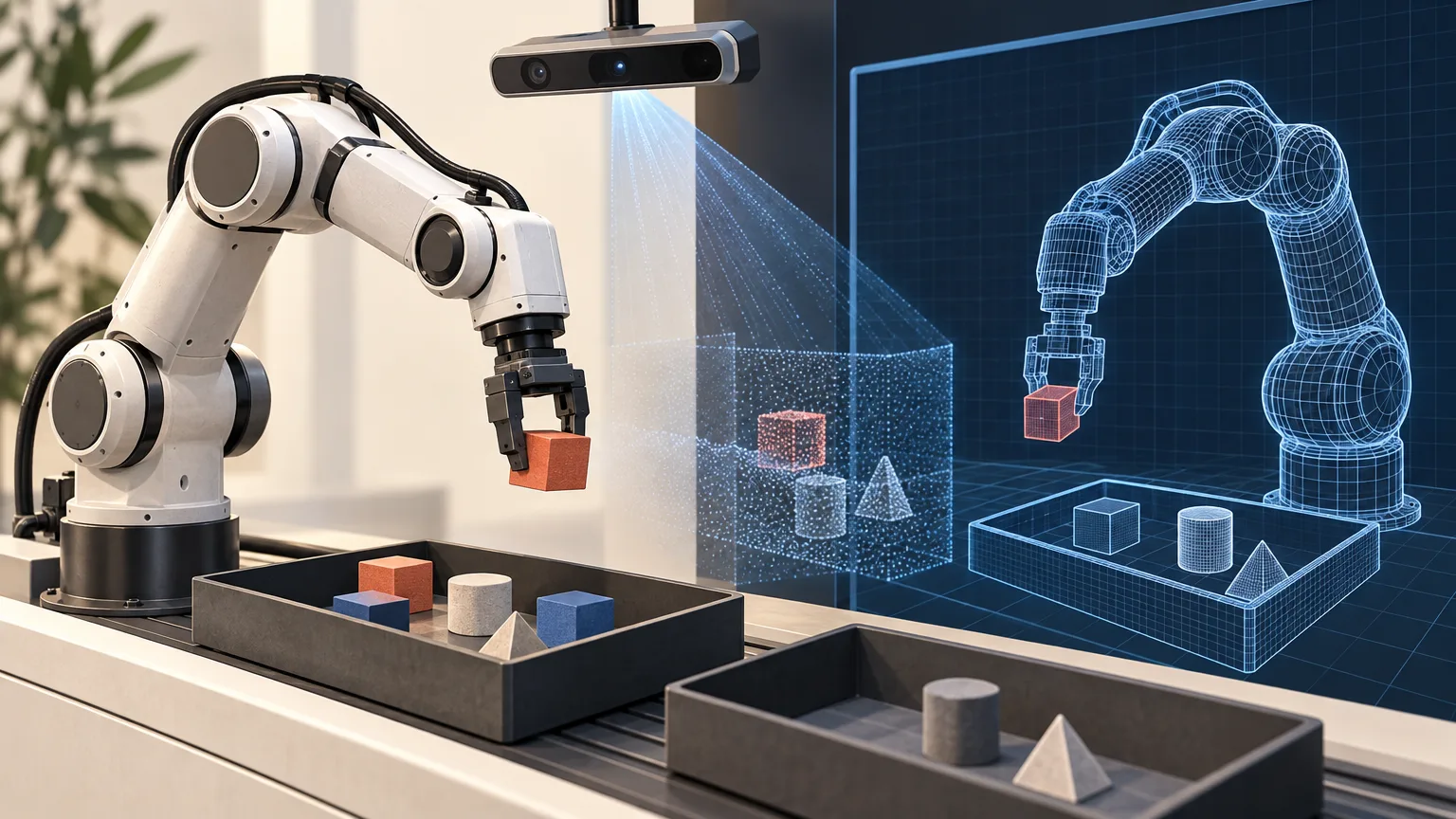
The workflow begins with a robot arm and depth camera connected to a laptop. The developer describes a task, and the agent sets up the hardware, prepares a simulation and generates control code. While carrying out the task, it monitors the camera feed and continually adjusts the arm’s movement.
The plugin groups reusable tools for different stages of the work. They handle driver installation, camera discovery and calibration, as well as simulation, perception and application generation. The simulation components include MuJoCo Studio and MuJoCo Playground; during control, the model locates objects, selects grasp points and plans movement.
A feature called “vibe sim” generates simulation assets from a written description, a photograph of the workspace or a product-page link. Developers can then adjust geometry, object placement and physical properties in chat, test the behavior in simulation and transfer it to the arm.
Google demonstrates sorting and chess
In a Google demonstration, setting up an I2RT YAM arm took approximately 10 minutes, including software installation, camera discovery, calibration and test movements. Once configured, the system completed tasks such as picking up a pen and stacking snacks within minutes.
In another demonstration, Hydrogen turned a whiteboard sketch and photographs of a scene into a simulation of a sorting conveyor. After repeatedly evaluating grasps, it deployed the control program to a real arm; the developer then adjusted grip force and sorting rules in plain language. Google says the full setup took about an hour.
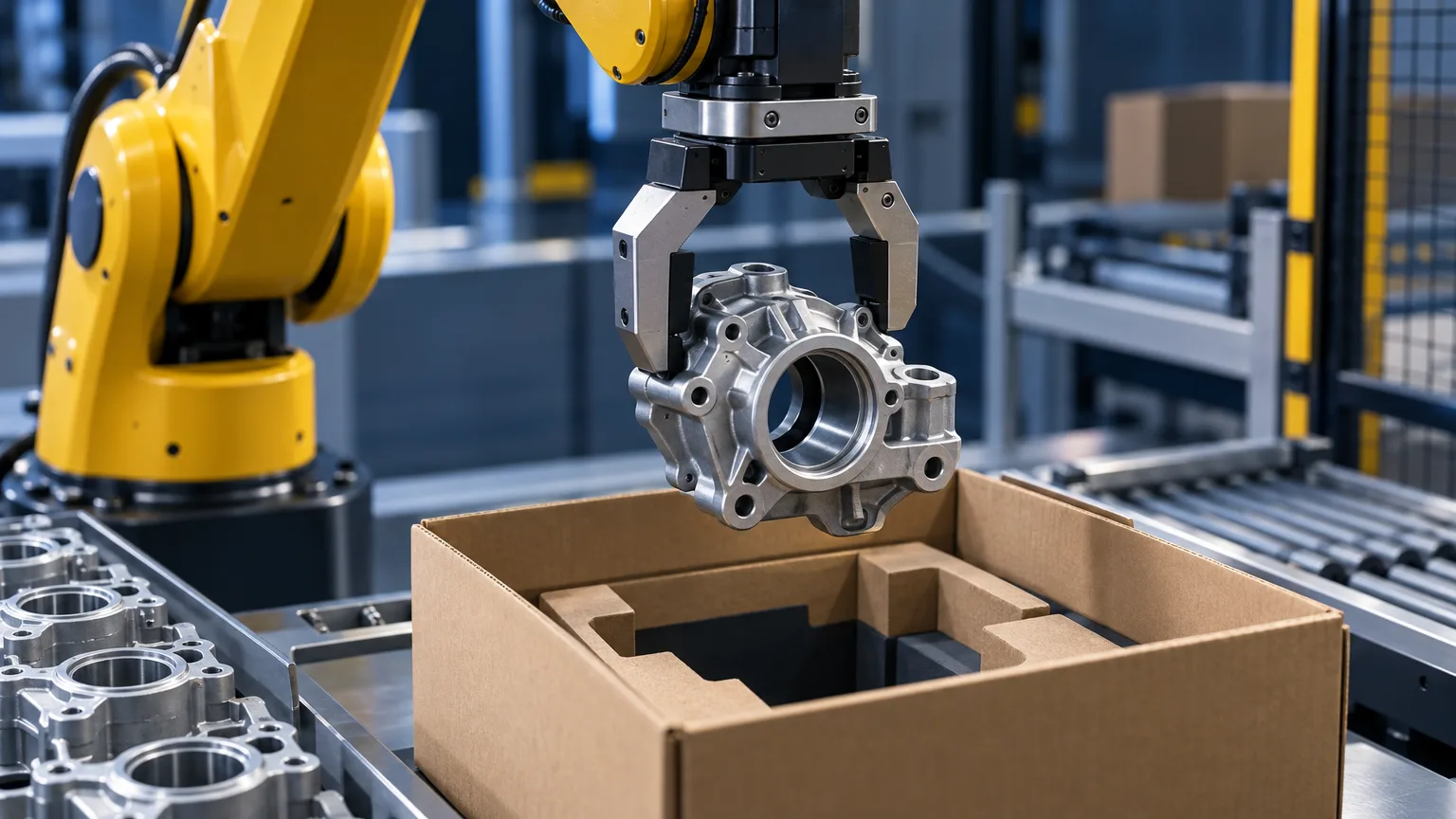
Google also showed a soap store connected to two YAM Pro arms that selected and packed goods in response to orders. A Franka FR3 Duo setup created a simulated chessboard and played against itself or a person.
Results against Gemini Robotics ER 2 and other models
According to Google, Hydrogen incorporates capabilities from the earlier specialist model Gemini Robotics ER 2, including object localization, grasp-point selection and spatial reasoning. Google reports that Hydrogen averaged 84.8 across 14 categories in the ERQA benchmark, compared with 75.5 for ER 2.
In the independent AA-Robotics v0.1 benchmark, Hydrogen scored 58, approximately matching Gemini 4 Argon, according to Google. The test gives a model control of a real six-axis arm across eight tabletop tasks. GPT-6 Astra led the leaderboard with 69 points.
The benchmark’s authors reported that models took an average of about 30 minutes per task, compared with 20 seconds for a person; Argon took 52 minutes. Argon also retained the target object in 36% of grasp attempts. Hydrogen’s similar overall score does not establish its grasp success rate.
Supported arms and access to the model
Directly supported configurations include I2RT YAM, SO-ARM101 and the dual-arm Franka FR3 Duo. The plugin is available on GitHub under the Apache 2.0 license. Developers can create support for other hardware and share it in the project’s discussions, but devices outside the supported list require integration, testing and hardware-specific safety checks.
Using Hydrogen in Antigravity requires a paid Google AI Pro or Ultra subscription. The model is also available through the Gemini API using the Interactions API or the google-genai SDK. In AI Studio, developers can test spatial prompts, live camera feeds and structured tool calls in a browser.
The API costs $1.50 per million input tokens and $7.50 per million output tokens, with the same rates throughout its one-million-token context window.
The plugin’s motion checks do not replace safety-rated control systems, physical stops, guarded workspaces or an application-specific risk assessment.