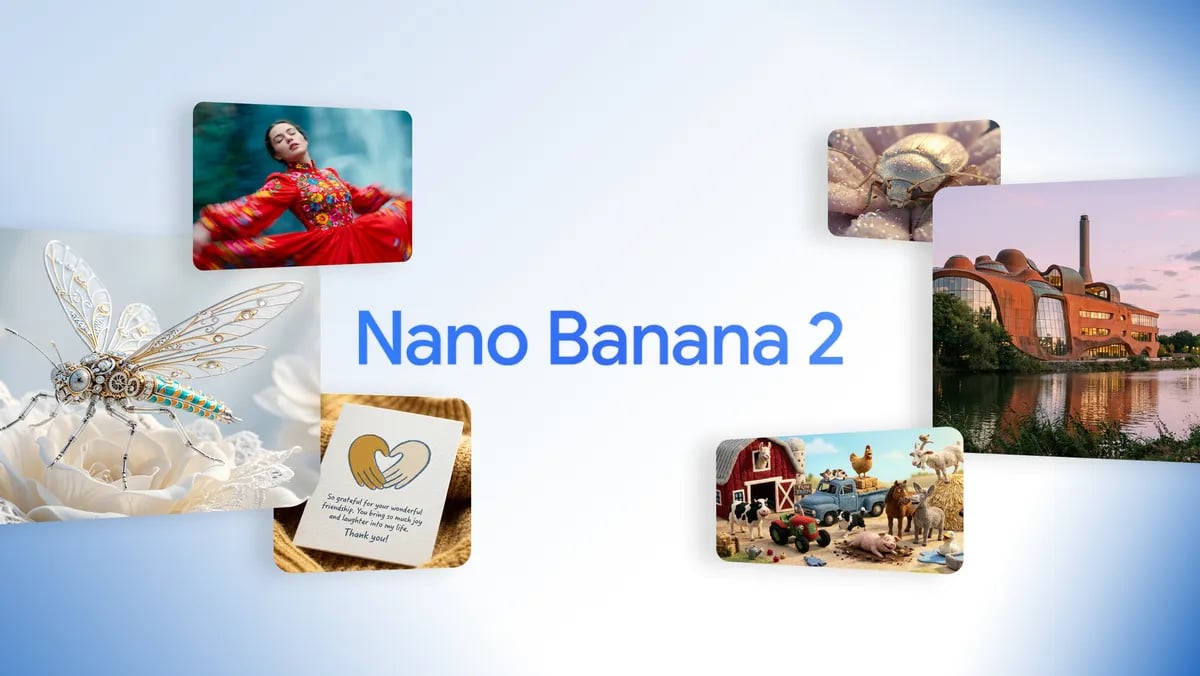
Last August was quite wild for Google. That was when it launched an image-generation model called Nano Banana, and the internet immediately went crazy. People generated millions of images, especially in India, where the tool became a truly viral phenomenon. Then, in November, Nano Banana Pro arrived with higher quality and more detailed outputs. And now Google is taking the next step: Nano Banana 2, technically known as Gemini 3.1 Flash Image.
This time, Google did not choose between speed and quality. It took both and packed them into a single model.
What Nano Banana 2 can do
The basic idea is simple: take the best features of Nano Banana Pro and add the speed of Gemini Flash. The result? A model that generates photorealistic images at lightning speed without sacrificing visual fidelity.
The model's specific capabilities include:
- Real-world knowledge thanks to its connection to web search. The model draws on up-to-date information and can generate infographics, turn notes into diagrams, or visualize data.
- Accurate text rendering in images, including translation and localization into other languages. Want a marketing banner in Chinese? No problem.
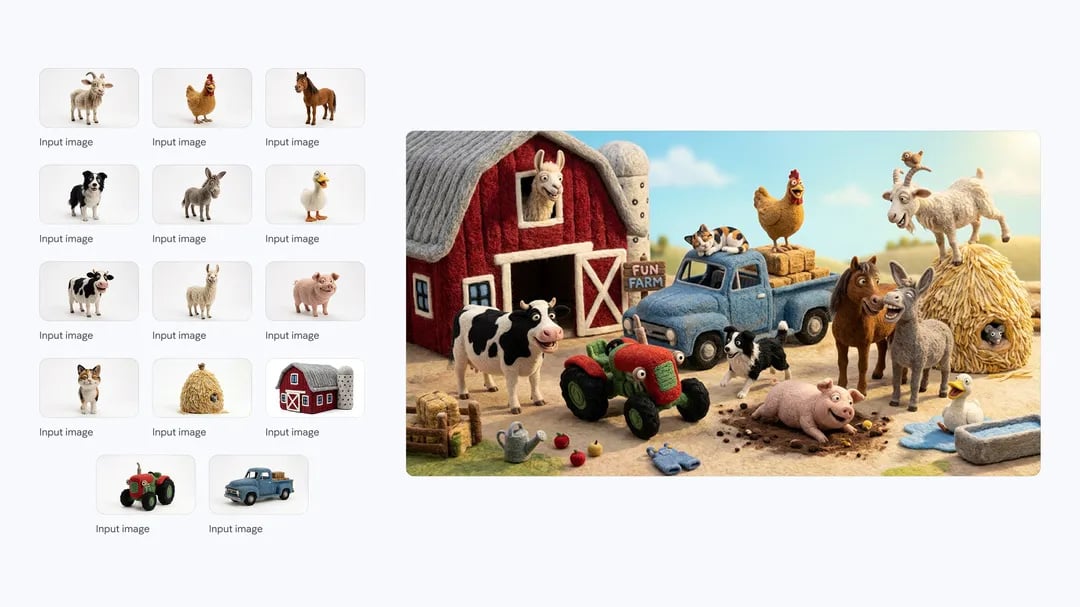
- Character consistency for up to five different characters and fidelity for up to 14 objects in a single workflow. This is useful when creating comics or storyboards, for example.
- Resolutions from 512px up to 4K in various aspect ratios, so the outputs work equally well for a social media post or large-format printing.
- More vibrant colors, richer textures, and sharper details compared to the original Nano Banana.
In short: the model aims to give users exactly what they envisioned, rather than just an approximate version of their prompt.
Where can you find Nano Banana 2?
Google rolled out the model practically everywhere at once. In the Gemini app, it replaces Nano Banana Pro as the default model for Fast, Thinking, and Pro modes. Google AI Pro and Ultra subscribers can still access the Pro version through the three-dot menu.
In Google Search, Nano Banana 2 works in AI Mode and through Google Lens in 141 countries on both mobile devices and computers. Developers can find it in AI Studio, through the Gemini API, and in Vertex AI. The model is also the default image-generation tool in Flow, the video editing tool, and powers suggestions when creating campaigns in Google Ads.
Access is free and requires no special setup. Just open Gemini and get started.

SynthID and protection against misinformation
Every image created with Nano Banana 2 carries a SynthID watermark, a technology developed by Google for labeling AI-generated content. Google is also adding support for the C2PA Content Credentials standard, which it shares with Adobe, Microsoft, OpenAI, and Meta. Since the SynthID verification feature launched in the Gemini app in November 2025, people have used it more than 20 million times. C2PA verification will soon be available directly in the Gemini app.
Why does this matter? Because as the outputs of AI generators improve, so does the risk that fake images will look convincing. The watermark is only visible when you look for it. Most people will overlook it while quickly scrolling through social media.
Nano Banana 2 vs. Nano Banana Pro: When should you use each one?
Google makes it clear: Nano Banana Pro remains the choice for tasks requiring maximum accuracy and fidelity to detail. Nano Banana 2 is the choice for fast creation, precise instruction following, and working with real-time web data. Both tools have their place, and Google does not offer them as competitors, but as complementary options. The result is compelling. Google took a viral tool, gave it both intelligence and speed, and deployed it across its entire product lineup.
Source: gemini.google