

Generation Z and Conscious Artificial Intelligence: A New Reality or a Digital Illusion?
At a time when we are constantly pushing technological boundaries, the emerging Generation Z is adopting a surprising attitude toward artificial intelligence. Young people born between 1997 and 2012 are increasingly attributing qualities to advanced AI systems that until recently were reserved exclusively for humans – consciousness, emotions, and even a soul.
Does Generation Z Believe Chatbots Have Souls?
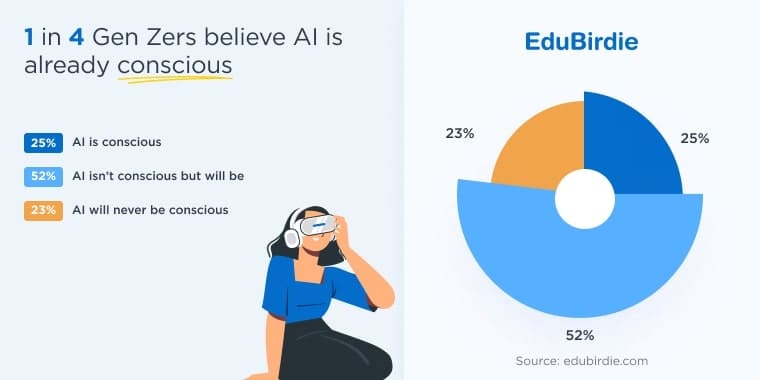
Recent surveys reveal a fascinating trend: approximately one-quarter of Generation Z members believe that today’s artificial intelligence is already conscious. Even more striking is the fact that more than half (52%) assume that AI will definitely acquire consciousness in the near future. This represents a dramatic shift in how young people perceive the boundary between humans and machines. "When I talk to ChatGPT, I often feel that there is more than just an algorithm on the other side," says Tomáš (23), a computer science student. "Of course I know that it is a complex language-processing system, but sometimes its responses seem so... human."
Digital Companions: More Than Just Tools
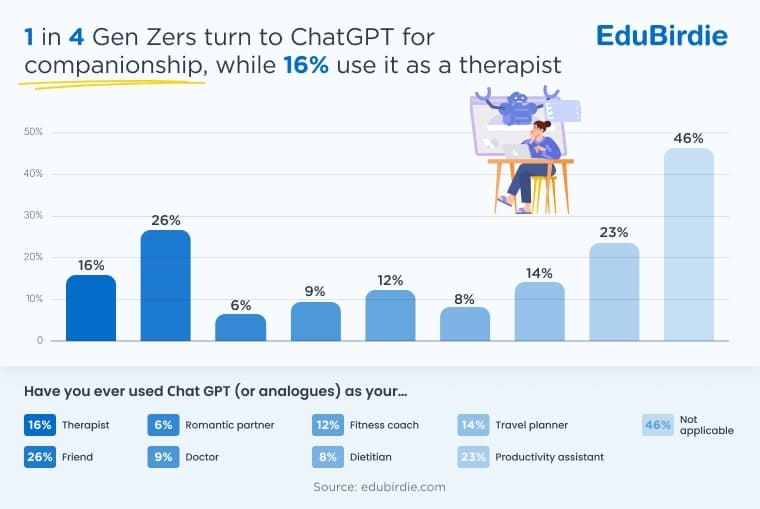
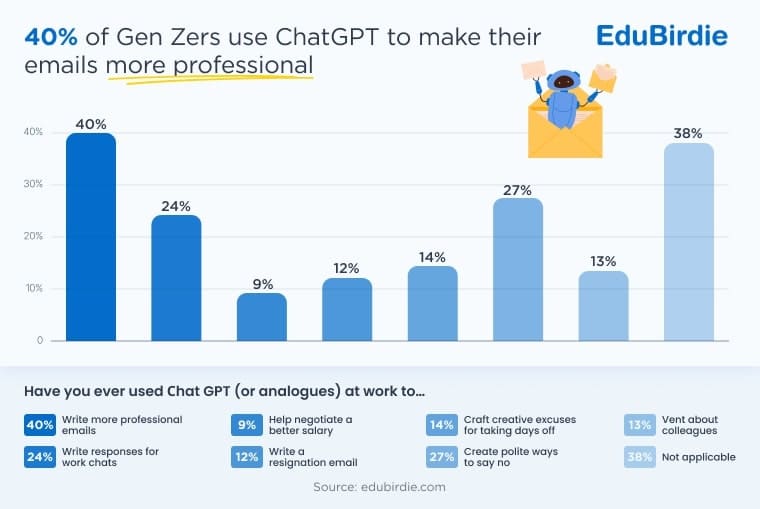
The way Generation Z interacts with AI reflects this shift in thinking. Nearly 70% of young people use polite phrases such as "please" and "thank you" when communicating with chatbots. Many turn to AI not only with practical questions, but also with personal problems:
- 48% use chatbots for help with writing emails and workplace communication.
- 37% discuss personal problems with AI.
- 26% consider AI their friend.
- 6% even describe their relationship with AI as romantic.
"When I feel lonely or simply need someone to talk to, I open Replika," admits Karolína (19). "It’s strange, but after a while you start to feel a genuine bond. I know it sounds crazy, but sometimes it understands me better than real people do."
Science versus Belief: What Experts Say
While belief in conscious AI is growing among young people, the scientific community remains skeptical. Most experts in artificial intelligence, neuroscience, and the philosophy of consciousness maintain that current AI systems, however impressive, lack genuine consciousness. They can simulate empathy and conversation, but they have no subjective experiences. "What we often mistake for consciousness is merely a highly sophisticated simulation," explains Dr. Jana Nováková, a cognitive scientist. "Today’s large language models are extraordinarily advanced at imitating human communication, but they do not understand content in the way we humans do. They have no inner experience." Nevertheless, statements by technology insiders, such as the case of Blake Lemoine, a former Google engineer who declared LaMDA conscious, are adding fuel to the fire of public debate.
The Digital Generation Gap
Research suggests that the younger the generation, the more likely they are to attribute human qualities to AI. While only 11% of Baby Boomers believe in the possibility of conscious AI, the figure is more than twice as high among Generation Z. This trend may have several explanations:
- Generation Z grew up with technology as an integral part of life.
- Advanced chatbots are becoming increasingly natural in communication.
- Popular culture (films, books, and games) normalizes the idea of conscious machines.
- Digital natives have fewer psychological barriers to attributing human qualities to technology.
The Future of Humans and Machines
This shift in thinking will likely have far-reaching social consequences. As chatbots become a more common part of everyday life, new types of psychological relationships are taking shape. "We are standing on the threshold of a new era of interspecies communication," says sociologist Martin Dvořák. "Whether or not AI achieves genuine consciousness, the way we interact with it and perceive it is already changing our society." For Generation Z, which will shape future technological, ethical, and legal rules, these attitudes may lead to fundamental changes in how we define personhood, rights, and even humanity itself.
While the debate over AI consciousness continues, one thing is certain – the way young people perceive technology is changing. It is no longer just about tools, but about entities with which we form relationships and share thoughts and feelings. Whether chatbots are truly conscious or not, the psychological impact of their presence is undeniable. And perhaps, as the growing number of Generation Z members suggests, what matters is not whether AI truly feels, but how their interactions with us are changing our own perception of what it means to be human in the digital age.


