I love visiting Texas. Honestly, I think it is the most beautiful part of America. Of course, that is just my point of view—I love horses, I love the old Old West, and that old West with its cowboys begins in Fort Worth and Texas as a whole. And one thing I really love about Fort Worth—I found out that the series 1883, a prequel to the popular Yellowstone, was filmed largely right here in the Fort Worth Stockyards. Creator Taylor Sheridan deliberately chose Fort Worth because the city was once a true center of the cattle trade and has retained its authentic Wild West atmosphere to this day. The first two episodes were filmed directly in the streets of the Stockyards, where the production transformed the entire Exchange Avenue into an 1883 town—they brought in dirt, removed the streetlights, and built period facades. Even the famous White Elephant Saloon was transformed into Pearl's Dance Hall & Saloon for the series. When you walk around there, the feeling that you have traveled back in time is absolutely real.
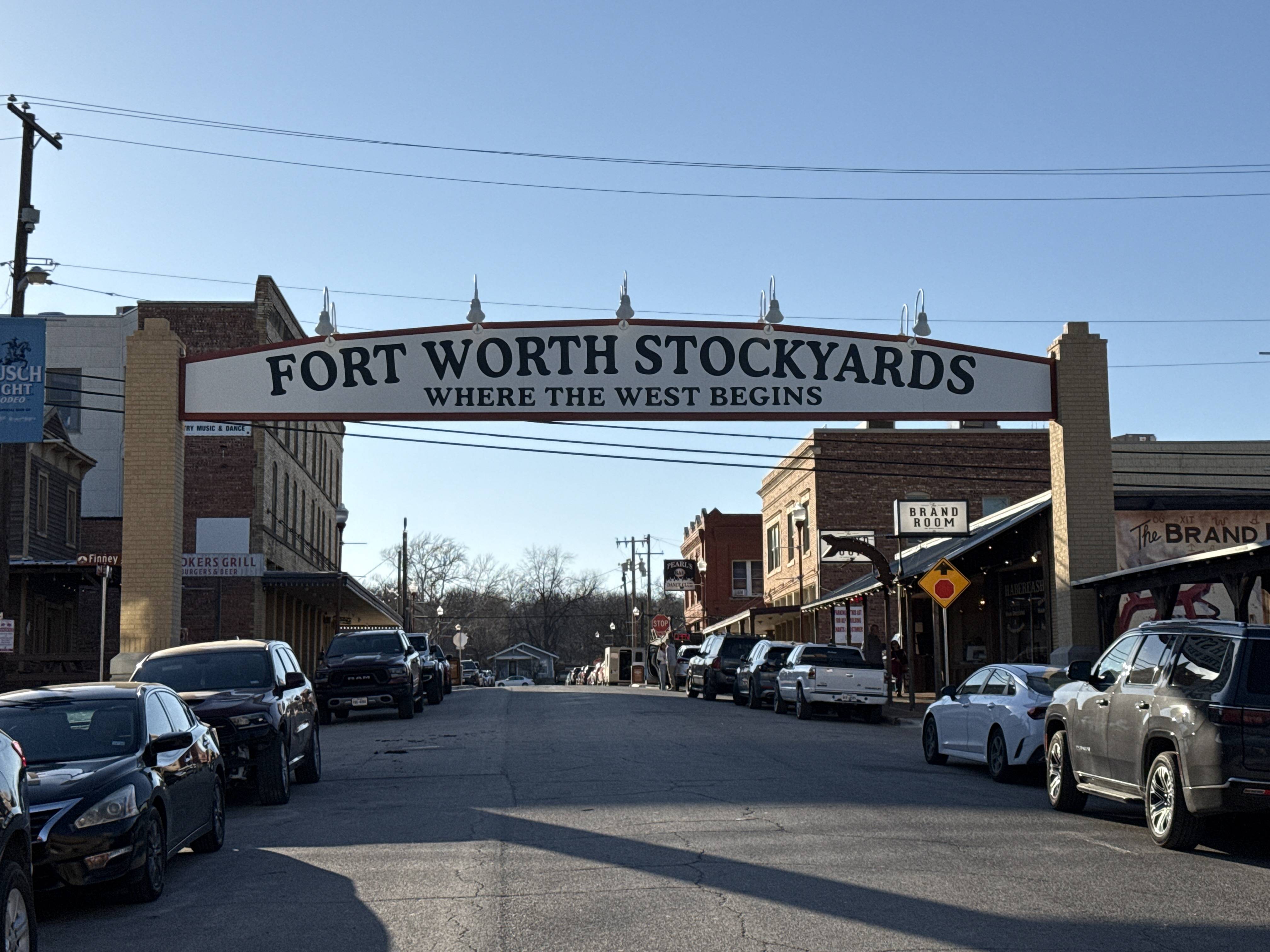
And overall, probably the best-known location in Fort Worth, attracting the most people and usually packed with visitors, is the area known as the Stockyards.
The History of the Fort Worth Stockyards—How Small Pens Became the Wall Street of the West
The Fort Worth Stockyards have an incredibly rich history dating back to 1866, when Fort Worth became a key stop on the famous Chisholm Trail—the main route along which cowboys drove cattle north from Texas ranches to Kansas. Fort Worth was the last civilized place where cowboys could replenish their supplies before setting out into the wild frontier.
When the railroad reached Fort Worth in 1876, the city was suddenly transformed into an important cattle transportation hub. Construction of the Union Stockyards began in 1887, and two years later, in January 1890, they opened across an area of more than 200 acres. The turning point came in 1893, when Boston capitalist Greenlief W. Simpson bought the entire complex for $133,333 and renamed it the Fort Worth Stockyards Company. Simpson attracted the major meatpacking companies Armour & Co. and Swift & Co., which built their plants here—and Fort Worth suddenly became one of the largest centers of the meat trade in the entire United States. The Livestock Exchange Building, where deals were made, earned the nickname “Wall Street of the West”.
In 1912, the Horse and Mule Barns, now known as Mule Alley, were built. During World War I, Fort Worth became the largest horse and mule market in the world—European armies sent agents here who purchased an estimated $11 million worth of animals. The peak came in the 1940s, when more than 5.25 million head of livestock passed through the Stockyards in 1944 alone. In 1937, Fort Worth even surpassed Chicago and Kansas City in trade volume for the first time in history.
After World War II, however, the decline began. New roads and truck transportation replaced the railroad, small local auctions drew business away from the Stockyards, and gradually fewer and fewer animals remained. The final auction was held in December 1992. Fortunately, Charlie and Sue McCafferty had already founded a historical society in 1976, which succeeded in having the Stockyards listed on the National Register of Historic Places, thereby saving the entire district from demolition. Gradual restoration has been underway since the 1980s, and today it is one of the most visited tourist destinations in Texas.
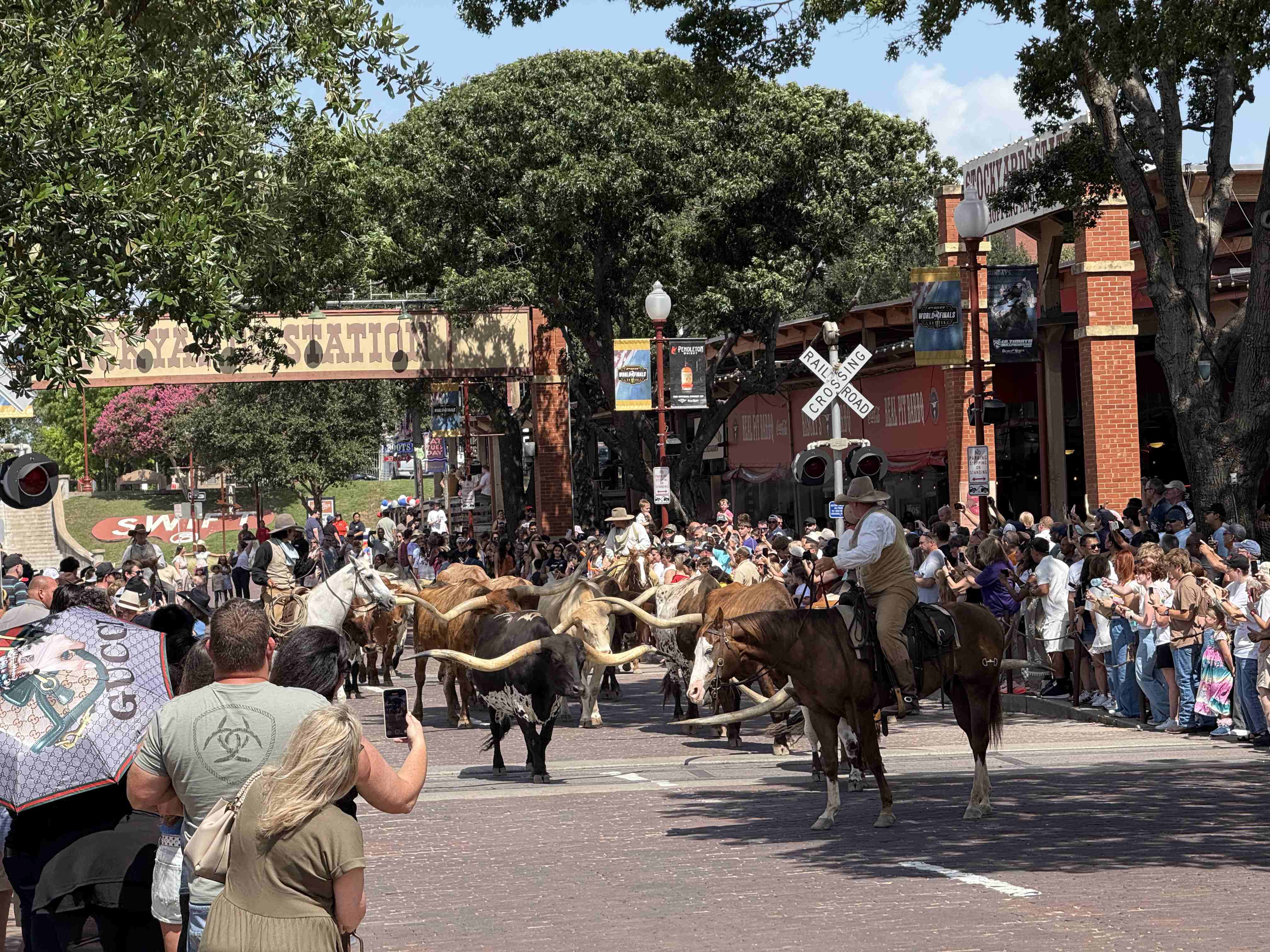
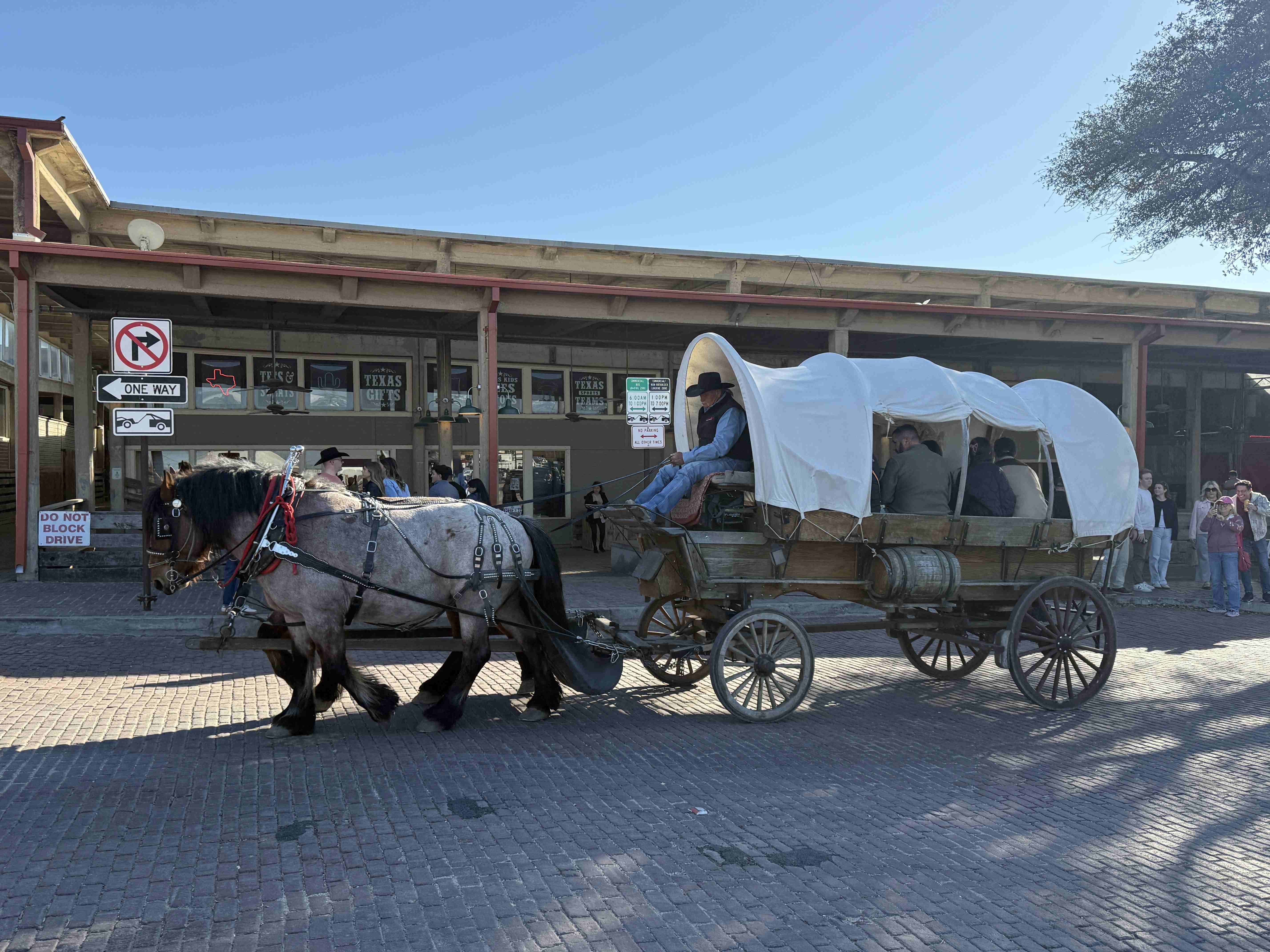
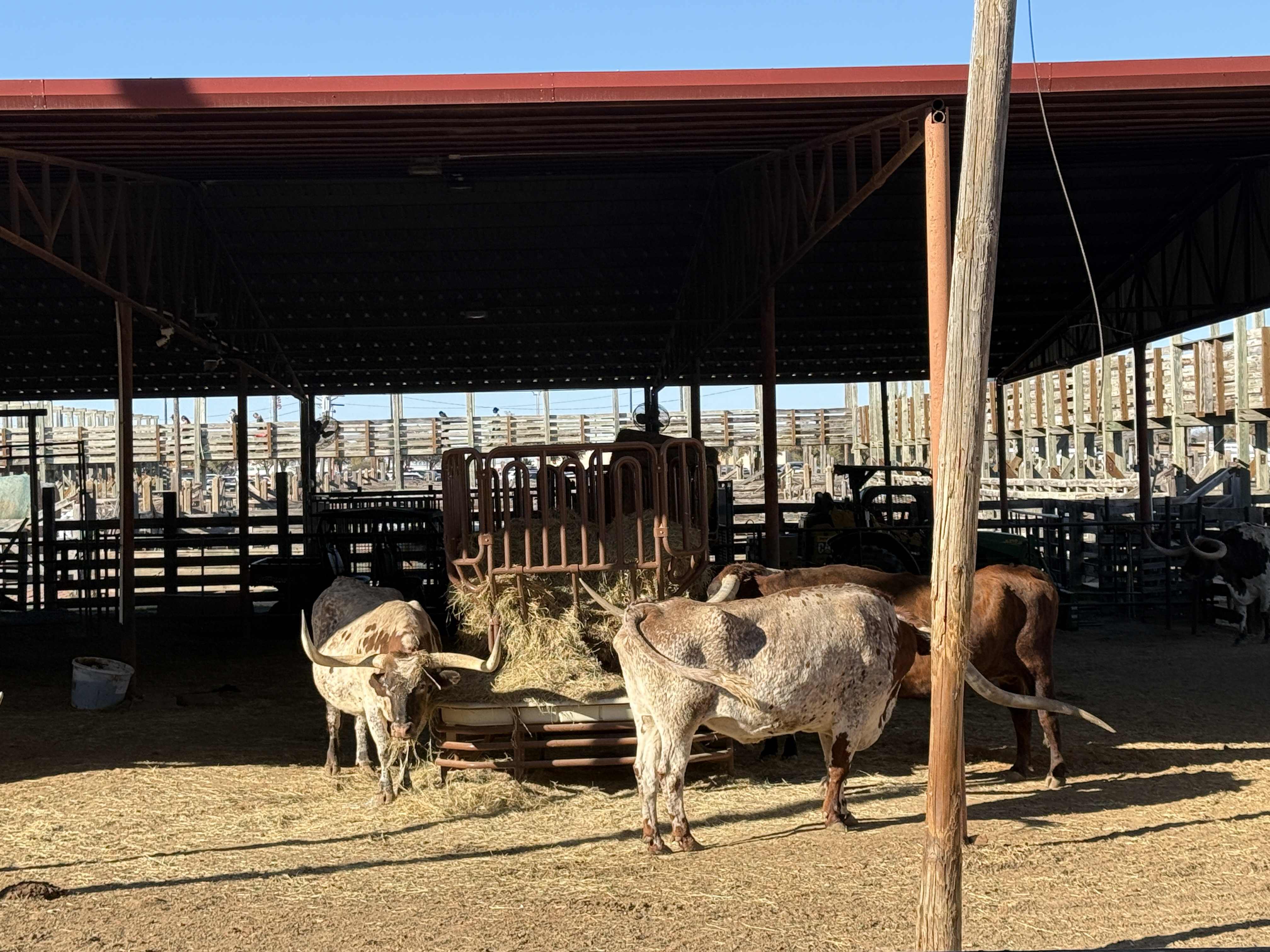
It is essentially one long street—Exchange Avenue—where cowboys from all over America once gathered to buy and sell cattle, and where the true life of the Wild West once thrived. Today, twice a day throughout the year, there is a huge procession of Texas Longhorns—massive cattle with enormous horns. It is stylish and cowboy-themed, there is great music, and it is really beautiful. I am completely blown away every time. I have seen it about five times already, and I still absolutely love it.
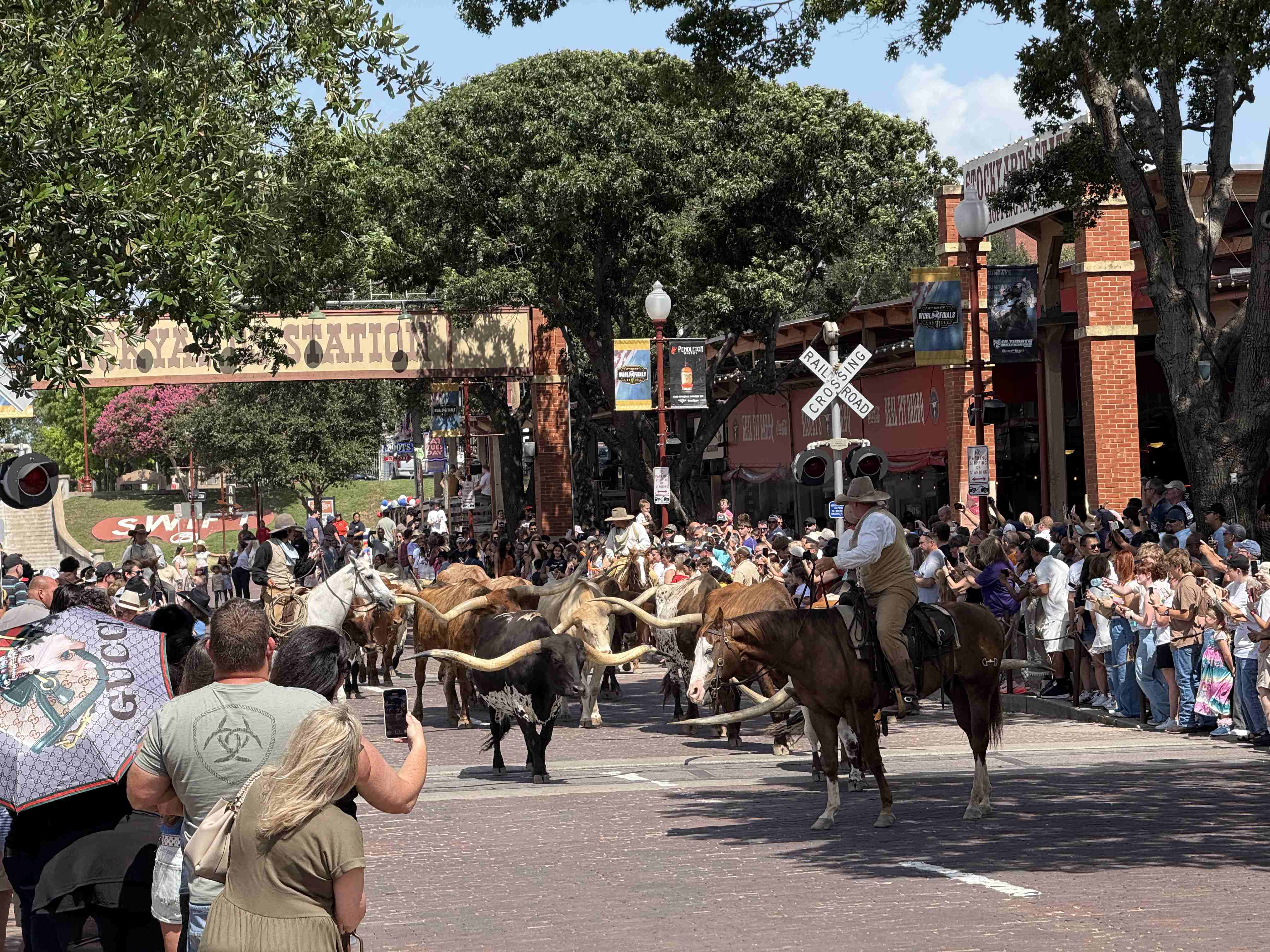
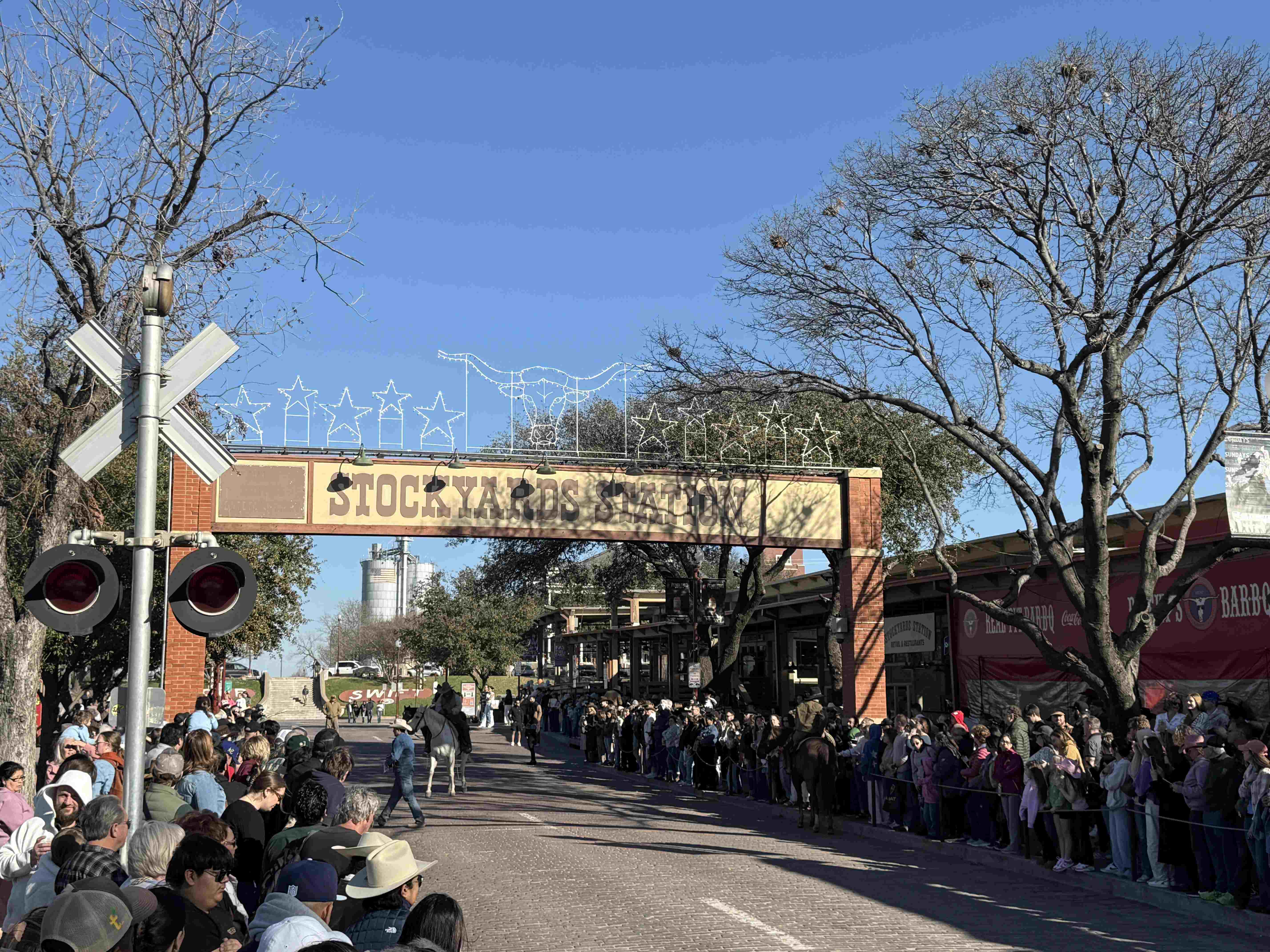
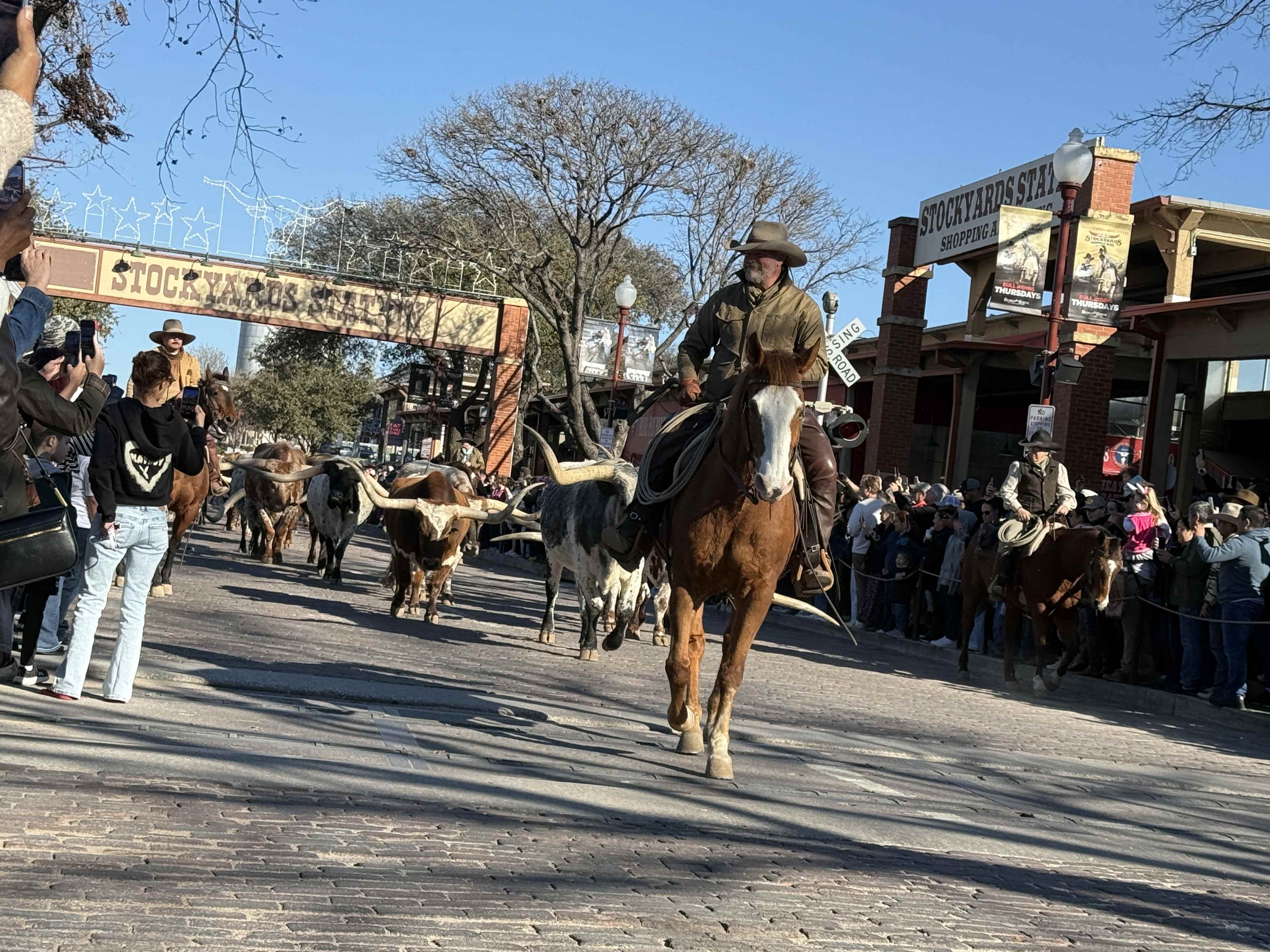
Here is also a video showing what the procession looks like, although it cannot capture the real atmosphere of actually being there :).
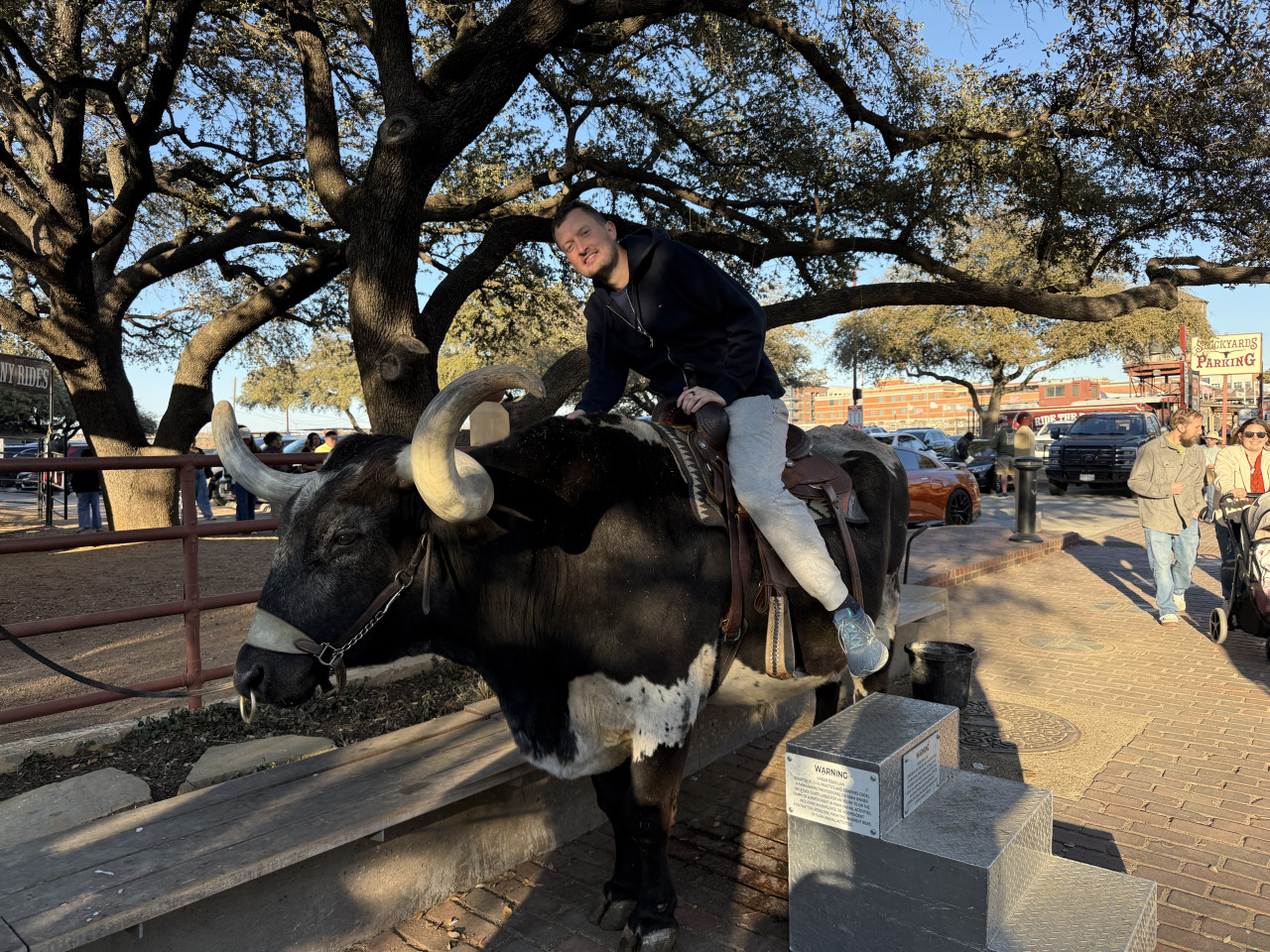
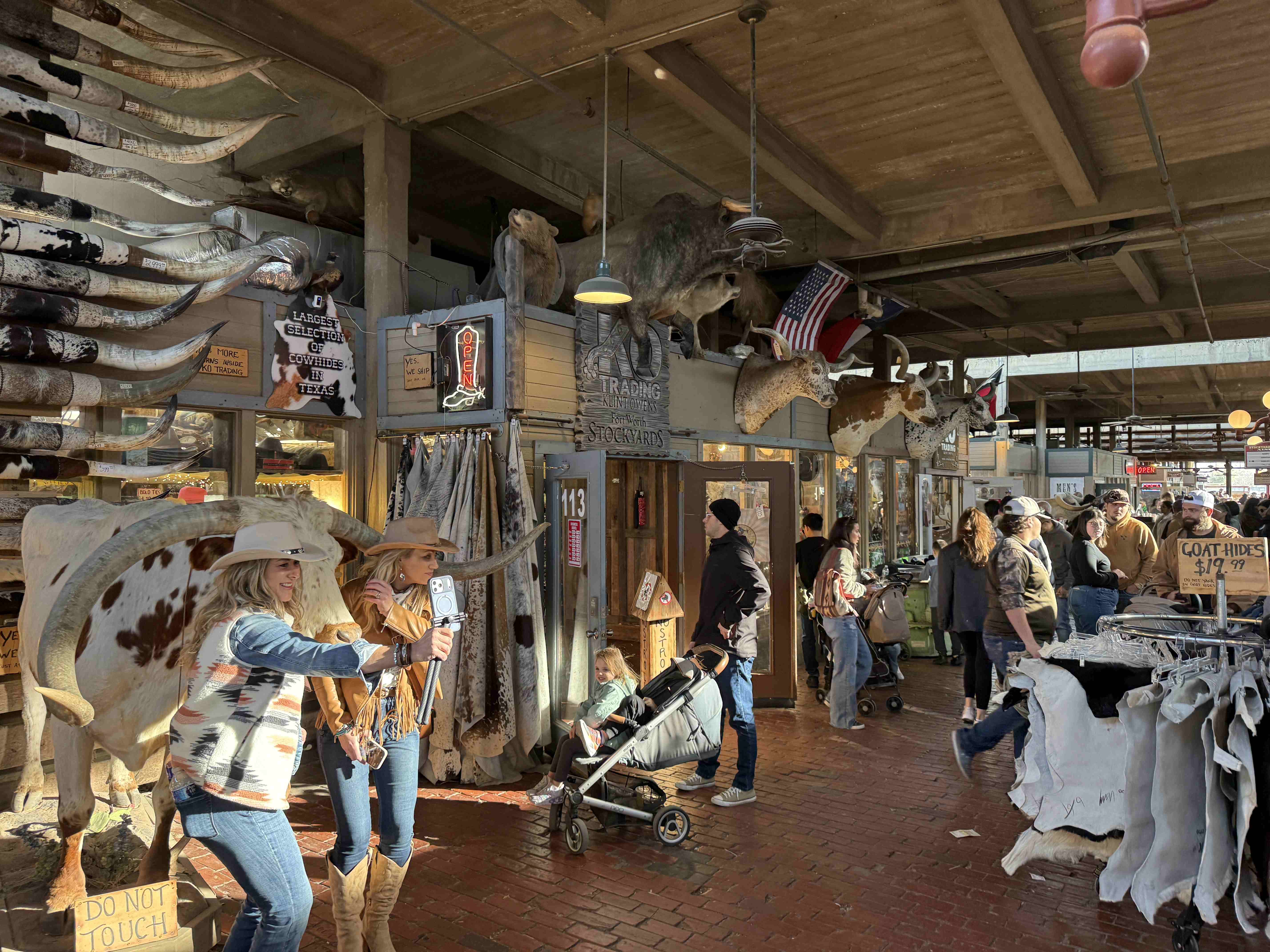
And by the way—you can have your photo taken on a real bull right there on the street. There is a saddled longhorn standing there, and for a few dollars they will help you climb onto it and take your picture. It is one of those experiences you simply have to try while you are there.
Cowtown Coliseum—the Oldest Rodeo Arena in America
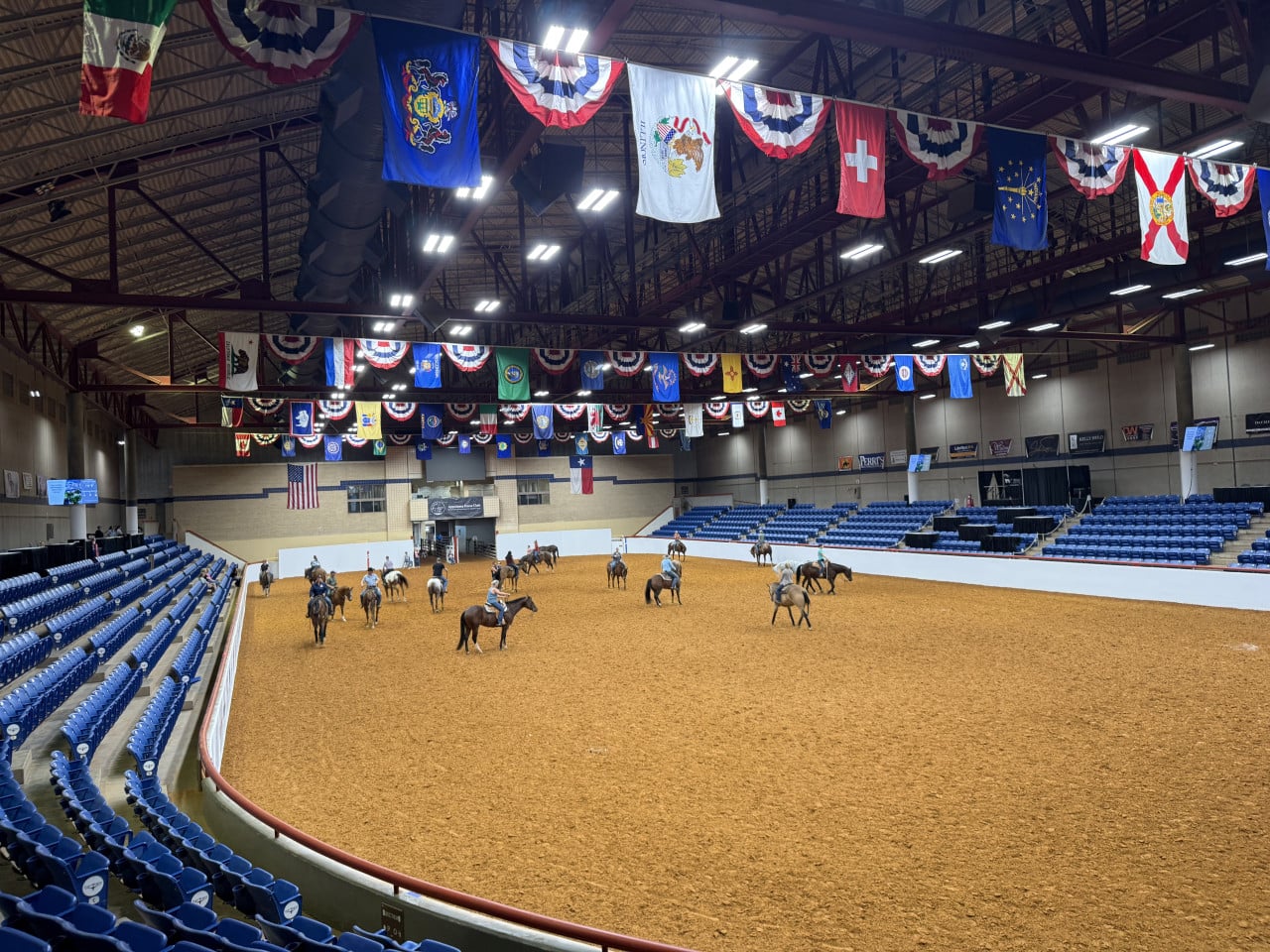
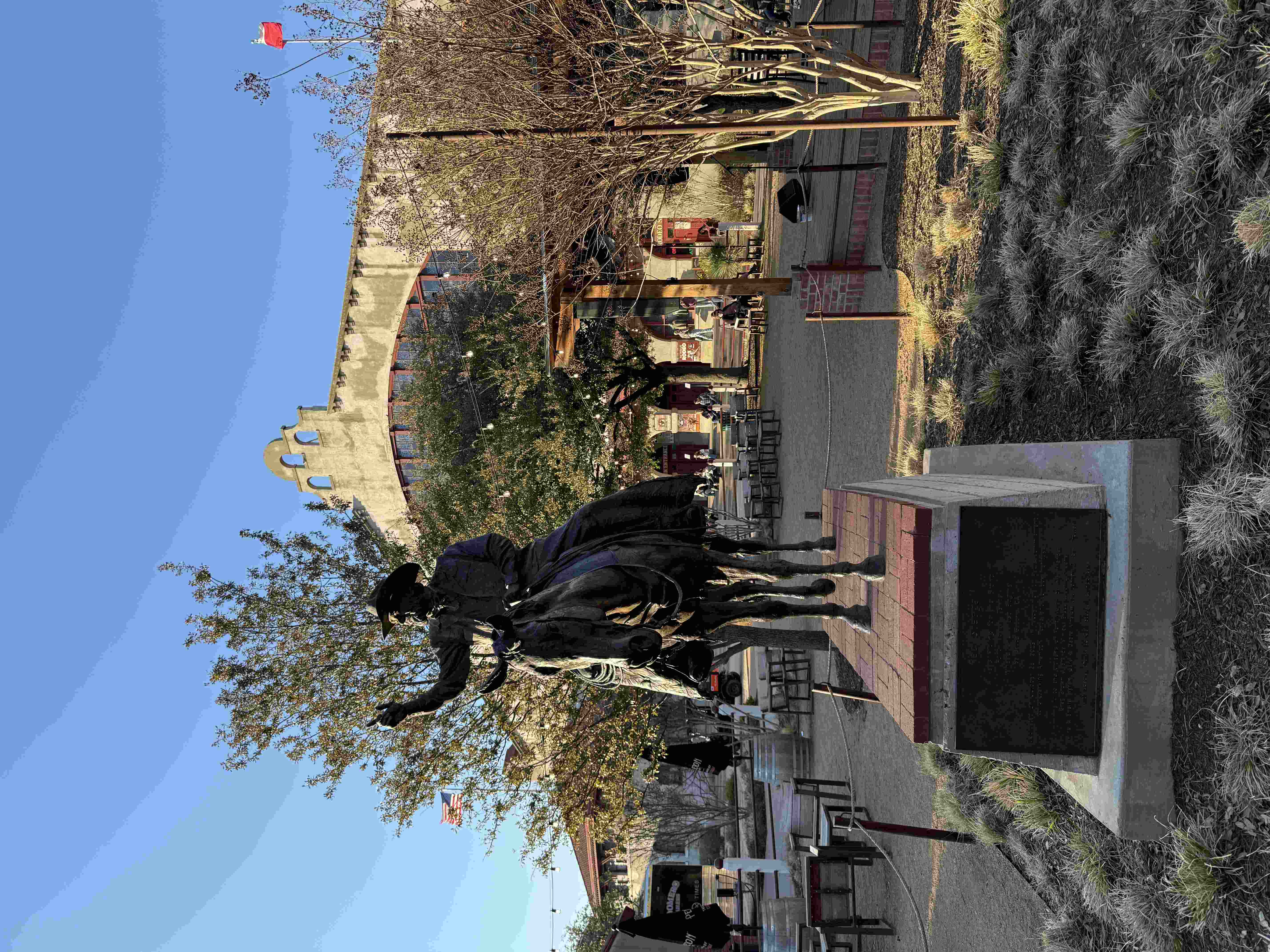
Of course, the Stockyards are also home to the oldest rodeo arena in the United States—Cowtown Coliseum. And it truly is something special.
Construction began in 1907 and was completed in 1908 at a cost of $250,000 at the time (equivalent to about $6.2 million today, excluding labor). It was originally called the Grand Coliseum and was built as an exhibition hall for the annual Fort Worth Fat Stock Show, which until then had been held at various locations around the city. Construction was financed by Swift, Armour, and the Fort Worth Stock Yards Company.
What makes Cowtown Coliseum unique is its entire list of historic firsts:
-
1908—the first indoor livestock show in the USA
-
1908—the first nighttime horse show in the USA
-
1918—the world's first indoor rodeo
-
1923—the first live radio broadcast of a rodeo (on station WBAP)
-
1934—bull riding was introduced to the world here
In 1911, former president Theodore Roosevelt addressed an audience of five thousand here, and in 1920 the famous Italian tenor Enrico Caruso performed here. President Jimmy Carter gave a speech here in the 1970s. Interestingly, throughout its history the venue has been located in three different cities—North Fort Worth until 1909, Niles City from 1911 to 1923, and only since 1923 has it been part of Fort Worth.
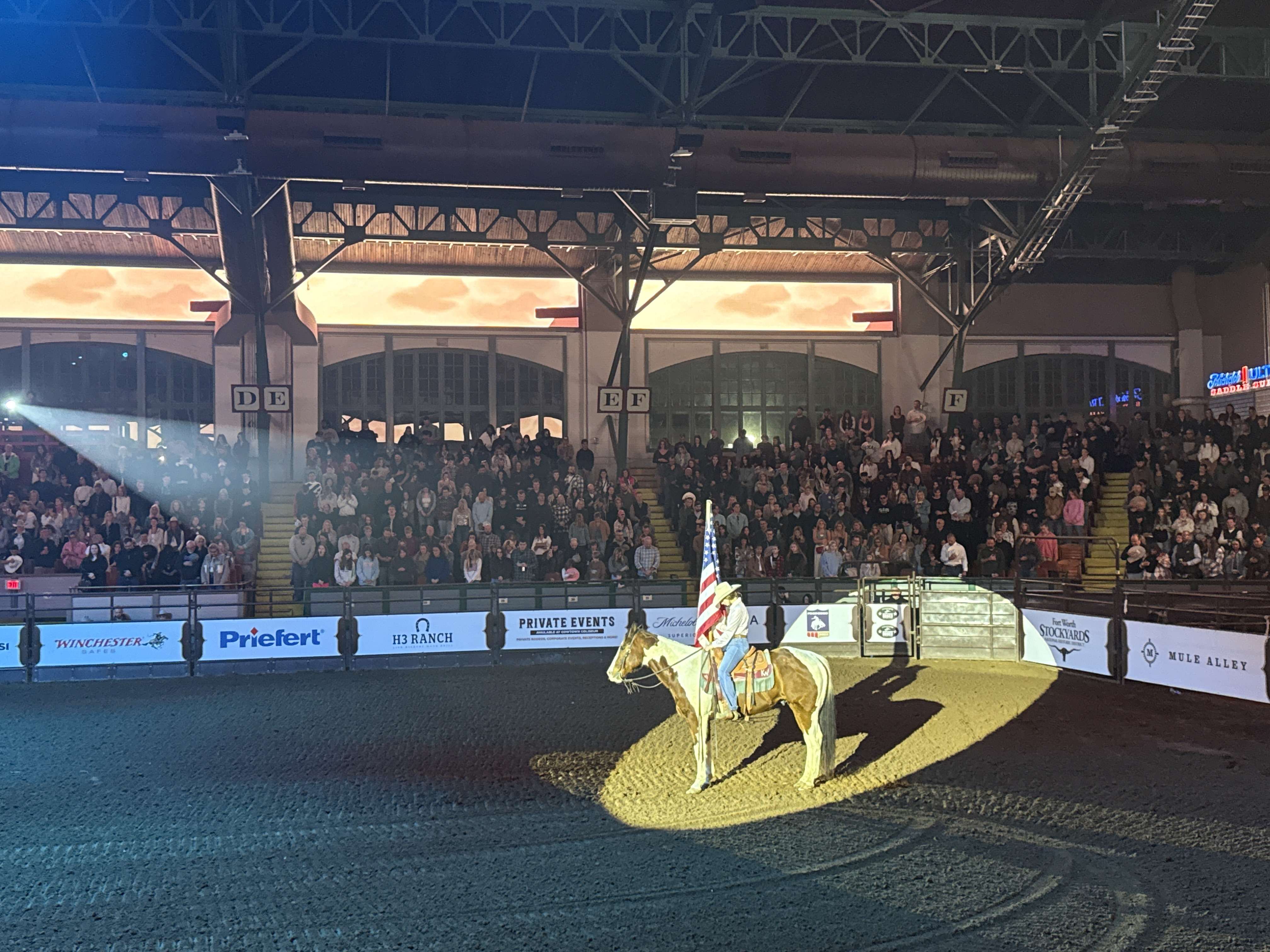
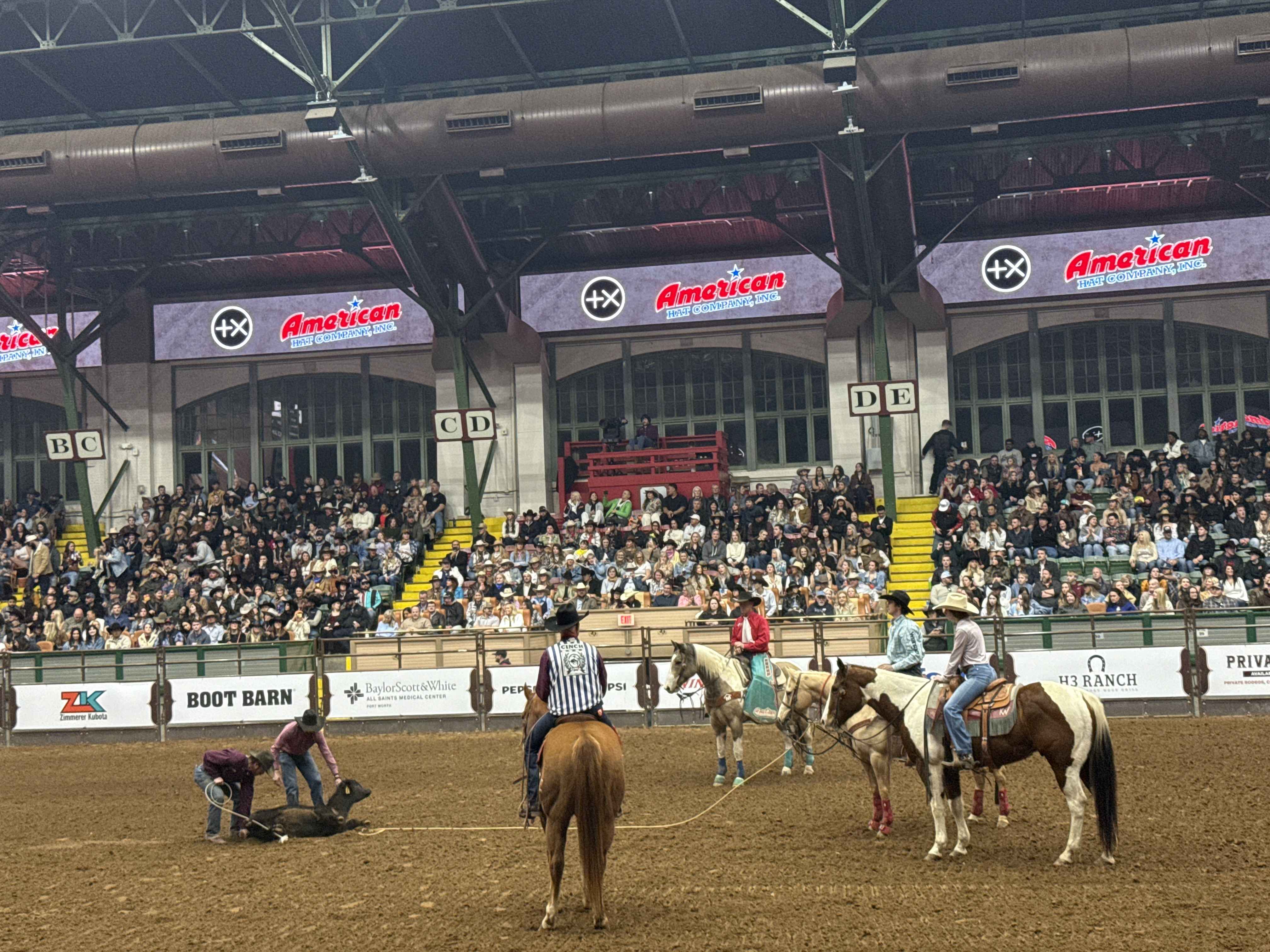
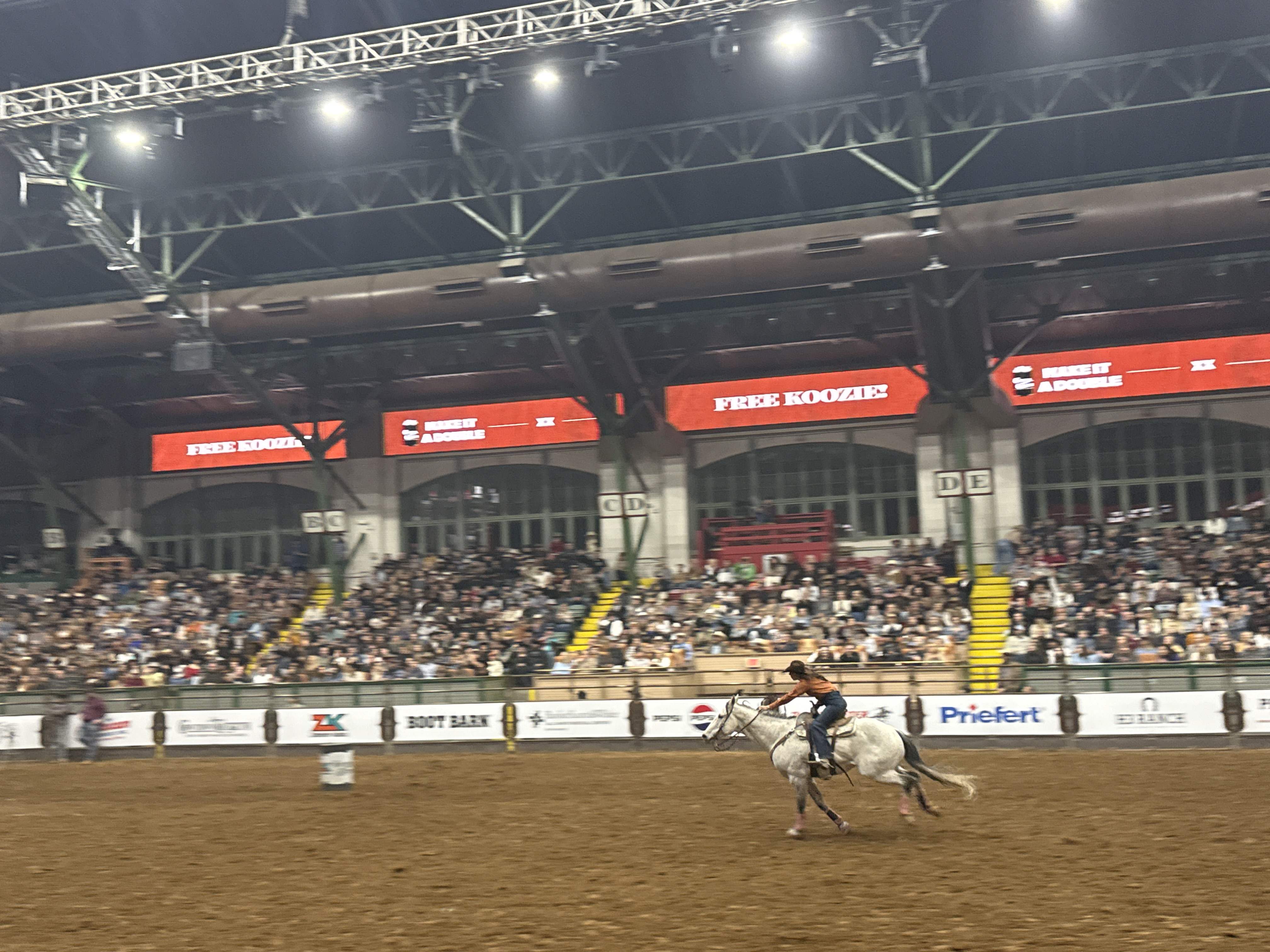
Today, the Stockyards Championship Rodeo takes place here every Friday and Saturday—the only year-round rodeo in the world. On Thursdays, the PBR Stockyards Showcase features professional bull riding. The arena seats about 2,400 spectators, and it is simply an unforgettable experience.
When I was there for the first time, I had no idea there was a rodeo. I had only seen some signs, but I did not know what they meant. In the evening, as I was walking back from the saloon, I stopped to ask what was going on inside. The woman scanning tickets said, “Rodeo.” And I asked, “A real rodeo?” She said, “Yeah.” So I immediately bought tickets next door and went in. These days, I buy tickets through the AXS app, where you can choose your seats as usual.
And the rodeo was absolutely amazing. I sat there open-mouthed for several hours. It started beautifully—a comic clown introduced the show, followed by God Bless America, the American national anthem, and processions with horses and the American flag. It was very patriotic, and I absolutely loved it. Then the rodeo itself began—riding wild bulls that threw the riders off, and there were even injuries when one bull kicked a rider in the leg and an ambulance had to come. They also ride wild horses, there is barrel racing, and during the intermission children chase a small bull and have to pull a ribbon from it—my little daughter was absolutely thrilled. I sat there for almost four hours and was completely blown away, because you simply cannot experience anything like this in Europe. Once, I also saw a rodeo with cutting—herding cattle—and that was really beautiful too.
Stockyards Station—a Former Railroad Station Full of Cowboy Merchandise
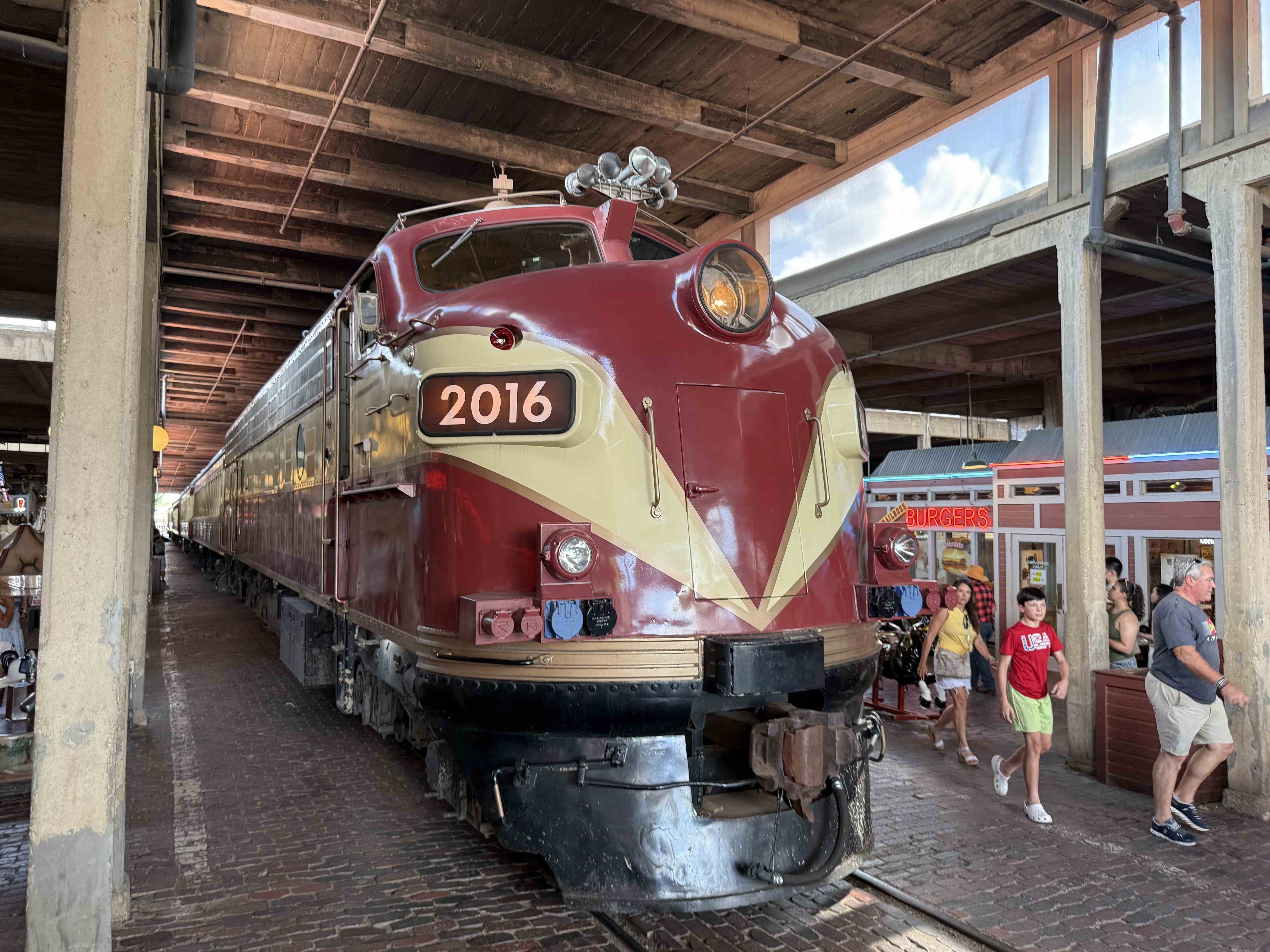
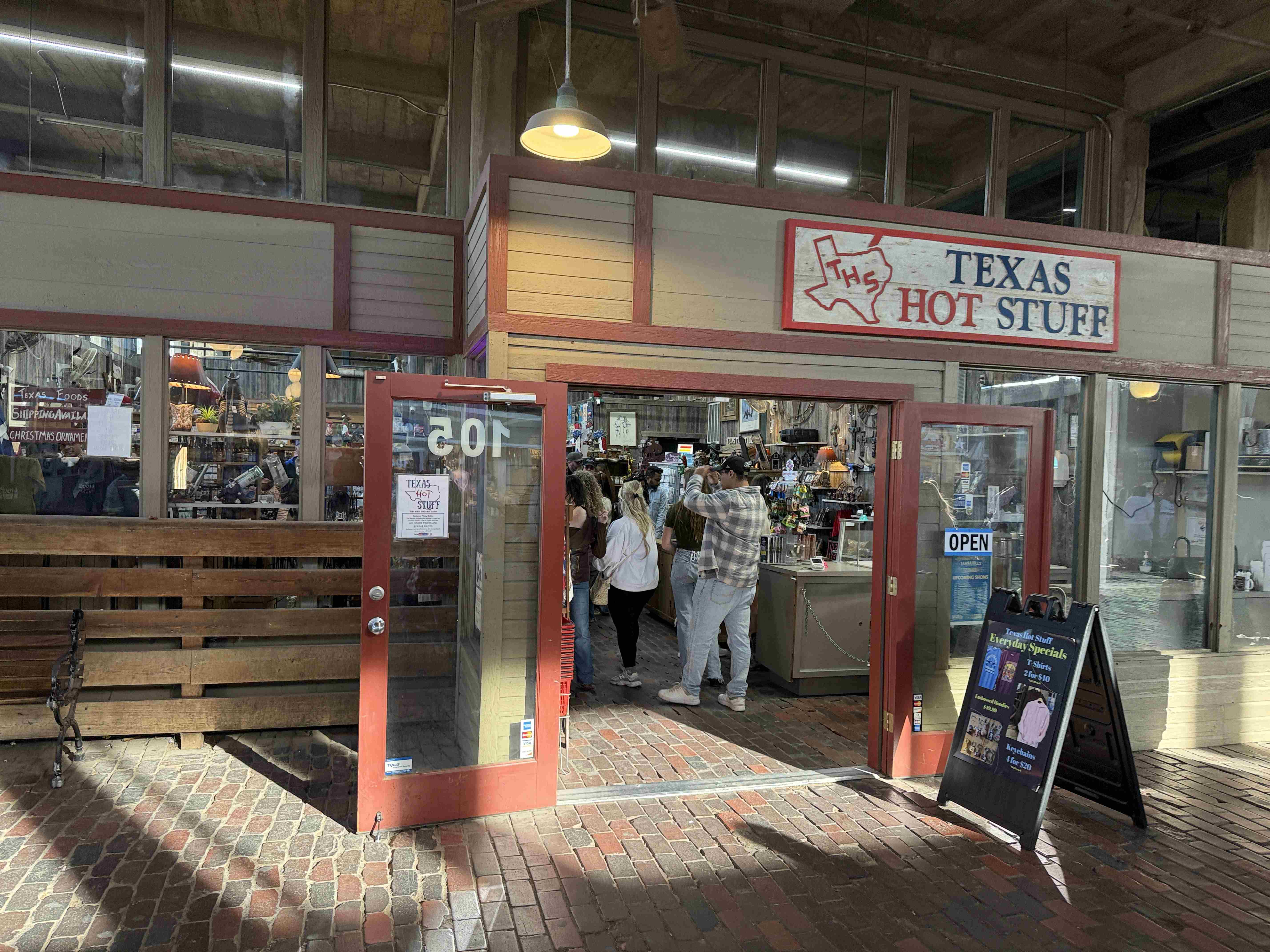
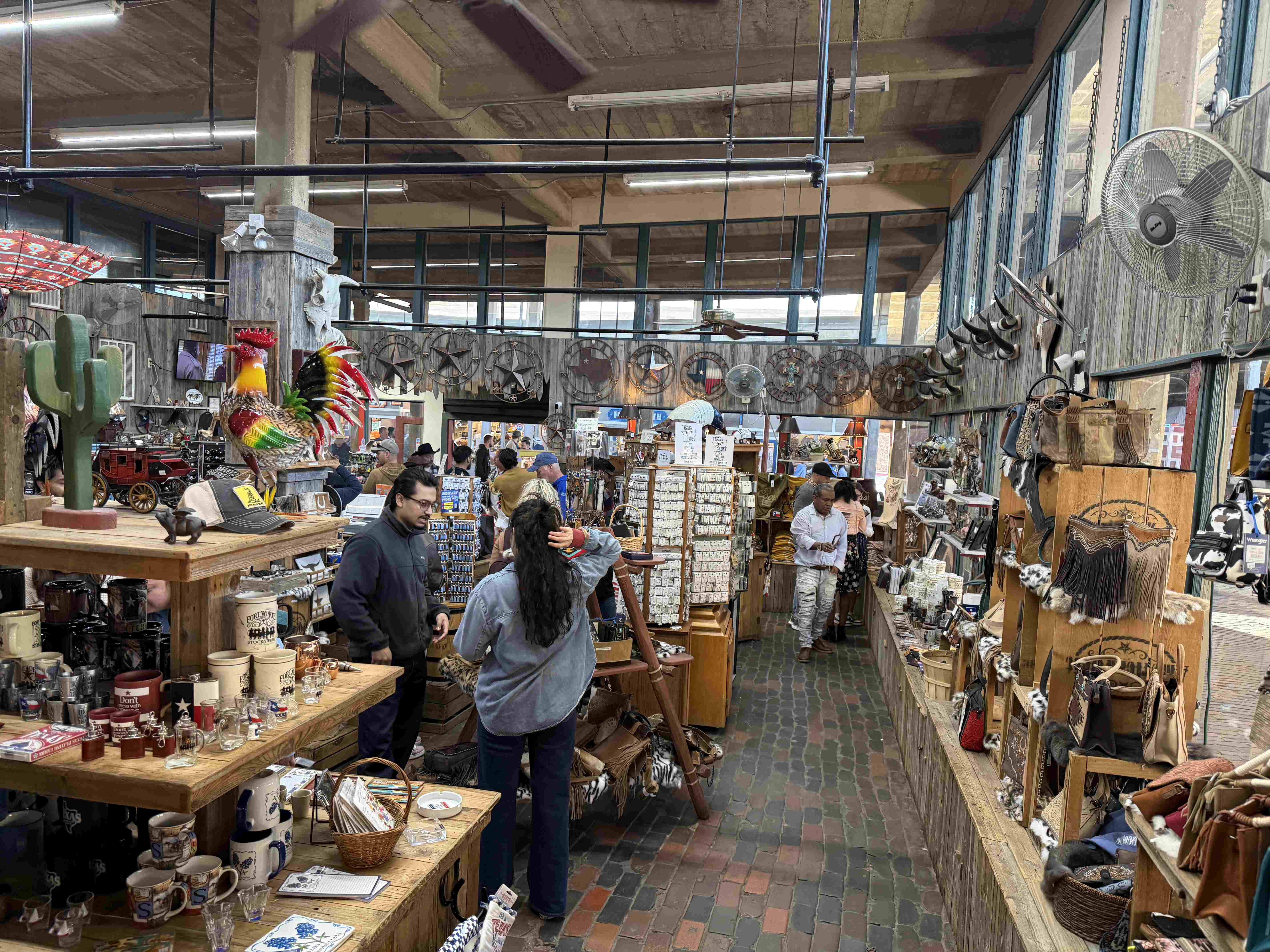
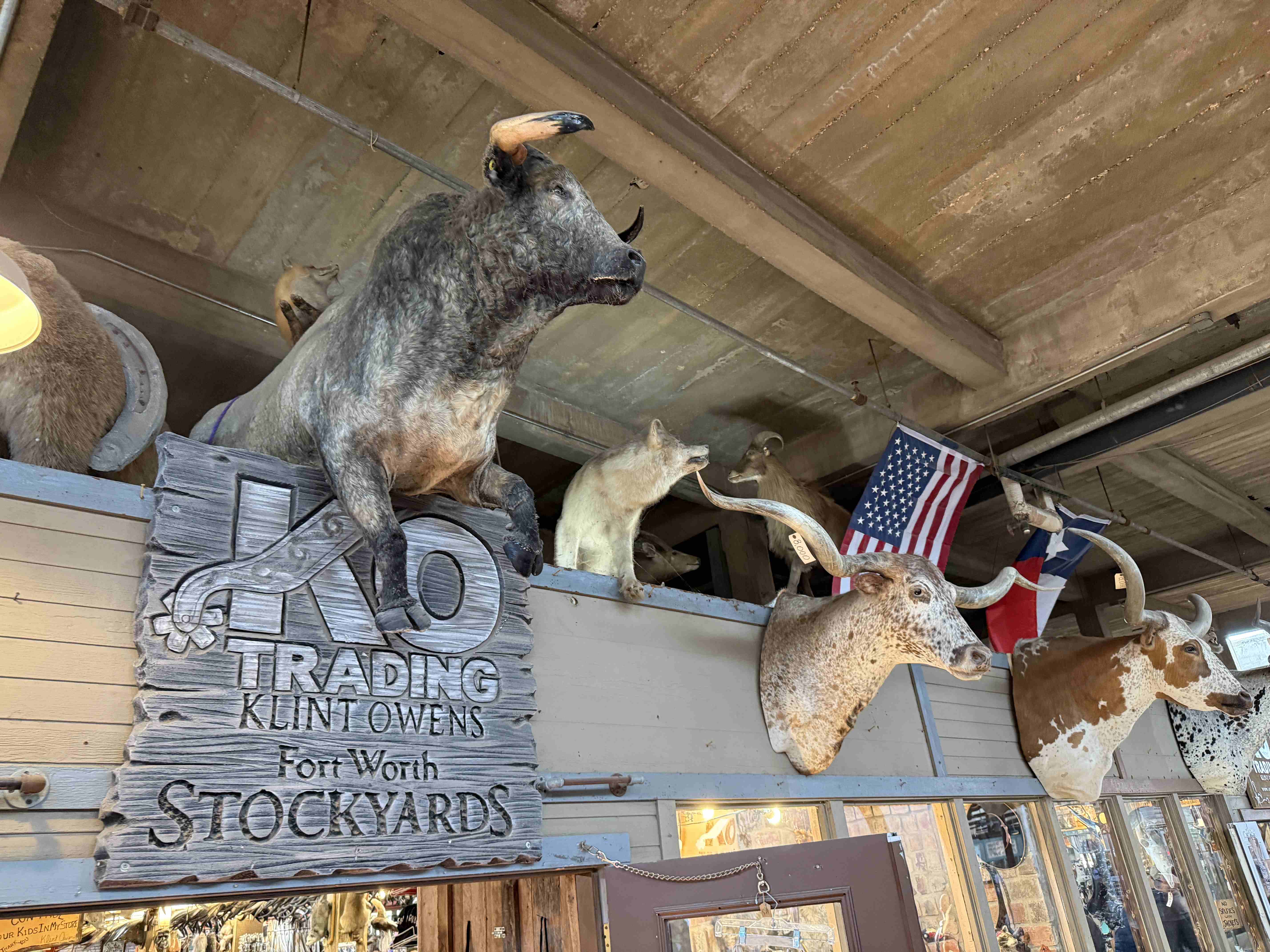
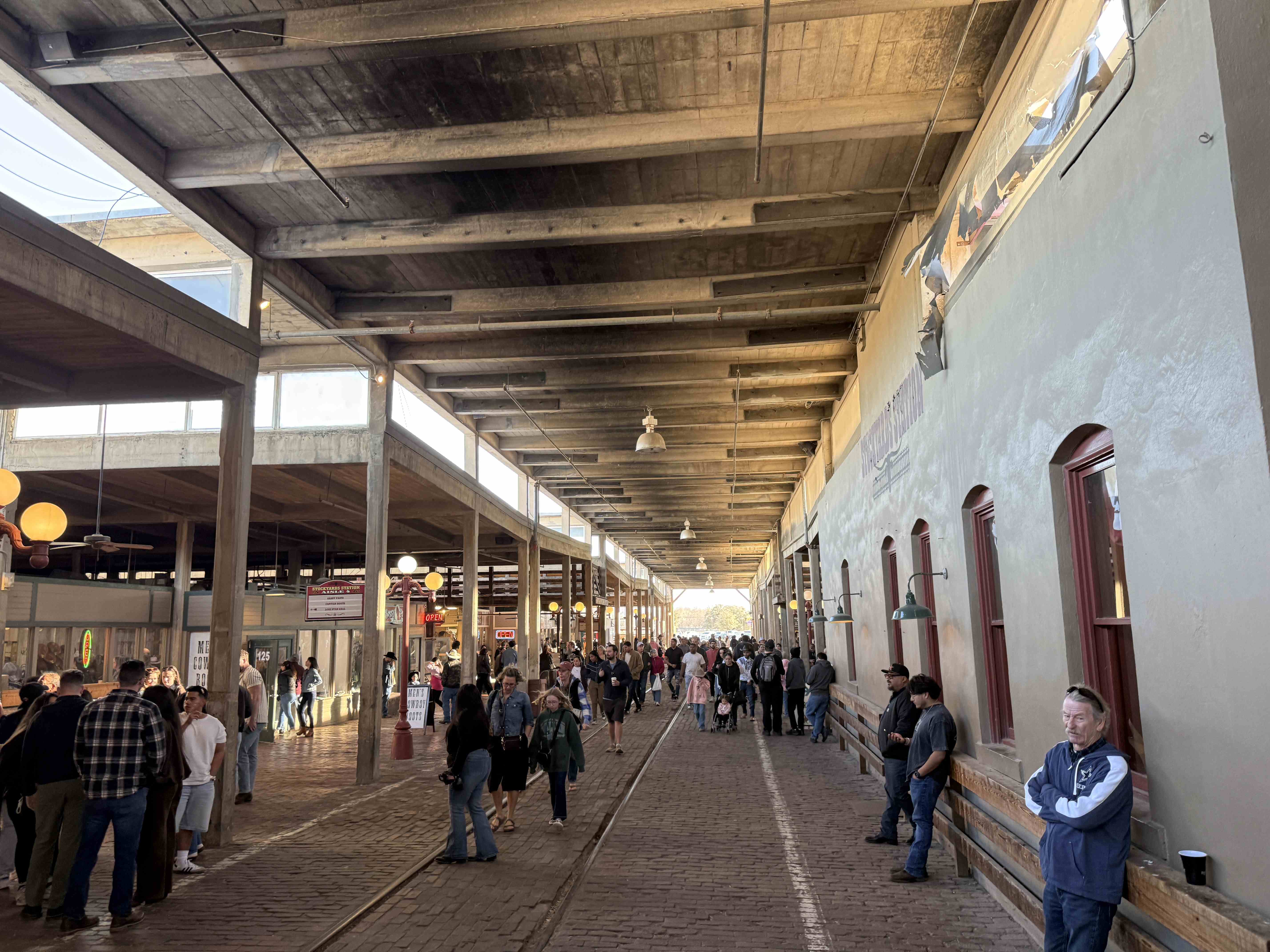
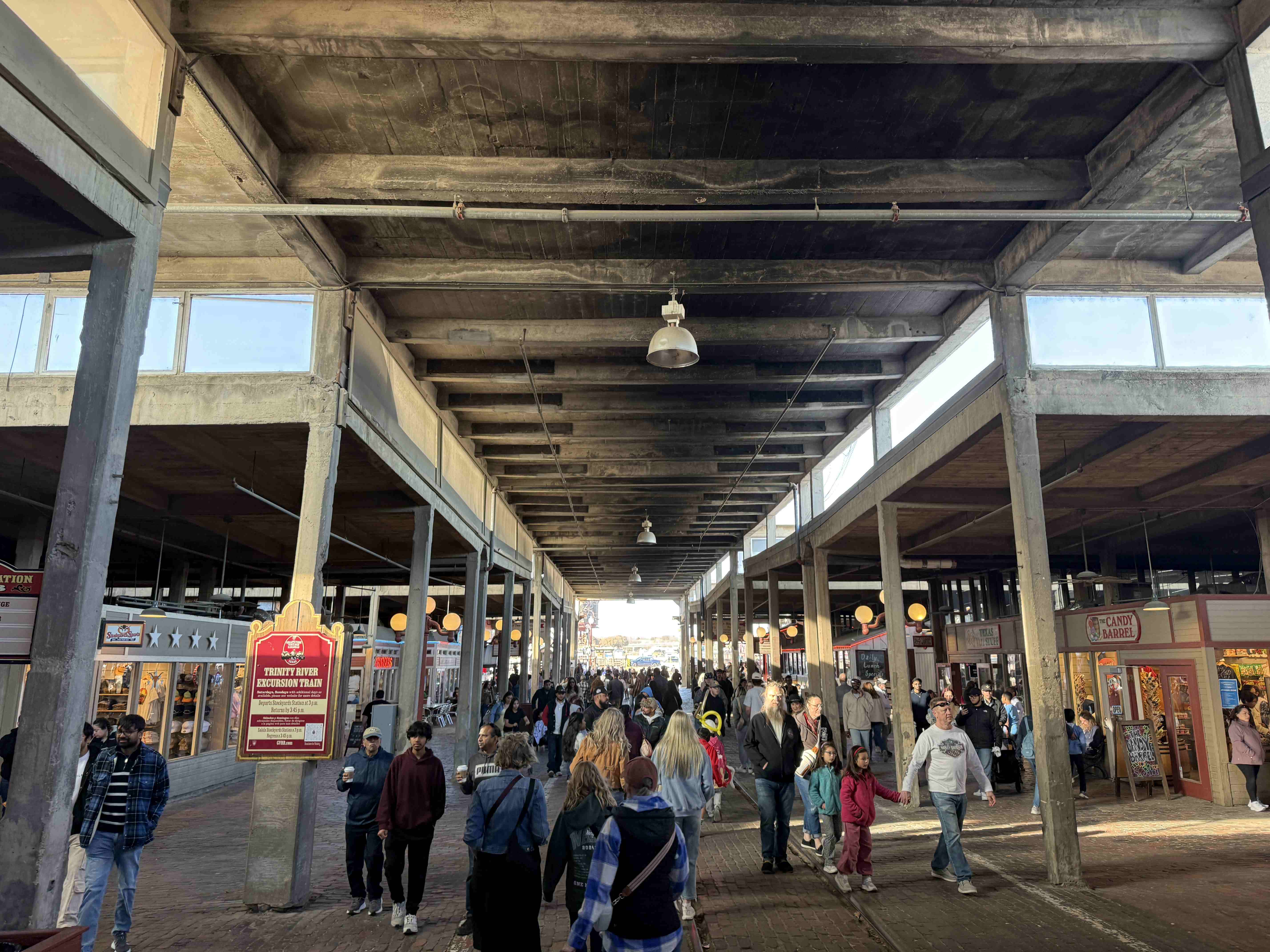
Then there is the former Stockyards Station—and it is important to point out that it was never originally a conventional passenger train station. This concrete and wooden building served as pens for pigs and sheep awaiting processing at the nearby Armour and Swift plants. When Fort Worth's meat industry declined, the pens stood empty—but instead of demolishing them, they were transformed into a shopping and entertainment center.
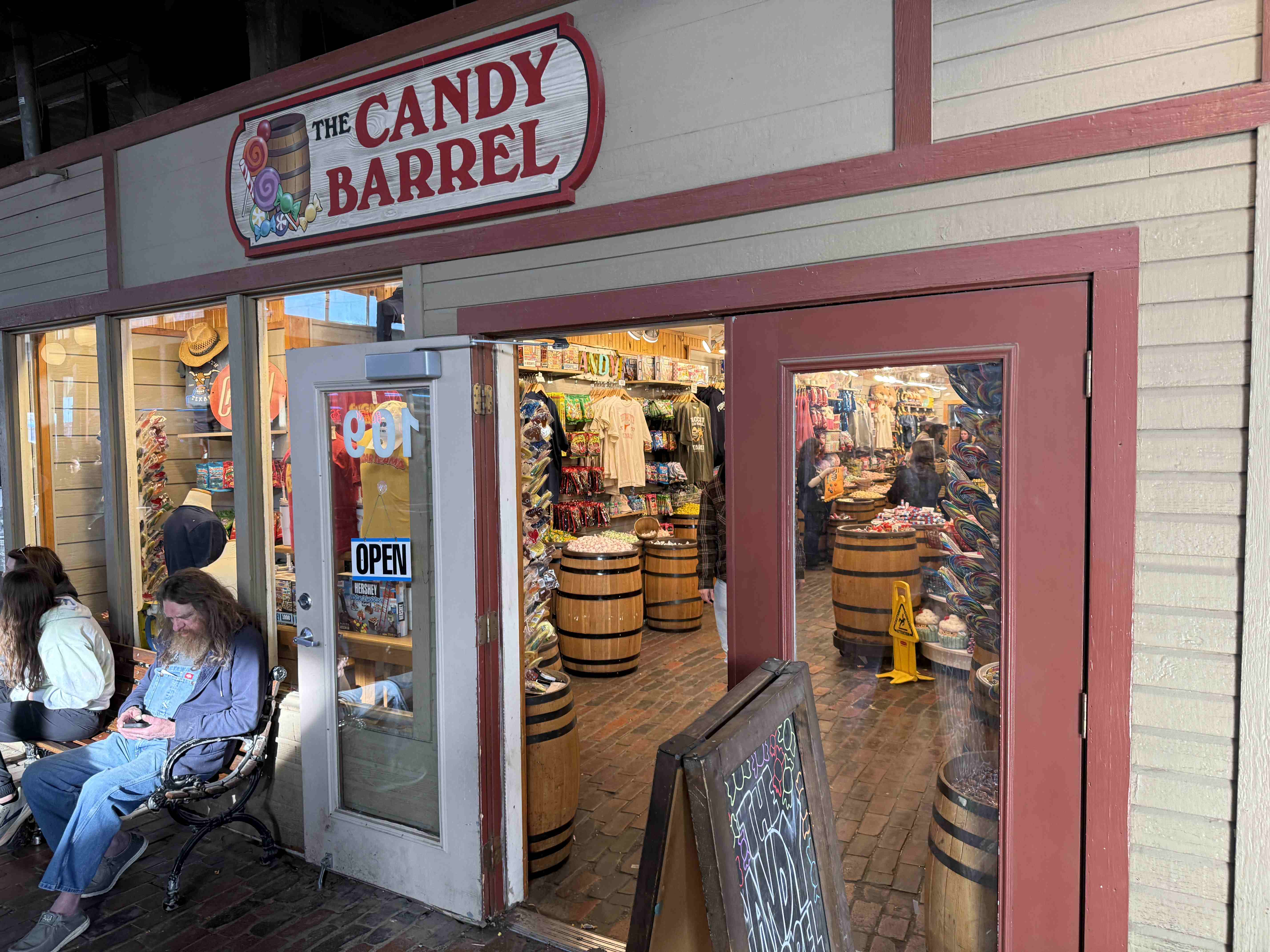
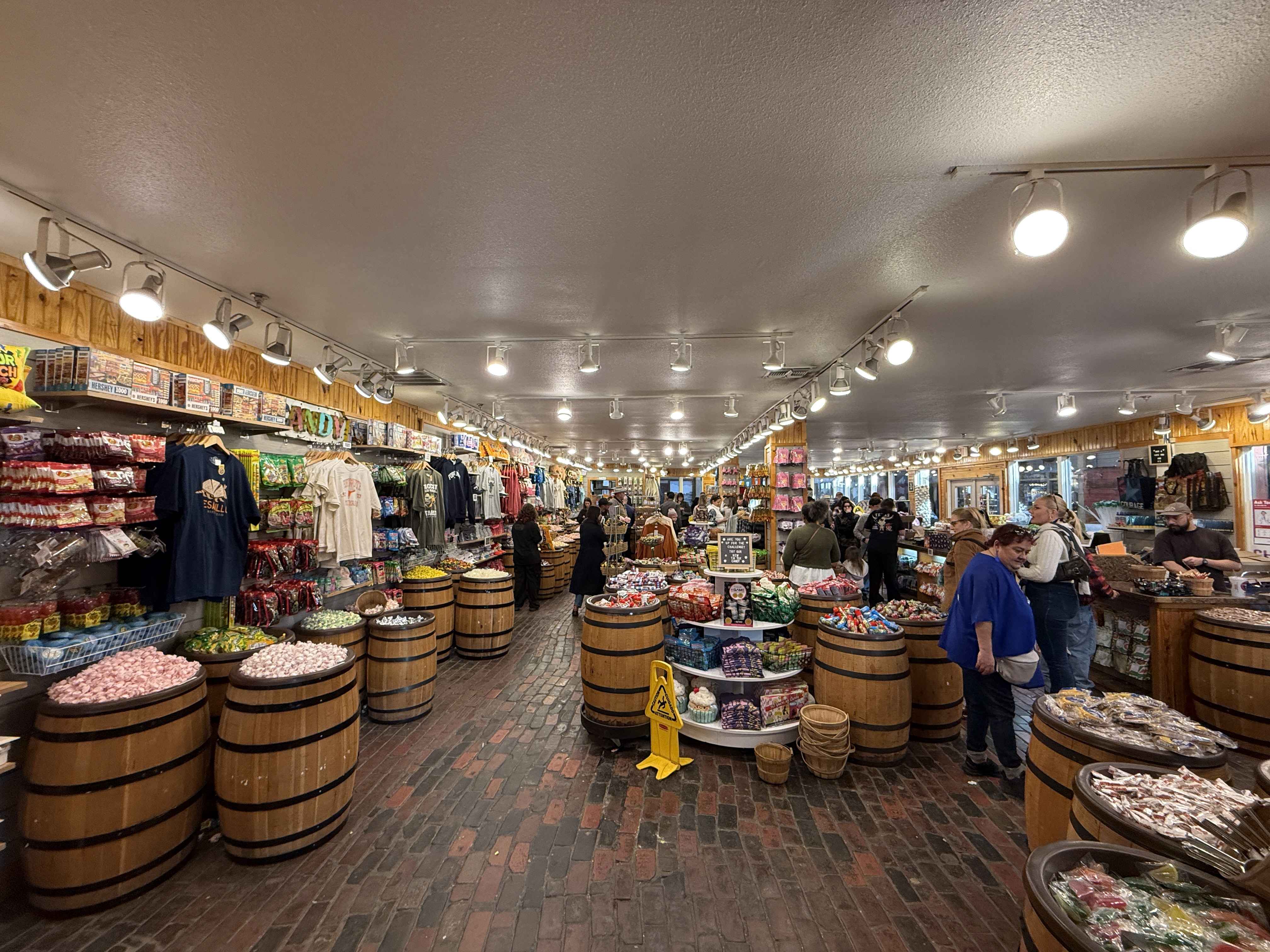
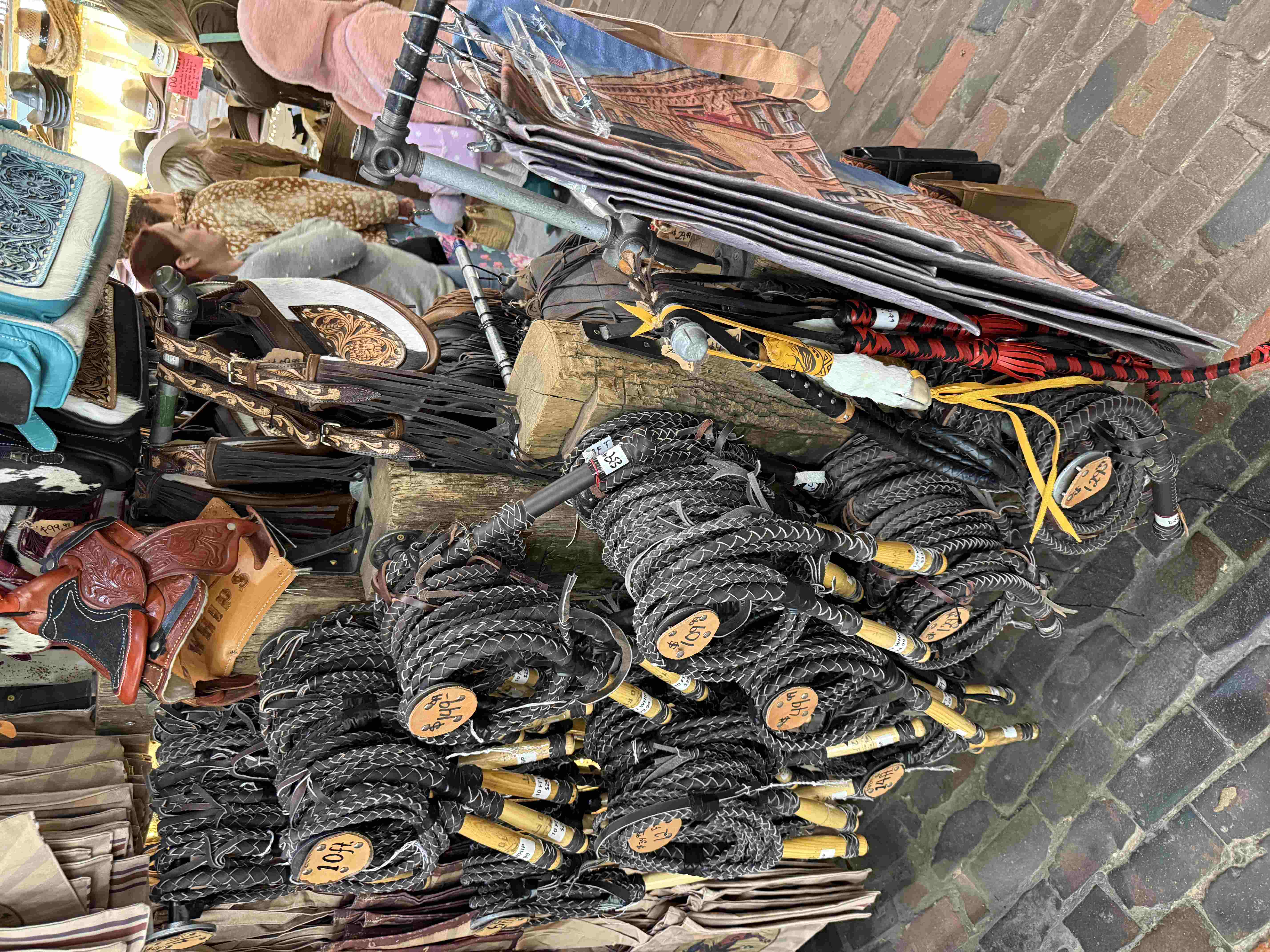
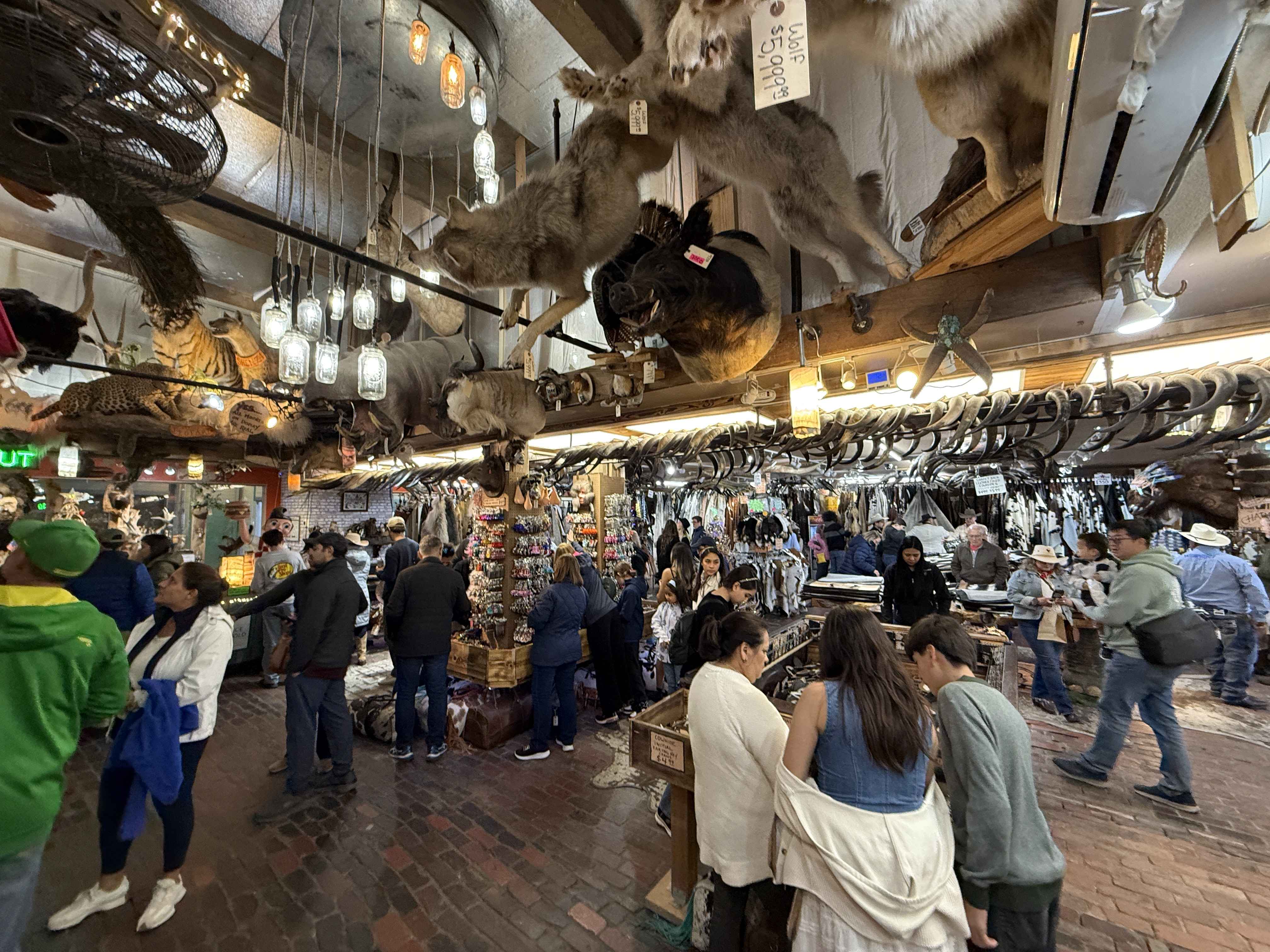
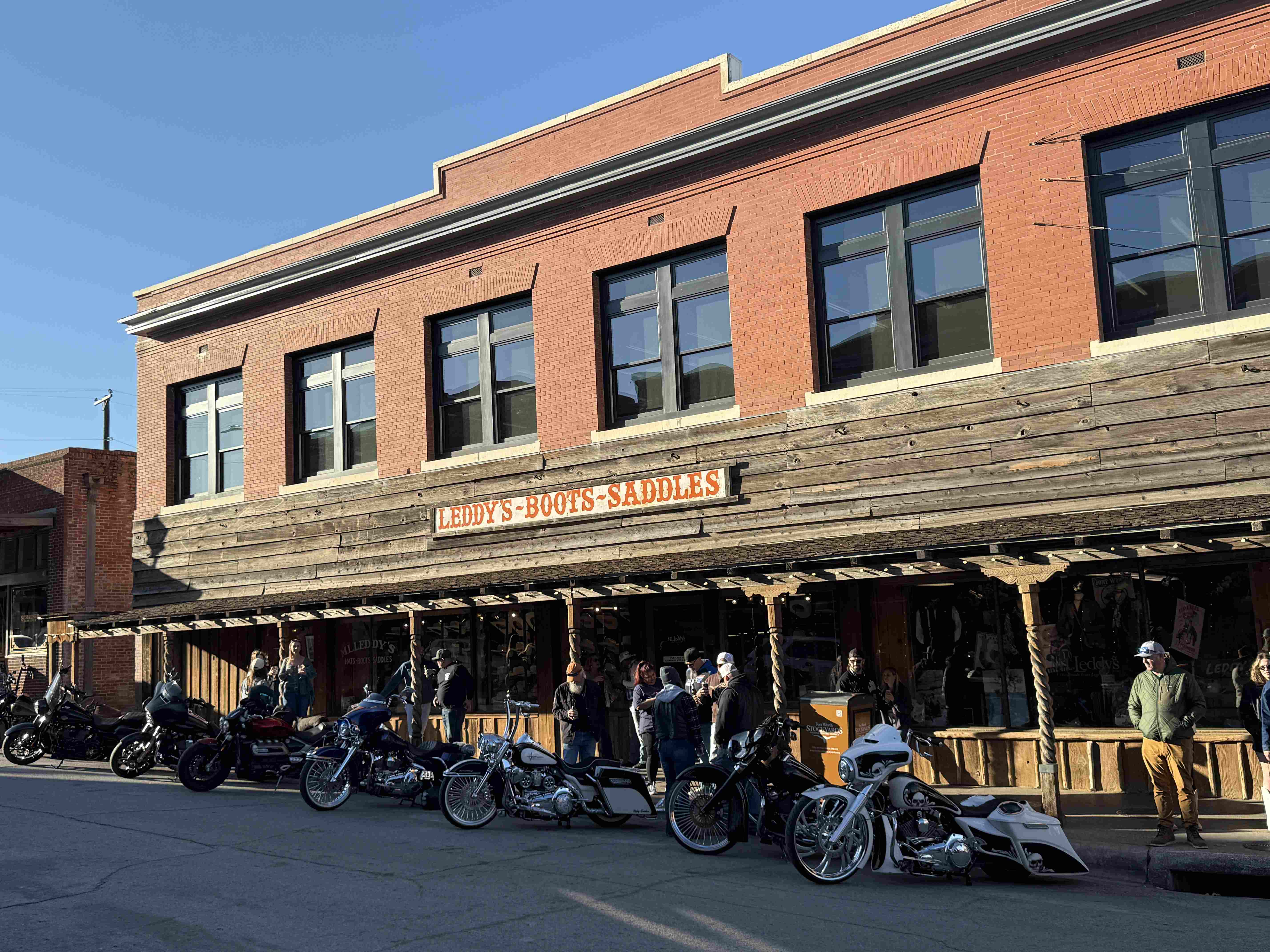
Today, Stockyards Station is the heart of shopping and tourism in the Stockyards. There are more than 20 shops and restaurants selling truly typical cowboy, American, and Texan items—mostly Western-themed. You can buy genuine leather, whips, mugs, old license plates, stuffed toys for children, coloring books, T-shirts, horseshoes, cowboy hats—basically anything you can imagine. Everything is heavily themed around cowboy culture and horses. Of course, children will also find plenty to enjoy, as there are entire stores full of sweets and candy.
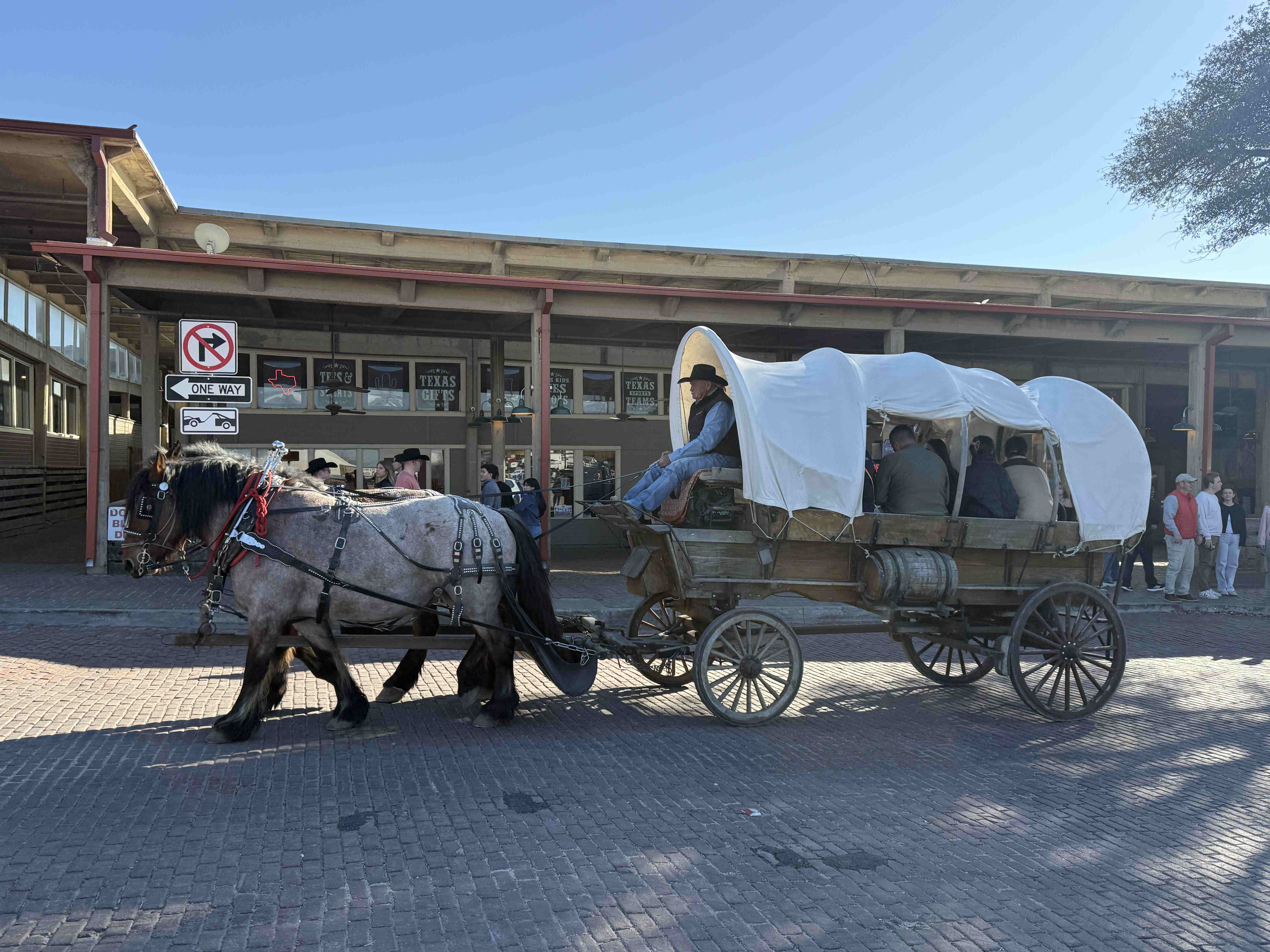
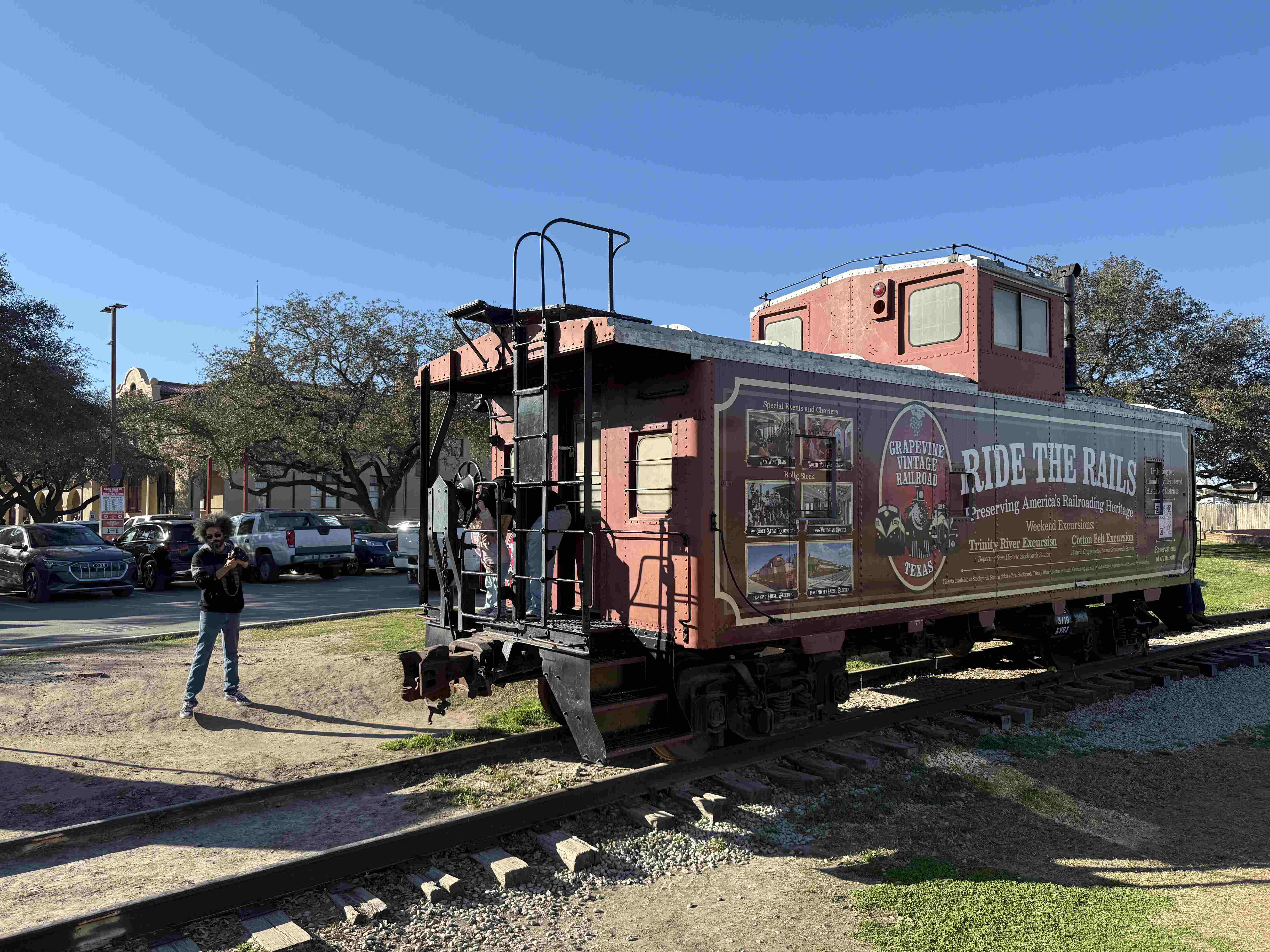
And what is really great—the train still runs to the station. The Grapevine Vintage Railroad offers sightseeing rides along the historic line, which is another beautiful experience. There are also horse-drawn carriages and period wagons—simply all those typical Wild West things. Once, I even saw people grilling and cooking by old cowboy wagons (chuck wagons), just like old-time cowboys on the prairie.
Hotel Drover— Luxury Inspired by the Cowboy Spirit
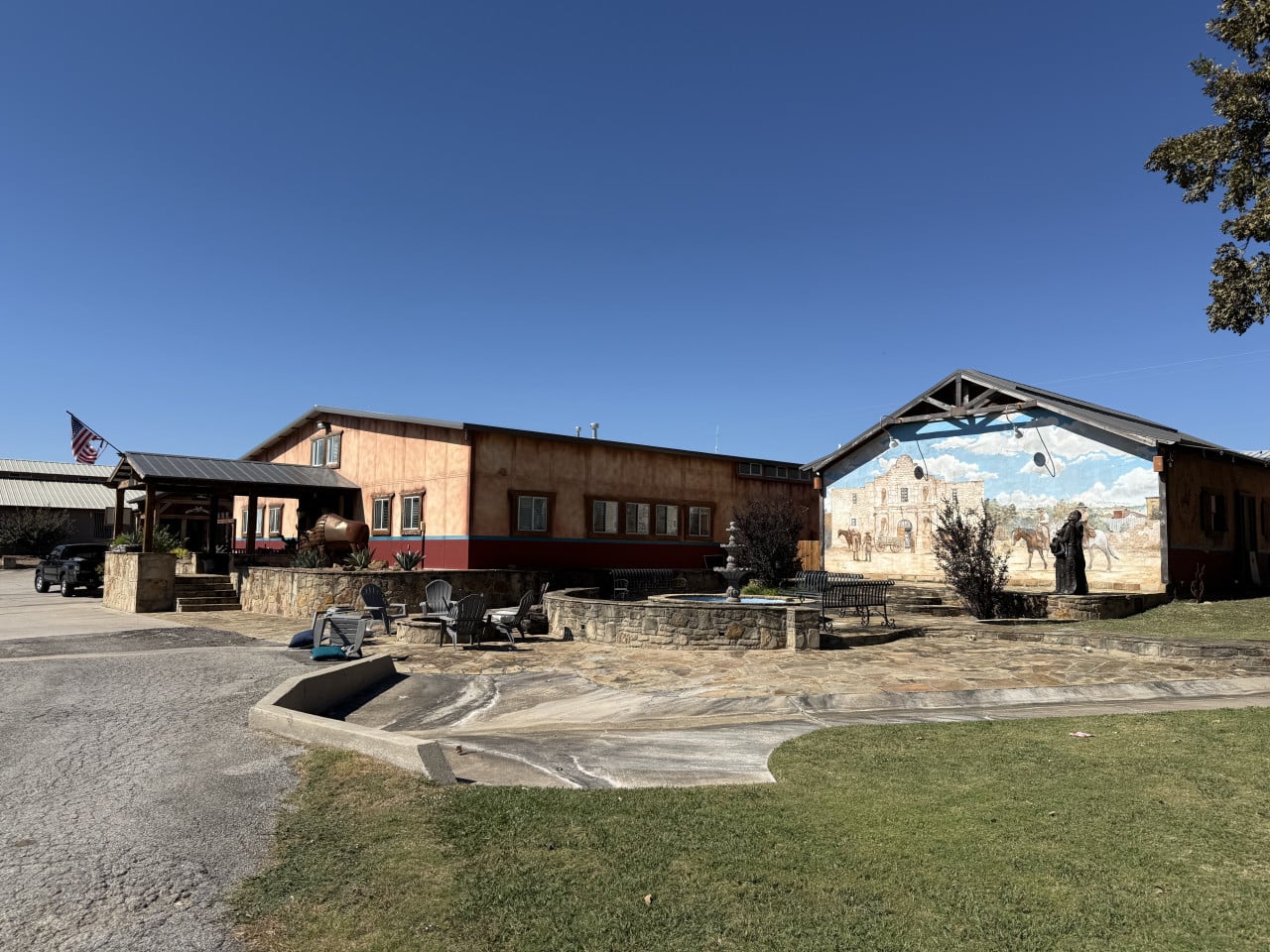
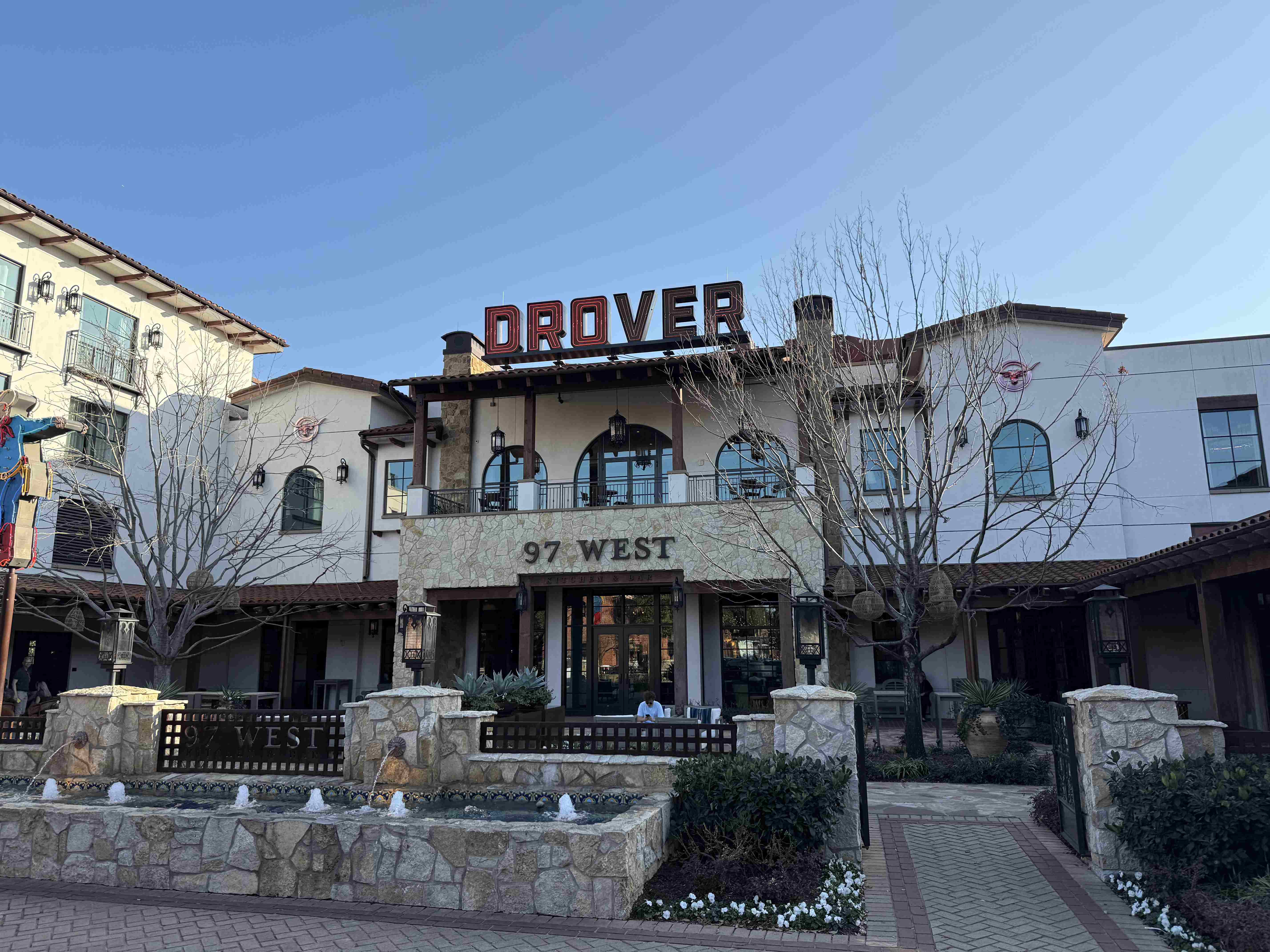
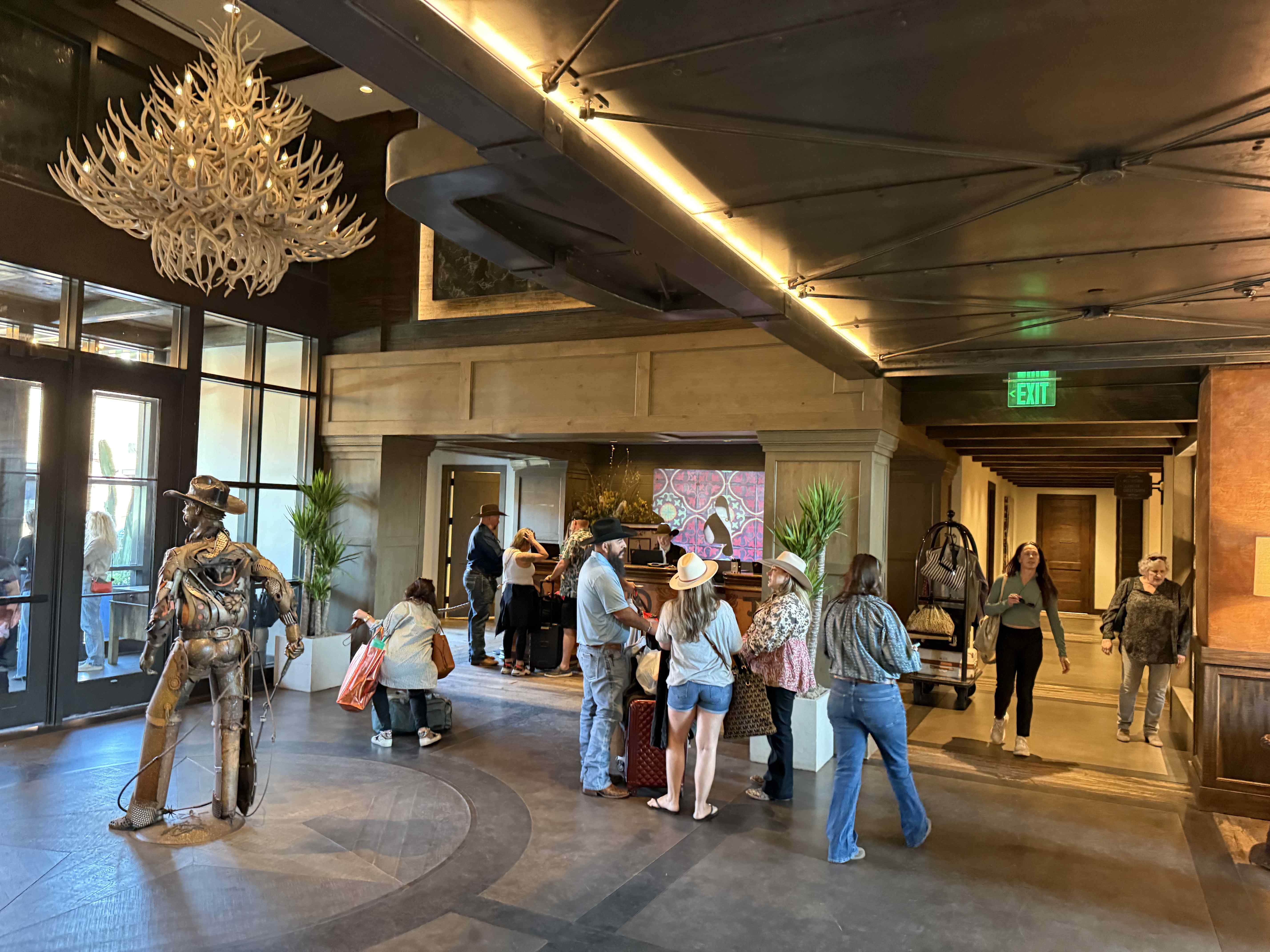
Another interesting place is Hotel Drover. The hotel opened in March 2021 as part of a massive $175 million revitalization of the Stockyards and is named after the legendary cowboys—“drovers”—who drove cattle across the plains to market. It is a 200-room Marriott Autograph Collection hotel that combines rustic Western style with modern luxury.
The hotel stands at the end of Mule Alley—beautifully restored horse and mule barns more than 100 years old that have been transformed into a street full of restaurants, boutiques, and stores from brands such as Lucchese (the famous cowboy boot maker) and Ariat. The hotel has received awards from Travel + Leisure, Condé Nast Traveler, and the MICHELIN Guide. It has a beautiful courtyard with a pool, hot tub, and fire pits, and at check-in you even receive a leather luggage tag on which your initials are branded by the fire in the evening.
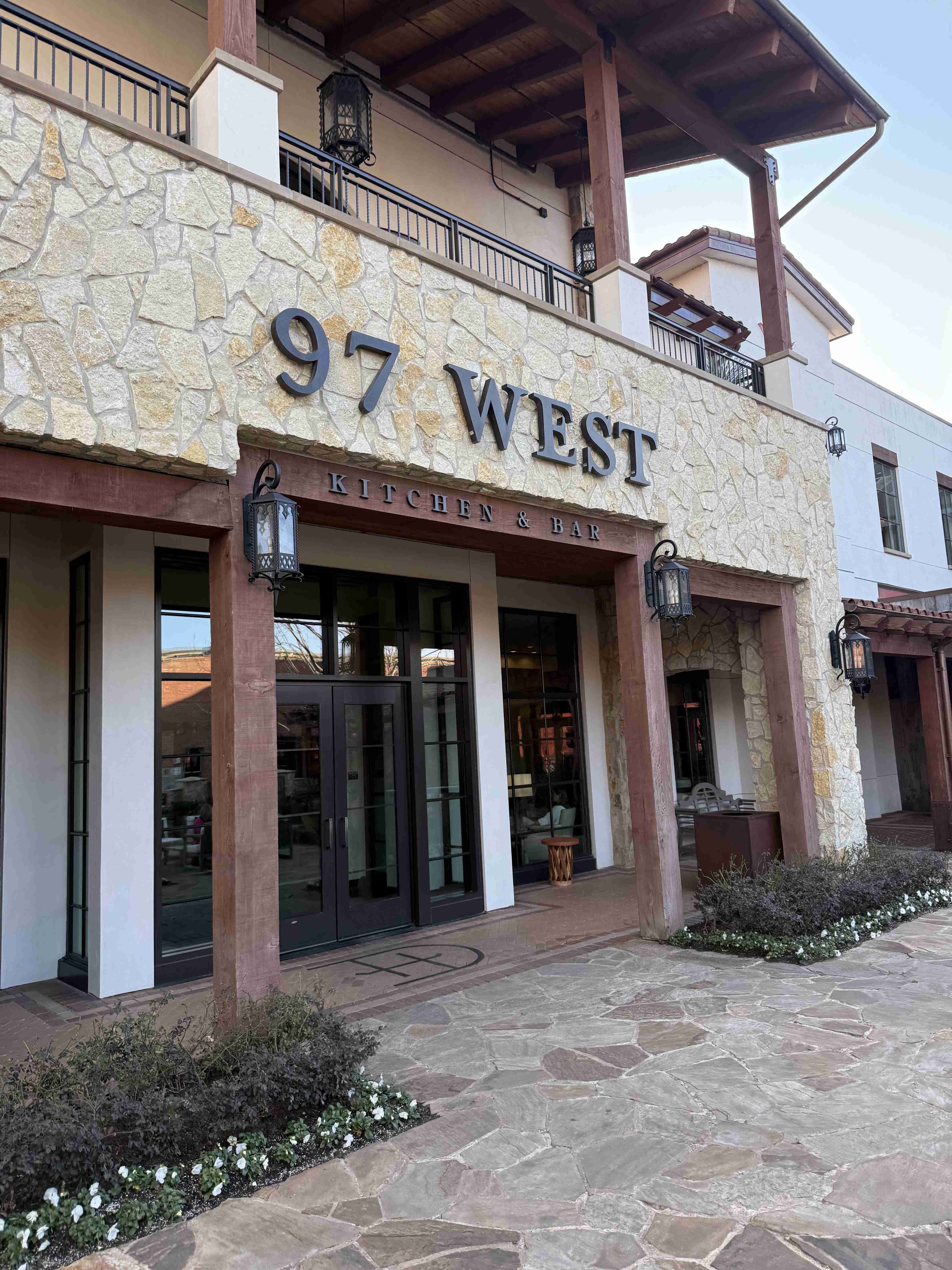
At 97 West Kitchen & Bar, the hotel's restaurant, they serve premium steaks made from Texas beef and ranch-style cuisine. It is a great place for dinner.
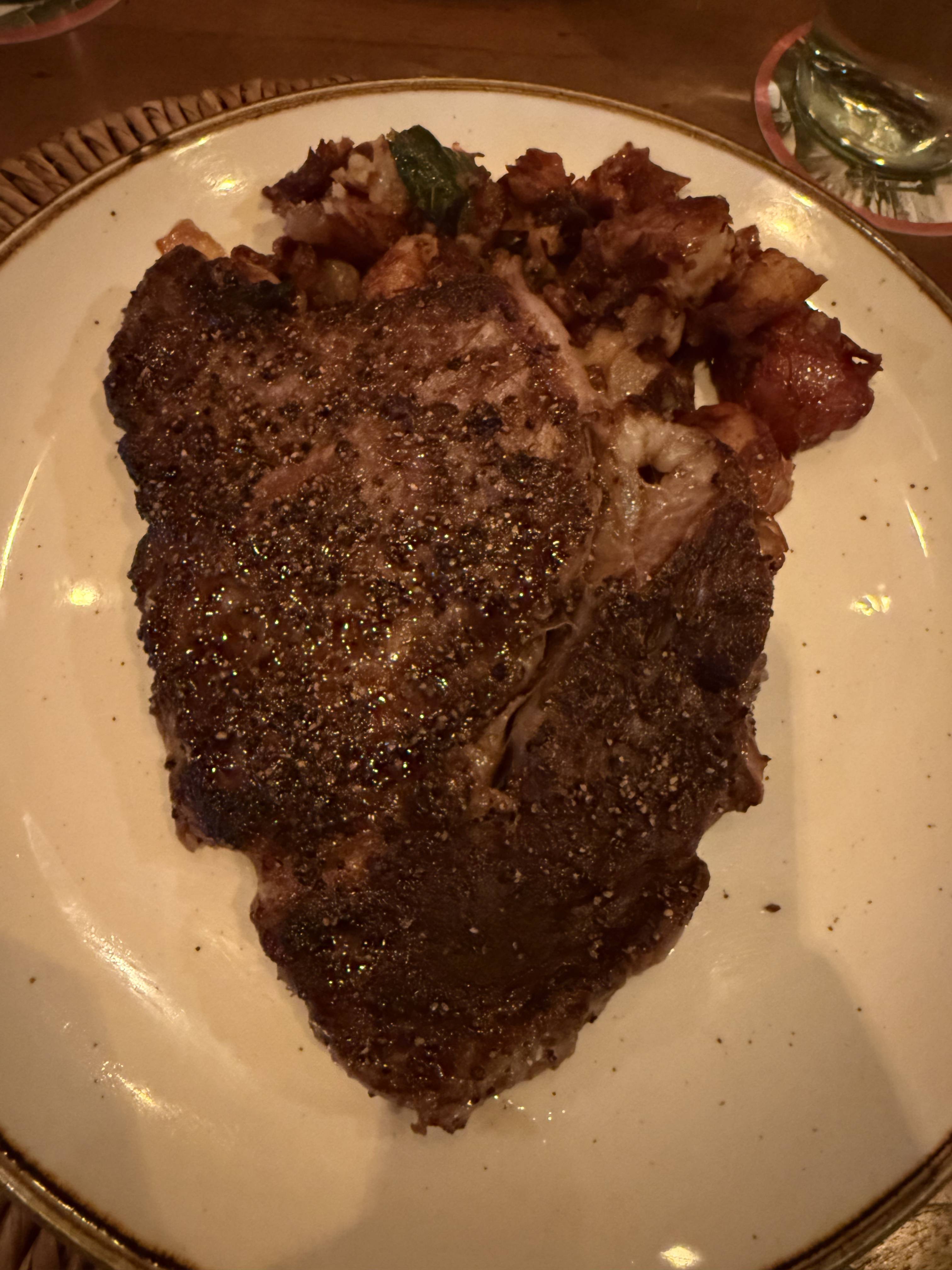
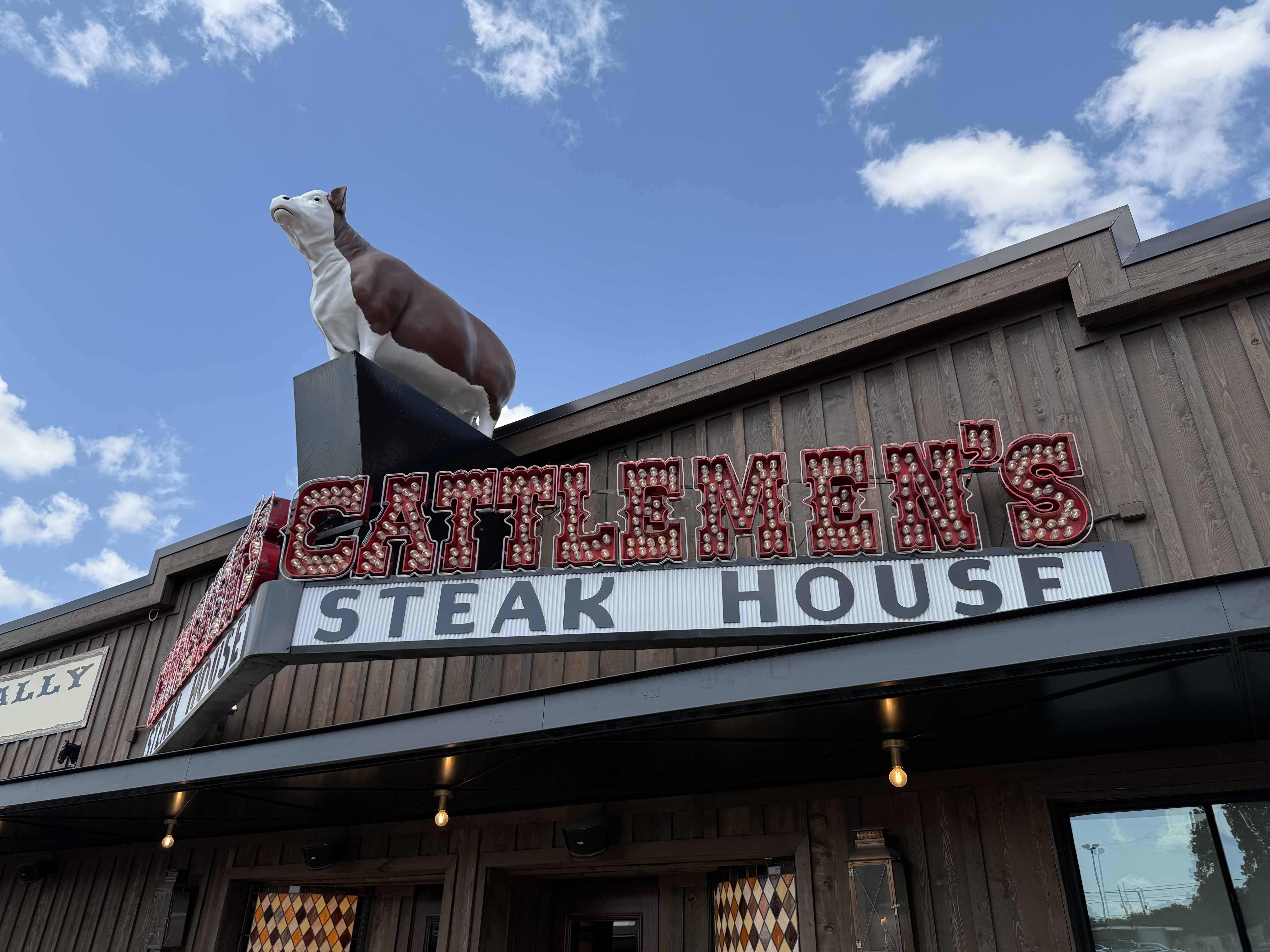
Where to Get a Steak—Cattleman's Steakhouse and H3 Ranch
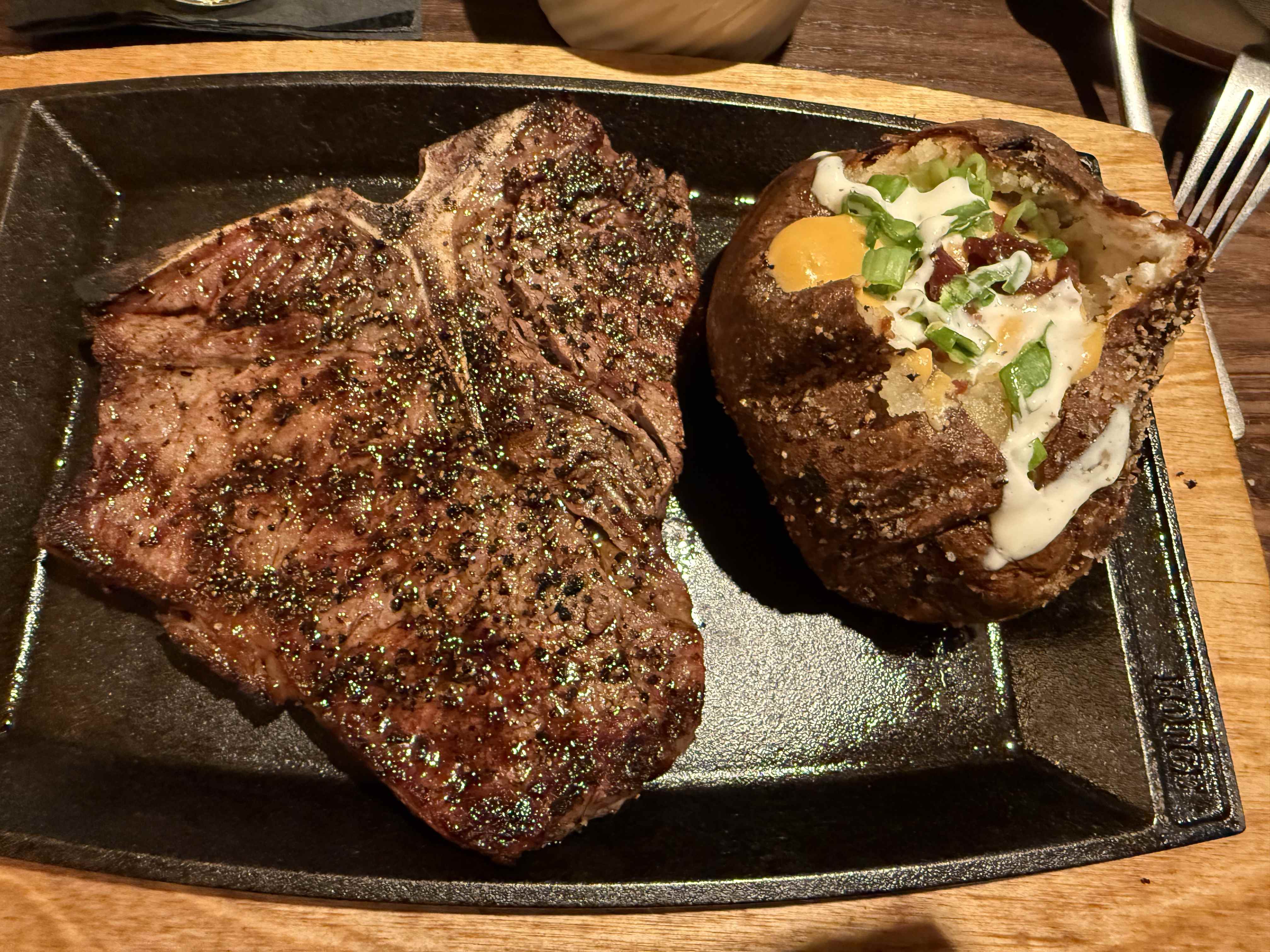
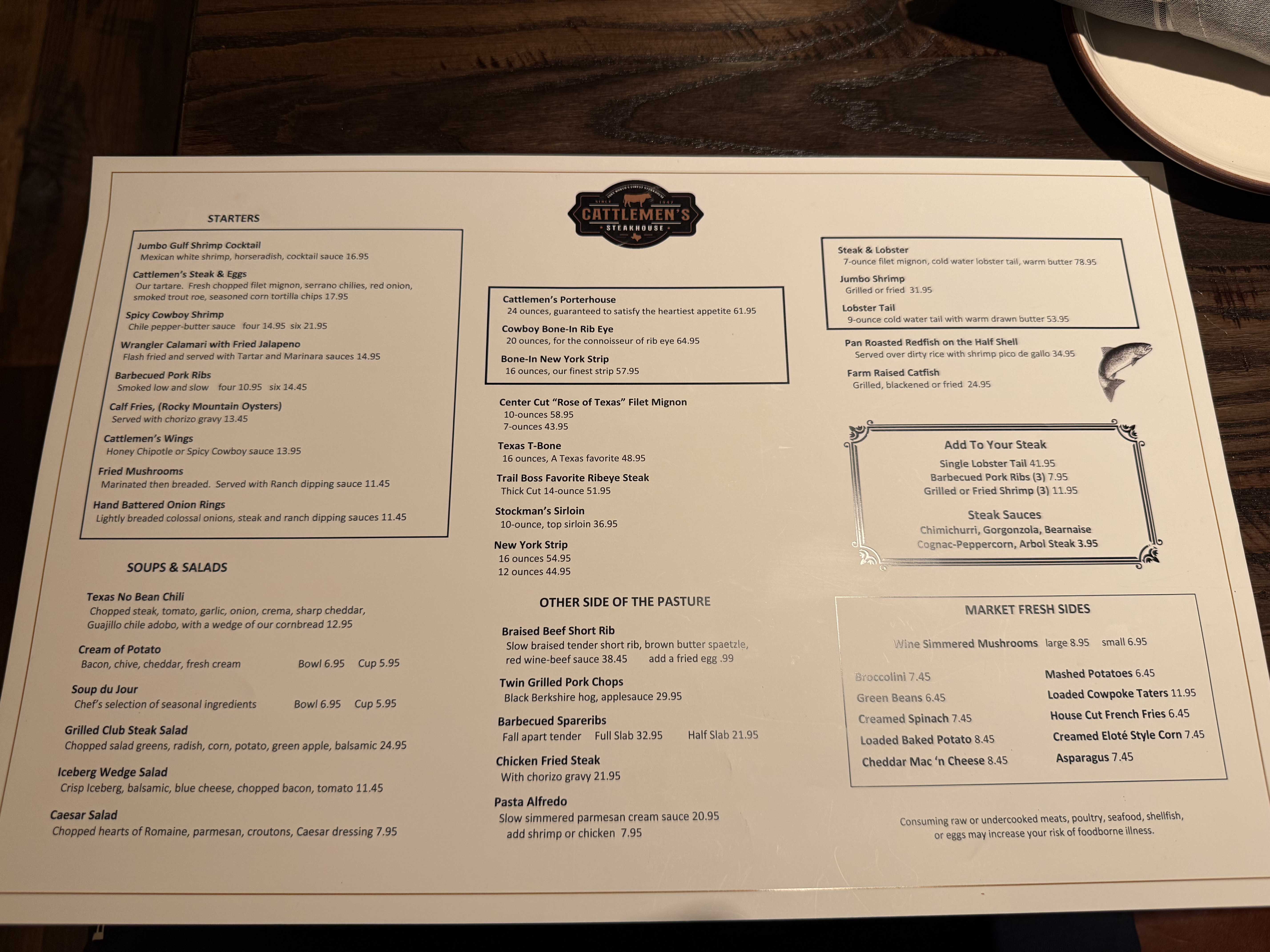
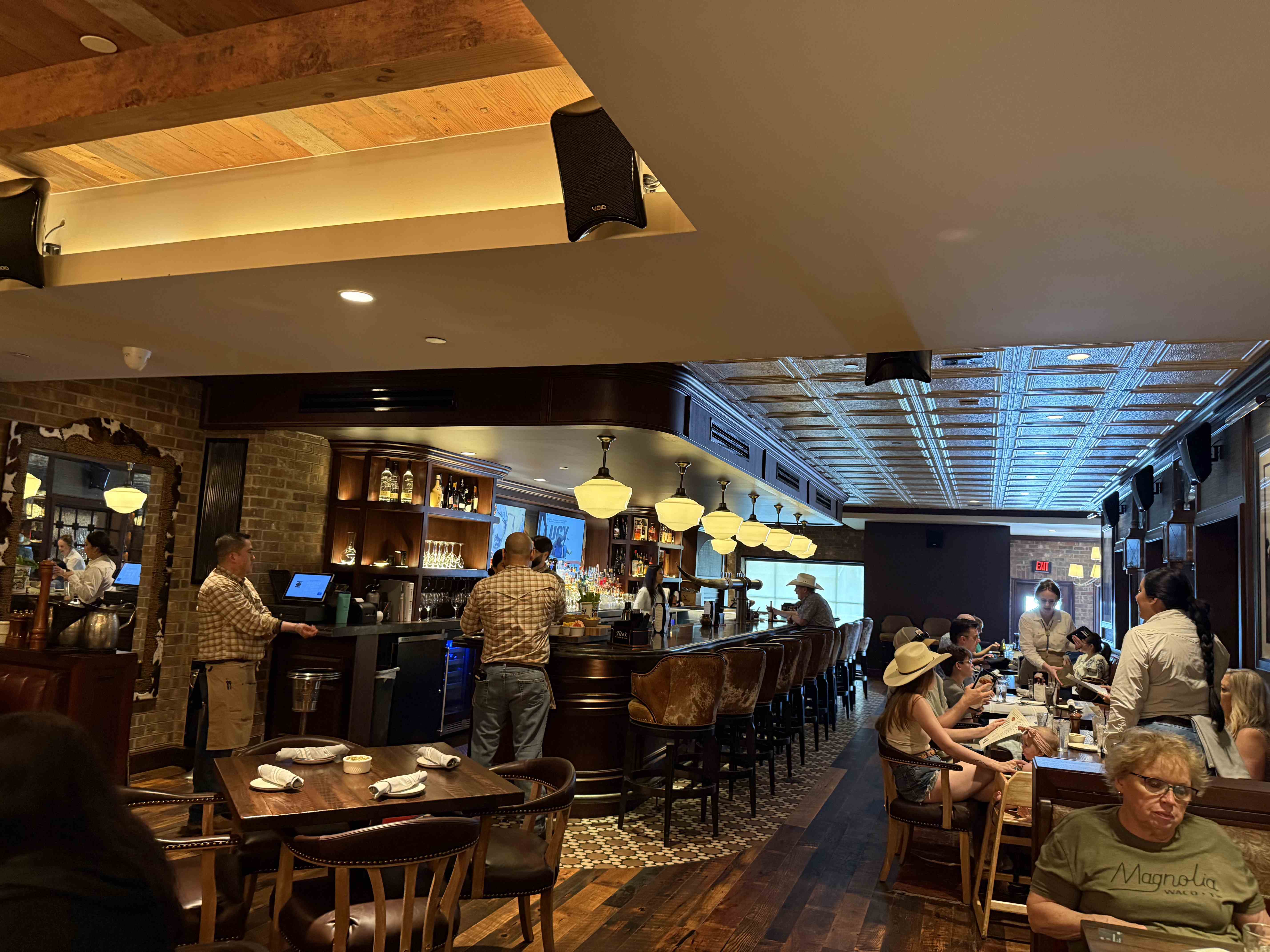
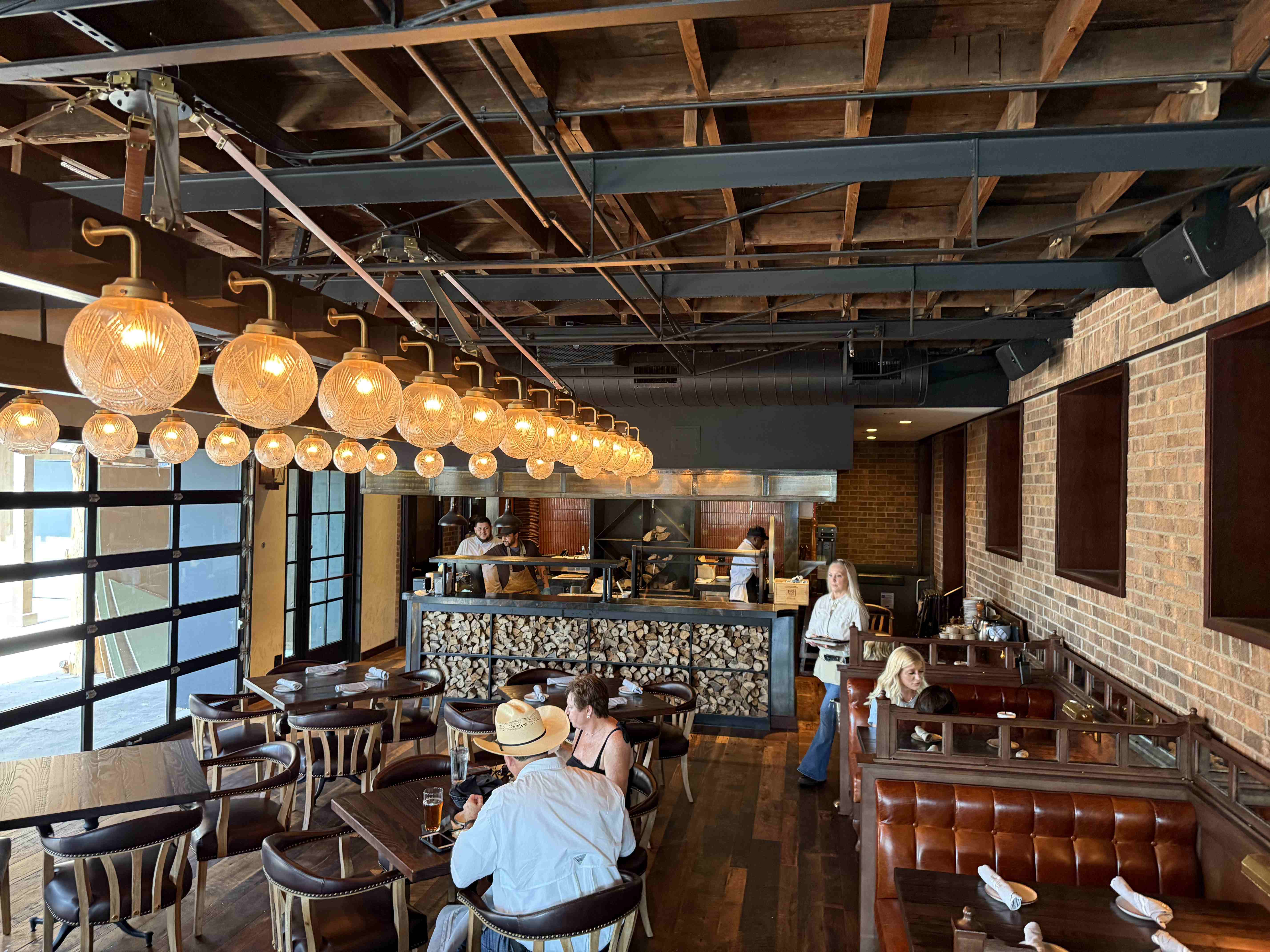
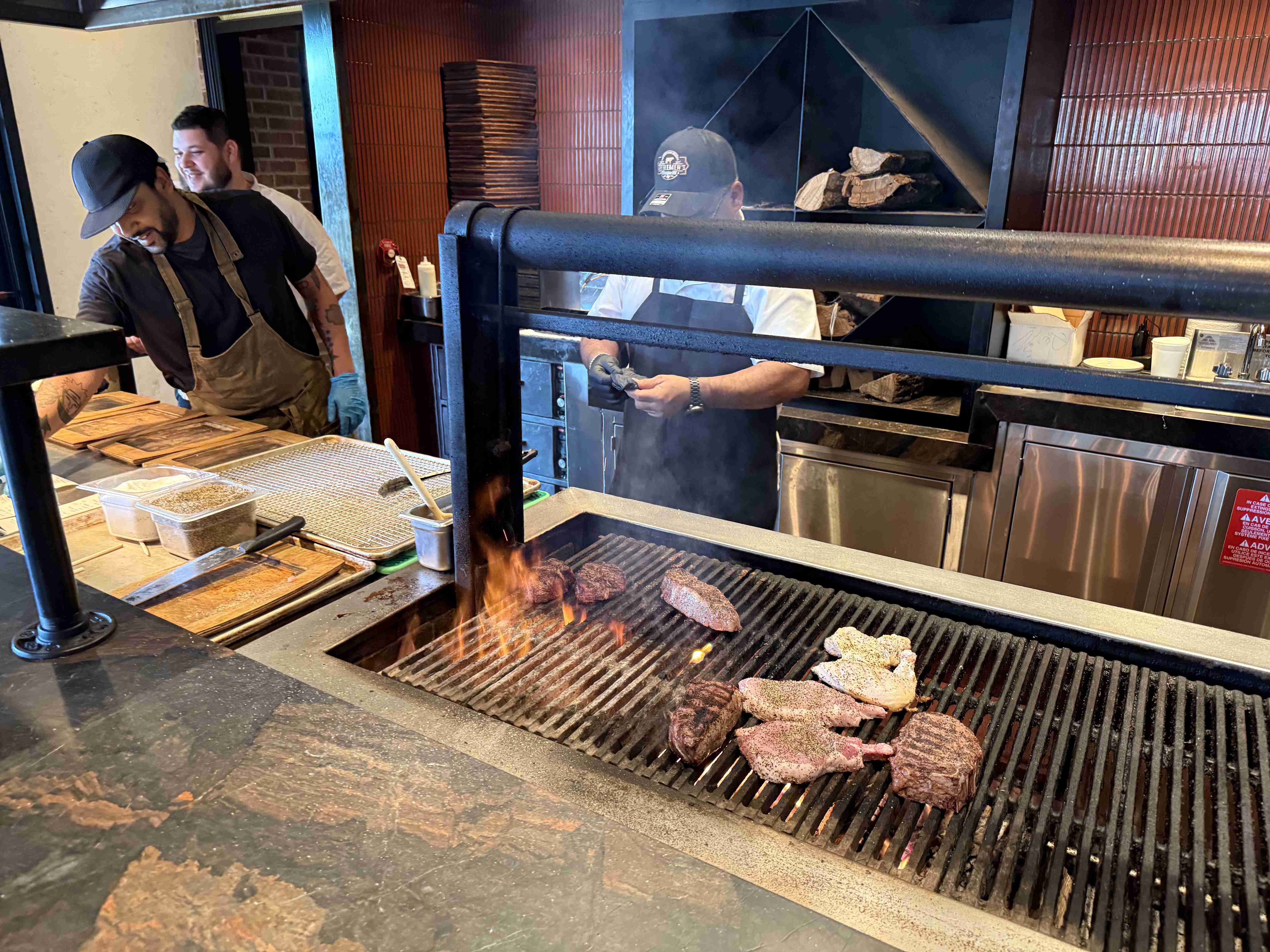
Since I am talking about restaurants, I definitely have to mention Cattleman's Steakhouse. In my opinion, it is the most renowned steakhouse in the Stockyards. What I really love is that you can watch them grill the meat over an open fire. That is a spectacle in itself. But I definitely recommend making a reservation, because you have no chance of getting in without one—especially around the cattle drives, when the longhorns are passing through, as it gets completely packed.
Then there is H3 Ranch—I have not eaten there yet, I only went in to take a look, and it looks really nice. H3 is part of the historic Stockyards Hotel, which has stood here since 1907 and whose history dates back to 1897, when businessman T.M. Thannisch built the original wooden structure.
White Elephant Saloon—a Legend of the Wild West
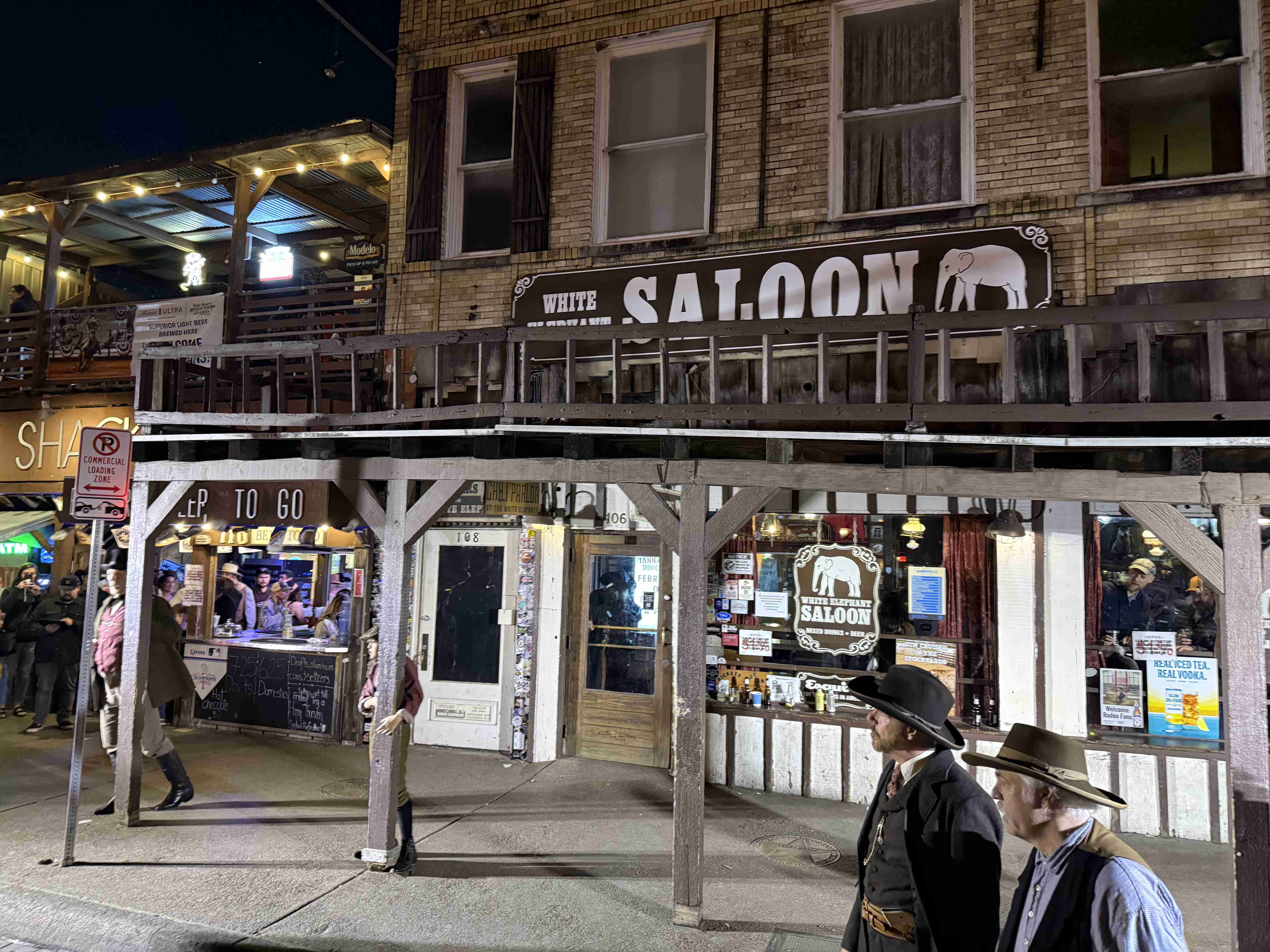
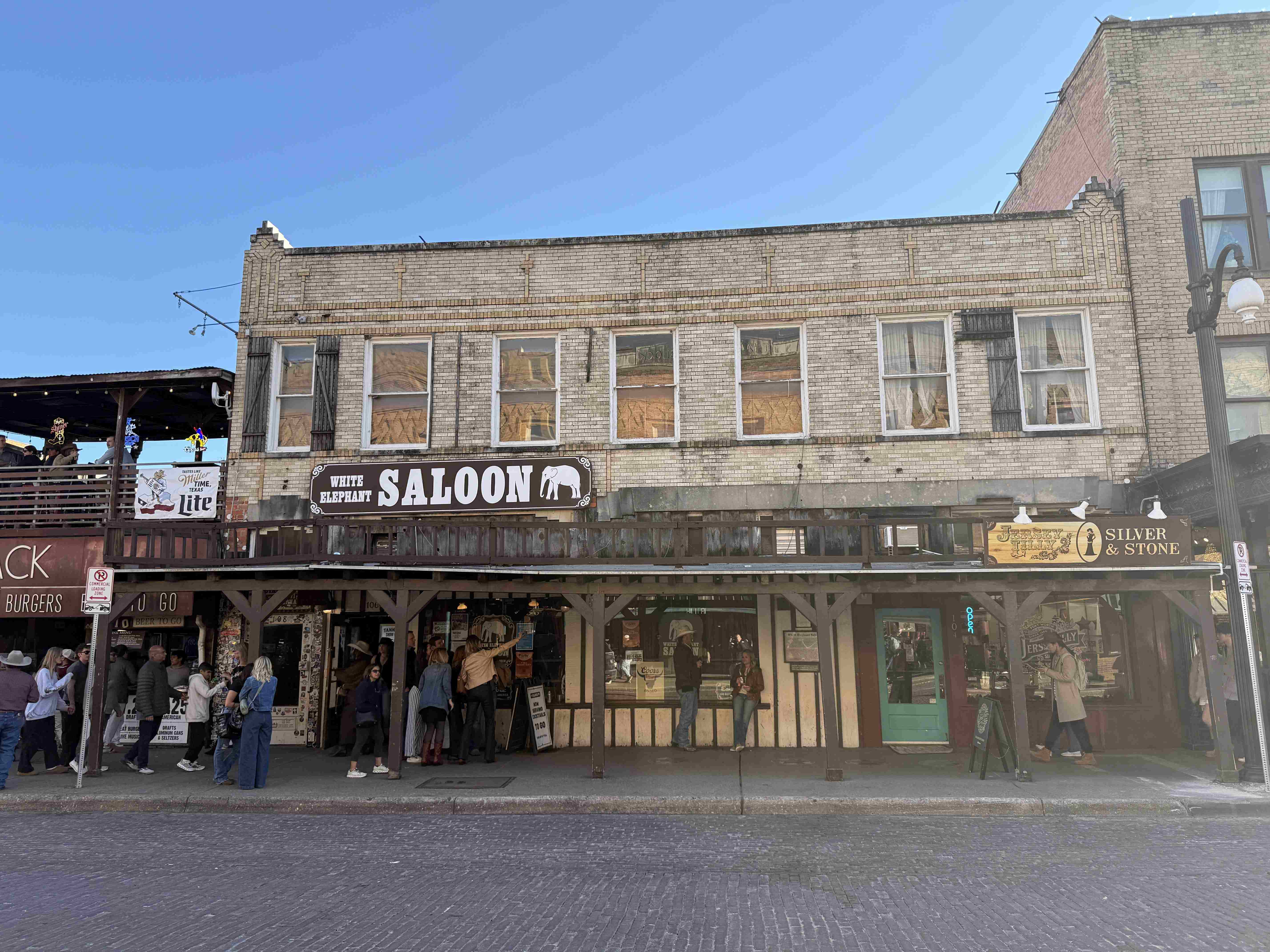
And now for the best part—the White Elephant Saloon. This place completely blows me away.
The White Elephant Saloon is the oldest honky-tonk in Texas, and its history dates back to 1884, when it was founded by legendary gambler and gunfighter Luke Short in what was then Fort Worth's most dangerous district, known as Hell's Half Acre. The saloon was the first establishment in the southwestern USA to combine a bar and a first-class restaurant under one roof. It offered luxurious surroundings for gambling, dining, and drinking, and helped put Fort Worth on the map.
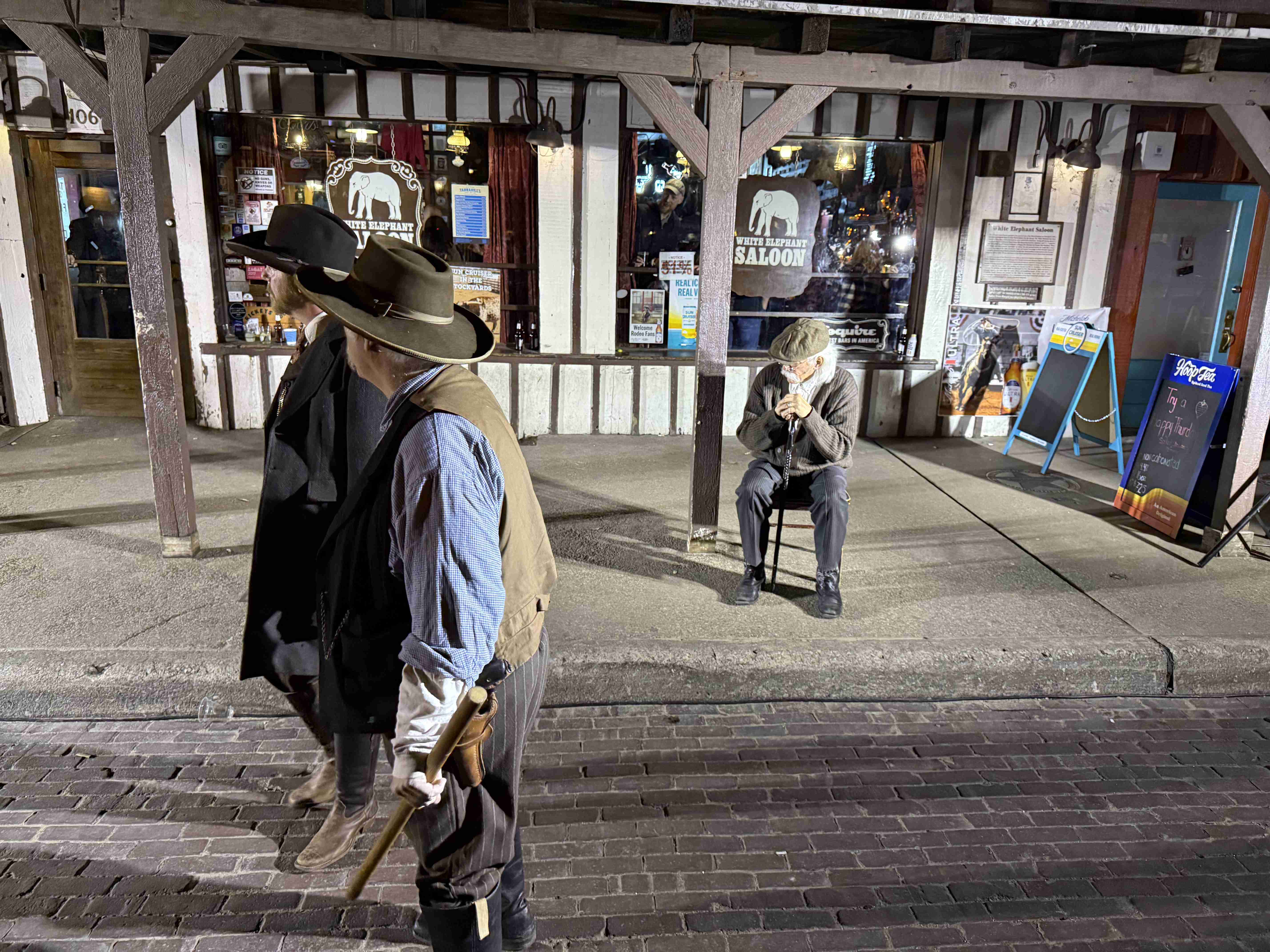
The most famous event in the history of the White Elephant Saloon was the 1887 shootout between owner Luke Short and former city marshal Jim “Longhair” Courtright. Courtright, who was considered one of Fort Worth's most corrupt lawmen, attempted to extort “protection” money from Short. Short refused, and the confrontation ended with Courtright's death. To this day, the shootout is reenacted every year on February 8 directly on Exchange Avenue in front of the saloon—and afterward, of course, everyone heads inside for a drink.
Prohibition arrived in the 1920s, and the saloon closed. In 1976, the Dooley family reopened it—this time at its current location directly in the Stockyards on Exchange Avenue, just beneath the famous gate reading “Fort Worth Stock Yards.” Today, it is owned by well-known Texas chef Tim Love, whose flagship restaurant, Lonesome Dove, is right next door.
Inside, it is an absolutely authentic experience—hundreds of cowboy hats left there by famous musicians, rodeo cowboys, and other notable figures hang from the walls and ceiling. Glass display cases contain thousands of white elephant figurines—gifts from friends of the saloon collected over many decades. And most importantly—live music plays 7 days a week. Scenes for the television series Walker, Texas Ranger were also filmed here (as CD's Bar & Grill), and in 2022 the saloon was transformed into Pearl's Dance Hall & Saloon for the series 1883.
The last time I was there, there was quite a long line, but it was worth it. What I really love is that they put on various performances—staged fights and shootouts from the days of the Wild West. It is simply incredible to watch.
What Else You Can Experience There
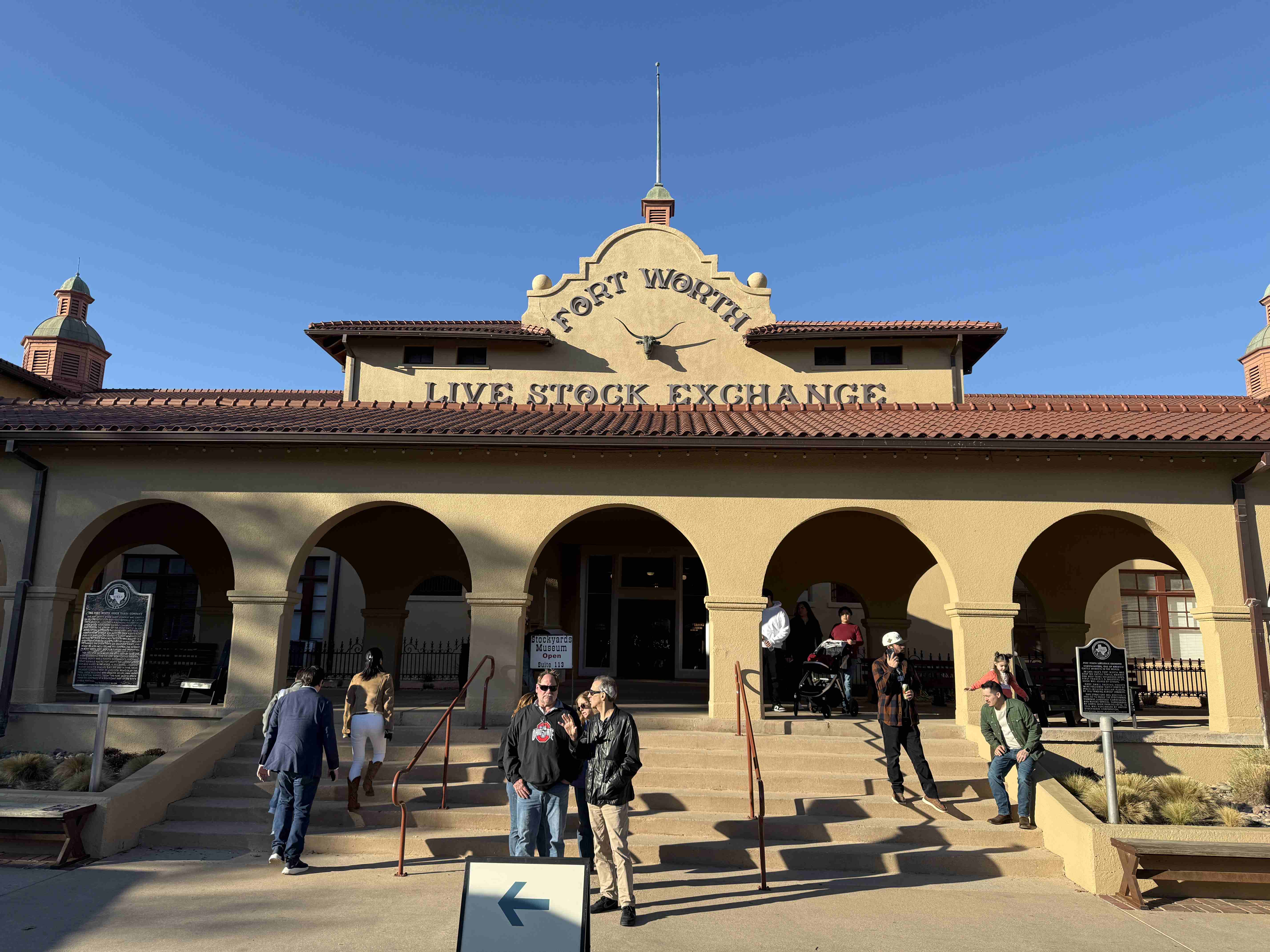
Of course, there is much more—the Livestock Exchange Building with the Stockyards Museum, pony rides for children, and a mechanical bull where you can compete to see who can stay on the longest. There is a walkway from which you can look down at the longhorns in the pens—a replica of what it used to look like when cattle were sorted and traded here. Billy Bob's Texas—the world's largest honky-tonk—is also nearby.
And what always fascinates me is that people truly live the lifestyle. Women dress like cowgirls, and restaurant servers wear hats and cowboy boots. Texans often wear period-style dresses too. It is an incredible atmosphere, something you simply cannot experience anywhere else in America.
Why You Have to Visit
I have traveled across a large part of the USA, and in my opinion, you simply will not find anything like the Fort Worth Stockyards anywhere else. If you are going to be in Texas, the Stockyards are an absolute must-visit. I cannot imagine anything more beautiful in America. Nothing has captivated me as much as Texas and the Stockyards.
I have been there about five times already, and every time I experience something new—a new attraction, something new in the saloon, a new show, something new at the rodeo. It is simply never the same. And you cannot possibly take in and experience everything in a single visit. So I wholeheartedly recommend it—it is worth it, and I am still dreaming about it.