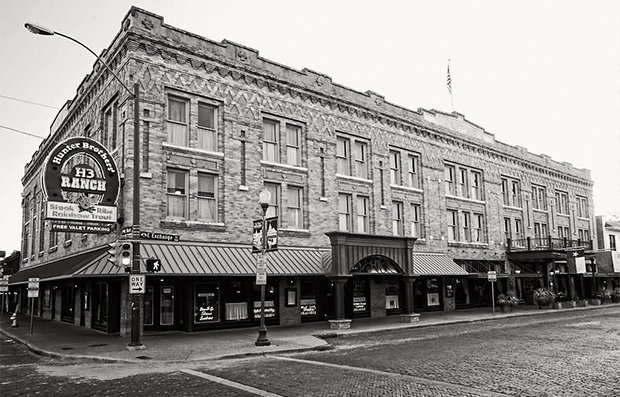
... Colonel Thomas Marion Thannisch bought a small plot of land at the northeast corner of North Main Street and Exchange Avenue in 1904. He cleared the trees and built a two-story building, which he completed in 1906. On the ground floor, he opened the Stock Yards Club saloon with a billiard room and rented furnished rooms on the upper floor. In 1913, he replaced this building with a three-story brick building and connected it to an earlier brick building that already stood on the property. Today, this combined building serves as the exclusive Stockyards Hotel.
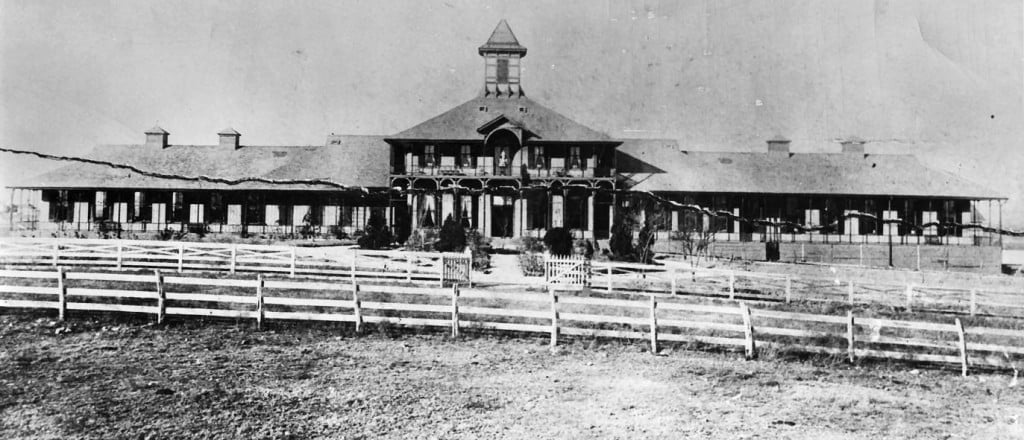
This is one of the oldest photographs of the current Live Stock Exchange building, which opened in 1903. When Armour and Swift jointly purchased two-thirds of the Fort Worth Stockyards, the newly reorganized company demolished the original wooden exchange building and constructed this larger stucco structure.
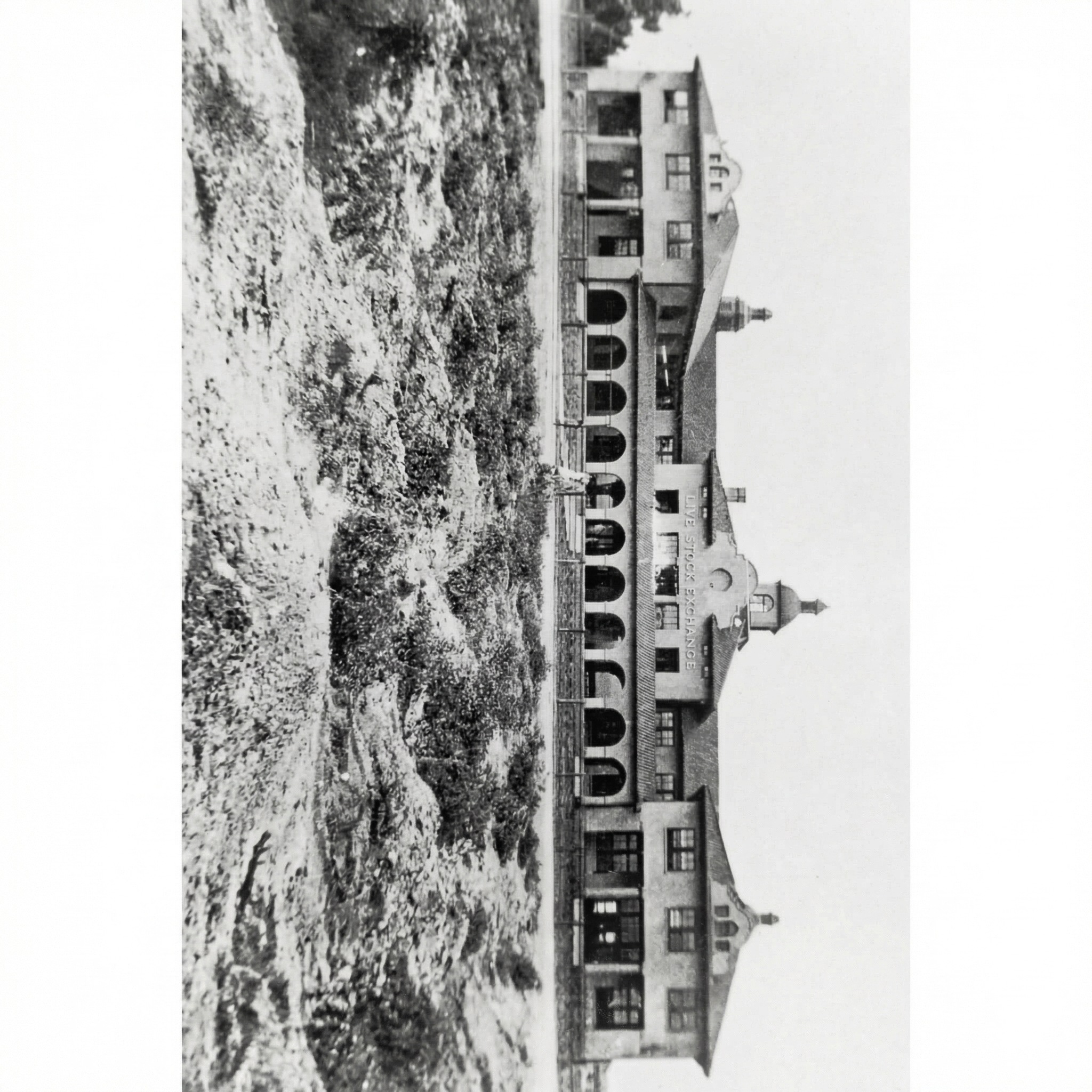
After some time, the grounds were fenced off, and grass and trees grew on the front lawn of the new livestock exchange.
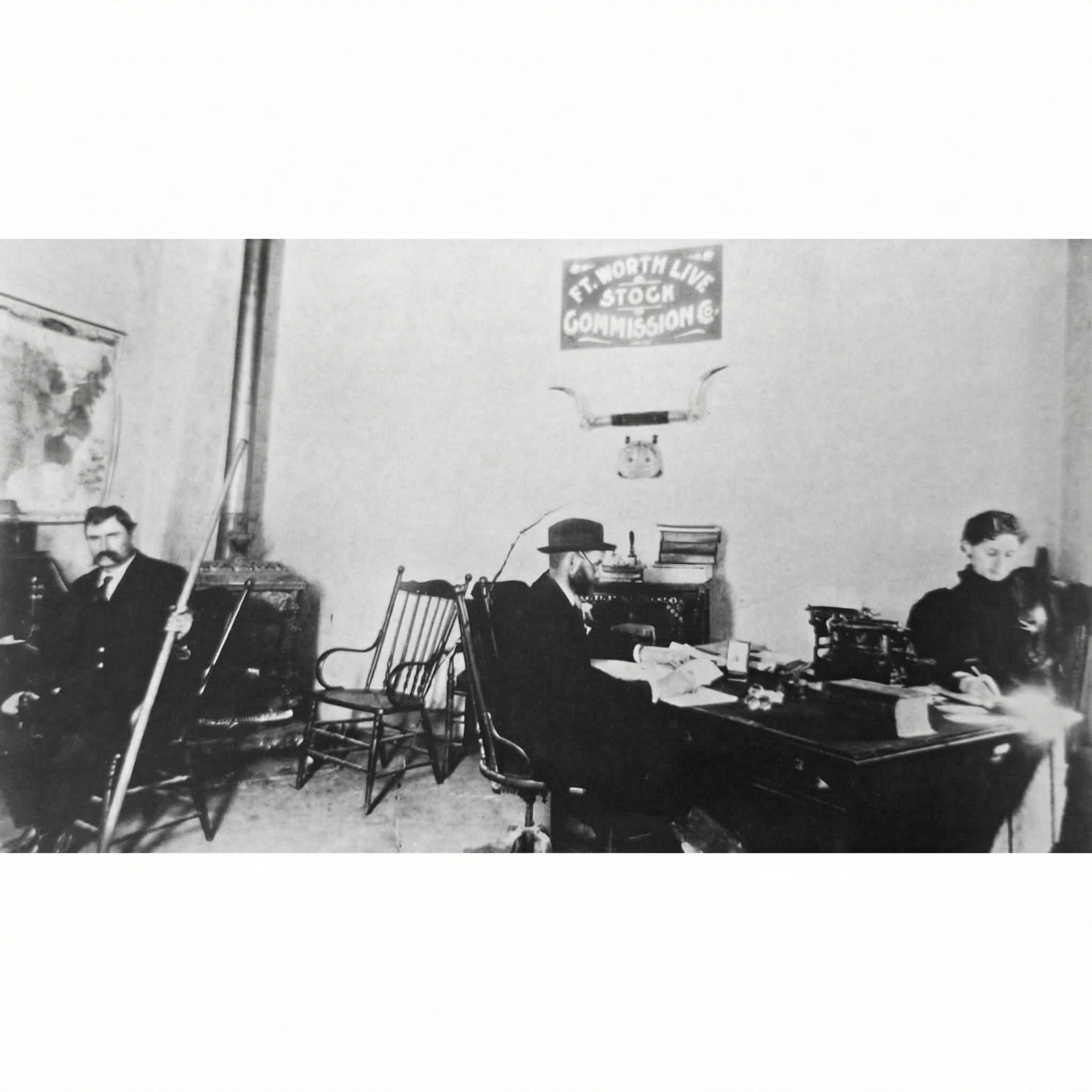
This office of the Fort Worth Live Stock Commission Company leased space in the new Live Stock Exchange building. The commission company operated as a broker, selling clients' livestock for a small commission per head. J. D. Farmer, who later became mayor of North Fort Worth, is the mustachioed man on the left. He later had his own commission firm as well.
Although many people traveled on foot, Exchange Avenue looked busy even in the days of horses and carriages. In 1903, when the new stucco Live Stock Exchange building opened. In 1911, the wooden horse and mule barns burned down. In 1912, the company built modern (for the time) brick structures for the horse and mule trade. These buildings still stand today.
Armour and Company boasted that the sign on the west side of its plant was the largest in the entire state. It stretched 400 feet (approximately 122 meters) in length and stood 80 feet (approximately 24 meters) high.
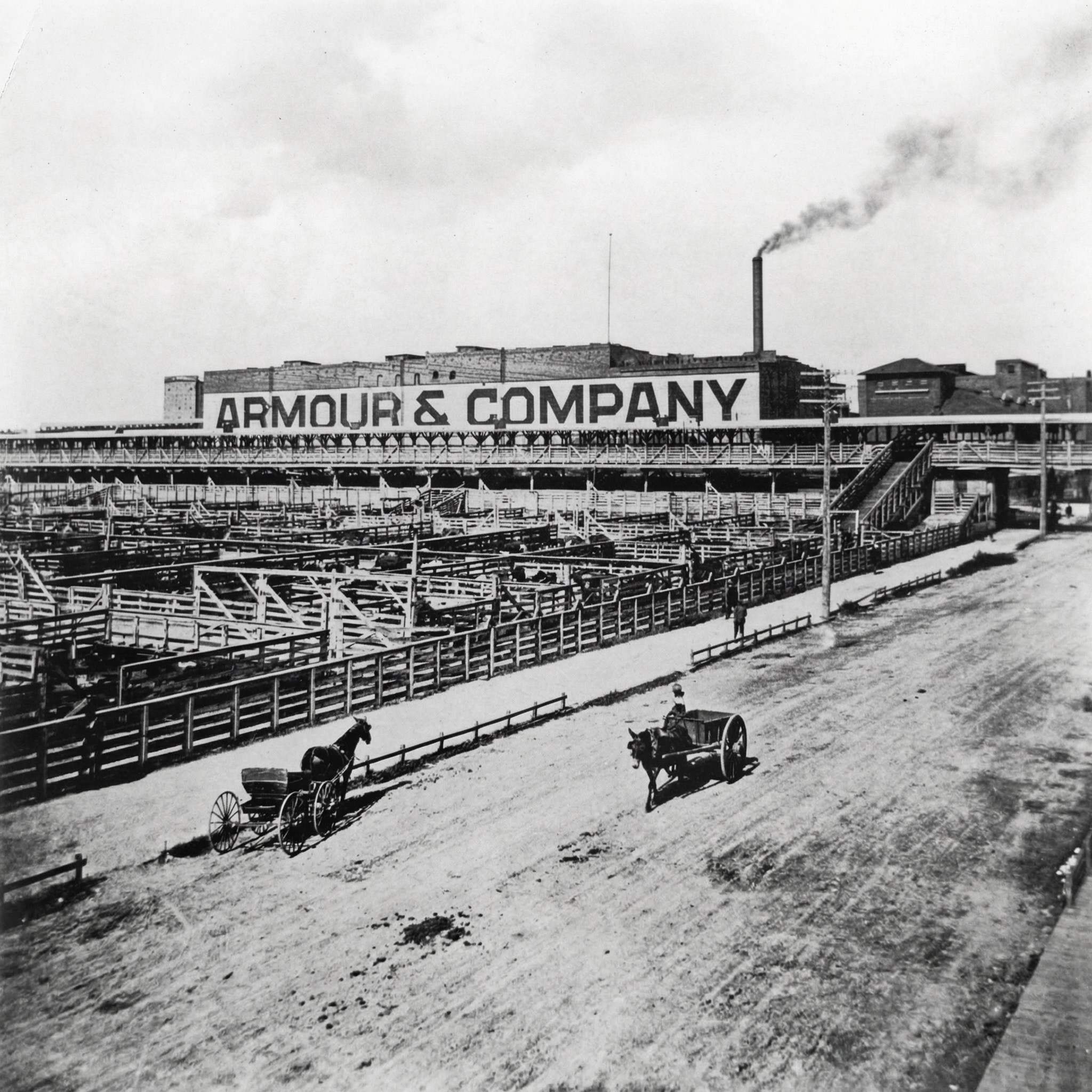
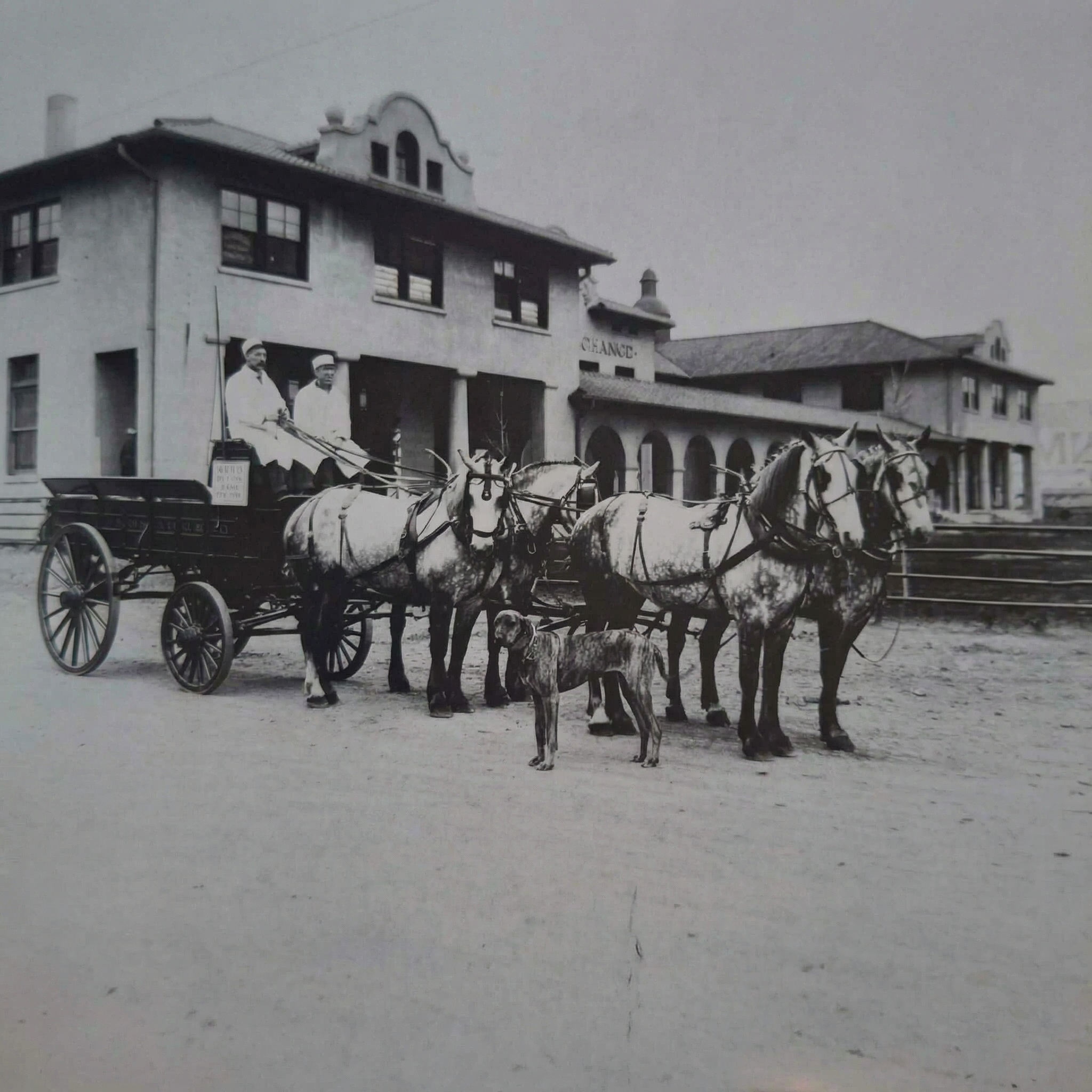
In 1905, local deliveries of processed beef, ham, or lamb from Armour were made using horse-drawn wagons.
The Armour and Company administration building was constructed somewhat similarly to the Swift company building. These two meat-processing giants built their structures at the same time in 1902. While the latter still stands today, the Armour building no longer exists.
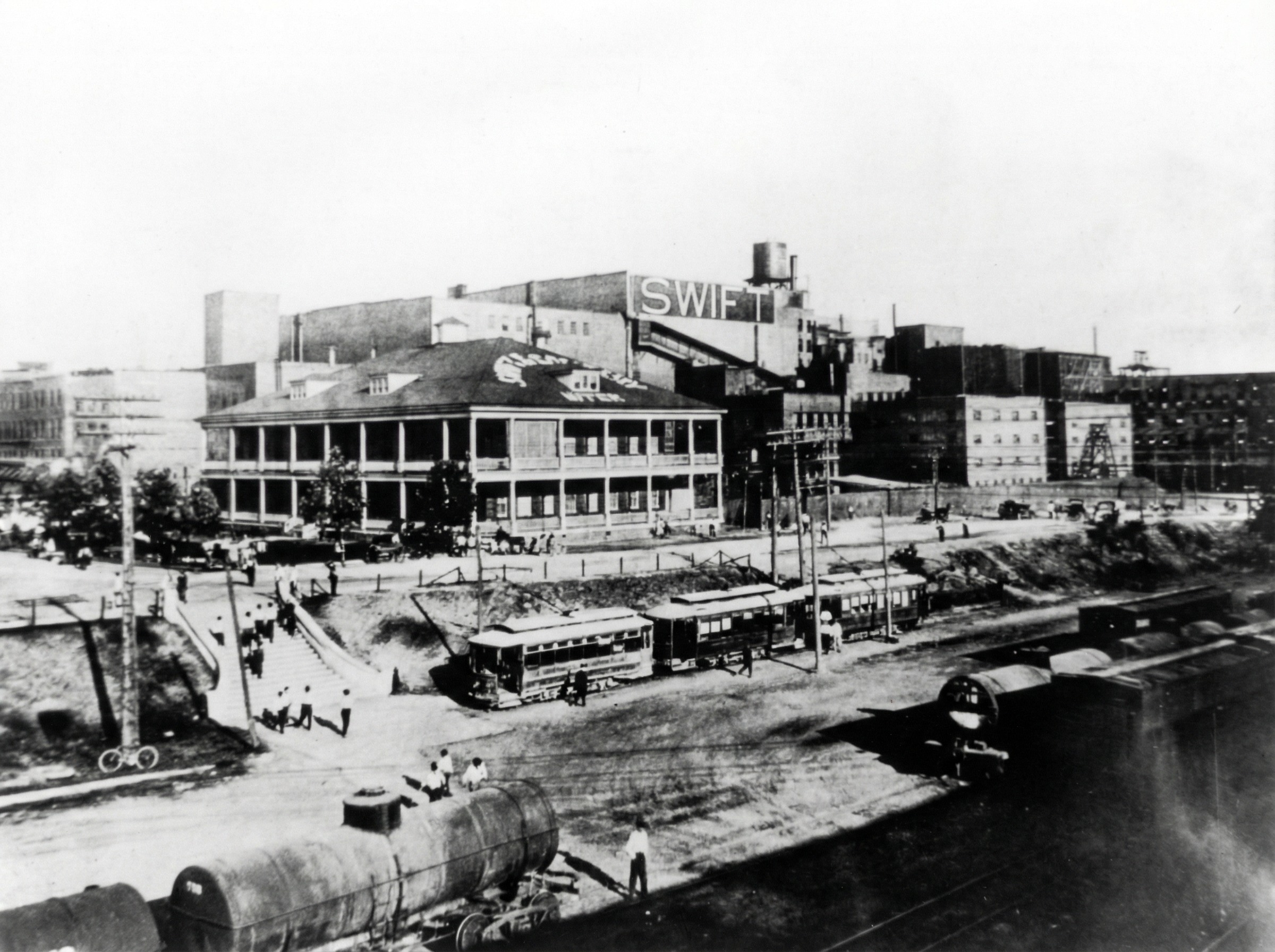
The railroad tracks in front of the Swift and Company complex received railcars full of animals every day, as well as workers arriving on the three streetcars pictured. Armour and Swift purchased the largest share of the animals that arrived at the Fort Worth Stockyards, but not all of them.
Directly east and uphill from the Fort Worth Stockyards complex are the remains of the Armour and Swift meat-processing plants, built in 1902. Representatives of the two plants relied on drawing lots to select the sites for their buildings. Armour drew a 12-acre plot (approximately 4.86 hectares) immediately north of Swift's equally large plot. White letters on the ground spell out the companies' names, although only the former Swift administration building and the skeleton of a burned-out structure remain.
The two-story Swift and Company administration building, surrounded by its meat-processing and refrigeration plants, faced the rival Armour and Company administration building for six decades. This building survived when a fire destroyed the closed Swift processing facility on May 30, 1975.
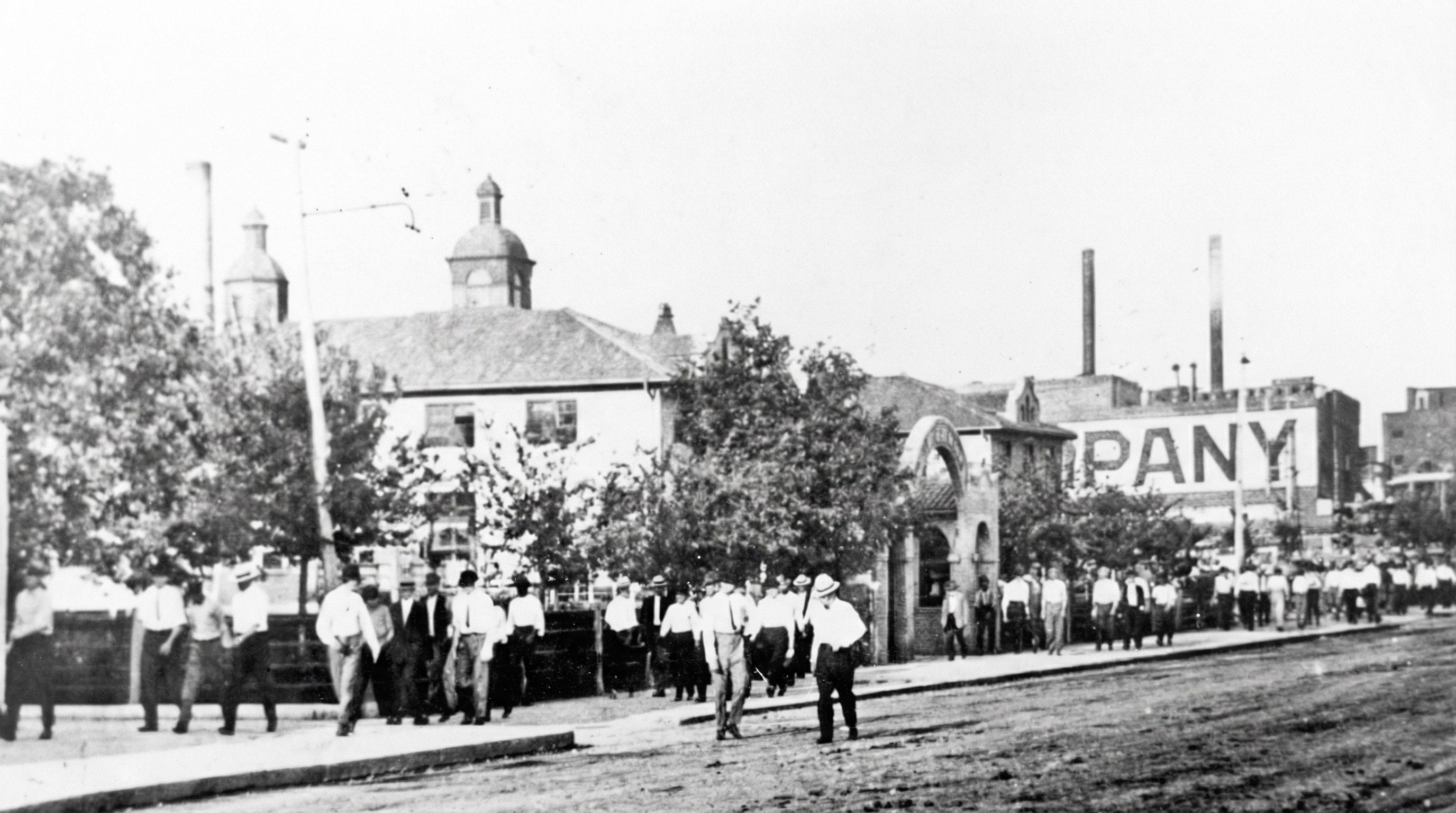
The trees and crowds of people are more prominent in this photograph than the large Live Stock Exchange building behind them. Only two domes can be seen through the trees. The company whose sign is clearly visible on the right is Armour and Company, located east of the exchange building. The crowd at the livestock market consists entirely of men, mostly in white shirts, some even wearing ties. Hats were apparently also in fashion.
The sign on the side of this Armour and Company wagon advertises “Star Hams and Bacon.” In the early years of the Fort Worth Stockyards, the Armour and Swift meat-processing companies focused on pork products and wanted three times as many hogs as cattle. This was the situation at livestock markets and meat-processing facilities in the Midwest and East because people ate more pork than beef at the time. They apparently forgot that Texas was cattle country, not hog country. Nevertheless, extensive publicity somewhat increased hog production.
...to be continued...