Today, we consider bathing a natural part of everyday life, and every home has a bathroom with hot and cold running water. But this was not always the case. People in the 19th century did not bathe every day or even every week, and when they did, it was usually just a quick dip in the nearest lake or river, sometimes clothed, sometimes not. Regular hygiene and the facilities needed for it were part of the urbanization process. Bathing was considered such a luxury that many cities taxed household bathtubs at $8 per year and public baths at $6 per tub per year.
Early Bathing Options in Fort Worth
Apart from taking a dip in the nearby Trinity River, the first bathing options in Fort Worth were associated with barbershops. One such place was Phil Decker's barbershop at 703 Main Street, where both men and women could enjoy a bath for $1. The Mansion Hotel, which opened its doors in 1878, was the first lodging establishment to offer guests the opportunity to bathe for a surcharge of 25 cents on top of the basic room rate, which was also 25 cents. A wooden tub stood on the back porch, shielded from prying eyes by walls on two sides and vine-covered trellises on the remaining sides. Water was pumped from a pump in the adjacent alley through a V-shaped trough and was not heated in any way. Anyone who wanted a bath had to ask the porter to fill the tub and obtain a piece of soap from him. Those were first-class accommodations at the time!
Bathtubs for the Chosen Few
There were other bathtubs in the city, but they were not available to everyone. The Texas & Pacific Railroad had a bathtub in the depot for its conductors and engineers, who needed to freshen up after arduous, smoke-filled journeys. It was especially appreciated during the summer months by engineers sitting in the cab beside the boiler and by conductors, who had to wear a tie and jacket regardless of the weather. It was one of the privileges enjoyed by railroad workers at a time when a private bathtub at home was practically unheard of. Another group of people, decidedly less privileged, also had access to a bathtub. These were long-term inmates at the county jail, for whom a regular bath, along with a change of clothes, was part of the weekly routine. The tub, which was also shared by the guards, occasionally served another purpose and was used for baptisms, which was particularly useful for those convicts who underwent a sudden spiritual conversion before their execution. The Tarrant County Jail was nothing unusual in this respect; every county jail had a bathtub, which could not be said of every hotel.
The First Public Baths
The first public baths in Fort Worth that did not require renting a room or working for T&P were W. R. Haymaker's Artesian Baths on the northwest corner of the square. They opened in 1884 and served both gentlemen and ladies. They offered first-class service and hot and cold water throughout the day. Although they stood practically beside the river, they drew their water from a deep well directly on the premises, which guaranteed its purity and allowed the owner to boast that he had the best bathing water in the state. The artesian water was remarkably soft, readily produced a thick soap lather, and left the skin feeling velvety after bathing. The price was the same as for a bath at the Mansion Hotel.
The Natatorium – A New Era
When the Natatorium opened at the corner of Third and Rusk/Commerce Streets in 1890, it was less about recreational swimming, which few people engaged in at the time, than about bathing, which was gradually gaining popularity in Fort Worth. The Natatorium drove Haymaker's Artesian Baths out of business. Both establishments boasted of using pure artesian water rather than river or surface water. The four-story building, constructed for $150,000, was more than just a bathhouse. It offered Fort Worth residents a level of luxury they had never experienced before: a public swimming pool measuring approximately 15 × 27 meters, Turkish and Russian steam baths, and rooms available for extended stays, as in a hotel. It also included a barbershop and old-fashioned tub baths. The Turkish and Russian baths were the greatest novelty, so much so that the Gazette published the name of the first brave soul to try the Turkish bath. He was Colonel J. K. Ashby, who declared that it surpassed everything he had ever experienced in that regard and added that he had taken such baths in all the country's larger cities. The newspapers did not continue to report on how the Russian and Turkish versions fared, but overall attendance increased during the summer months, suggesting that most people simply wanted a traditional bath with soap and water rather than an exotic experience in a steam room. The management therefore appealed to those determined to make it through the summer clean, fresh, and healthy.
Bathing as a Personal Routine
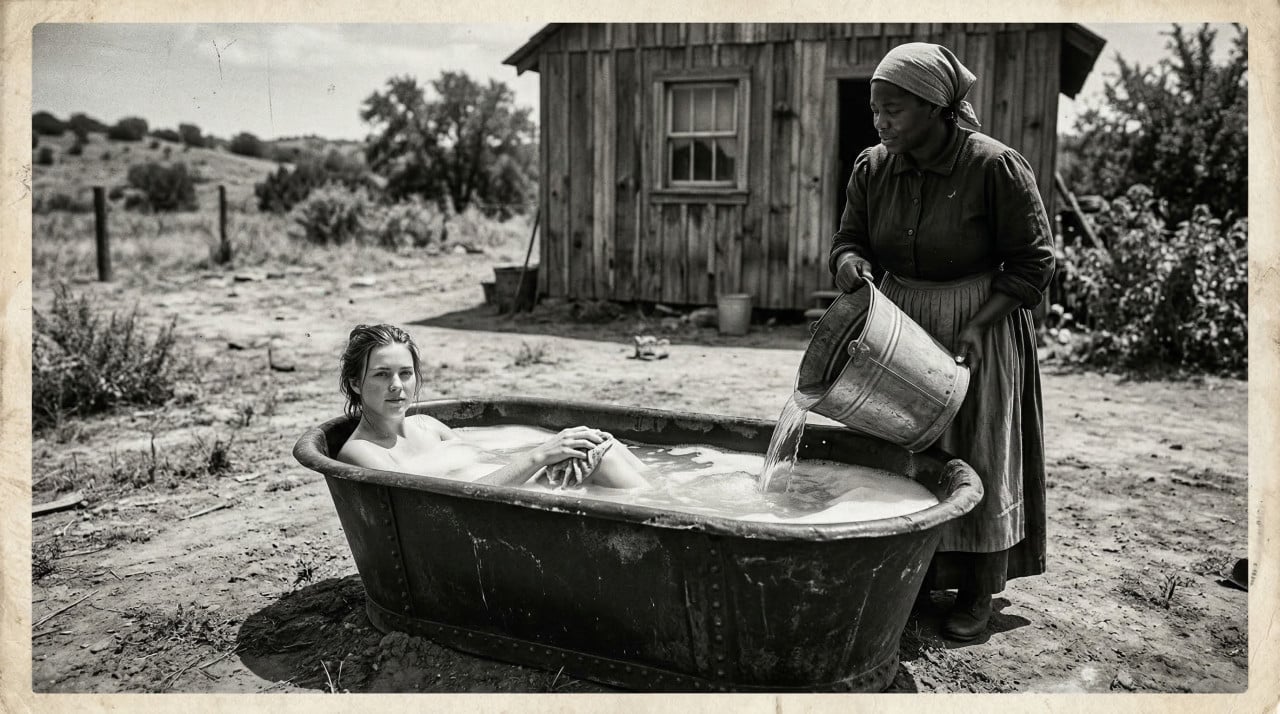
The greatest advance for Fort Worth residents, however, was the acceptance of bathing as part of everyday personal hygiene. Historically, bathing at home was laborious; before a person could undress and immerse themselves in water, they first had to prepare the tub and heat the water. Ordinary lye soap was harsh on the skin, and people believed that bathing in winter caused colds.
The Legendary Old Iron
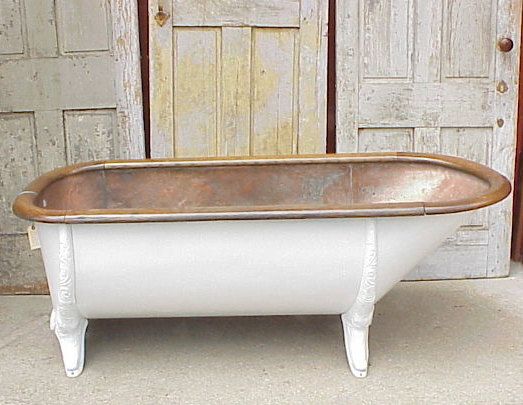
The first recorded bathtub in Fort Worth belonged to J. Y. Hogsett, a respected attorney who arrived in the city in 1872 and was held in such high regard that in 1873 he was tasked with drafting the city charter. Hogsett was a man of strict temperance and a meticulous dresser who paid great attention to personal hygiene. The exact date is unknown, but sometime before 1876 he ordered a bathtub by mail from St. Louis and had it transported by train to Dallas. It traveled the final approximately fifty-five kilometers to Fort Worth in a horse-drawn wagon. It is said that the entire city celebrated its arrival as a symbol of growing civilization on the banks of the Trinity. The tub was made of iron and shaped like an old-fashioned coffin, about sixty centimeters wide at the top and narrowing to thirty at the bottom. It stood on four short legs. Someone nicknamed it Old Iron, and the name stuck. Several years later, it was still the only bathtub in the city when merchant B. C. Evans developed a dangerously high fever. Dr. W. P. Burts prescribed cooling baths, so Old Iron was loaded onto a wagon and taken to Evans's home. Around 1904, the historic bathtub passed into the hands of Ballard Ice and Fuel Co., which used it as a watering trough for the horses and mules that pulled its wagons. It nevertheless remained in the family, as Joseph J. Ballard was Judge Hogsett's son-in-law.
Luxury for the Privileged
Private bathtubs remained luxury goods available only to a privileged few. Another early bathtub owner was Ed Farmer, one of Fort Worth's pioneering businessmen and largest real estate developers. As a capitalist and respected member of the Chamber of Commerce, he had to maintain a certain image. He also lived in one of the large houses with enough space for a bathroom equipped with a bathtub and hot and cold running water. No carrying pots of hot water from the kitchen stove on Saturday nights.
Order Behind Bars
Prisoners were not always willing to bathe, and some had to be persuaded. This was handled by prison kangaroo courts, which forced every inmate to bathe twice a week, on Wednesdays and Saturdays. The guards supported this practice, not for the prisoners' welfare, but to suppress odors and prevent disease. Woe betide anyone who resisted the mandatory bath. Eventually, the city jail also acquired a bathtub for the same reasons as the county jail, only with greater urgency. Because the city jail cell was located in the basement of City Hall, maintaining a certain standard of cleanliness was an important consideration for everyone who entered the building.
Fort Worth on the Road to Modern Hygiene
Even after Fort Worth had become a civilized city, the finer points of bathing remained unfamiliar to some residents. In 1911, James Ellis proposed converting the burned-out high school building into public baths. He argued: As far as I know, there is only one public bathhouse in Texas, and even that one is inferior. Why should Fort Worth not set an example instead of following other Texas cities? He added, somewhat anachronistically, that public baths were inevitable.
A year later, the city had two public swimming pools, the Natatorium and the YMCA. When the park board considered building the first outdoor pool in Trinity Park, a number of questions had to be resolved: Should the pool be drained and refilled regularly? What about mixed bathing? And what swimwear should be permitted? The key problem, however, was what to do about swimmers who used the pool as their own private bathtub. As the Star-Telegram pointed out in one editorial, the greatest difficulty was that almost everyone regarded the pool as a place where they could not only swim but also wash. Some people arrived with soap and a towel and unceremoniously began scrubbing themselves in the middle of the other swimmers. One possible solution to the hygiene problem was proposed by the head of the YMCA's physical education department, who pointed out that many public pools across the country were experimenting with chemically treating water with chlorine.
The Long Road Ahead
Fort Worth had come a long way since the days when city residents gathered curiously to admire J. Y. Hogsett's new bathtub and wondered what he could possibly need it for. Within just a few years, every newly built home had indoor plumbing, including a bathtub. Daily hygiene became an accepted part of civilized life.