Once upon a time there was a candy, and Fort Worth was arguably the confectionery capital of the Southwest, perhaps even of all America, even though Hershey, Pennsylvania, received all the glory. Fort Worth was home to two of the six largest confectionery companies, Pangburn's and King Candy Co. (The other four were Hershey, Russell Stover, M&M Mars, and Whitman's.) King Candy was founded in 1905, Pangburn's ten years later, and for the next 50 years Fort Worth was the only city that could lay claim to such a title.
Fort Worth's confectionery tradition dates back to the very beginnings of the city. In 1878, Frenchman John F. P. Capera opened Capera Candy Manufacturing at 106–110 Throckmorton and enjoyed great success in the years that followed. By 1890, Capera & Bro. had become “the largest establishment of its kind in the entire state.” In 1889, Capera joined with other leading local manufacturers to establish the Fort Worth Manufacturers' Association. Together, they even organized an exhibit at the Spring Palace. In 1890, he expanded his product line to include crackers and renamed the business Fort Worth Candy & Cracker Co. He employed fifty workers, mostly women, and had three traveling salesmen covering Texas, New Mexico, and Indian Territory. His factory consumed 5,000 pounds of cane sugar a day, producing 10,000 pounds of rock candy. His chief competitor was J. S. Clark, who opened Queen City Candy Works at 1600 Houston in 1888. Clark produced 4,000 pounds of stick candy a week. Capera's remarkable success story was eventually overshadowed by the achievements of King Candy Company and Pangburn's in the 20th century.
Fort Worth thus had two thriving candy factories. The confectionery business ranked just behind saloon ownership as a reliable source of income, and it was just as easy to enter. Candy, like alcohol, was inexpensive and popular with everyone, but unlike alcohol, there were no social inhibitions against consuming it. After retiring, August R. Mignon, one of Fort Worth's leading 19th-century photographers, became a co-owner of Fort Worth Candy & Cracker.
The candy business could also be a springboard to greater things. Livestock magnate Sam Davidson began his career running a candy store in Granbury, Texas. The man who would later move in the same circles as Samuel Burk Burnett and W. T. Waggoner was not born a cowboy. He was a Jewish immigrant from Eastern Europe who came west for health reasons and settled in the small town of Granbury. His first business venture was a small candy store that he opened near the town square. From there, his fortunes rose rapidly. In 1892, he moved to Fort Worth and subsequently became vice president of King Candy Co. He did not become interested in cattle ranching until after he had conquered the confectionery world.
There was, however, one fundamental problem with the confectionery business in the Southwest: the warm climate made it impossible to sell chocolate candies and cream-filled confections for most of the year, or at least that was the generally accepted belief that held back the entire industry. It took John P. King to disprove this notion with the help of industrial refrigeration. In 1905, King began producing candy on a small scale in rented quarters on the second floor of a wooden building at 918 E. Ninth. At first, he made only ordinary stick candy, but he soon began producing chocolate as well, becoming the only local manufacturer to do so. His workforce initially consisted of boys, but necessity compelled him to hire young women. By nature and upbringing, boys were not particularly well suited to candy making. Young women represented an untapped source of labor. He therefore advertised for “skillful” and “experienced girls” and employed them dipping chocolates, a task requiring delicate dexterity. Within a year, twenty girls were working in his “chocolate department,” and business was booming. The following year, he hired ten more girls to package and ship chocolates to an ever-growing number of mail-order customers. In August 1906, he launched a Christmas collection of luxury confections that he boasted were equal to those of the largest Eastern manufacturers. And he backed up his words with genuinely outstanding quality.
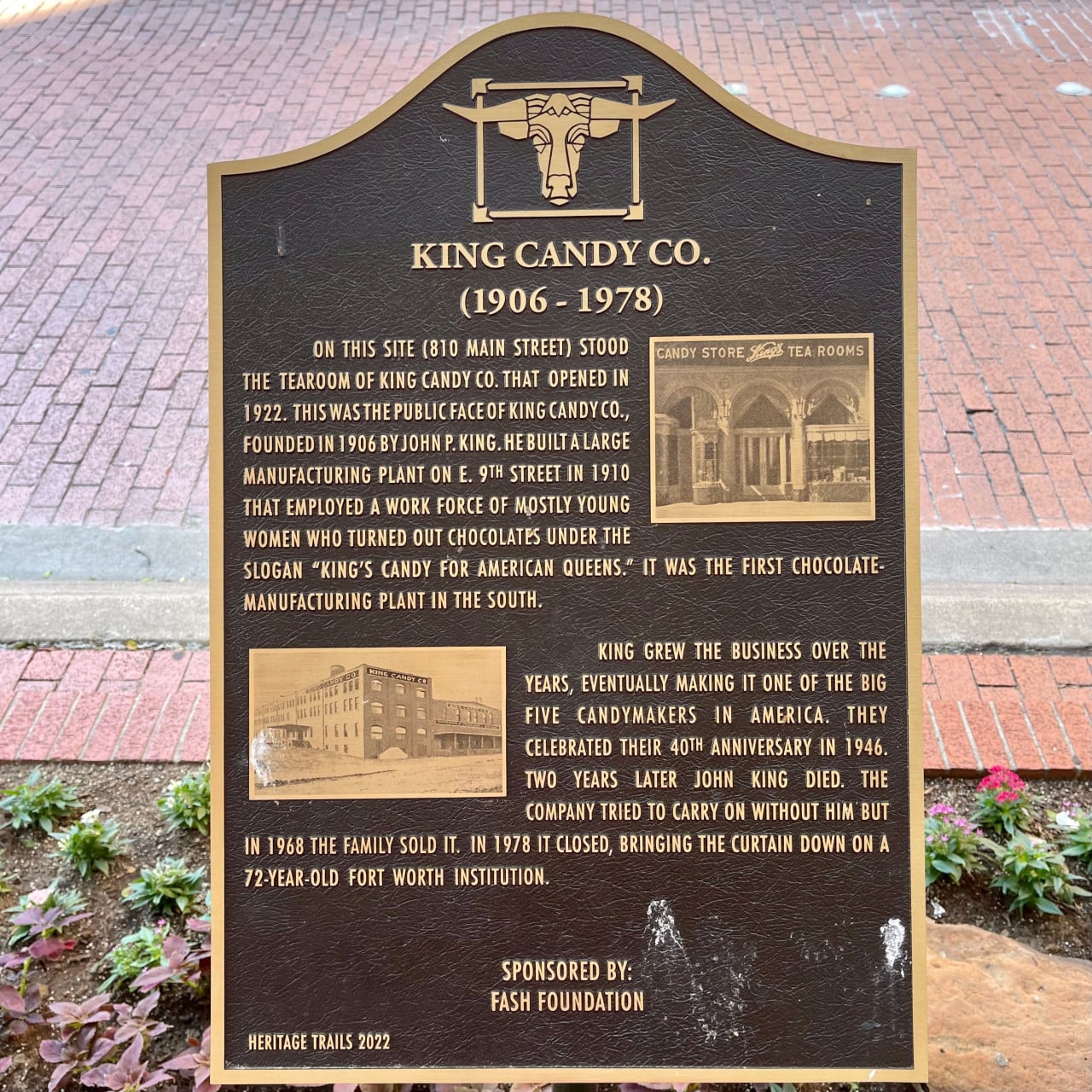
King was not merely the Willy Wonka of Fort Worth; he was much more. He was an excellent businessman who steadily expanded his enterprise. In January 1909, he filed incorporation papers for King Candy Co. with partners R. H. McMatt and Sam Davidson. There was no doubt who the principal partner was and whose vision guided the entire company. In 1910, he built a modern four-story building next to the original site, and two years later he expanded production into a third building, growing from 10,000 square feet and fifteen employees to 80,000 square feet and 275 employees. In 1913, he added peanuts to his product line because of the enormous popularity of peanut candy. By 1915, he was producing 30,000 pounds of candy a day. In 1921, he purchased the neighboring cold-storage plant and converted it into King Ice Co., capitalized at $300,000. There was a natural synergy between the two businesses, which he exploited brilliantly. His candy factory had a showroom where some of the local output was sold, but the location and factory atmosphere did not attract many customers, so in 1922 he opened the King Candy Store and Tea Room at 810 Main. The Victoria Building, as it was called, stood strategically across from the Texas Hotel. It offered the usual candies, as well as a soda fountain serving its own ice cream and chilled drinks, and a menu featuring French pastries and other fine foods. King never had trouble securing financing, just as he had not during his previous expansions. He appeared to have a gold mine. His monthly payroll was $25,000, even before he hired forty more employees for the tea room.
Like any proper magnate, he turned the company into a family business and brought in his sons Porter and R. H., who served as company secretary and treasurer. They later took over the business, but as with many second-generation family companies, things were never quite the same.
The heart of the business remained candy production, specifically chocolates, which explains the company slogan “King's for Southern Queens” (at the time without any of the sexual overtones that would be obvious today). The factory on Ninth Street was efficiently arranged: offices and direct sales on the ground floor, chocolates and creams on the second floor, and the production of stick, peanut, and rock candy on the third floor. Packaging and shipping took place in the basement.
What the factory lacked for years were restrooms for women and a dining room. The first deficiency was an obvious problem for a business employing more women than men, but the lack of a dining room was also an issue because the building was located far from the business district and employees had only half an hour for lunch. Eventually, both problems were resolved. John King was neither more nor less indifferent to his employees than most of his contemporaries. In 1913, he acknowledged the lack of restrooms for the girls and admitted: “We will be compelled to provide a restroom... Working women should have such a place.” Perhaps he had previously learned the hard lesson that Texas girls were no docile slaves. In 1906, when he refused to address their complaints about working conditions, twenty girls walked off the job—the entire chocolate department. They were not members of any labor union and acted entirely on their own initiative. But because experienced chocolate dippers were difficult to find and milk chocolate is a perishable product, they succeeded in negotiating some improvements in working conditions, although neither restrooms nor a dining room were part of the agreement at the time. They had to wait another ten years for those. King also did not hesitate to put his charming “candy-making girls” front and center when receiving visitors to the factory; there was nothing improper about it, but a pretty smile could help sales. King was not alone in associating chocolate candy with a pretty girl's face. There was a natural connection between the two.
The story of Pangburn's begins in 1902, when Hugh T. Pangburn operated a drugstore at 501 Houston. He opened a second store on West Seventh, where he sold ice cream and chilled drinks, and in 1915 converted the upper floor above the ice cream parlor into a “candy factory” equipped with the latest machinery. He began selling his own chocolates under the name “Ragtime Chocolates” to customers of the ice cream parlor. He had learned an important lesson from John King: successful chocolate production required refrigeration facilities, which he had right on the premises. His goal was to produce “the highest-quality candy at the lowest prices” and break the dominance of large out-of-state manufacturers over the Texas candy market. He was the owner and general manager of the company.
He openly challenged John King by advertising that his candy was “the newest and best in Fort Worth,” and furthermore that it was not merely candy but “pure candy,” whatever that meant. His special creation was “Ragtime Chocolates,” chocolates coated in crushed nuts. Over time, “Ragtime Chocolates” were replaced as the company's flagship product by “Texas Millionaires.” Millionaires were the perfect combination of pecans, caramel, milk chocolate, and a touch of honey. Every Valentine's Day, gift boxes of this confection flew off the shelves and went straight into the hands of wives and sweethearts.
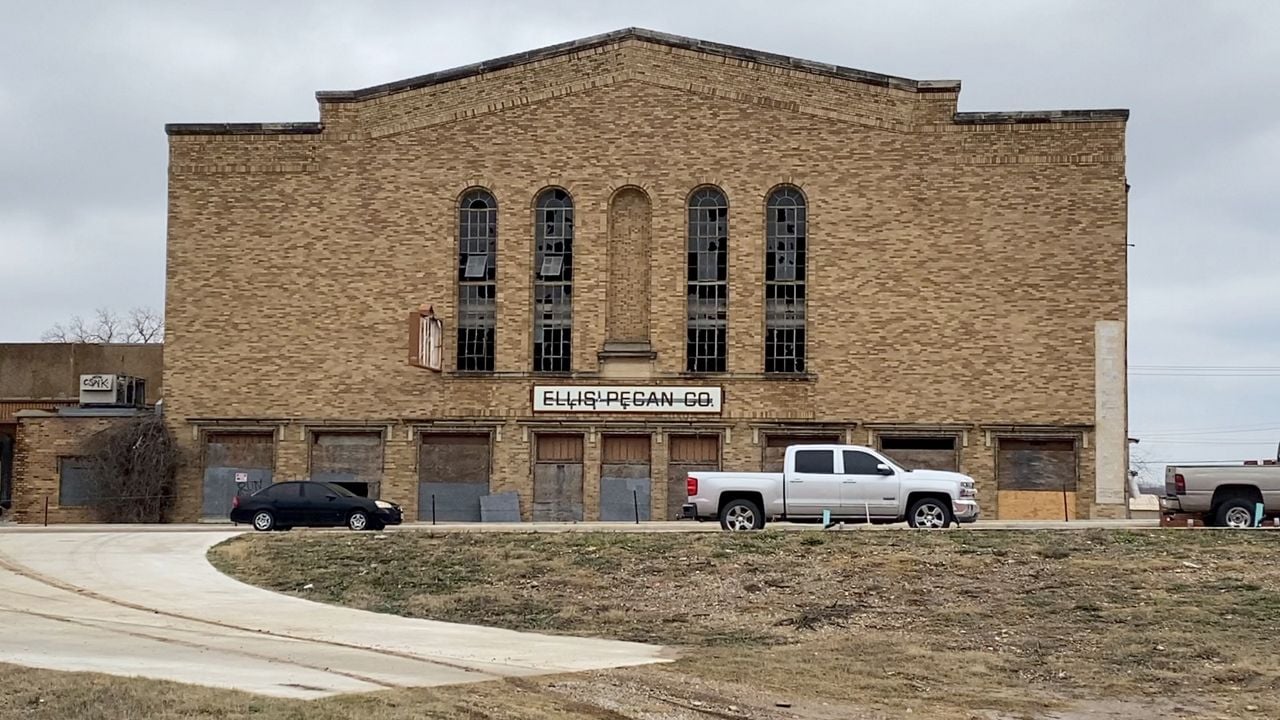
Pangburn's had a natural synergy with another Fort Worth institution, the Ellis Pecan Company on North Main. Ellis supplied the pecans for Texas Millionaires, and both companies prospered from the popularity of the candies. The Ellis Pecan Company thus became another link in the chain that made Fort Worth the confectionery capital of the Southwest.
Both Hugh Pangburn and John King were first-rate businessmen and patriots who knew how to combine the two. When the Camp Bowie military camp came to Fort Worth in 1917, Pangburn loaded tubs of ice cream onto streetcars and sent them to the soldiers as a gift from the company. During World War II, John King provided free chocolate bars for Red Cross packages sent to soldiers.
The 1920s were a period of prosperity for Pangburn's. When Americans in the Roaring Twenties were not dancing and drinking alcohol, they were eating candy and ice cream as if there were no tomorrow. By 1922, the business had expanded beyond the original drugstore to include an ice cream and candy factory, a chocolate shop at 609 Houston, and a cafeteria at 1007 Houston. The cafeteria represented a new concept in family dining away from home, and Hugh Pangburn was among the first to embrace the trend. Pangburn's Cafeteria offered “home-cooked food at reasonable prices,” serving breakfast, lunch, and dinner from 6:00 a.m. to 8:00 p.m. Tuesday through Saturday. To make the experience more enjoyable, an orchestra played every evening from six to eight.
Over time, the candy business far surpassed the drugstore and restaurant operations. Pangburn focused on the holiday season, which flourished from Thanksgiving through Mother's Day each year, and offered his products in beautiful decorative boxes that were part of the gift's charm. Many featured the distinctive silhouette of the Pangburn cowgirl, whose face was modeled on Constance Campbell, an Arlington Heights High School graduate who became the face of the company in 1942. The company president declared at the time that Pangburn's had based its packaging and advertising on “the natural beauty of the outdoor Texas girl, admired by the world and its artists.” Production had to be increased to meet nationwide demand, and in 1947 the company moved into a new modern plant at 2000 White Settlement Road.
John King and Hugh Pangburn revolutionized the confectionery industry in the Southwest. Before their arrival, any Texan with a taste for fine candy had to rely on goods imported from the East. King and Pangburn transformed the dynamics of the industry and made Fort Worth a center for the production and distribution of not only hard candy but fine confections as well. Their sales extended far beyond Texas. They also introduced assembly lines into candy manufacturing, allowing them to mass-produce their popular products. Girls on the production line were evaluated by the number of pieces they could coat in chocolate during an eight-hour shift. A lesser-known fact is that they transformed the Fort Worth labor market. The confectionery industry employed mostly women and provided jobs for more women than any other employer except the telephone company. Like teaching and telephone operating, candy making was a respectable profession that seemed tailor-made for women.
King Candy Co. and Pangburn's were the pride of Fort Worth, but even in their golden age they did not have an absolute monopoly on the candy market. Their chief competitors were Greek immigrants Nick Gavril (originally Gavrelos) and John Sideris, who founded Tripoli's Confectionary Company in 1911 at the corner of Main and Eleventh, in the same building as Renfro's Drug Store. They began with only hard candy, which they sold in the Greek community on the North Side, but soon expanded their range to include homemade chocolates, ice cream, and chilled drinks. They also offered Christmas boxes filled right in the store for delivery or mailing. By 1919, business was going so well that they had to advertise for additional workers to coat chocolates. The candy business was resilient even in the face of wartime rationing. In 1942, they were among only three companies in Fort Worth that paid employees bonuses amounting to 25 percent of their weekly wages. Neither King's nor Pangburn's did so.
In the 1970s, as large manufacturers took over the industry, social customs changed (people gave boxes of candy as gifts less often), and Americans became more health-conscious, Fort Worth's confectionery industry came to an end. Hugh Pangburn died in 1928, John King in 1948. After Pangburn's death, the company he had founded underwent several changes of ownership, with none of his successors matching the founder's abilities. In 1999, the Fort Worth plant closed, and the brand was purchased by Russell Stover Candies, which continued producing Texas Millionaires in Corsicana. John King left the company in his son's hands, but for many reasons business declined. The final blow came in 1978, when the FDA ordered the recall of 11,000 cases of King's candy because of bacterial contamination. The company closed shortly afterward. What was so exceptional about both founders? John King once explained the philosophy that had led both him and Hugh Pangburn to success: “From the very beginning, we aimed for quality—to make candy in Texas as good as that made anywhere in the world. We did it in the beginning and we kept on doing it... that is the secret of our success.”