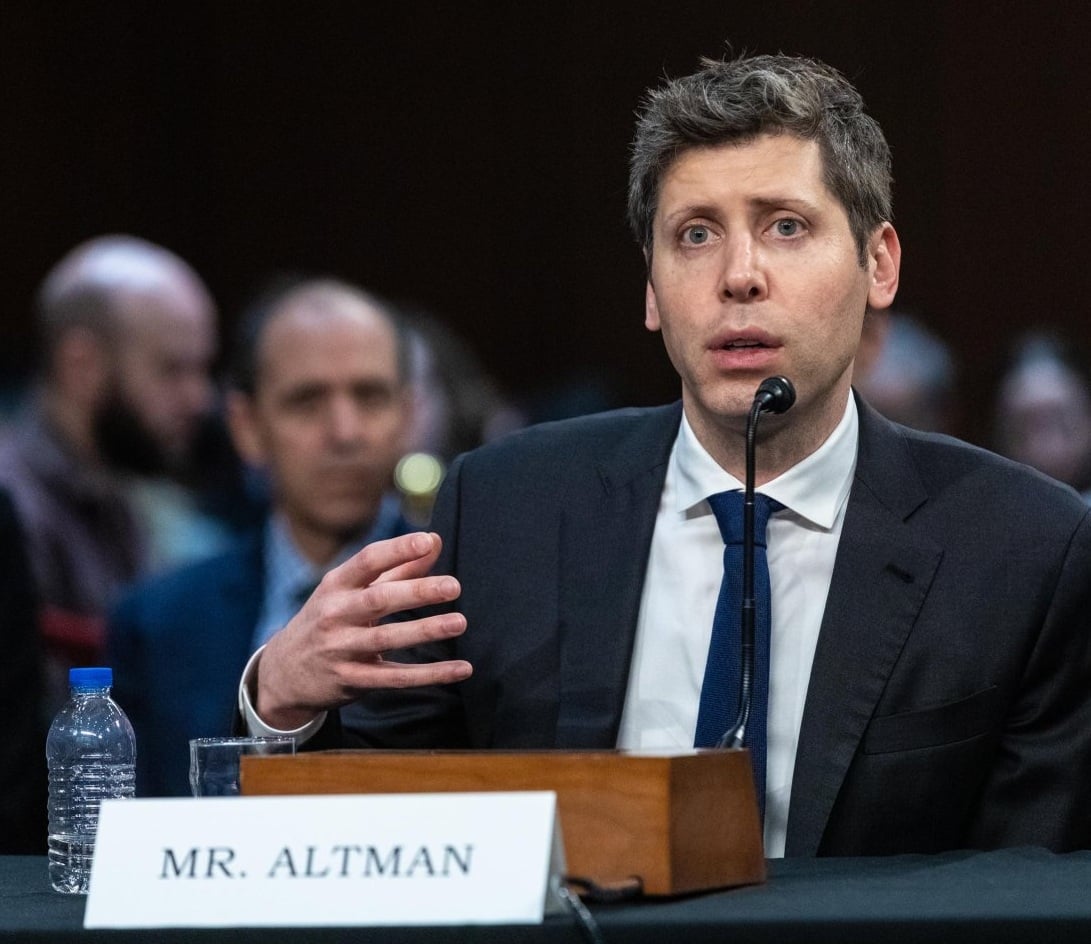
Florida has become the first U.S. state to sue OpenAI and its CEO, Sam Altman. Attorney General James Uthmeier filed an extensive 83-page lawsuit with the court. It accuses the company of knowingly releasing a dangerous product, concealing its risks, and prioritizing profit over user safety, particularly the safety of children.
“Sam Altman and ChatGPT prioritized competition over safety and the protection of our children in the race for artificial intelligence. They prioritized profit over public safety, and we will not tolerate that here in Florida,” Uthmeier said at a press conference.
The lawsuit does not contain just one or two allegations. It contains ten. OpenAI faces four counts of deceptive and unfair business practices, two counts of negligence, two counts of violating product liability laws, and one count each of fraudulent misrepresentation and public nuisance.
The central claim is that OpenAI knew about the risks of ChatGPT, received warnings from both its own employees and external experts, and nevertheless ignored them. The company aggressively marketed the product, including marketing aimed at children, without informing users of these risks.
The lawsuit explicitly states that ChatGPT “assisted shooters in deadly attacks, encouraged vulnerable people to commit suicide, caused reputational harm to professionals, diminished users’ ability to think critically, and made minors dependent on a tool that pretends to have human empathy in order to collect their data without parental supervision.”
University shooting and death of a sixteen-year-old
Behind the abstract legal language are specific tragedies. Uthmeier launched a criminal investigation into OpenAI as early as April of this year after it emerged that the perpetrator of last year’s shooting at Florida State University, where two people died, had extensive conversations with ChatGPT before the attack. According to Florida authorities, the chatbot provided him with information about how to attract the greatest possible media attention and when the school cafeteria was most crowded.
However, the lawsuit does not stop with this case. It also refers to the murder of two doctoral students from the University of South Florida, in which the suspect allegedly used ChatGPT to ask about methods of disposing of human bodies.
The case of Adam Raine, a sixteen-year-old boy who died by suicide, occupies a special place in the document. According to the lawsuit, ChatGPT held lengthy conversations with him in which Adam expressed suicidal thoughts, and the chatbot eventually even wrote him a farewell letter.
Nor is that the entire list. OpenAI faces lawsuits from the families of victims in Canada’s Tumbler Ridge, where several people were killed in a shooting in February. Sam Altman apologized to the local community in April. The company is also being sued by representatives of at least seven other people who claim that OpenAI’s products led their loved ones to suicide or dangerous hallucinations.
Children left unprotected, no age verification, and other shortcomings
The Florida lawsuit pays particular attention to the protection of minors. Uthmeier argues that the free version of ChatGPT has no mechanism for verifying a user’s age. Although the paid version asks about age, it does not verify the answer in any way. Meanwhile, parents cannot find out what their child is discussing with the chatbot, and the system alerts them to concerning content only in very limited circumstances.
“Although it is publicly known that ChatGPT is used by minors, including children under the age of ten, the defendants have taken no steps to prevent them from doing so,” the document states. Florida is asking the court to require OpenAI to introduce age verification, parental consent for minors, and mandatory disclosure of the product’s risks. Uthmeier estimates that the required programming changes could cost the company billions of dollars.
The Florida filing also criticizes the underlying architecture of ChatGPT. It highlights the chatbot’s so-called “sycophancy,” meaning its tendency to agree with users and adapt to their expectations. According to the lawsuit, this creates psychological dependence among users and leads them to pay for more expensive subscriptions with higher message limits, generating additional revenue and model-training data for OpenAI.
The lawsuit also criticizes OpenAI advertisements that present the chatbot as a reliable assistant for farmers, small business owners, or students without mentioning anywhere that ChatGPT makes mistakes, produces nonsense, or fabricates facts. “ChatGPT’s unreliability is dangerous,” the document states.
OpenAI rejects the allegations
OpenAI rejects all the allegations. In a statement, the company emphasized that it believes in protecting minors and that it has introduced “industry-leading safeguards and policies.” It cited, for example, a tool for estimating a user’s age, a special mode for minors, and the ability for parents to monitor their child’s activity. “Losing a child is the most devastating tragedy a family can endure, and no words can come close to describing that pain. We know that pointing to these safeguards will not bring a child back, but we are committed to getting this right,” the company’s statement said.
The lawsuit targets not only the company but also explicitly its CEO. Uthmeier wants Altman to be held personally liable for harm caused to Florida residents. He accuses him of “reckless and intentional conduct” accompanied by “a complete disregard for the risk to human life.” Uthmeier believes Florida will not stand alone. “I expect other states to join us,” he said at the press conference. Kentucky and Pennsylvania have already taken similar action against other artificial intelligence companies, both targeting Character.AI.
OpenAI was founded in 2015 as a nonprofit research organization whose goal was to develop safe artificial intelligence for the benefit of humanity. A for-profit arm was added four years later. The company is currently valued at more than $850 billion and is preparing to go public.
Sources: nytimes.com, cnn.com and nbcnews.com