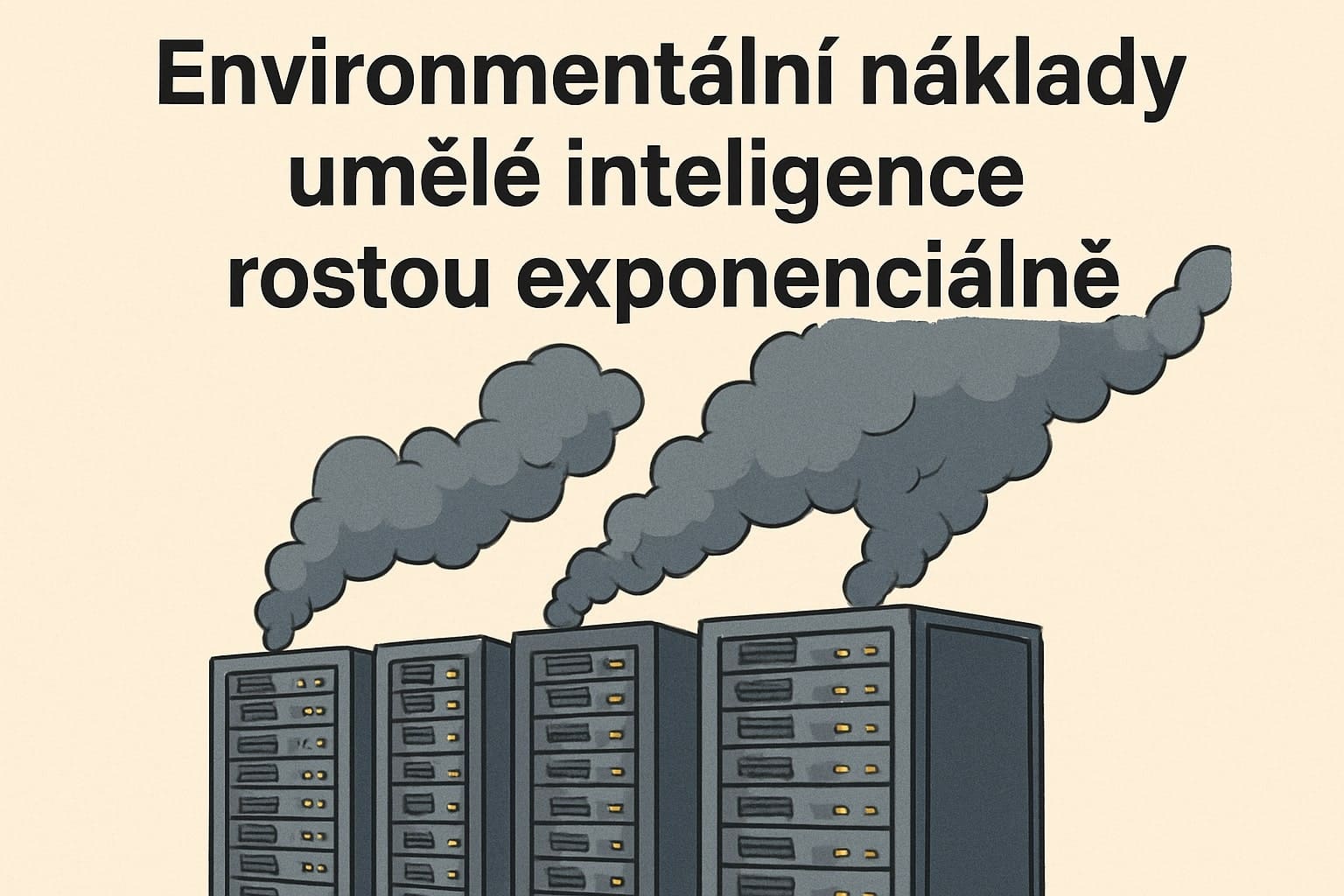
The Environmental Costs of Artificial Intelligence Are Growing Exponentially
Artificial intelligence is radically changing the way we communicate at every level—from individual interactions to organizational and societal exchanges. While these technologies increase the speed, creativity, and personalization of communication, they also present serious challenges related to bias, privacy, and data governance. An equally important but often overlooked issue is the environmental cost of these technologies.
A new study by researchers Maximilian Dauner and Gudrun Socher from the Munich Center for Digital Sciences and AI (MUC.DAI) at HM Hochschule München University of Applied Sciences reveals shocking facts about the environmental impact of large language models (LLMs). Their research presents a comprehensive assessment of the environmental costs of LLMs by analyzing their performance, token usage, and CO2-equivalent emissions across 14 different models with parameter counts ranging from 7 to 72 billion.
Research Methodology
The researchers tested a diverse range of language models, including Meta's Llama3.1 models (Grattafiori et al., 2024) with 8 billion and 70 billion parameters, as well as the Llama3.3 model (Grattafiori et al., 2024) with 70 billion parameters. They also included Alibaba's Qwen models (Bai et al., 2023) and Qwen2.5 models (Qwen et al., 2025), each with 7 billion and 72 billion parameters. The study also analyzed two reasoning models developed by Deep Cogito with 8 billion and 70 billion parameters, which operate in both standard text generation mode and reasoning mode. The research also included Deepseek R1 models (DeepSeek-AI et al., 2025) specifically designed for logical reasoning, with variants featuring 7 billion, 8 billion, and 70 billion parameters.
All models were tasked with answering the same 500 questions from different fields. The questions and their correct answers were extracted from the Massive Multitask Language Understanding (MMLU) dataset (Hendrycks et al., 2021). The MMLU dataset evaluates multitask accuracy across diverse knowledge domains and contains 15,908 multiple-choice questions from 57 subjects, including engineering, mathematics, the humanities, and the social sciences.
Surprising Test Results
The experiments were conducted on a local Nvidia A100 GPU with 80 GB of memory, enabling precise measurement of energy consumption, memory usage, and response time during model evaluation. Measurements were taken using the Perun framework, designed for energy benchmarking of high-performance computing applications (Gutiérrez Hermosillo Muriedas et al., 2023). An emission factor of 480 gCO2/kWh was used to calculate the associated CO2eq emissions, representing the latest global average and reflecting current trends toward increased use of renewable energy sources.
In the multiple-choice phase, the reasoning-enhanced Cogito 70B model achieved the highest accuracy, with 91.0% correct answers, followed by the Deepseek R1 70B reasoning model at 85.0% and the Qwen 2.5 72B model at 80.2%. In the free-response phase, the same Cogito variant again ranked first at 78.8%, narrowly ahead of Cogito 70B in standard text mode (76.4%) and Qwen 2.5 72B (75.0%).
Alarming Emissions Balance
The total CO2eq emissions, expressed in grams of CO2 equivalent required to process the complete set of 500 MMLU questions, reveal dramatic differences between the models. In the multiple-choice phase, emissions ranged from just 1.25 g CO2eq for the default Cogito 8B model to 717.31 g CO2eq for the Deepseek-R1 70B model. Reasoning-enabled variants generated substantially more emissions than their standard counterparts—for example, Cogito 70B reasoning: 411.72g compared with Cogito 70B default: 8.20g.
In the free-response phase, the range widened even further, from a low of 26.28 g CO2eq for Qwen 7B to an alarming 1,325.12 g CO2eq for Deepseek-R1 70B. Reasoning modes caused a 4× to 6× increase in emissions compared with text-only modes.
When examining combined CO2eq emissions and overall accuracy across all 1,000 questions, clear trade-offs emerge between model size, reasoning depth, and environmental costs. The smallest model, Qwen 7B, has the lowest footprint, emitting only 27.7 g CO2eq, but achieves just 32.9% accuracy. Conversely, the largest reasoning model, Deepseek-R1 70B, generates 2,042.4 g CO2eq and achieves 78.9% accuracy.
Analysis by Subject
Analysis by subject reveals significant variability in performance across different domains. Multiple-choice accuracy was consistently highest in High School World History, with an average of 76.3% correct answers per model, likely due to the factual nature of the questions, which allows for easier recall or recognition. Conversely, Abstract Algebra presented the greatest challenge, with an average of only 51.4% correct answers, reflecting its greater complexity and abstract conceptual demands.
In free-response mode, the models achieved their highest scores in High School Mathematics, with an average of 69.4% correct answers per model, likely due to explicit numerical calculations. Conversely, Philosophy questions, requiring nuanced and subjective reasoning, presented considerable challenges, with an average of only 52.1% correct answers.
Token Analysis Reveals Hidden Costs
The analysis of token generation further highlights the computational costs of reasoning. A token is a unit of text, such as a word, part of a word, or an individual character, that is converted into a numerical representation so that an LLM can process it (Gastaldi et al., 2025). The study distinguishes between response tokens (tokens forming the model's final answer) and thinking tokens (additional tokens generated by reasoning-enabled models before producing an answer).
In the multiple-choice setting, the models generated an average of 37.7 response tokens per question, while reasoning-enabled variants required an additional 543.5 thinking tokens. By subject, High School Mathematics produced the longest answers (an average of 83.3 tokens), while Abstract Algebra required the highest thinking overhead (an average of 865.5 tokens).
In free-response mode, average response lengths increased to 435.2 tokens. The shortest free-text responses (two tokens) were produced by the Qwen 2.5 72B model on Philosophy, while the longest individual output (37,575 tokens) was generated by the Cogito 8B reasoning model on Abstract Algebra.
Discussion and Conclusions
The analysis of combined CO2eq emissions, accuracy, and token generation across all 1,000 questions reveals clear trends and trade-offs between model size, reasoning complexity, and environmental impact. As model size increases, accuracy tends to improve, but this gain is also associated with substantial increases in both CO2eq emissions and the number of generated tokens.
Notably, the reasoning-enabled Cogito 70B model demonstrates a better performance-efficiency balance, achieving the highest accuracy of 84.9%, a relative improvement of 7.6 percentage points over Deepseek-R1 70B, while emitting 34.3% less CO2eq (1,341.1 g). This suggests that adding a reasoning component to large models can substantially improve accuracy without a proportional increase in environmental impact.
Limitations and Future Research
Although this study compares a diverse range of language models with different architectures, training datasets, parameter counts, and reasoning routines, the findings are not readily transferable to other model families. Due to these structural and architectural differences, the generalizability of the results to models with significantly different designs is limited.
All emissions were measured under a specific hardware and energy profile, namely using an NVIDIA A100 80GB GPU and an emission factor of 480 gCO2/kWh. These values depend heavily on the chosen infrastructure and local power grid, and the results may vary significantly with different hardware configurations or emissions baselines.
Future work could expand this investigation by including a broader range of models, including those fine-tuned for specific tasks across diverse domains. For example, it would be valuable to analyze whether models specialized in code generation perform better on programming tasks and whether such specialization leads to lower CO2eq emissions compared with general-purpose LLMs.
The study clearly shows that while larger and reasoning-enhanced models significantly outperform smaller counterparts in terms of accuracy, this improvement comes with steep increases in emissions and computational requirements. Optimizing reasoning efficiency and response conciseness is crucial for advancing toward more sustainable and environmentally responsible artificial intelligence technologies.