The arrival of public transportation in Fort Worth in the form of railroads and streetcars, both in 1876, represented an enormous leap forward in the city’s growth from a small frontier settlement into a major metropolis. Yet this story also had a dark side: trains and streetcars posed a constant danger to residents moving around the city, since people from the countryside were not accustomed to looking both ways before crossing the street. The situation was further aggravated by the attitude of the streetcar companies and railroads, which behaved as though the streets containing their tracks were their private property. Accidents became an everyday occurrence, and as deaths and injuries mounted, so did the number of lawsuits. The companies involved fought tooth and nail, trying to keep cases out of courtrooms and away from sympathetic juries.
For the companies, lawsuits were simply one of the costs of doing business. They kept expensive attorneys on permanent retainers to handle the frequent cases. Victims who survived an encounter with the iron monster discovered that fighting a powerful corporation was even more difficult than fighting city hall. The dangers were not limited to direct encounters between people and machines; every aspect of the companies’ operations posed a risk to the public. In 1891, an unnamed journalist fell into an uncovered excavation belonging to the North Side streetcar company. He demanded $7,500 in damages but ultimately accepted a substantially lower amount.
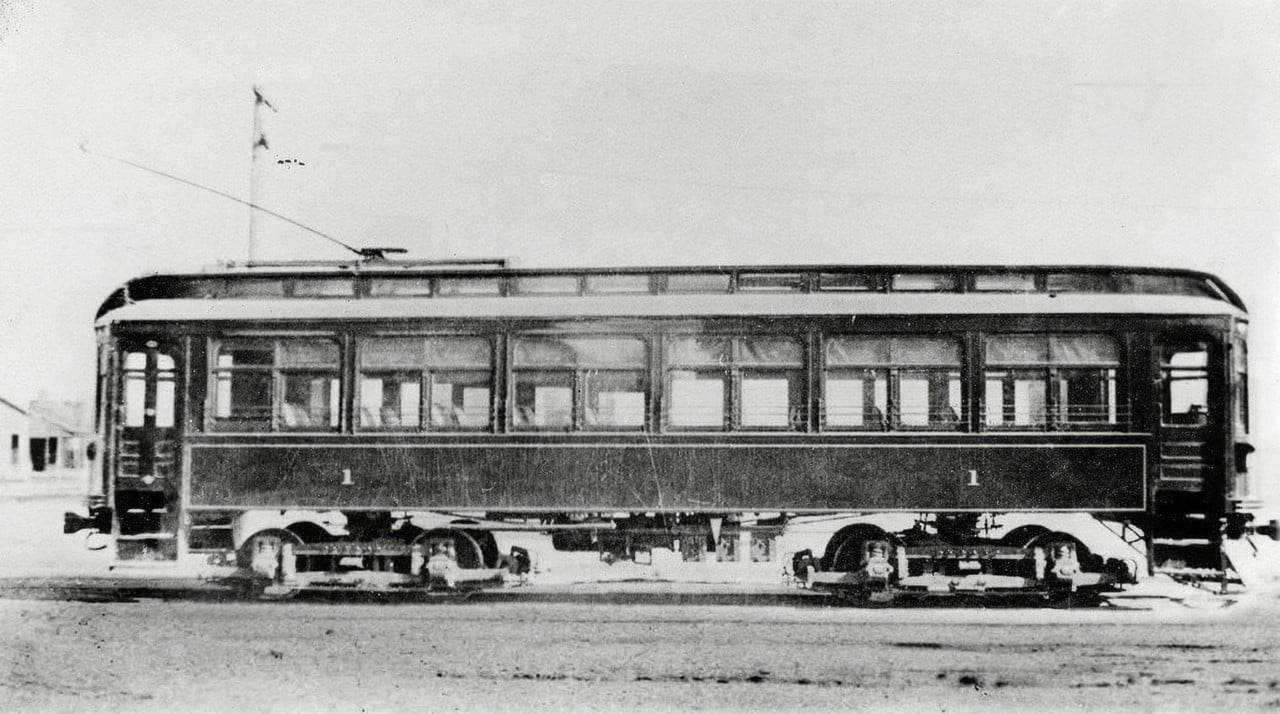
The Northern Texas Traction Company (NTTC), founded in 1902 to consolidate Fort Worth’s streetcar lines, attempted to cultivate a favorable public image for its Fort Worth–Dallas interurban line with the slogan “Speed with Safety.” Interurban cars were larger and heavier than streetcars, used the same tracks within the city, but traveled at dizzying speeds between cities (Fort Worth to Dallas, Fort Worth to Cleburne, and so on). In 1904, the company launched an advertising campaign boasting that it had not yet lost a single passenger on the Fort Worth–Dallas line, which was true to a certain extent. What it failed to mention, however, was all the livestock and people traveling in carriages or other vehicles, as well as pedestrians, who had lost their lives during its operations. Among the four-legged victims was “Tom Powell,” a beloved Fort Worth Fire Department horse that was struck and killed by an interurban car in 1906 while pulling a fire wagon across the tracks.
Streetcars were welcomed as a major advance in urban transportation, speeding the movement of residents and connecting distant suburbs with the business district, but they also proved to be accidents waiting to happen. The cars were of fragile construction, and their only safety equipment was a bell warning of an approaching car. Streetcars derailed easily when they struck any substantial obstacle and overturned readily. Although they shared the streets with pedestrians, horse-drawn vehicles, and automobiles, their operators simply assumed they had the right of way. Tracks were laid down the middle of streets on inadequately prepared foundations, and over time the ground beneath them subsided, leaving the rails protruding above the surface. Any vehicle with low ground clearance thus risked becoming suspended in midair with its wheels off the ground when crossing the tracks. In addition, streetcar operators (motormen) were poorly paid and received minimal training. Many had previously worked as conductors and had earned promotion to operator as a reward for long service. Strict schedules, which forced the cars to travel at dangerous speeds, did nothing to improve safety. A 1910 Chicago study found that most streetcar accidents were caused by excessive speed, yet the practice remained unchanged. Operating regulations were vague or entirely absent. The law, for example, did not establish a maximum number of passengers a car could carry. The rule was “as many as will fit,” with people boarding and alighting while the car was moving. Streetcar operators reportedly often stopped between designated stops to allow a friend to board. Racial segregation contributed to dangerous operating conditions because if most seats inside a streetcar were occupied by white passengers, Black passengers had to stand on the rear platform, clinging on tightly and disrupting the car’s balance. That, however, was their problem if they tried to sit inside.
Fort Worth’s streetcars were electrified in 1889, creating another danger for anyone involved in an accident: electrocution. Overhead wires carrying 600-volt direct current could kill instantly if they fell into the street. The small electric motors powering the cars were equally dangerous. In 1915, a collision with a motorcycle caused a streetcar to jump the tracks, but its trolley pole remained in contact with the overhead wire. Without the grounding provided by the rails, every metal part of the car became a potentially lethal conductor of electricity. Fortunately, a hero was nearby: butcher J.R. Townsend, who ran over from a nearby store and pulled down the trolley pole.
In 1890, the North Side Street Railway Company, which had switched to electric operation, reverted to mule-drawn cars. According to the company, it could not have switched to electric cars without incurring a financial loss. Even more revealing, however, were the reasons the company cited for its difficulties: “poor track conditions, unskilled employees, and dilapidated secondhand cars.” These problems continued to plague electric streetcar companies in the years that followed.
When accidents inevitably occurred, companies could choose from various legal and media defense strategies. One was to label the accident an “act of God” or a “natural disaster.” If rain reduced visibility or washed out the tracks, for example, nature was to blame, not the company. Almost anything could be blamed on an act of God. Another popular defense tactic was to attribute blame to “operator error” or “indeterminable causes,” both of which relieved the company of legal liability. (Courts at the time were willing to separate the operator’s liability from that of the company, a defense that would not hold up today.) When all else failed, the companies settled out of court. A few thousand dollars offered to the victim or the victim’s family was usually enough to end the lawsuit.
Unfortunate operators abandoned by their employers became sympathetic figures compared with the heartless corporations that employed them. The NTTC operator whose streetcar struck and killed Ryan Godwin in 1915 became so hysterical at the scene of the accident that he was unable to give police a coherent statement. Unsurprisingly, the company quickly distanced itself from him. Fortunately for both the company and the operator, the investigation blamed the victim, who had no business being on the tracks. In 1895, after Joe Wilson was struck and killed by a Fort Worth Street Railway Company car, the company promptly pointed out that Wilson was “deaf and mute” and was therefore himself to blame for having “allowed himself to be caught on the tracks,” even though witnesses said the car was traveling at a “high rate of speed” when it struck him. The operator was reportedly “utterly devastated” by the accident, but nevertheless continued along his route. By a strange coincidence, a deaf and mute friend of Wilson’s had been struck and killed by the same car at almost the identical location a year earlier.
Unsurprisingly, the law was on the companies’ side. Legal precedent placed all responsibility for safely crossing the tracks on pedestrians themselves. A streetcar operator was first held legally responsible for a fatal accident in New York in 1906, with blame falling on the conductor rather than the operator or the company. The operator left his position to speak with a passenger and handed control over to the conductor. The conductor lost control and collided with a mail wagon, killing its driver. The jury found the conductor guilty of negligence, which should have had major legal consequences, but it established little precedent in conservative inland cities such as Fort Worth.
As the number of streetcar lines increased, so did accidents between streetcars and pedestrians or between streetcars and other vehicles. Many involved carriages whose owners allowed their horses to travel on their own because they knew the route well. Horses could be relied upon to watch out for one another and avoid collisions. Electric streetcars did not forgive such lapses by drivers. A single inattentive streetcar operator or carriage driver was enough to cause an accident. Subsequent investigations usually assigned responsibility to no one. The situation became so bad that the Telegram and Star-Telegram began publishing annual casualty totals like sports scores. Accidents were so frequent that newspapers often grouped two or three of them into a single article placed on an inside page. Some stories warranted front-page coverage, such as a 1912 accident with the terrifying headline: “6 Injured in Collision of Crowded Streetcars. Operator Crushed, Pulled from Burning Wreckage.”
In reporting accidents, newspapers faithfully followed the tried-and-tested journalistic principle: “The more blood, the greater the sensation.” This meant graphic details. In the aforementioned 1895 accident, a streetcar on Main Street ran over Joe Wilson. As the Gazette described it, his body was dragged forty yards before the operator managed to stop. “When pulled out, it was so mutilated that it scarcely resembled a human body. The arms and legs were crushed, the head split open, and the abdomen and chest so torn apart that the entrails spilled onto the ground.” The bloodied corpse was carried to the sidewalk, where “hundreds” of people soon gathered to gaze upon the “horrific spectacle.”
The more victims there were, the greater the public interest. In 1907, twenty people were injured when an overcrowded NTTC car overturned while traveling along North Main toward the stockyards. After the Star-Telegram tallied the casualties for 1909 (four children killed and two adults injured by November), which was a good year by streetcar standards, a wave of public outrage arose demanding that “catcher nets,” as they were called, be installed on the fronts of the cars. City council members responded to the calls with an ordinance requiring the equipment, but the companies did nothing until December 16, 1909, when an NTTC car ran over twelve-year-old Otto Berger. Only then did NTTC agree to install catcher nets “in deference to public opinion,” as the newspaper phrased it, although the company manager warned that “this will not prevent accidents.” He declared that NTTC was doing everything possible to prevent them, noting that accidents were “costly and cost the company large sums every year.” The competing Citizens Railway streetcar company made no such promise to install catcher nets.
As soon became apparent, the installation of catcher nets reduced neither the number nor the severity of accidents. The causes were usually defective components or poor track maintenance, both consequences of cutting operating expenses. What the companies saved on maintenance, they spent defending themselves in lawsuits. Most victims were not pedestrians struck by slow-moving cars (seven miles per hour), but passengers who died or were injured when a car derailed or collided with another vehicle. In January 1920, nine passengers were injured when the Arlington Heights streetcar in which they were riding was struck by a Frisco train at the intersection of the two routes on Seventh St. The accident resulted from a series of poor decisions by employees of both companies. The streetcar operator stopped on the tracks to let off a passenger, and the locomotive was pushing sixteen railcars ahead of it, so the engineer could not see the tracks in front of him.
Victims of streetcar accidents did not shy away from confronting Goliath. All it took to win was a good lawyer and a sympathetic jury. Some victims even had legitimate claims. Large awards were rare, but not unheard of. Amounts awarded in Fort Worth cases ranged from $15,000 to $50,000 in compensatory and punitive damages. A victim’s case was always strengthened if the victim was a child or a respected person. Minor cases, such as Mrs. Margaret Treadwell’s 1918 lawsuit against NTTC for $2,000 after a streetcar struck her carriage as it crossed the tracks, were settled on the courthouse steps, usually for a fraction of the amount originally demanded. Notices of pending lawsuits appeared in newspapers as regularly as reports of streetcar accidents and, like those reports, were sometimes grouped into a single article, as on December 5, 1918, when the Star-Telegram reported together on U.A. Zimmerman’s $10,000 lawsuit against NTTC and Dada Ward’s $5,000 lawsuit against the same company.
Even a good lawyer and a sympathetic victim, however, did not guarantee a large award. A “catastrophic streetcar accident” on Thanksgiving Day in 1907 claimed one life and injured fifteen people. The authorities and NTTC launched investigations, but both the company and Judge Thomas J. Maben concluded that it was impossible to determine why the car had left the tracks and plunged down a steep embankment. Without a proven cause, the victims had no legal basis for a negligence lawsuit. End of story. The injured parties were victimized twice: first by the company and then by the legal system.
...To be continued...