

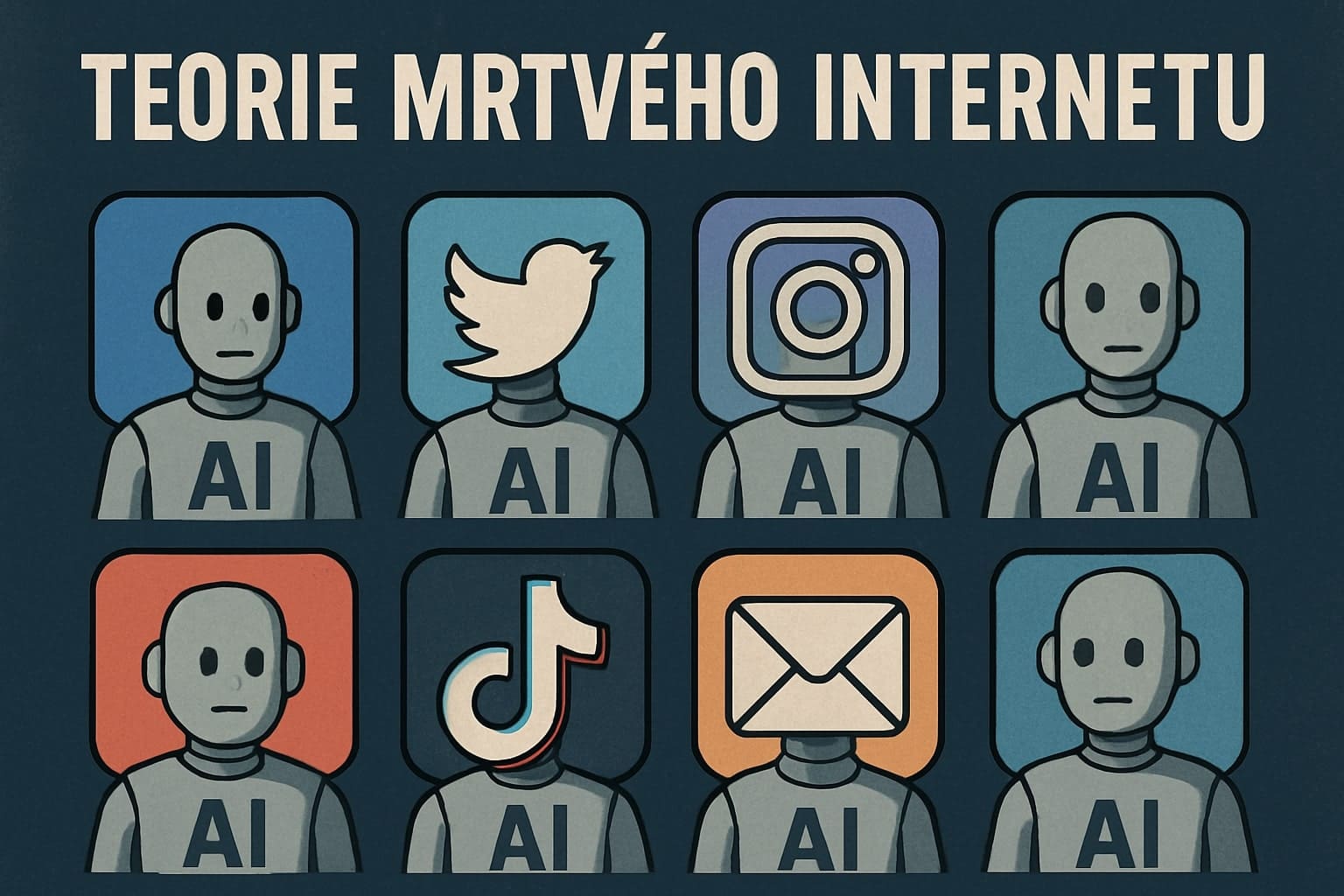
Dead Internet Theory: How AI and Bots Took Control of the Digital World
Imagine a world where most social media posts, comments under articles, and even entire profiles are created not by people, but by artificial intelligence and automated systems. This is precisely what the dead internet theory claims—a conspiracy concept that is gaining popularity and raising questions about the authenticity of our digital lives.
What Is the Dead Internet Theory?
The dead internet theory is a conspiracy belief claiming that most activity and content on the internet today—especially on social media—is generated not by humans, but by artificial intelligence agents and bots. According to this theory, these AI-driven systems create posts, images, comments, and even entire accounts designed to farm engagement in the form of likes, shares, and comments, often without any real human participation. The idea goes even further—many of the accounts interacting with such content are also managed by artificial intelligence. This creates a self-sustaining cycle of artificial engagement in which bots interact with other bots or AI-generated content. When these bot-controlled accounts accumulate followers—some fake, some real—their high follower counts can make them appear legitimate in the eyes of real users. The result is an online environment where distinguishing between genuine human interaction and synthetic activity is becoming increasingly difficult.
Origins and Main Claims of the Theory
The dead internet theory includes several key claims that challenge our understanding of the modern internet. The first is the displacement of human activity—the theory suggests that organic human participation has largely been replaced by automated systems. Bots generate most of what appears to be user-generated content, while algorithms control what people see in their feeds. Another pillar of the theory is coordinated manipulation. Some proponents claim that this shift is intentional—a coordinated effort by governments or corporations to manipulate public perception through curated or even fabricated information. This claim touches on concerns about disinformation campaigns and propaganda spread through digital platforms. The third aspect is homogenization and commodification. Critics argue that social media platforms prioritize engagement metrics over authentic communication. Algorithms favor viral or sensational content because of advertising revenue, rather than meaningful discussion or diversity of thought. This trend leads to uniformity of content and a decline in genuine human creativity and spontaneity.
The Role of Artificial Intelligence in This Theory
Artificial intelligence technologies are central to this phenomenon. Social platforms use machine-learning algorithms to curate feeds for maximum user engagement. Generative models produce text, images such as viral memes, videos, and even deepfake personas that can be almost indistinguishable from genuine human content. Bots can simulate conversations in comments or forums with such sophistication that ordinary users often cannot tell the difference. This automation enables the creation of enormous amounts of online interaction—and even trends—that are synthetic rather than organic. The result is a digital environment where it is increasingly difficult to determine what is authentic and what is artificial. Jake Renzella of the University of New South Wales describes this phenomenon as follows: "Any interaction, trend... could very well be synthetic. Designed to slightly change the way you perceive the world." This warning highlights the potential psychological impact that constant exposure to artificial content may have on our perception of reality and society.
The Truth Behind the Theory
While the dead internet theory contains elements typical of conspiracy thinking—such as claims of government mind control—it points to genuine concerns of the modern digital age. A significant portion of web traffic does indeed come from non-human sources, such as bots and data scrapers. The rise of generative AI means that more online content is created automatically each year; some experts predict that as much as 99% could be created by machines within a decade. Social media's reliance on algorithmic selection can indeed amplify low-quality or manipulative material on a large scale. Algorithms often favor content that elicits strong emotional reactions, regardless of its factual accuracy or social value. This can lead to the spread of disinformation and the polarization of society. However, there is no credible evidence supporting the claim that most personal interactions are fake—or that all major platforms are secretly operated exclusively by AI for sinister purposes. Instead, the theory is better understood as a warning about how easily digital spaces can be dominated by artificial signals if left unchecked.
What the Future Will Bring
As more and more people rely on social media for news and connection—especially younger generations—the risk grows that perceptions will be shaped less by authentic discourse and more by what is amplified through automated systems. This underscores the need for skepticism when navigating digital spaces: any trend or sentiment may be artificially manufactured rather than genuinely popular among people. The dead internet theory also points to deeper questions about the nature of authenticity in the digital age. If it is becoming increasingly difficult to distinguish between human and machine-generated content, how can we maintain meaningful human connections online? How can we ensure that our opinions and decisions are based on genuine human experiences rather than artificial constructs? Growing automation through AI raises legitimate questions about authenticity and highlights why critical thinking is important when engaging with digital content. While much online activity today remains authentically human-driven, the growing presence of AI in our digital lives requires new skills in digital literacy and skeptical analysis of the content we encounter every day.
Ultimately, whether or not the dead internet theory is true, it serves as an important reminder of the need to remain vigilant and critical of the information we consume online and to actively seek authentic human connection in an increasingly automated world.


