

Claude Opus 4.1: An AI Coding Upgrade for Developers
Today, we'll take a look at the latest news from Anthropic, which has just announced the release of the Claude Opus 4.1 model. This upgrade brings significant improvements in agentic tasks, real-world coding, and logical reasoning. It was released on August 5, and this is just the beginning—Anthropic plans to introduce even greater improvements to its models in the coming weeks.
What's New in Claude Opus 4.1?
Claude Opus 4.1 is now available to paid Claude users and in Claude Code. You can also use it through the API, Amazon Bedrock, or Google Cloud's Vertex AI. The price remains the same as for the previous Opus 4 version, which is great news for those who want to upgrade quickly without additional costs.
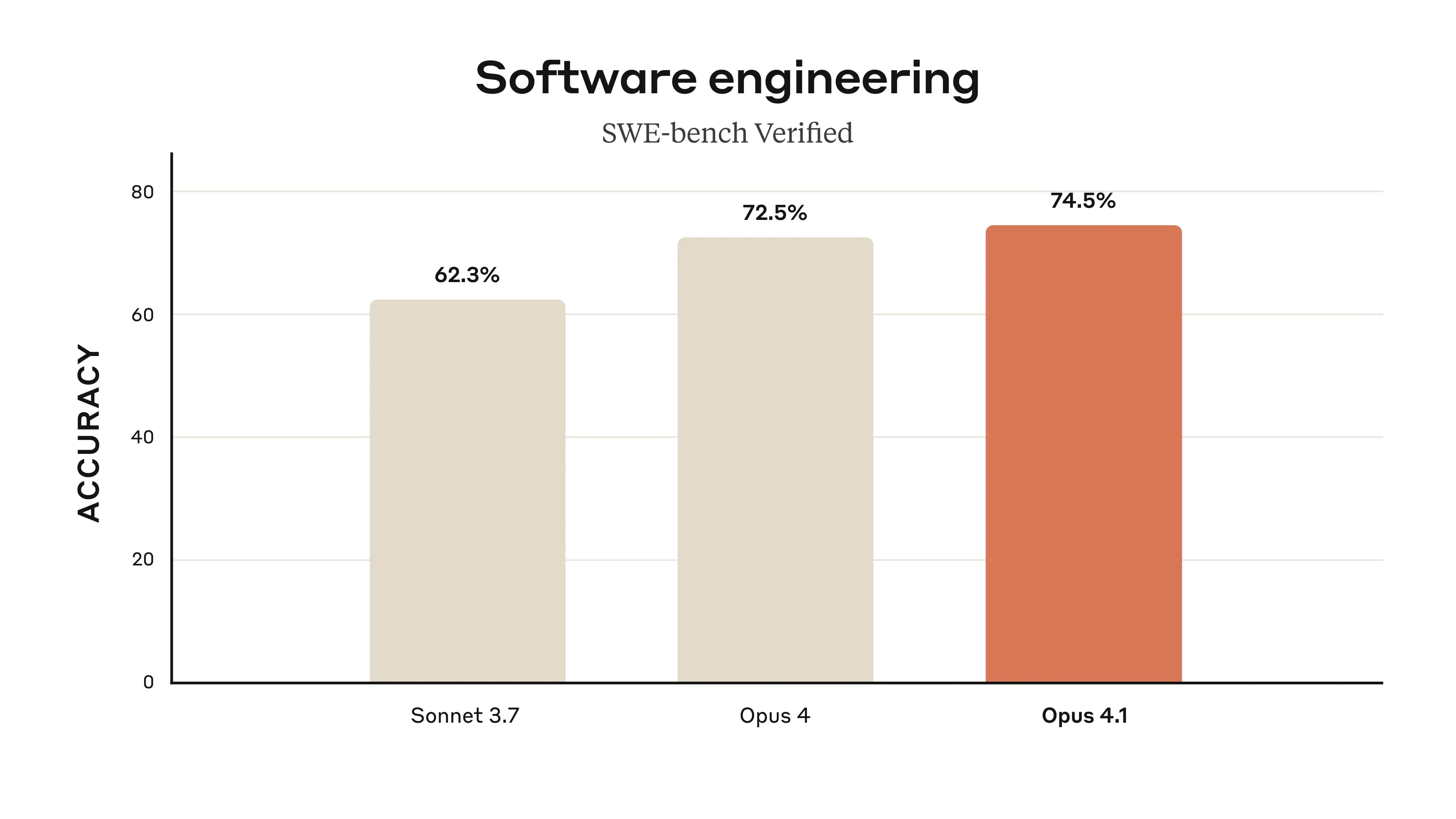
This model pushes the boundaries of coding to a new level. It achieves an impressive 74.5% on the SWE-bench Verified benchmark, marking a step forward. It also improves deep research and data analysis capabilities, particularly in tracking details and agentic search. According to GitHub, the model excels at refactoring code across multiple files, showing a significant improvement over the previous version.
Feedback from Experts and Companies
Rakuten Group appreciates how Claude Opus 4.1 can accurately identify fixes in large codebases without making unnecessary changes or introducing errors. Its team considers it ideal for everyday debugging. Windsurf also provided positive feedback, reporting an improvement of one standard deviation over Opus 4 on its junior developer benchmark. This is comparable to the leap from Sonnet 3.7 to Sonnet 4.
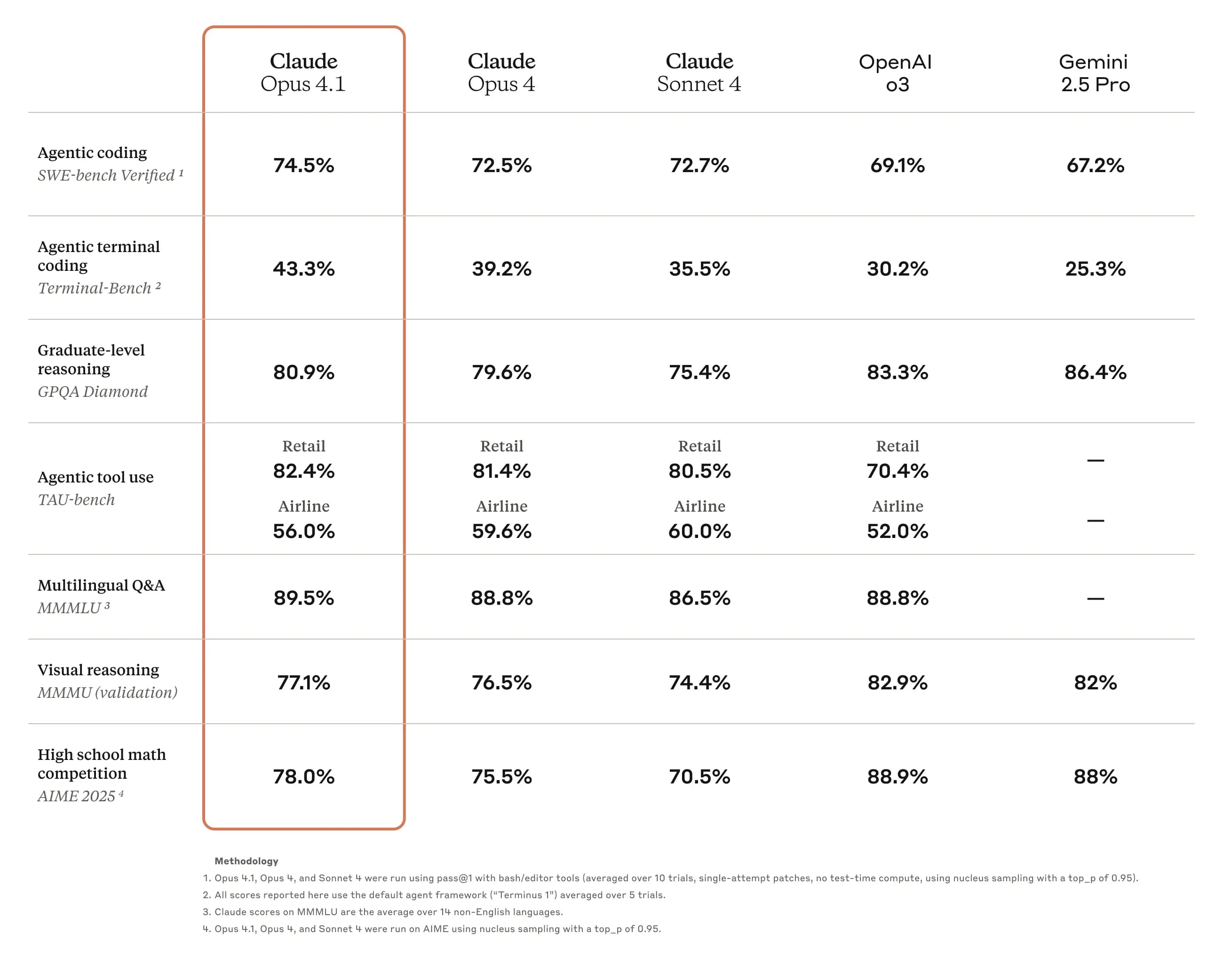
In the benchmark table comparing Claude Opus 4.1 with previous Claude models and other public models, it excels in categories such as SWE-bench Verified, Terminal-Bench, TAU-bench, GPQA Diamond, MMMLU, MMMU, and AIME. Some results were achieved using extended thinking of up to 64K tokens, which helps the model solve complex tasks more effectively.
How to Get Started?
Anthropic recommends that all users switch from Opus 4 to Opus 4.1 for all applications. If you're a developer, simply use the identifier “claude-opus-4-1-20250805” in the API. You can find more details in the system card, model page, pricing, and documentation. The company welcomes feedback at [email protected] to help it continue improving its models.
The appendix to the announcement lists data sources such as OpenAI's launch posts for the o3 models and the o3 system card, the model card for Gemini 2.5 Pro, and previous Anthropic announcements for Sonnet 3.7 and Claude 4. For SWE-bench, a simple scaffold is used with tools such as the bash tool and file editing tool, without the third planning tool used in previous versions.


