

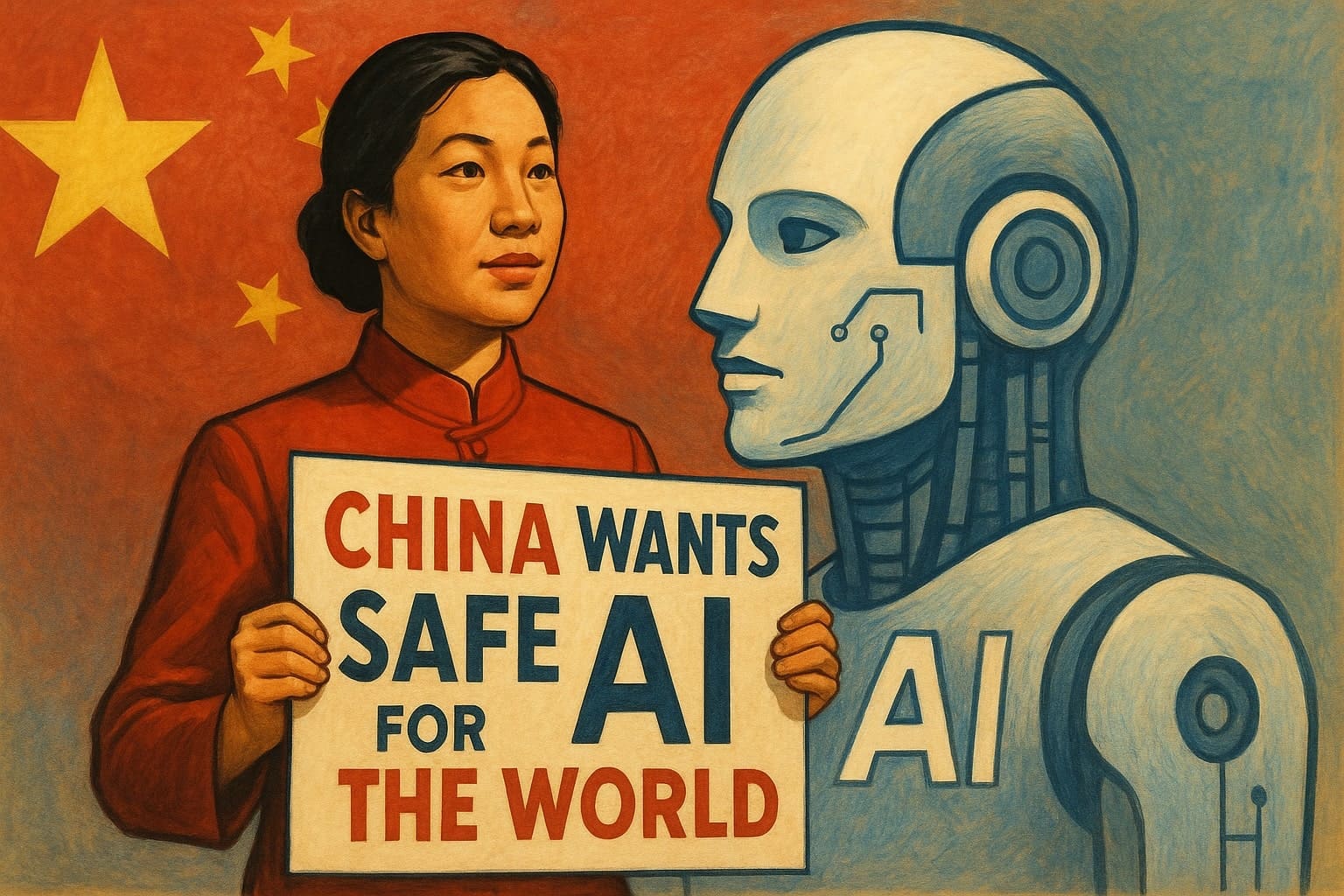
China Unveils a Global Plan for Artificial Intelligence Governance
Do you dream of a world where artificial intelligence (AI) helps everyone, not just a select few, and where risks are kept under control? That is precisely the core of the new action plan released by China on July 26, 2025, at the World Artificial Intelligence Conference in Shanghai. The document, titled "Global AI Governance Action Plan," is based on principles such as putting people first, respecting national sovereignty, focusing on development, safety, fairness, inclusivity, and open cooperation. It is not just theory—the plan proposes concrete steps to ensure that AI serves the entire world, in line with UN goals such as the 2030 Agenda for Sustainable Development.
The document emphasizes that AI is a new frontier of human progress and a key driver of the technological revolution. It brings enormous opportunities, but also risks that must be addressed together. China calls for cooperation among governments, organizations, companies, scientists, and citizens to ensure safety, reliability, and fairness in the use of AI. All of this is in the spirit of a "shared future"—the idea that in the age of intelligence, we must all work together.
Key Points of the Plan: 13 Steps Toward Better AI
The plan is structured around 13 specific actions covering everything from innovation to safety. It begins with a call to jointly seize the opportunities offered by AI. For example, it proposes accelerating the construction of digital infrastructure, exploring the frontiers of technology, and promoting AI globally so that it can help address global challenges such as poverty and climate change.
Another point focuses on promoting innovation. China proposes creating international platforms for cooperation, reducing barriers, and sharing results so that AI can develop in an open and collaborative manner. This includes, for example, building innovative ecosystems where resources are shared and research costs are reduced.
Next comes the practical application of AI. The plan seeks to integrate AI into industry, commerce, healthcare, education, agriculture, and other areas. Examples include autonomous driving, smart cities, and cross-border infrastructure sharing to create a healthy application ecosystem.
Infrastructure and Inclusivity
One of the key elements is accelerating the construction of infrastructure such as clean energy, next-generation networks, data centers, and computing power standards. The plan emphasizes support for the Global South—meaning developing countries—so that they can genuinely benefit from AI and are not left behind. This includes sharing knowledge and technology to narrow the digital divide.
The plan also promotes open innovation ecosystems. This means cooperation among governments, industry, and academia to share resources, such as open platforms and communities, where costs are reduced and waste is prevented. It also includes rules for open-source code to ensure that it is safe and accessible.
Safety and Sustainability
The plan places a strong focus on data and the environment. It proposes cooperation on high-quality data, its free flow with privacy protections, and efforts to combat discrimination. This is intended to ensure that AI respects cultural diversity.
On the environmental front, it calls for "sustainable AI"—energy-efficient technologies such as low-power chips and algorithms. The plan supports cooperation on energy and water standards and the use of AI for the green transition, including biodiversity conservation.
Other actions concern standards and regulations. China proposes dialogue among organizations such as the International Telecommunication Union and ISO to create transparent frameworks that eliminate bias and ensure interoperability.
The Public Sector and Global Cooperation
Public institutions should lead by example: deploying AI in medicine, education, and transportation, with regular safety reviews and respect for intellectual property. The plan emphasizes data protection and knowledge sharing.
For safety, it proposes risk assessments, threat classification, information sharing, and investment in transparent technologies. This includes AI traceability to prevent misuse.
The plan is linked to the UN: it supports the Global Digital Compact and proposes new mechanisms, such as an International AI Scientific Panel and a global dialogue under the UN, to discuss safe and inclusive AI.
Capacity Building
The emphasis is on international cooperation in capacity building—constructing laboratories, providing training, and sharing datasets. This is intended to help developing countries, including by improving digital literacy, especially among women and children.
Finally, the plan calls for an inclusive governance model involving everyone—companies, researchers, and forums. This is intended to ensure dialogue and the sharing of best practices for better AI.
This plan is not merely a Chinese initiative—it is an invitation to worldwide cooperation. According to related reports from global sources such as the Global Times and Eurasia Review, China is thereby strengthening its role in the international dialogue on AI, with an emphasis on multilateralism and support for the UN. It is a step toward ensuring that AI serves everyone, without hegemony or discrimination.


