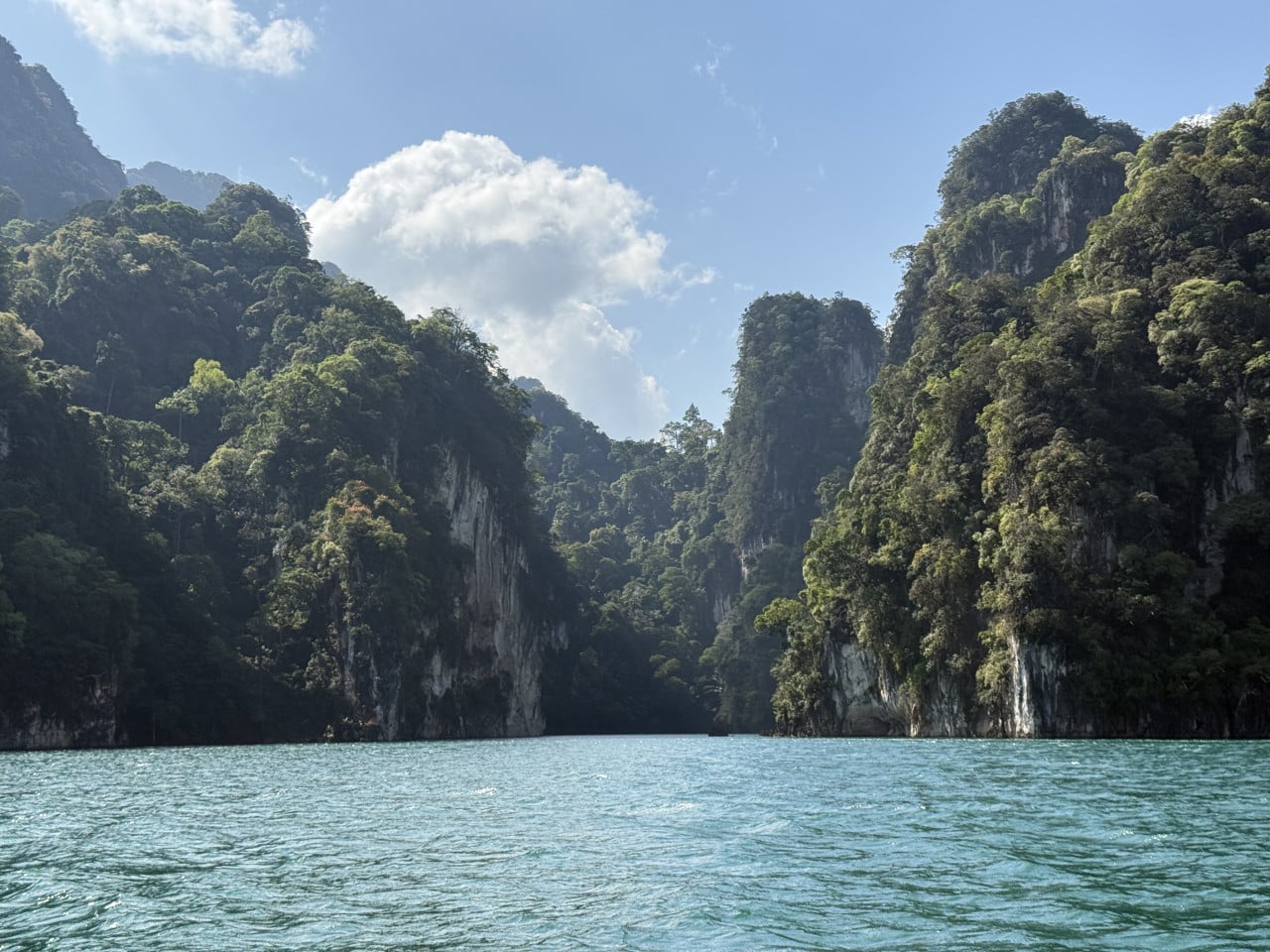
One of the greatest experiences of our vacation in Thailand was a full-day trip to Cheow Lan Lake – a vast emerald lake hidden in the heart of Khao Sok National Park, in Surat Thani Province. If you're staying in Khao Lak like us, or anywhere near Khao Sok, this is an absolute must-see in my opinion.
What exactly is Cheow Lan Lake?
Before I get into the story itself, I'd like to explain a little about what Cheow Lan Lake actually is – because at first glance, it looks like something that has always been here, but it is actually an artificial lake that was only created in 1987.
The whole story began in the 1980s, when Thailand decided to build a dam on the Khlong Saeng River to generate electricity for the entire southern region. Construction of the Rajjaprabha Dam (also known as Ratchaprapa Dam) began in February 1982 and took more than five years. When it was officially opened in September 1987, Thailand's King Bhumibol Adulyadej named it Rajjaprabha, which translates as “Light of the Kingdom" – quite poetic for a dam, isn't it?
And now for the figures that personally fascinated me. The dam is about 95 meters high and 761 meters long. The lake behind it covers an area of approximately 185 square kilometers and holds almost 5.6 billion cubic meters of water. To give you an idea – that's more than 2,200 times the volume of the Brno Reservoir. Its maximum depth is around 90 meters. The power plant at the dam has three turbines, each with a capacity of 80 MW, for a total of 240 MW – and it supplies electricity not only to Surat Thani Province, but also to the surrounding provinces in southern Thailand.
However, there is a rather sad side to the whole story – in order to create the lake, a vast area of pristine rainforest had to be flooded. Five villages had to be relocated, and residents received financial compensation and new land. Before the flooding, a rescue operation was carried out during which more than 1,300 animals from 116 different species were captured. Unfortunately, many of them did not survive the relocation, and approximately 52 fish species were unable to adapt to the new, deeper environment. Even today, while cruising across the lake, you can sometimes see the trunks of the original trees protruding from the water – a silent reminder of what once stood here.
On the other hand, the surrounding rainforest in Khao Sok is more than 160 million years old, making it older than both the Amazon rainforest and the rainforests of Central Africa. The Ice Age never reached this region, so the ecosystem here developed continuously. Today, the lake and surrounding forests rank among the most biodiverse areas in the world – it is estimated that more than 5% of all species identified on Earth live here. You can see gibbons, hornbills, macaques, and if you're as lucky as we were – even wild elephants.
Incidentally, Cheow Lan Lake is often compared to Guilin in China or Vietnam's Ha Long Bay – thanks to the dramatic limestone formations rising directly from the surface of the lake. The difference is that there are only a fraction of the tourists here.
From the pier onto the lake
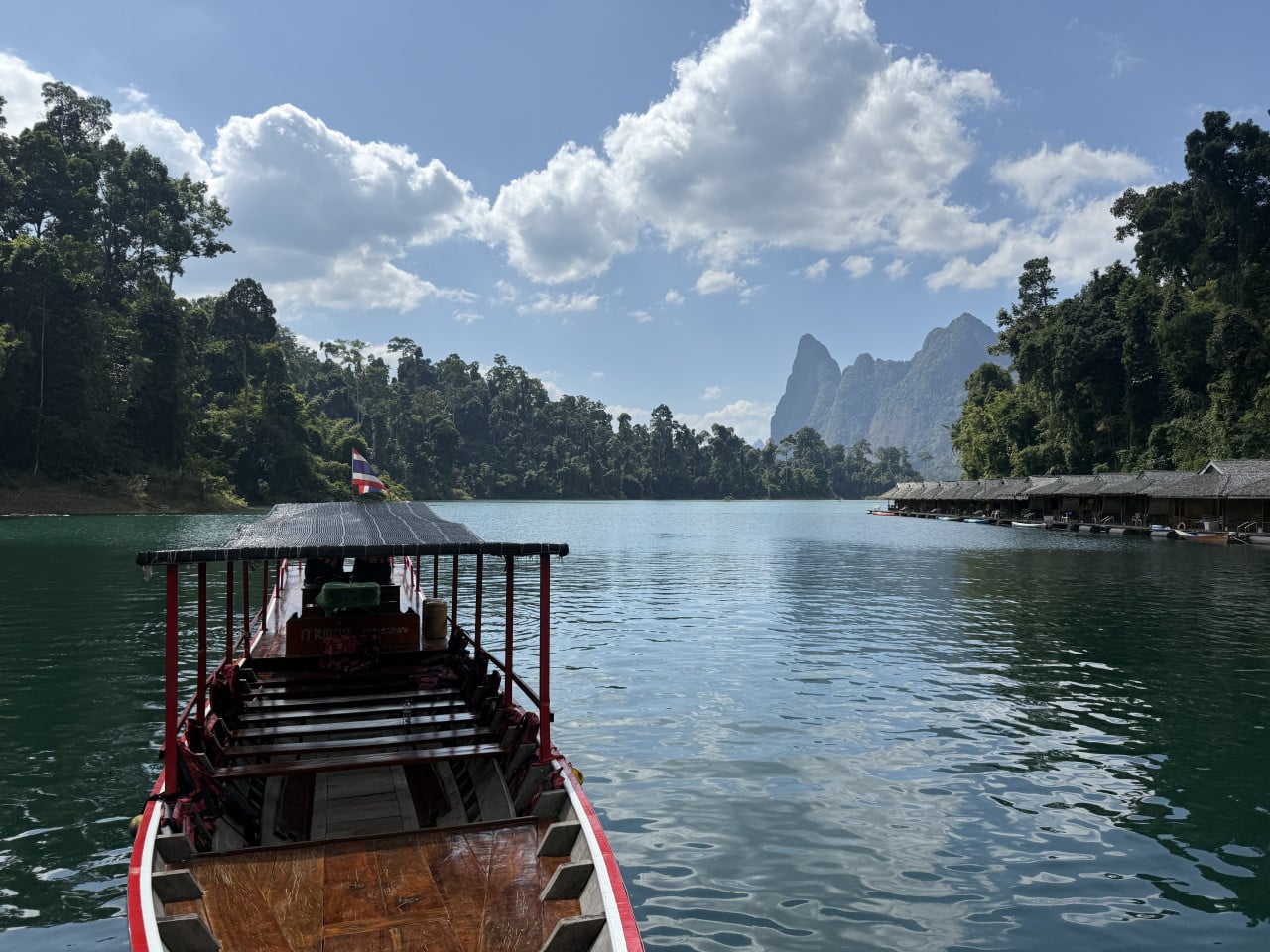
So in the morning, we met our guide at Ratchaprapa Pier, boarded a classic Thai longtail boat, and set off onto the lake with our entire group.
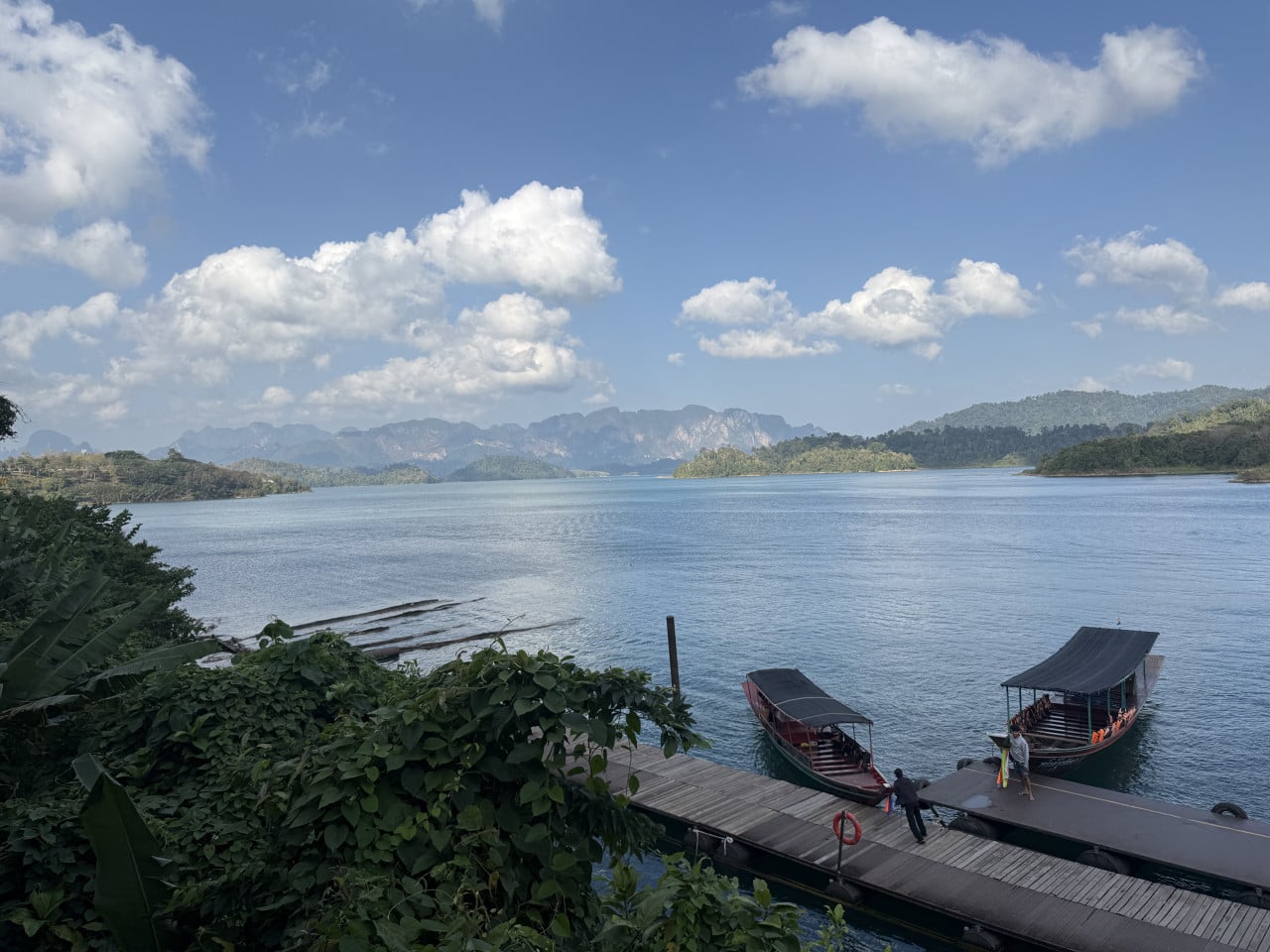
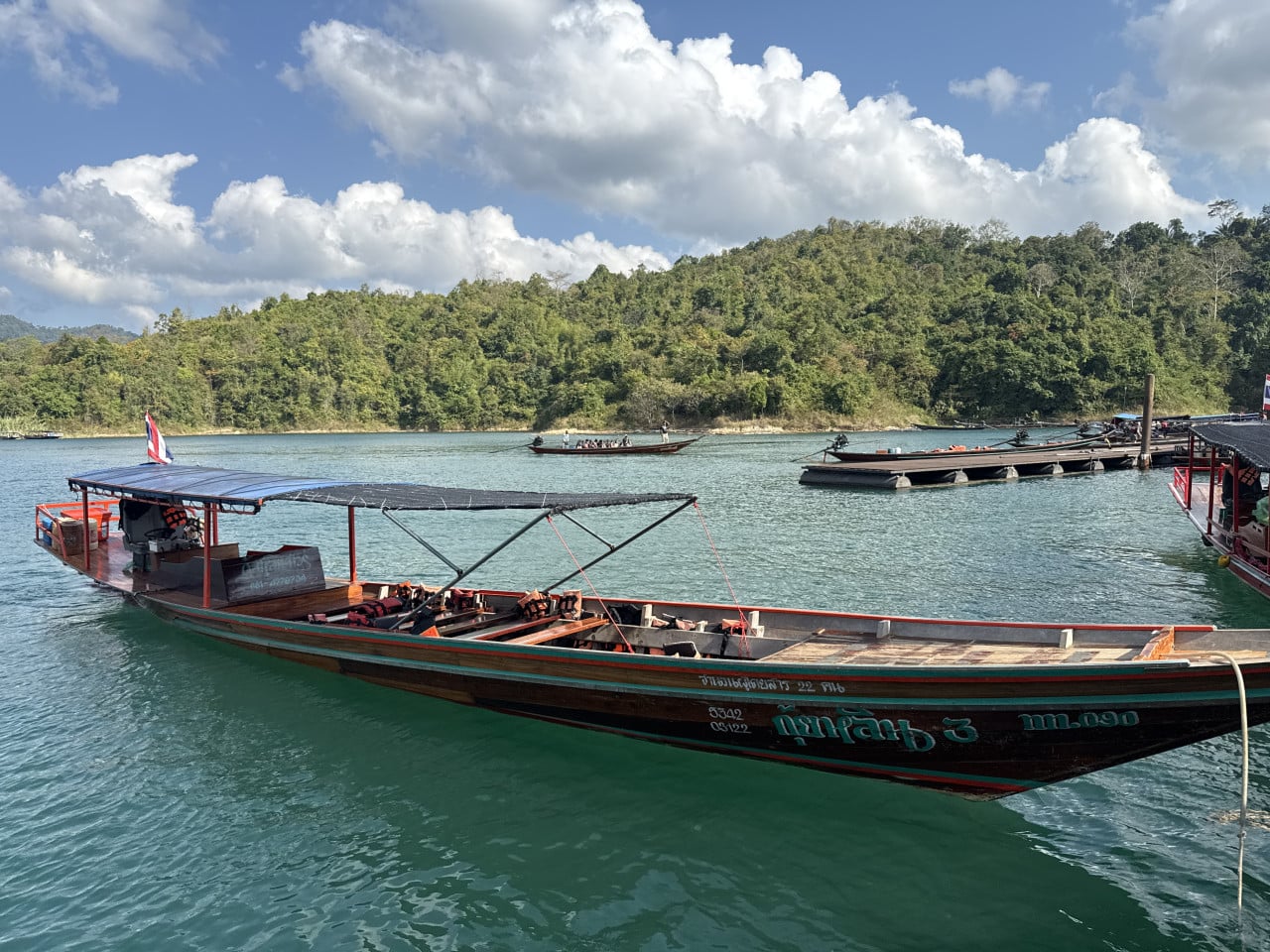
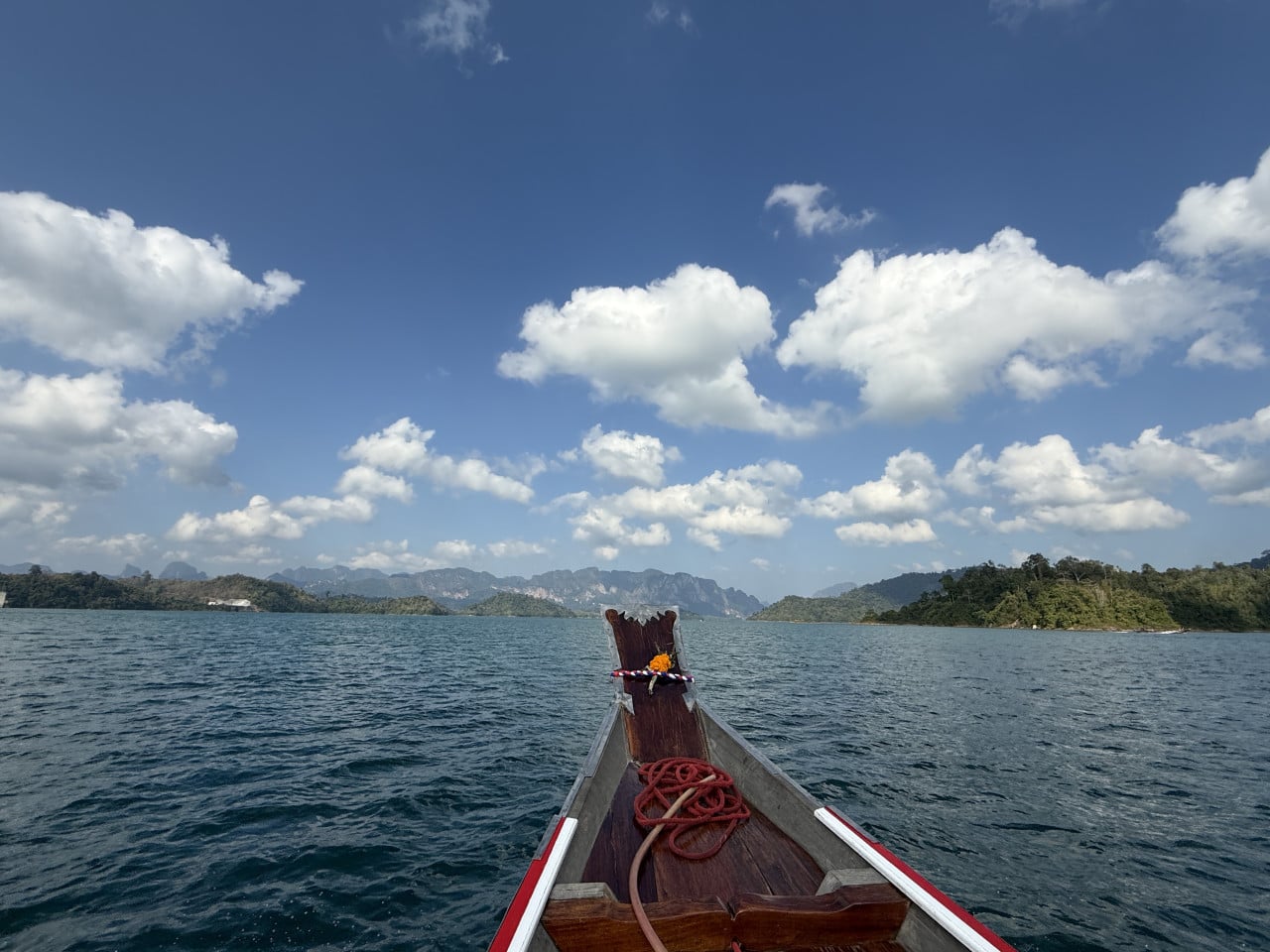
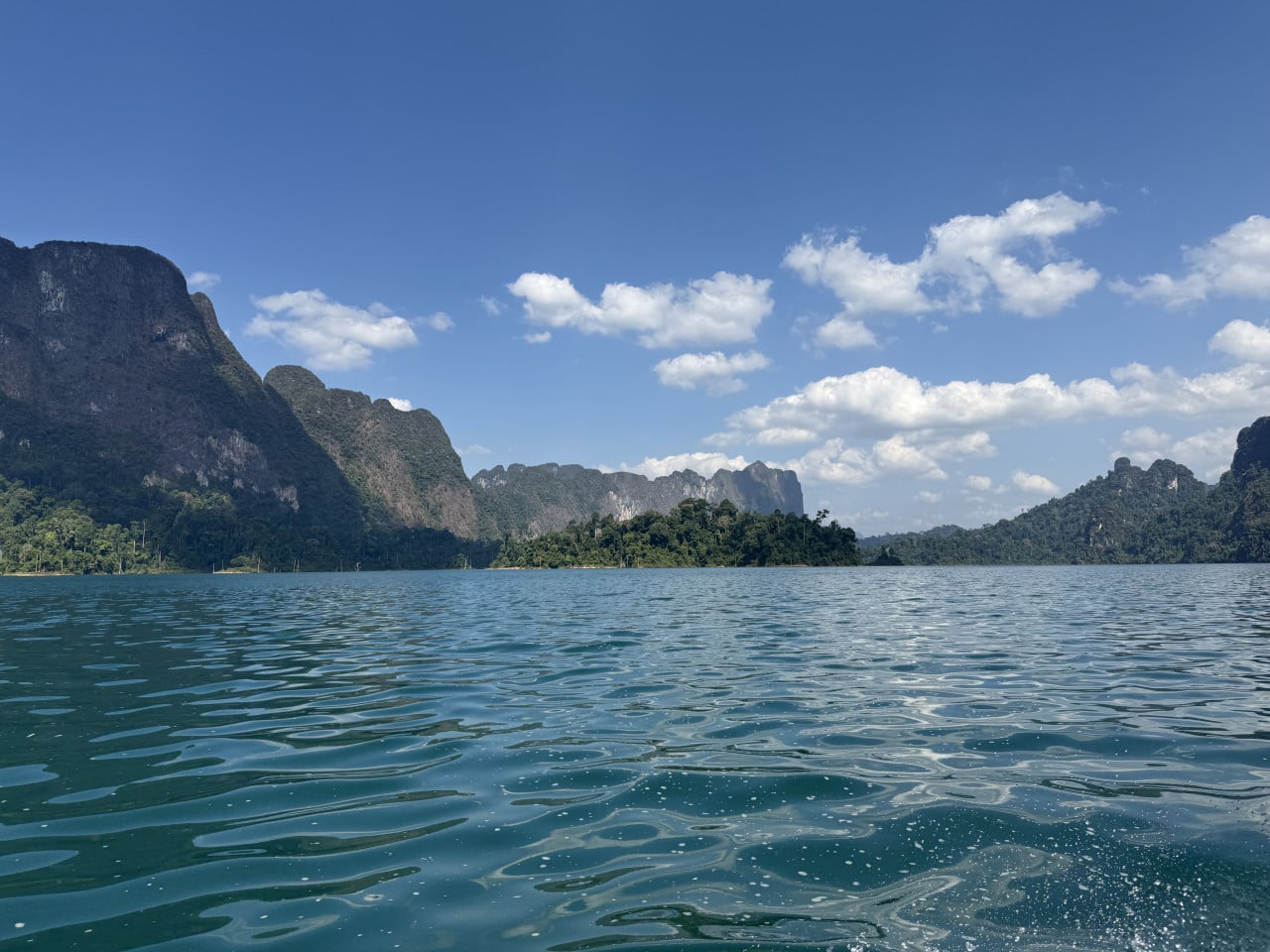
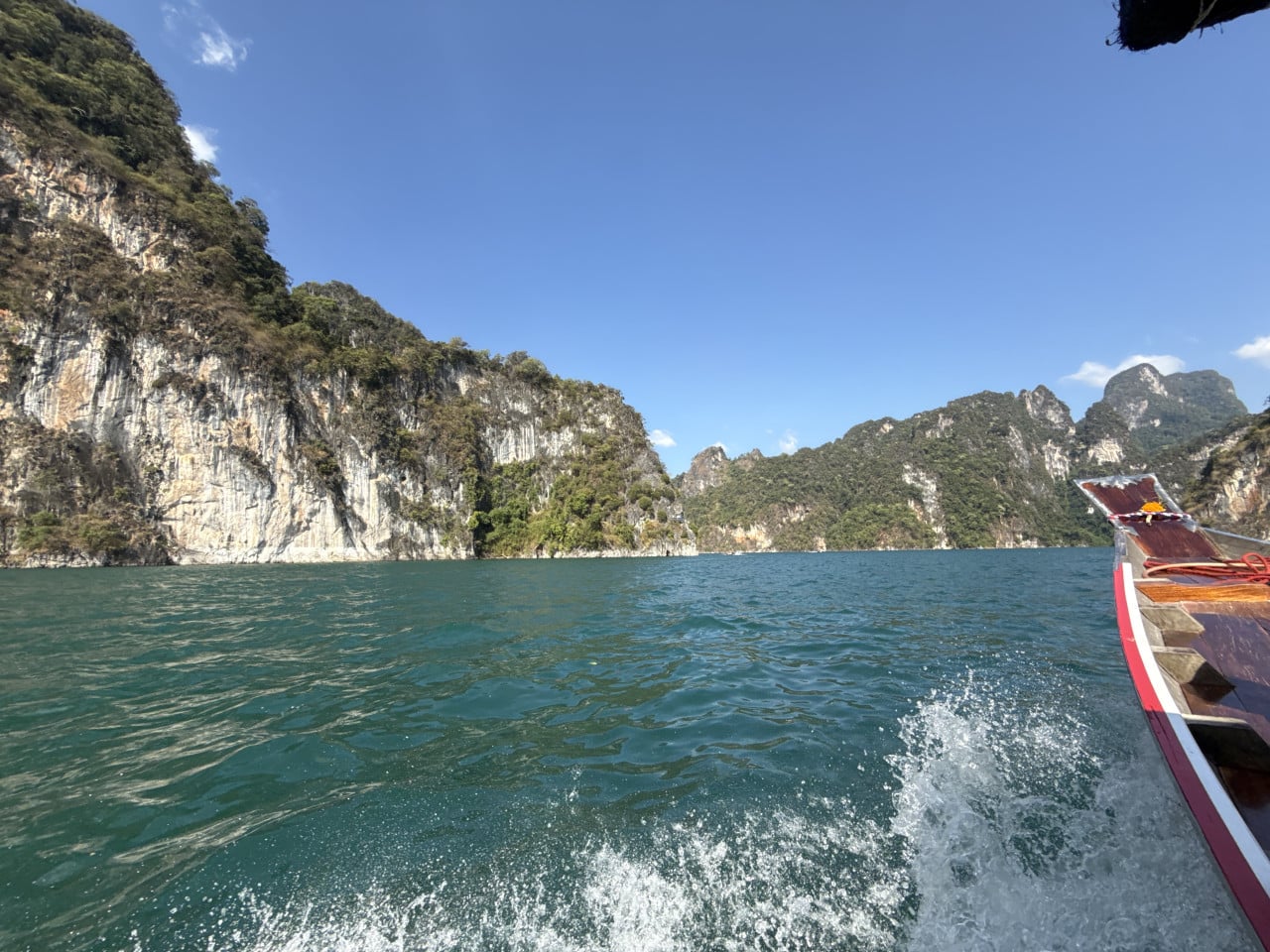
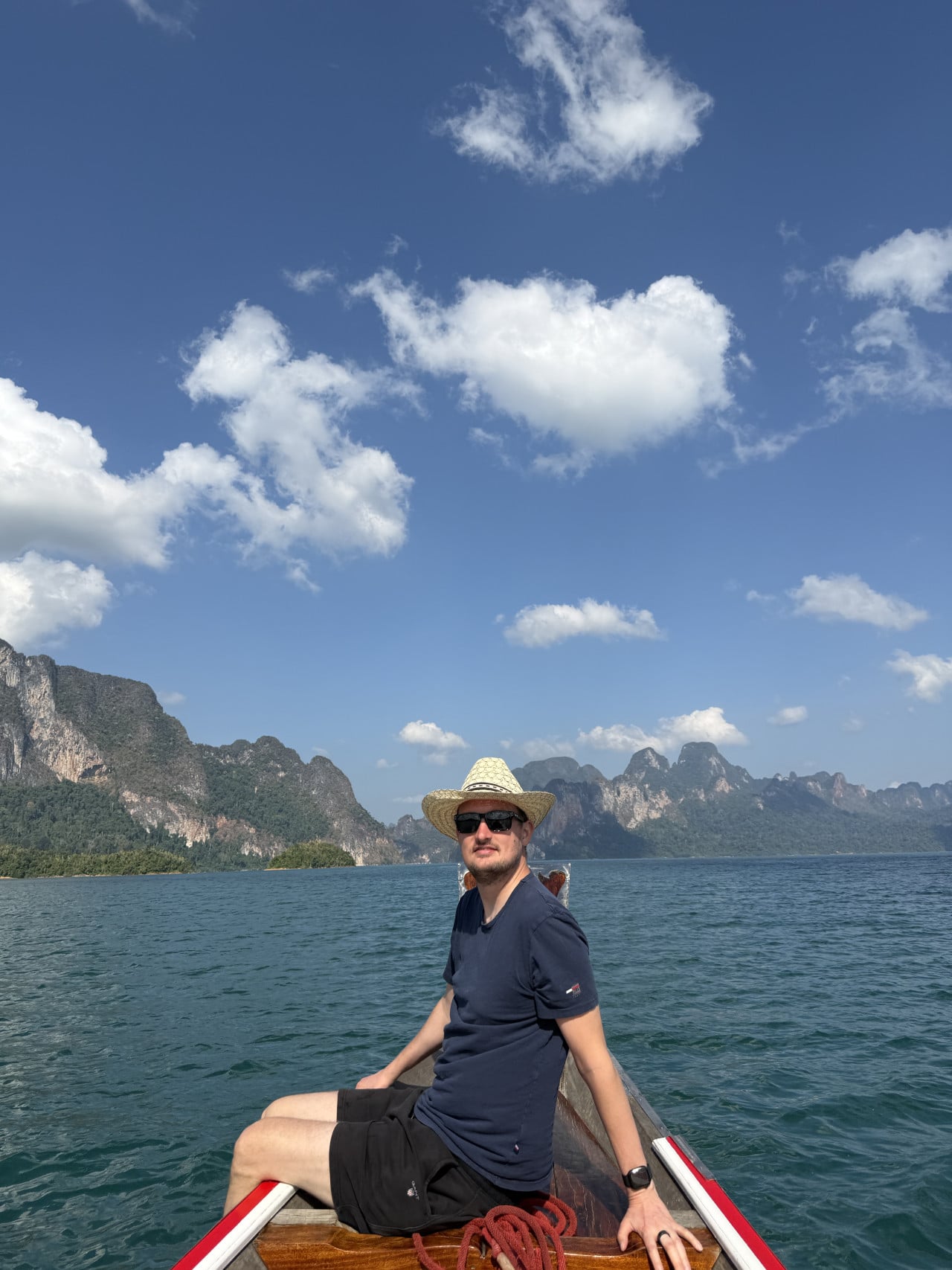
Right from the start, it was clear that this was going to be a different kind of experience. The water was incredibly turquoise, almost unrealistically emerald green. Steep limestone cliffs covered in dense tropical vegetation rose on both sides. We took some photos at the bow of the boat and simply enjoyed it – the panoramas, the peace, the warmth.
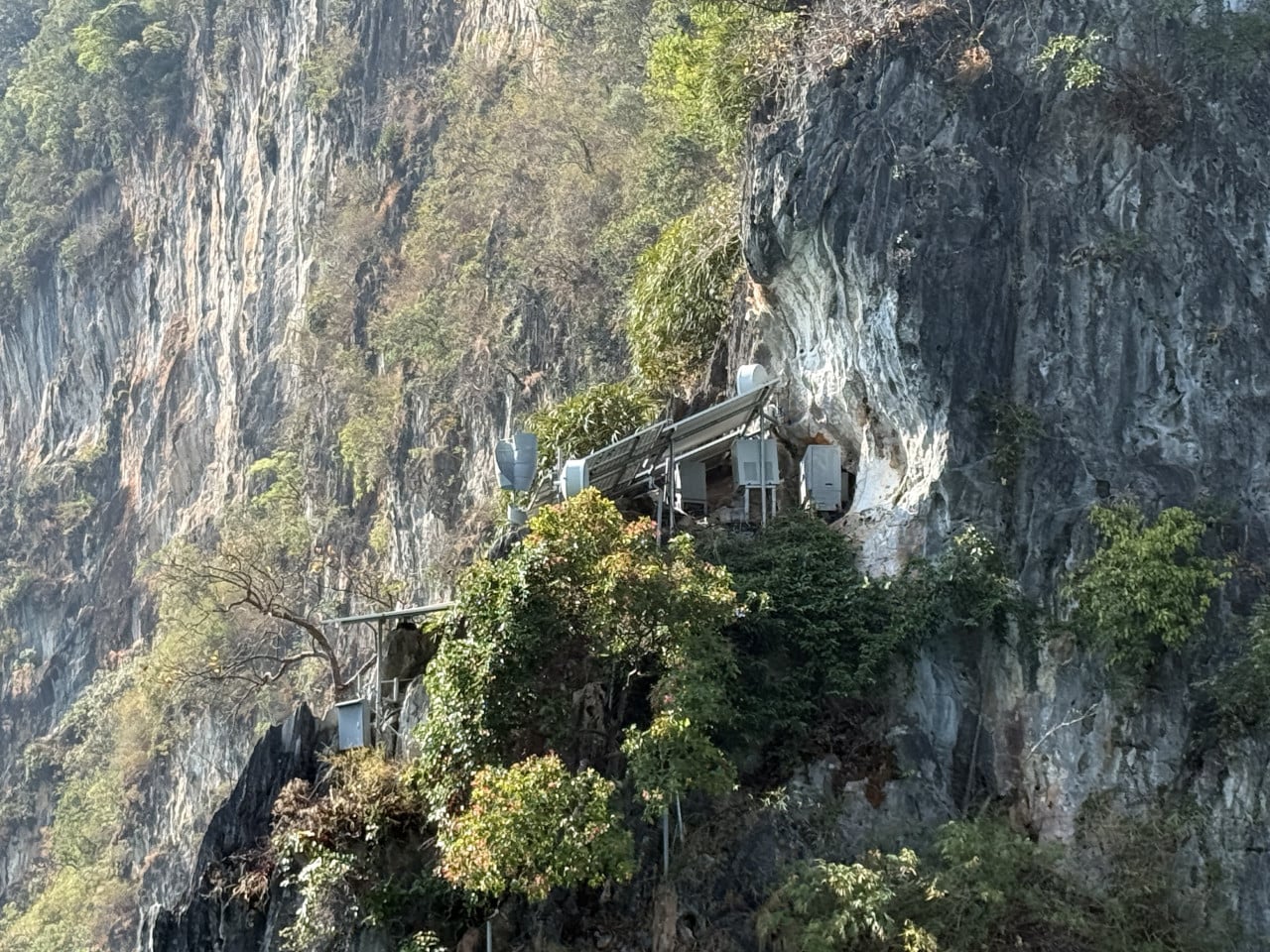
What naturally caught my attention from a slightly different perspective were the antennas and BTS stations installed directly on the rock. That's just typical of me – even on vacation, I keep an eye on telecommunications infrastructure.
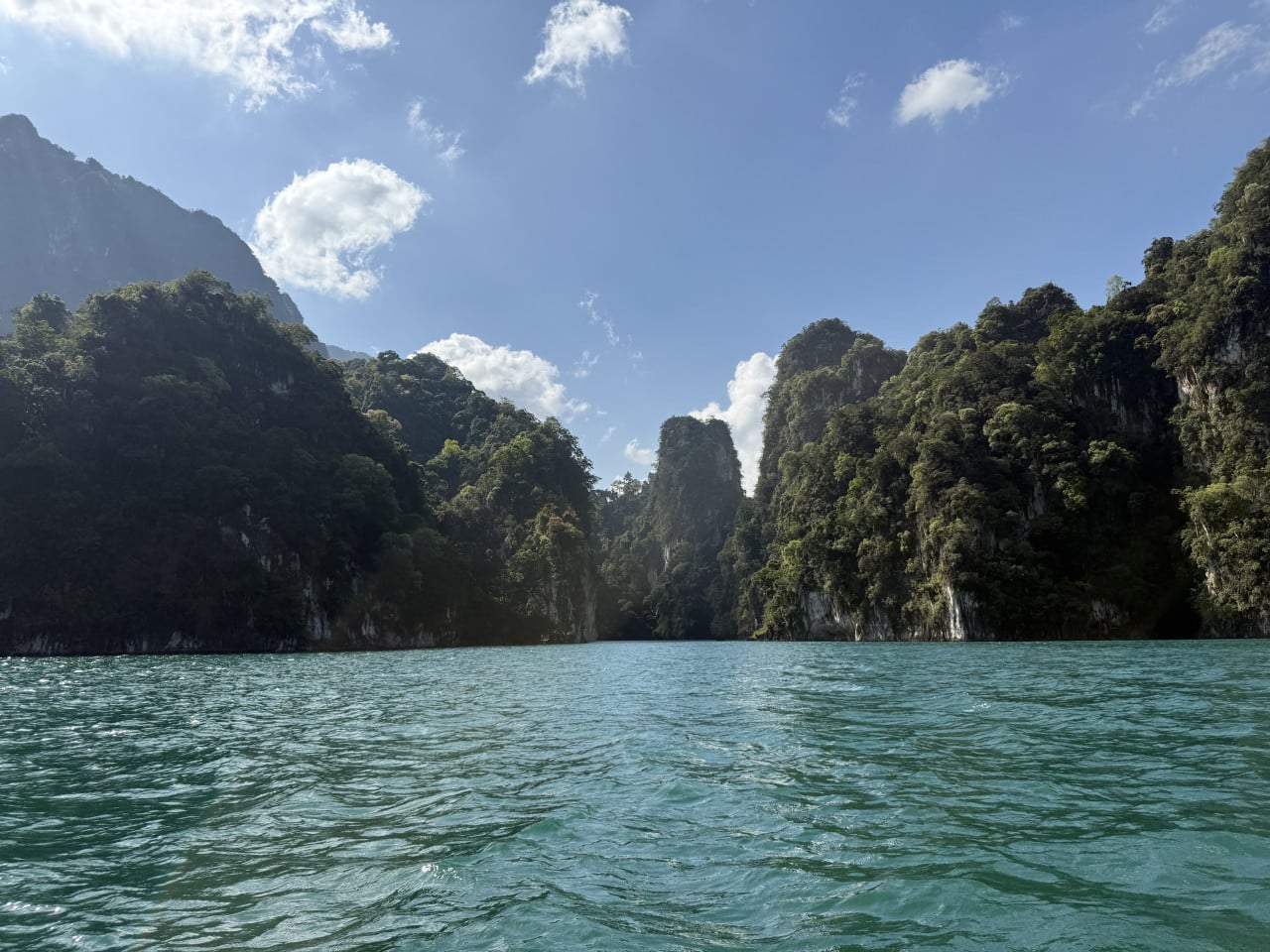
We then cruised through various channels between the limestone islets, which was beautiful. It was hot overall and the sun was shining brightly, so a hat was essential.
Khao Sam Kler – the iconic three rocks
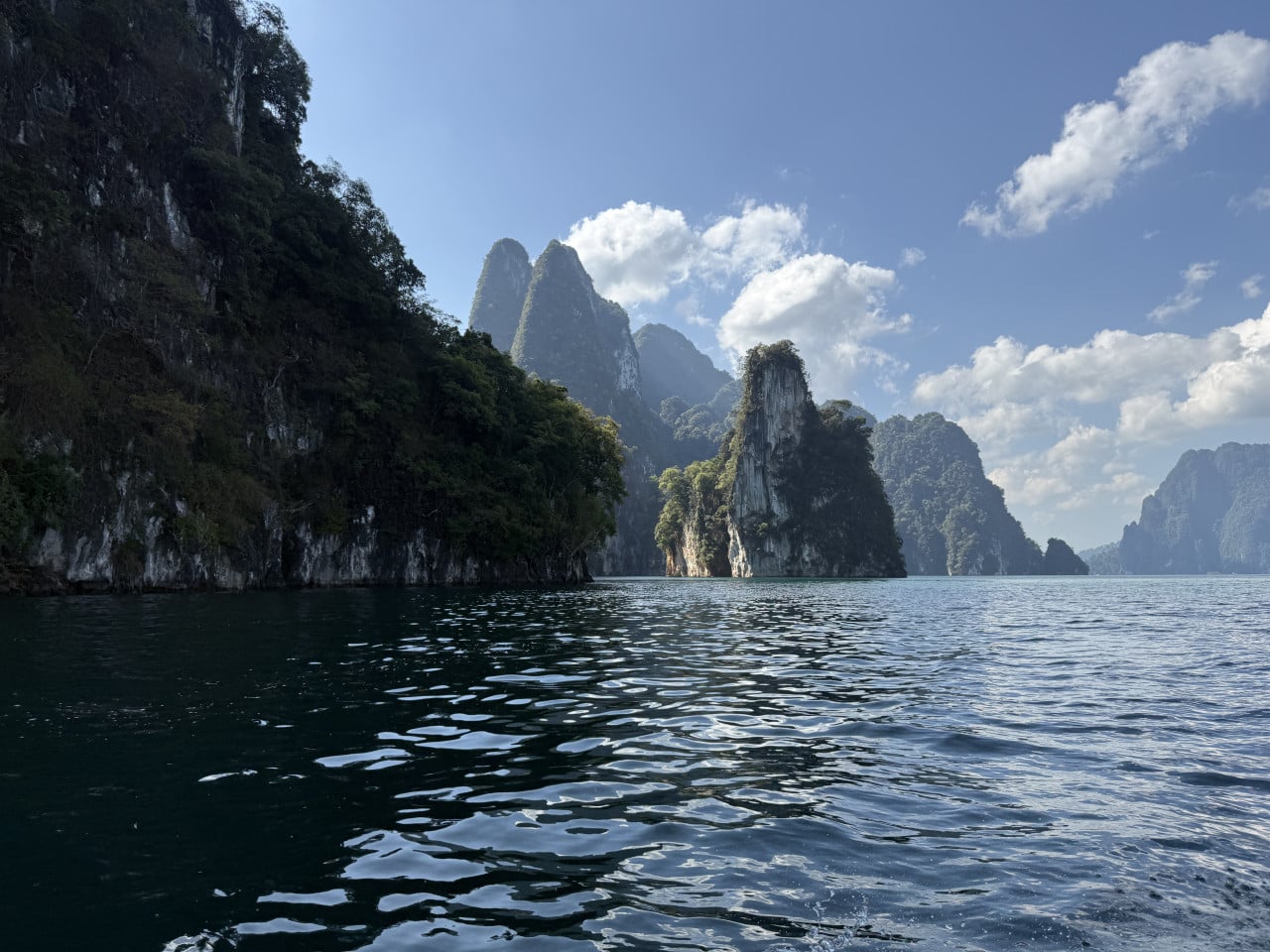
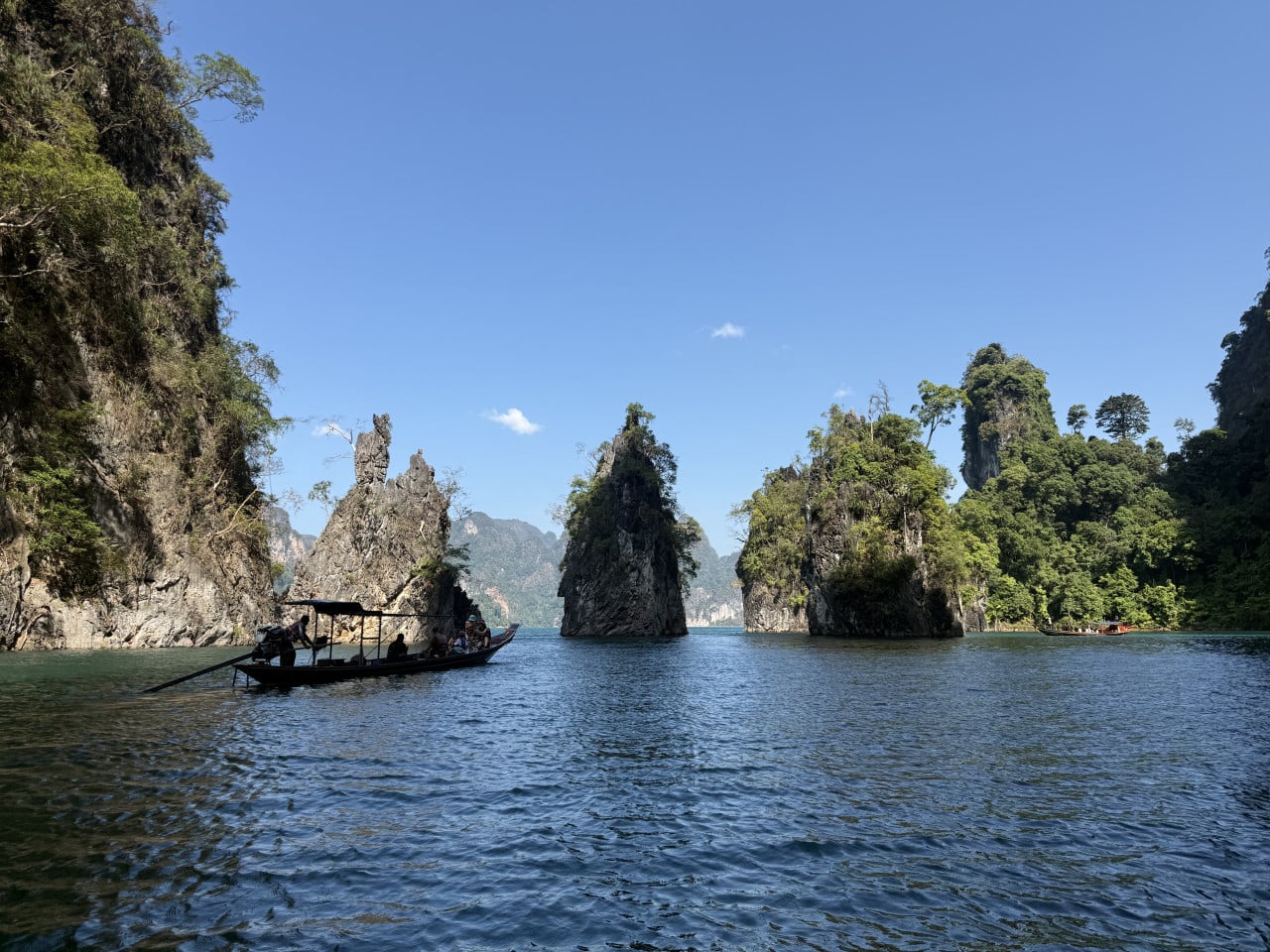
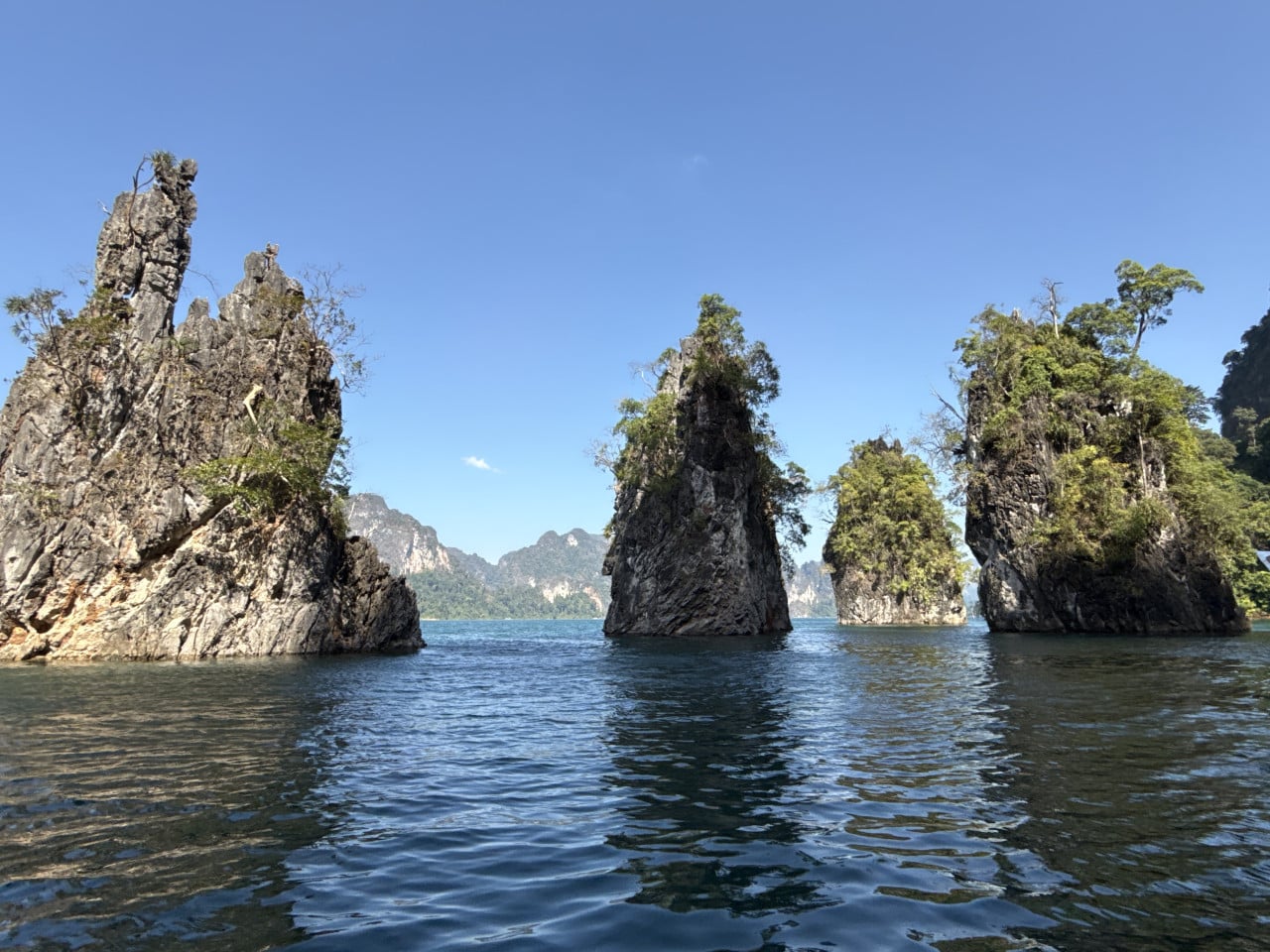
Our first major stop was Khao Sam Kler, which translates as “Mountain of Three Friends". These are three majestic limestone peaks standing side by side right in the middle of the lake, rising dramatically from the water. These formations were created over millions of years by rain and wind, which gradually eroded the limestone into their distinctive present-day shapes.
If you've ever seen a cover photo of Thailand or Cheow Lan Lake online or in a travel guide, it was most likely a photo of these three rocks. It is simply the most photographed spot on the entire lake and its unofficial symbol. Boats bring tourists here to stop and take photos, and I have to say – it is even more impressive in person than in any photograph.
The emerald-green water beautifully reflects the massive vegetation-covered rocks, while the silhouettes of more limestone mountains stretch across the background. Simply magnificent.
Praiwan Raft House – lunch on the water
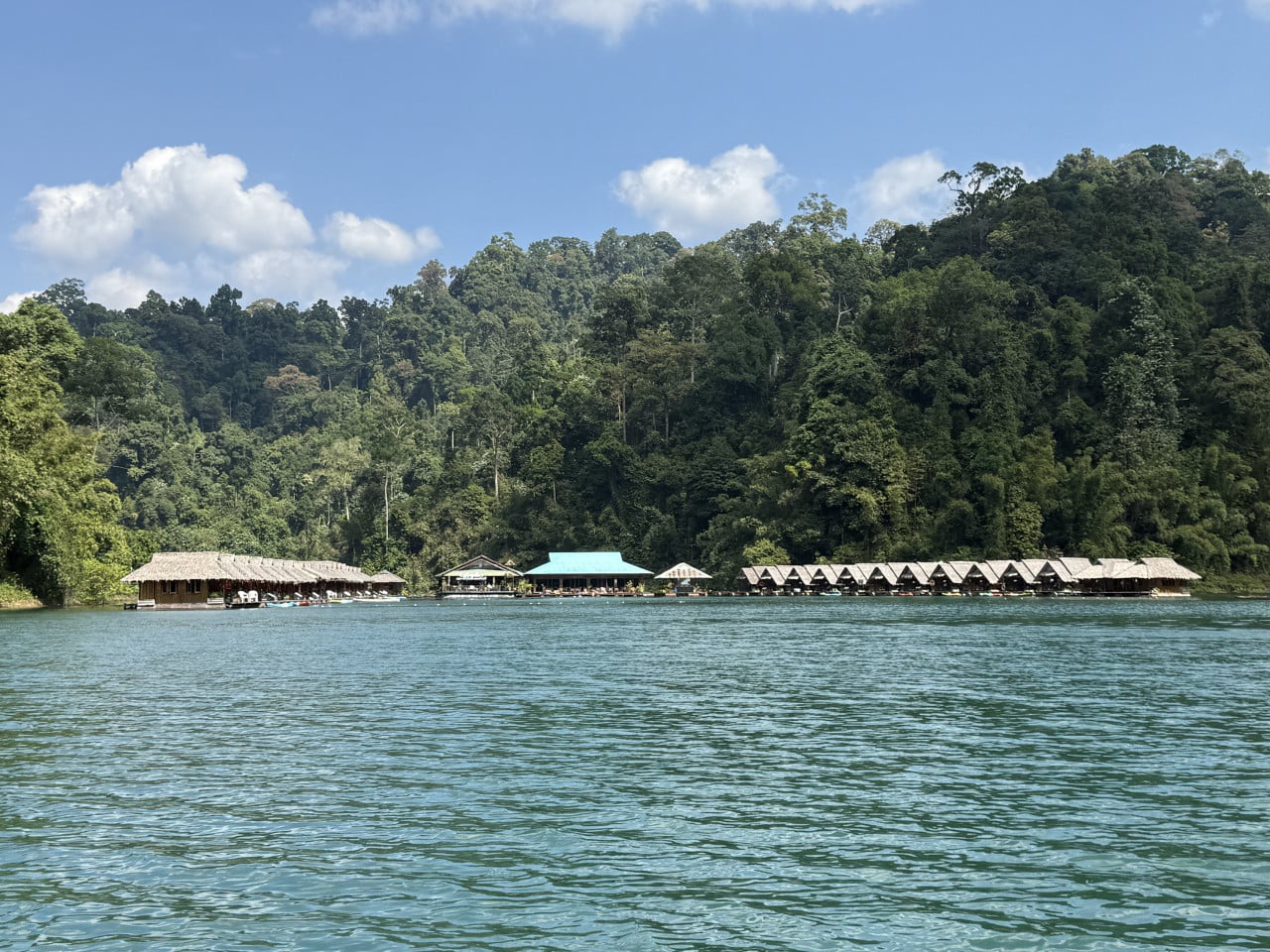
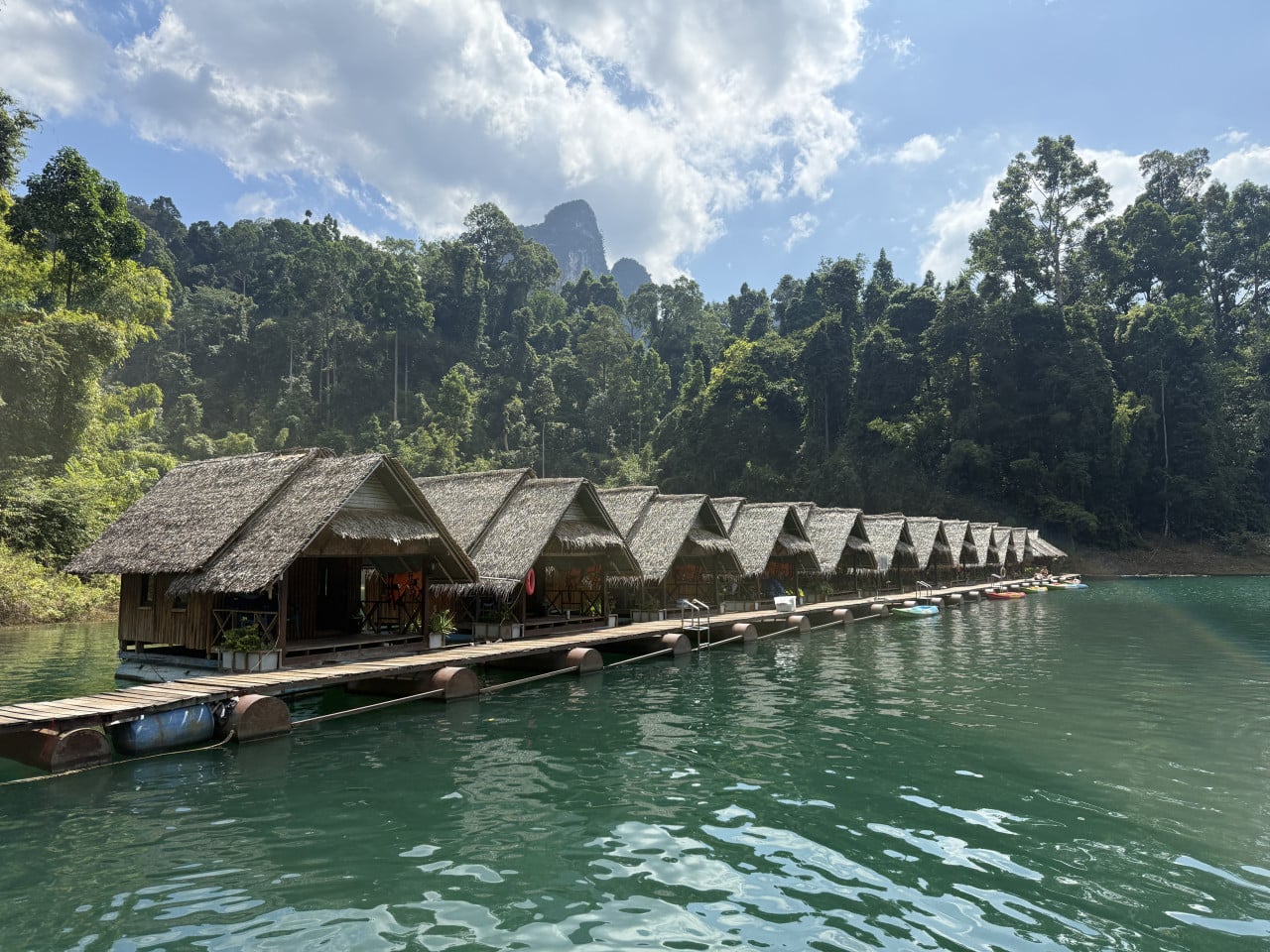
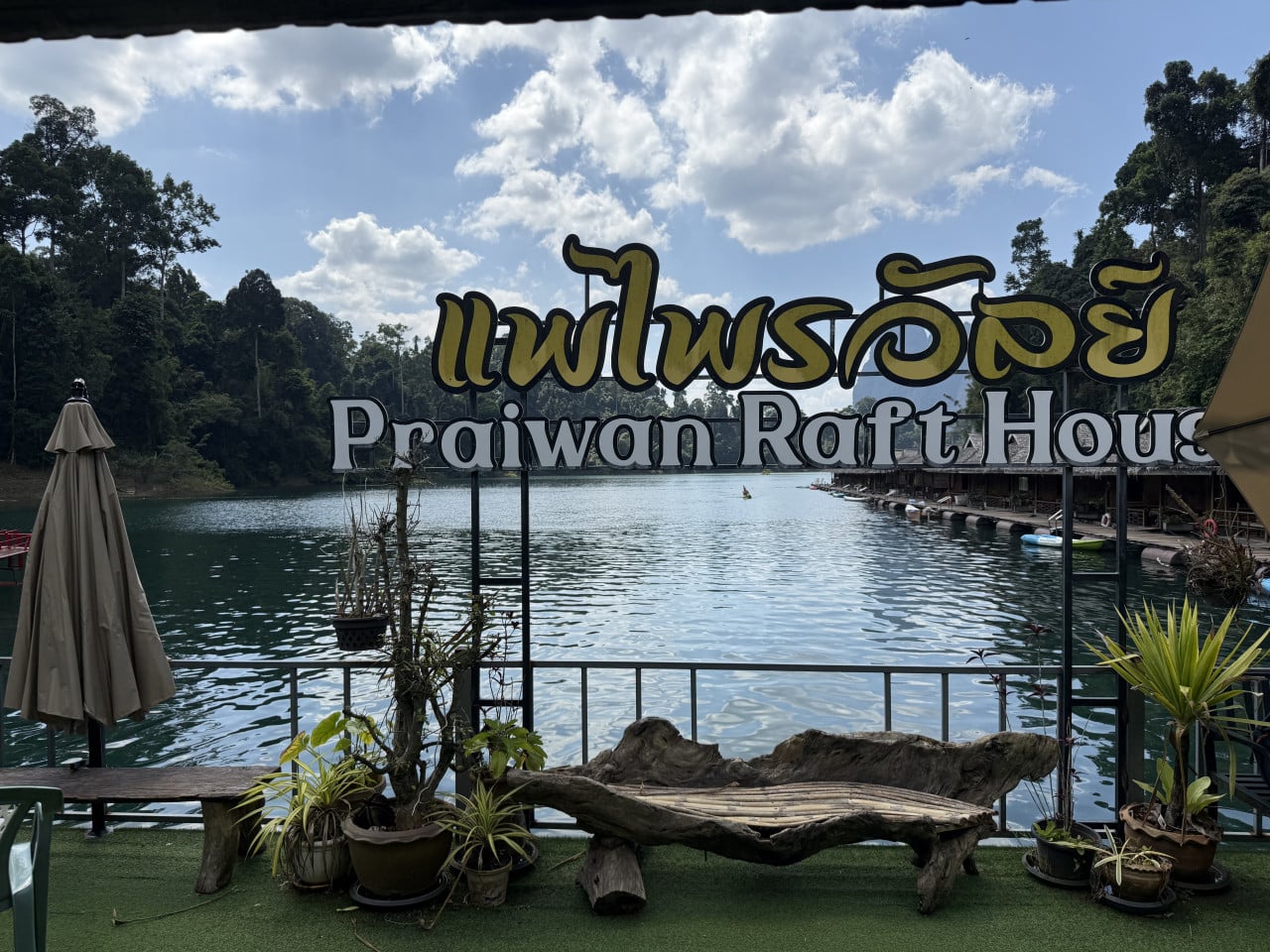
After stopping at Khao Sam Kler, we continued by boat to Praiwan Raft House – a floating village right on the surface of the lake. And I have to say, it was really great.
Praiwan Raft House is one of the floating resorts on Cheow Lan Lake, where you can not only have lunch but also stay overnight. The huts are built from natural bamboo with thatched roofs – they look rustic, but also very authentic and in harmony with the surrounding nature. The entire resort has an ecological focus and tries to minimize its environmental impact – the roofs are made of natural materials that decompose easily, and guests are asked not to bring plastic packaging into the jungle.
An interesting fact is that more than twelve similar floating resorts operate on Cheow Lan Lake, and their operating licenses are strictly regulated by the Khao Sok National Park administration. Licenses can only be obtained by descendants of the original families from the village of Cheow Lan, which was flooded during construction of the dam, or by national park employees. So it isn't as though just anyone can build a bungalow there.
As for the facilities – at Praiwan Raft House, there is practically no internet or phone service (only an occasional AIS signal), and electricity is available for only a few hours a day. And you know what? It's liberating. You simply disconnect.
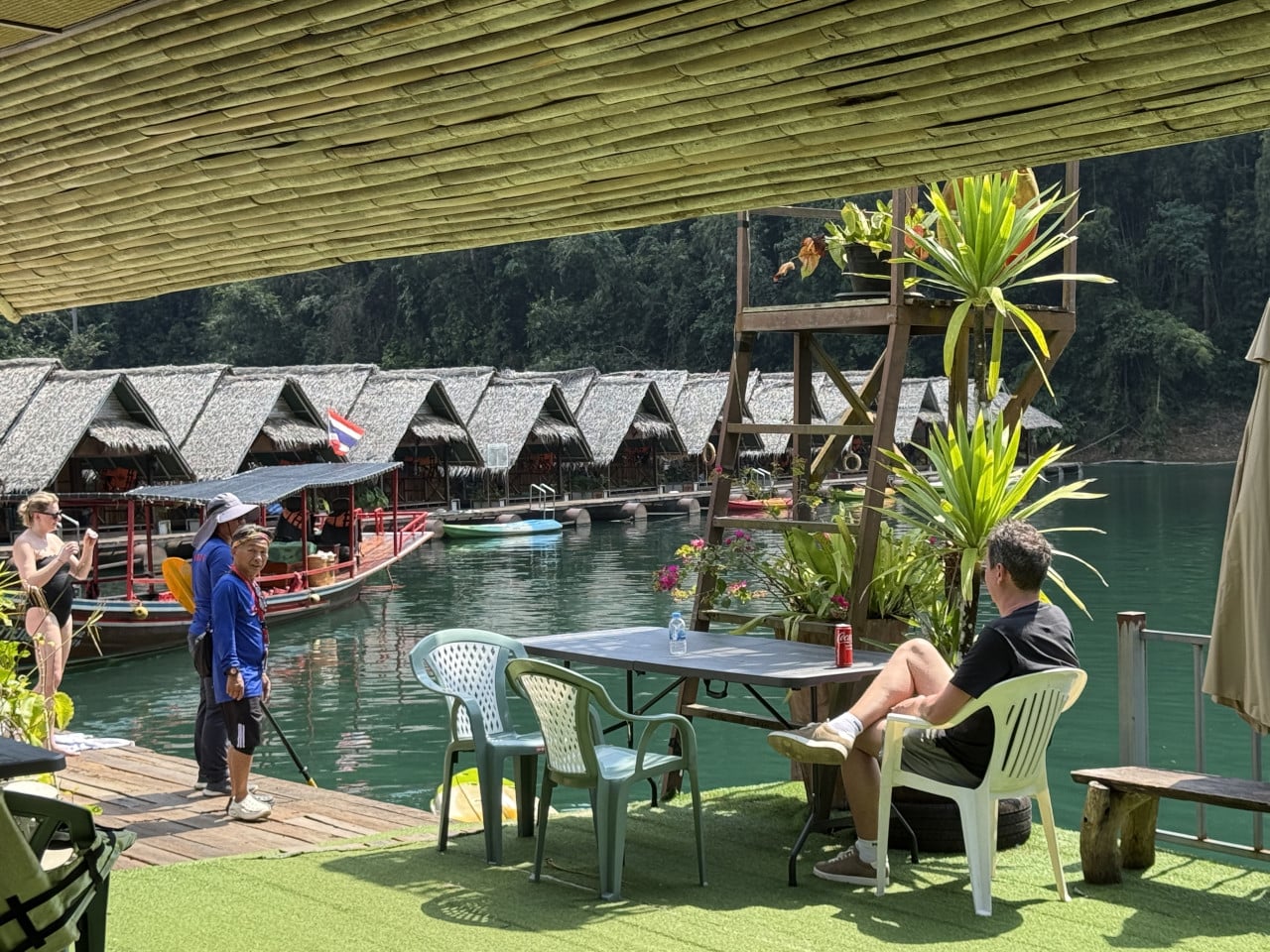
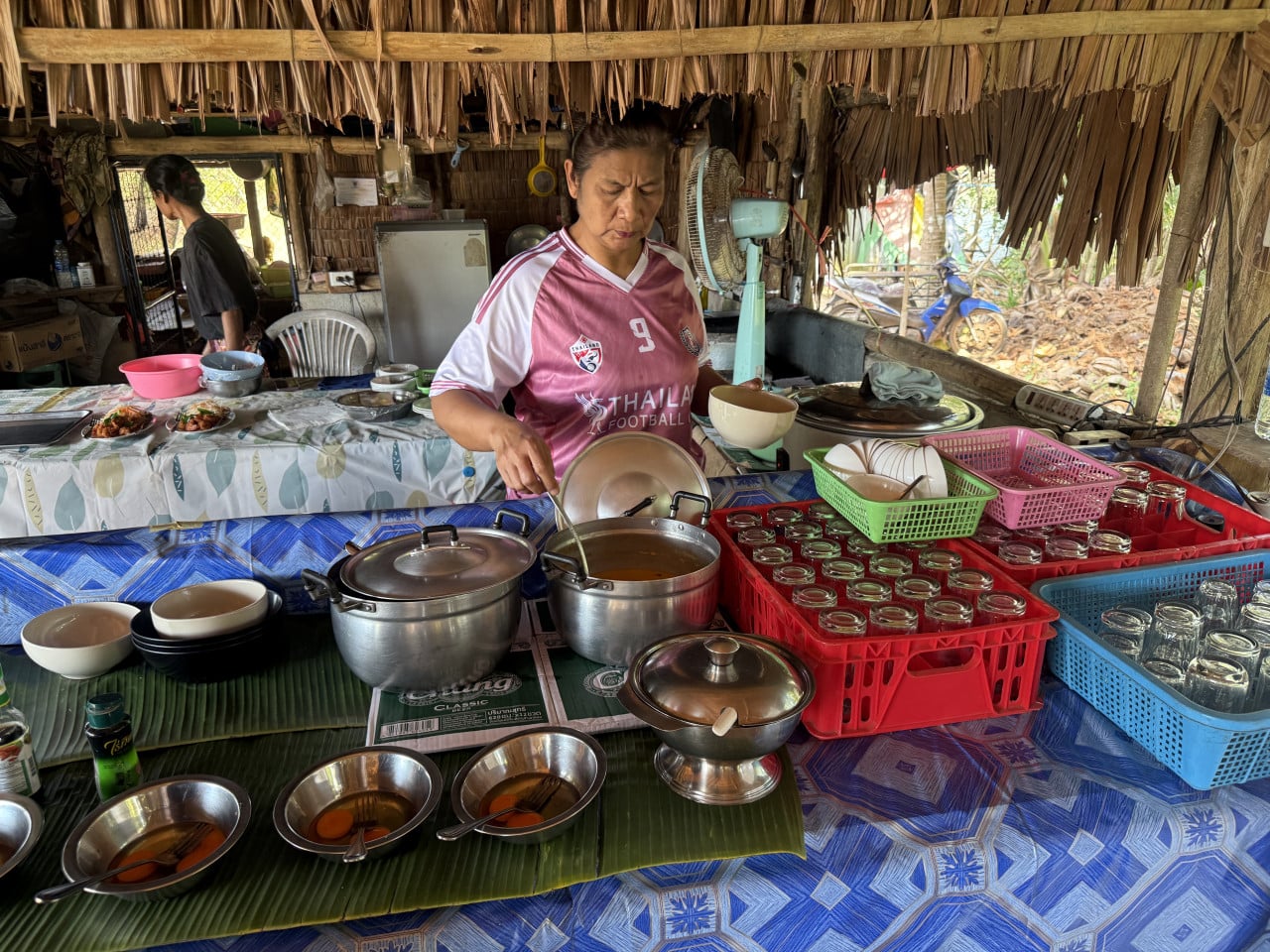
We had an excellent lunch here – Thai cuisine made from fresh local ingredients, with fish straight from the lake. There was a lot of food and it was delicious. While waiting for lunch, we chatted with several Europeans – we met people from Finland and Denmark – and talked about Bangkok and similar topics.
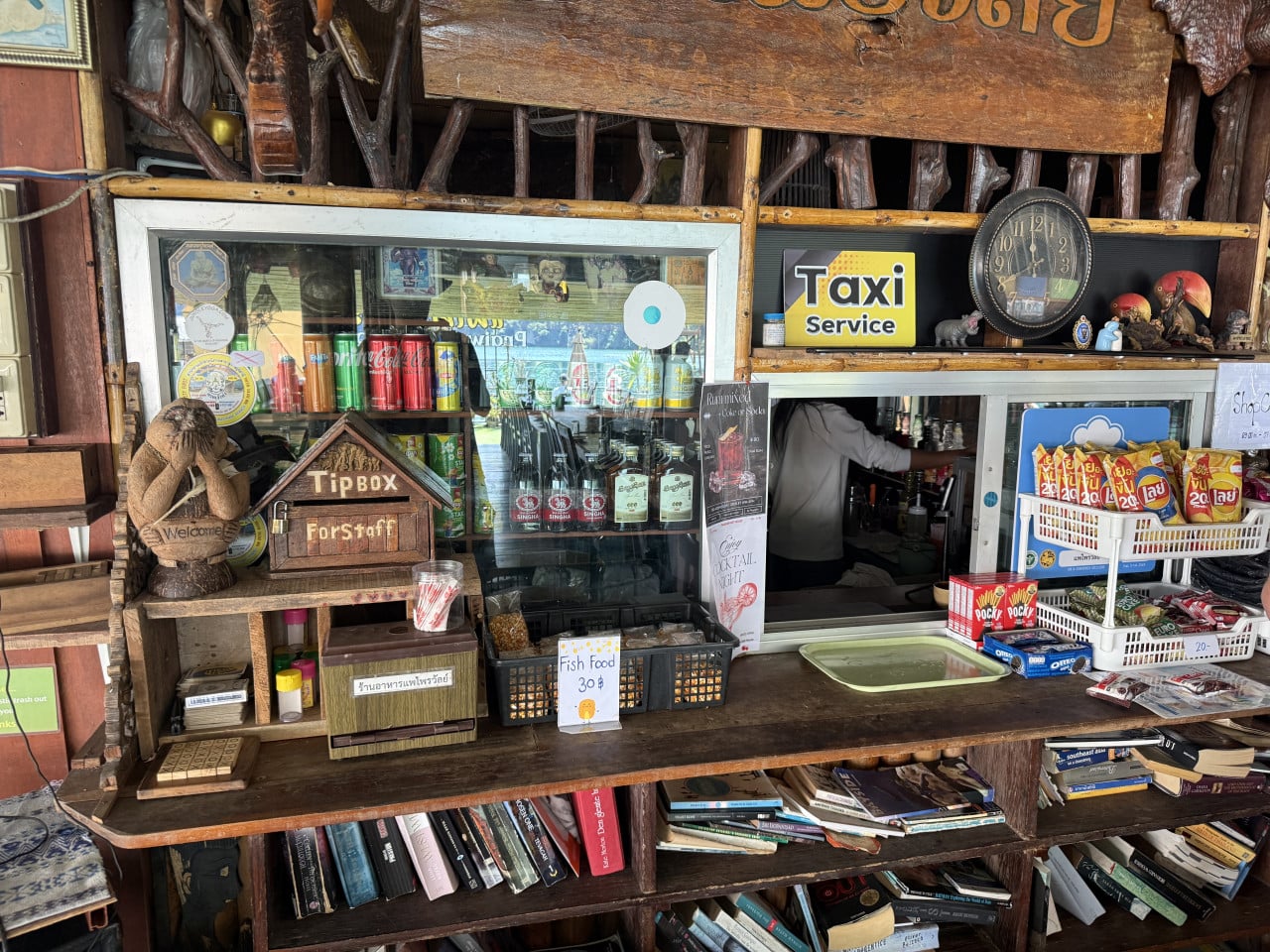
Of course, I bought some refreshments at the local shop – some soft drinks that were delicious – and most importantly, we bought fish food (it cost 30 baht, twice as much as on the mainland). There were plenty of fish, and the children absolutely loved feeding them. They sold corn everywhere, both at the pier and directly at Praiwan Raft House.
We had originally planned to stop in the jungle for some cave exploration (probably Coral Cave, which is only a few minutes by boat from Praiwan Raft House), but that ultimately didn't happen – and the reason was quite specific. Wild elephants had been spotted in the area, and entry into the jungle was prohibited for safety reasons. At that moment, we were a little disappointed, but as it turned out, this “bad luck" paid us back a hundredfold.
Swimming in the lake
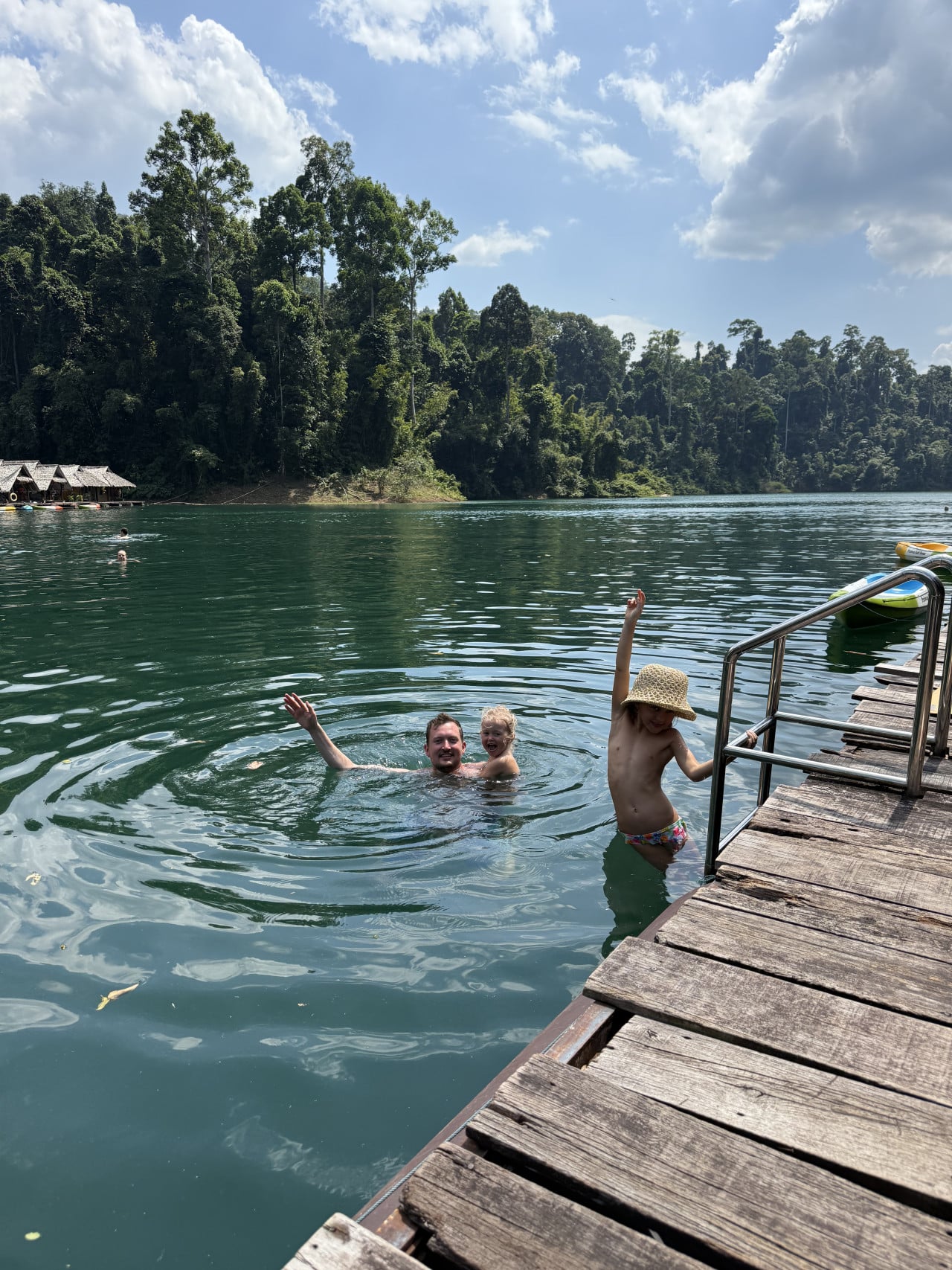
After lunch, we went for a swim. My mom, who runs the travel agency Grand Travel and had been in Thailand approximately three weeks before us, warned us a little – apparently her husband Michal had developed some kind of rash after swimming. But despite that, we took the risk with the children and jumped into the water.
And it was great – we didn't catch anything and had a wonderful swim in the emerald lake, surrounded by limestone cliffs and jungle. Simply an unforgettable moment before we got back on the boat and set off on our return journey.
Wild elephants – incredibly lucky
And now for the best part.
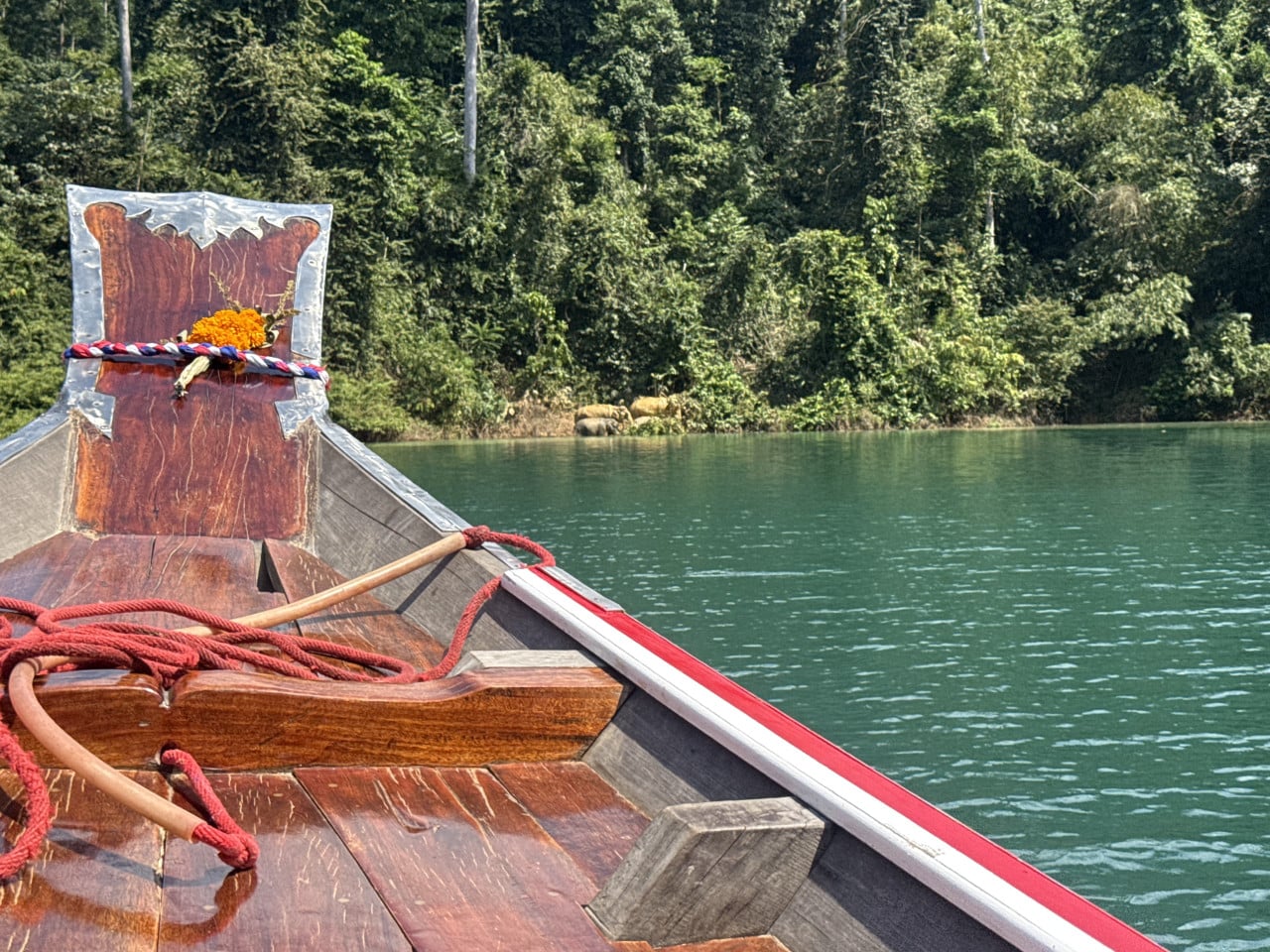
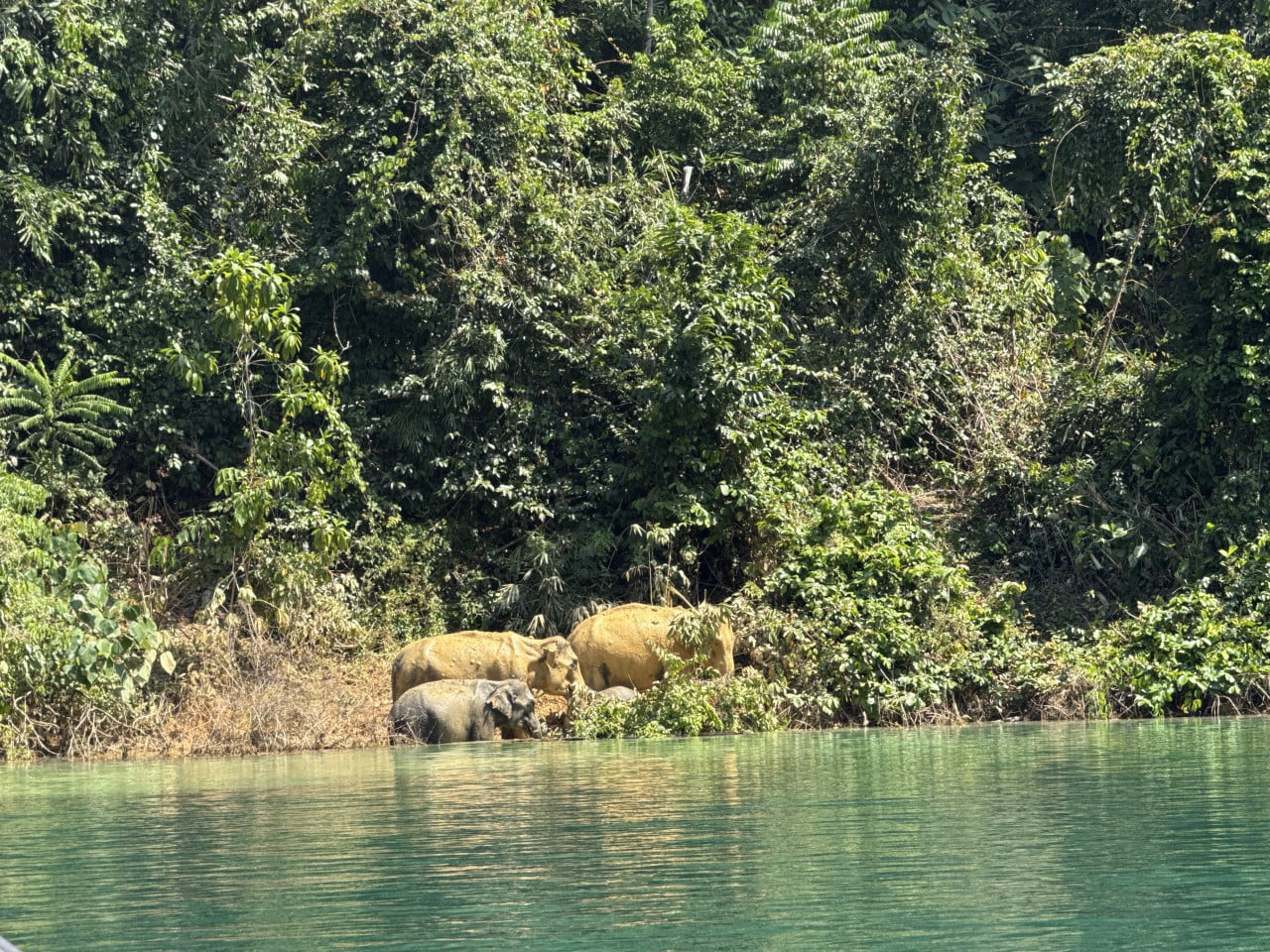
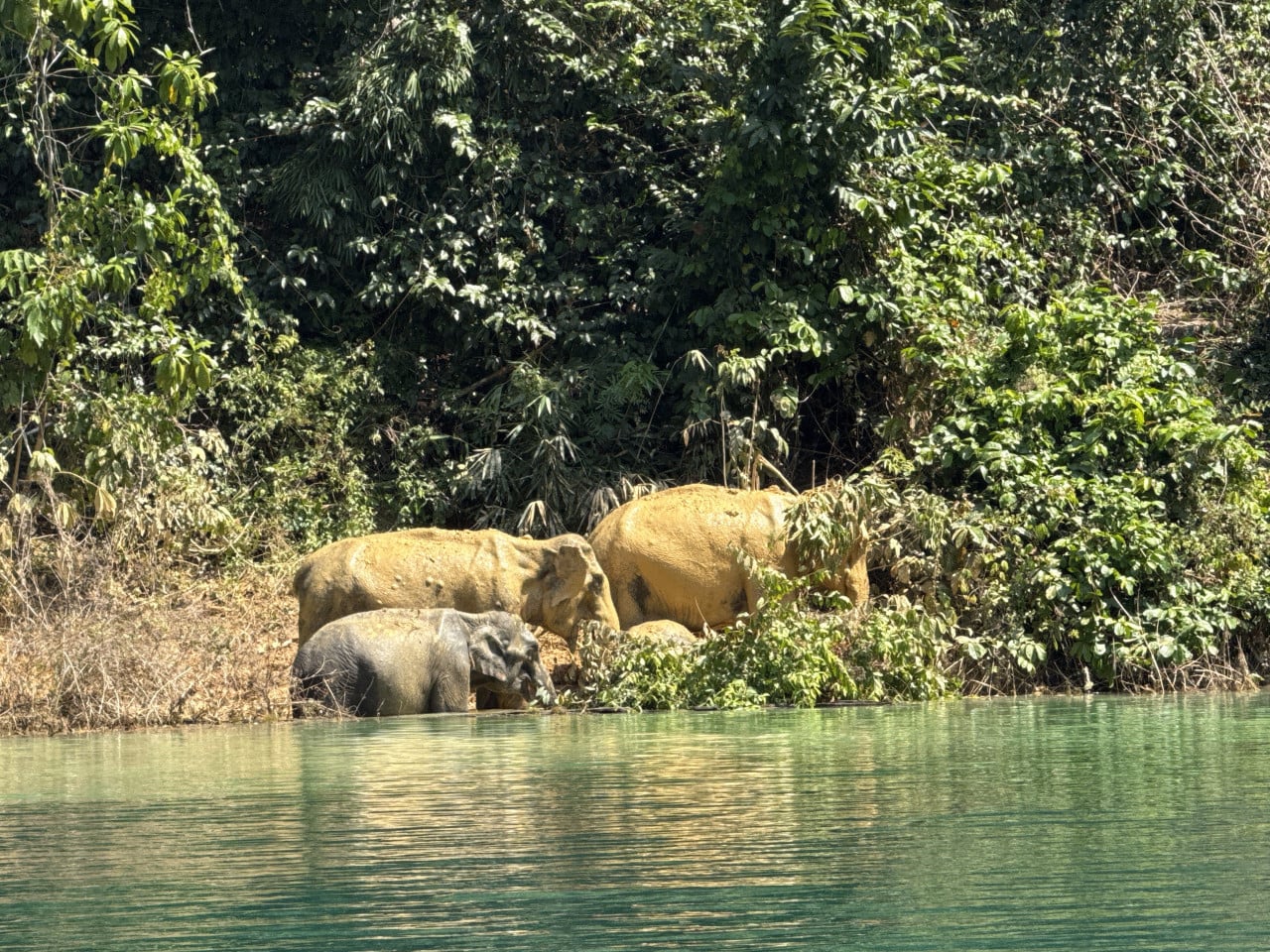
As we were traveling back to the pier by boat, something happened that I will remember for a very long time. Our captain spotted wild elephants by the shore, bathing and drinking water. He immediately steered the boat toward them so that we could see and photograph them up close.
There were at least two adults and one calf, all covered in mud from the shore. They stood at the water's edge, calmly bathing and eating vegetation. It was absolutely magical – seeing these enormous animals in their natural habitat, not in a zoo or on a farm, but genuinely wild.
Our guide told us that being lucky enough to see them like this is truly rare – elephants do live here, but they only appear occasionally and certainly not on every trip. So we were thrilled, and it was the perfect ending to the entire day.
Incidentally, Khao Sok is home to a number of large mammals, including wild elephants, leopards, tapirs, gaurs and even tigers – although seeing those is extremely rare. The area around Cheow Lan Lake, together with the neighboring reserves, forms the largest protected forest complex in all of southern Thailand.
Would I recommend a trip to Cheow Lan Lake?
Definitely yes. If you're staying near Khao Sok or in Khao Lak like us, this is an absolute must in my opinion. My mom did tell me that there “isn't that much to see there," but for me, it was one of the best trips of the entire vacation.
Rajjaprabha Dam itself, cruising across the emerald lake, the iconic three rocks of Khao Sam Kler, the floating village, swimming in the middle of the jungle, and finally the wild elephants – it's an experience you won't soon forget. The panoramas are beautiful, the landscape is unique, and overall, it was simply a wonderful day.
So if you're heading to Thailand and will be anywhere nearby, make the trip. It's worth it.