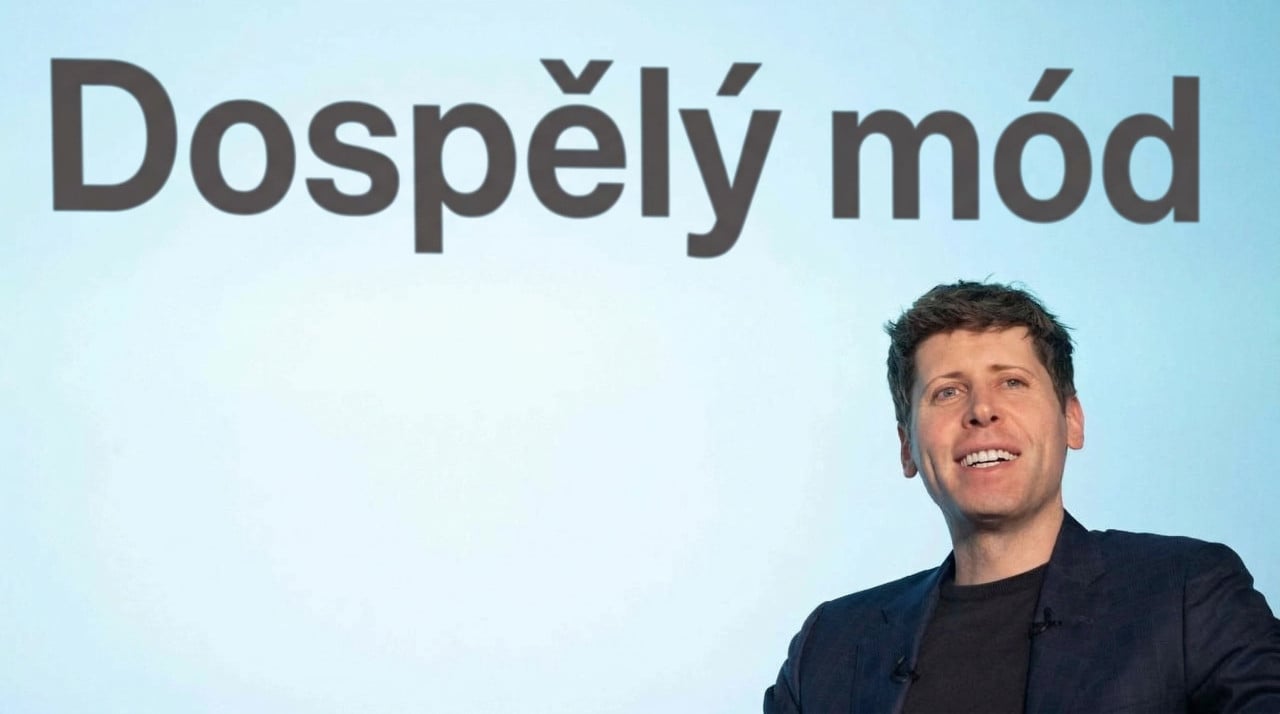
Last October, Sam Altman wrote a post on X announcing that ChatGPT had been too restrictive, too cautious, and that this was simply ruining the user experience. He promised a change. He promised that adult users would finally be able to access content that had previously been denied to them for no good reason, including erotica. The deadline? December 2025. But December came and went. And now, in March 2026, a second delay has been announced. With no new date.
What does “adult mode" actually mean?
Before we go any further, let’s clarify what we are actually talking about. “Adult mode" is not just about erotica. It is a broader principle that OpenAI refers to as “treat adults like adults."
In practice, this would mean that verified adult users could access content that is currently blocked automatically. This includes direct medical conversations without unnecessary warnings, open discussions about relationships, dark creative content, or erotic content. The feature would be entirely optional, and users would have to activate it themselves in the settings after verifying their age.
At the same time, firm boundaries would remain in place. Prohibited content involving minors, illegal conversations, or anything non-consensual would continue to be strictly blocked. It would therefore be more about relaxing unnecessarily strict filters than opening Pandora’s box.
Altman’s post and the subsequent delays
In October 2025, Altman wrote on X that OpenAI had gone too far with censorship. The original intention was to protect users with mental health issues, but the result was that ChatGPT became less useful even for millions of people who had no such issues. Altman promised at the time that OpenAI would launch expanded age verification in December 2025, along with access to erotic content for verified adults. It sounded clear and specific. But then December arrived.
We made ChatGPT pretty restrictive to make sure we were being careful with mental health issues. We realize this made it less useful/enjoyable to many users who had no mental health problems, but given the seriousness of the issue we wanted to get this right.
— Sam Altman (@sama) October 14, 2025
Now that we have…
Instead of the feature’s launch, December 2025 brought an internal memo. Altman declared a so-called “code red" at OpenAI and redirected teams to other priorities. These included improving ChatGPT’s core performance, personality, and ability to respond proactively. Competition from Google and Anthropic was intensifying, and OpenAI needed to keep up. The launch of “adult mode" was moved to the first quarter of 2026. Users thought: fine, we’ll wait.
In early March 2026, news arrived that disappointed many. OpenAI announced a second delay. A company spokesperson told Axios: “We are delaying the launch of adult mode so that we can focus on work that is a higher priority for more users." These priorities include improving the model’s intelligence, enhancing its personality and personalization, and making the chatbot more proactive. The company also added: “We still believe in the principle of treating adults like adults, but getting the feature right will take more time."
No new date. No specific timeframe. Just a vague “it will take longer."
Reason for the delay: Age, safety, and tragedy
It would be naive to think that this is only about technical problems. There is also a much more sensitive context behind the delays.
Since October 2025, OpenAI has been working on a system for predicting users’ ages. This tool became operational in January 2026 and automatically determines whether a user is under 18. If so, stricter safety settings are activated, limiting access to violent or sexual content. However, testing has shown that the system’s accuracy is still insufficient.
And then there is another, far more troubling reason. OpenAI is facing a lawsuit from the family of 16-year-old Adam Raine, who died by suicide after allegedly receiving instructions on suicide methods from ChatGPT. This case, along with other similar reports, has significantly increased pressure on the company to take the safety of minors extremely seriously.
The United Kingdom also has strict rules. If ChatGPT were to generate content considered pornographic under the country’s online safety law (Online Safety Act), OpenAI would need to have a functional and reliable age-verification system. Without one, it would expose itself to legal risks.
900 million users and the question of priorities
The Guardian highlighted one interesting detail: ChatGPT has more than 900 million users. That is an enormous user base, and OpenAI must balance the needs of the vast majority, who do not require erotic content at all, with the wishes of a smaller group that does. It therefore makes sense for the company to prioritize improvements to performance, personality, and personalization over a feature that has attracted considerable media attention but will in reality affect only a small proportion of users. Or is it merely a convenient excuse? It is hard to say.
If you were among those waiting for “adult mode," you will have to keep waiting for now. OpenAI has not provided any new date. Although the company continues to say that it wants to launch the feature and believes in its purpose, there is simply no specific date. In the meantime, OpenAI continues to expand protections for minors and refine its age-prediction system. These steps are prerequisites for the safe launch of adult mode, so this is not wasted time. Rather, it is necessary preparation.