Between the glittering neon lights of Las Vegas and the Hollywood billboards of Los Angeles lies the inhospitable Mojave—a desert where you would never expect to find anything interesting. And right there, in the middle of nowhere, lies one of the most authentic places in the American Wild West. It is called Calico Ghost Town, and I visit whenever I travel between Vegas and LA. I have already been there three times—and each time I discover something new.
Starting the journey: breakfast at Denny's and the giant Chevron
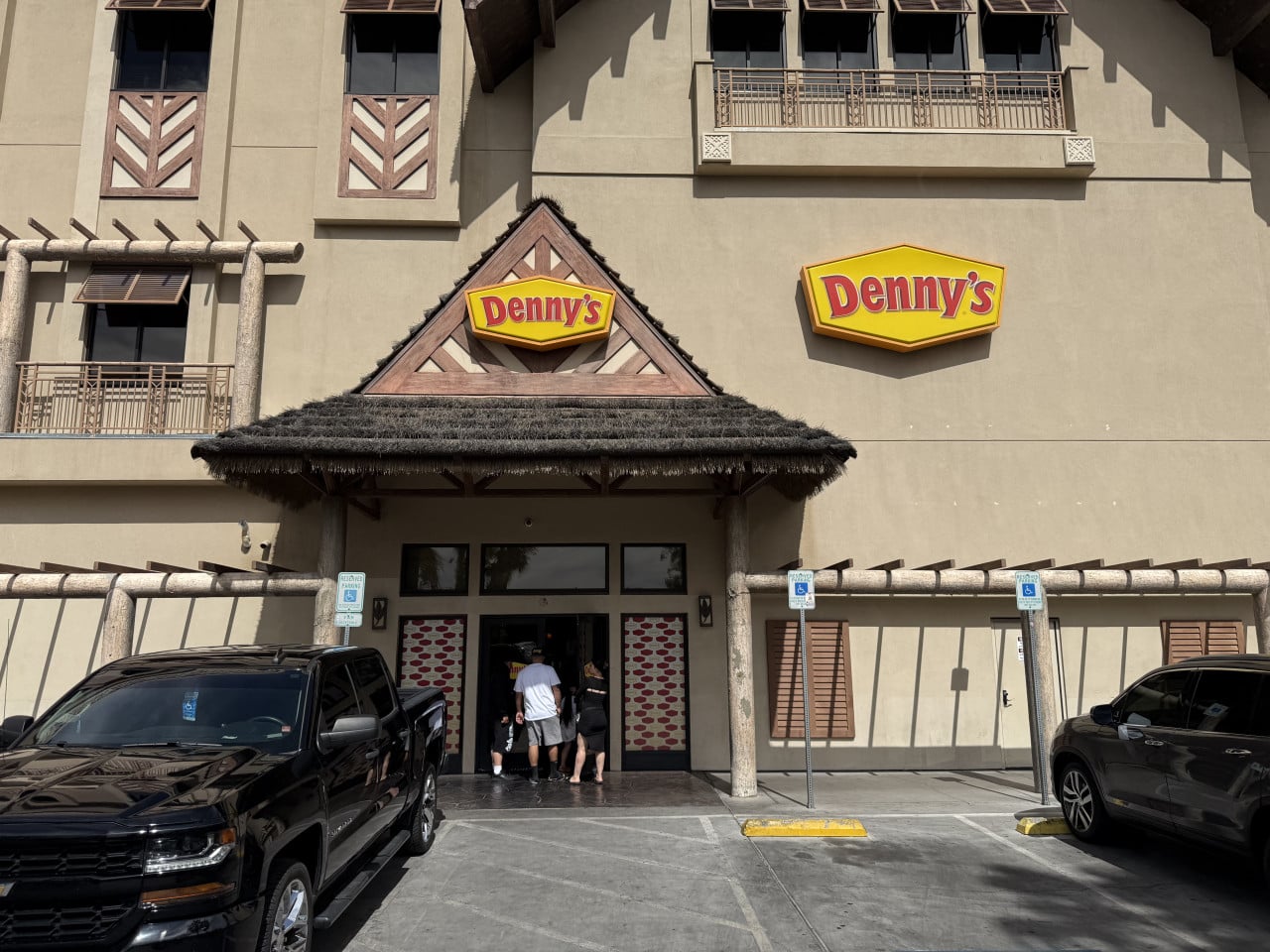
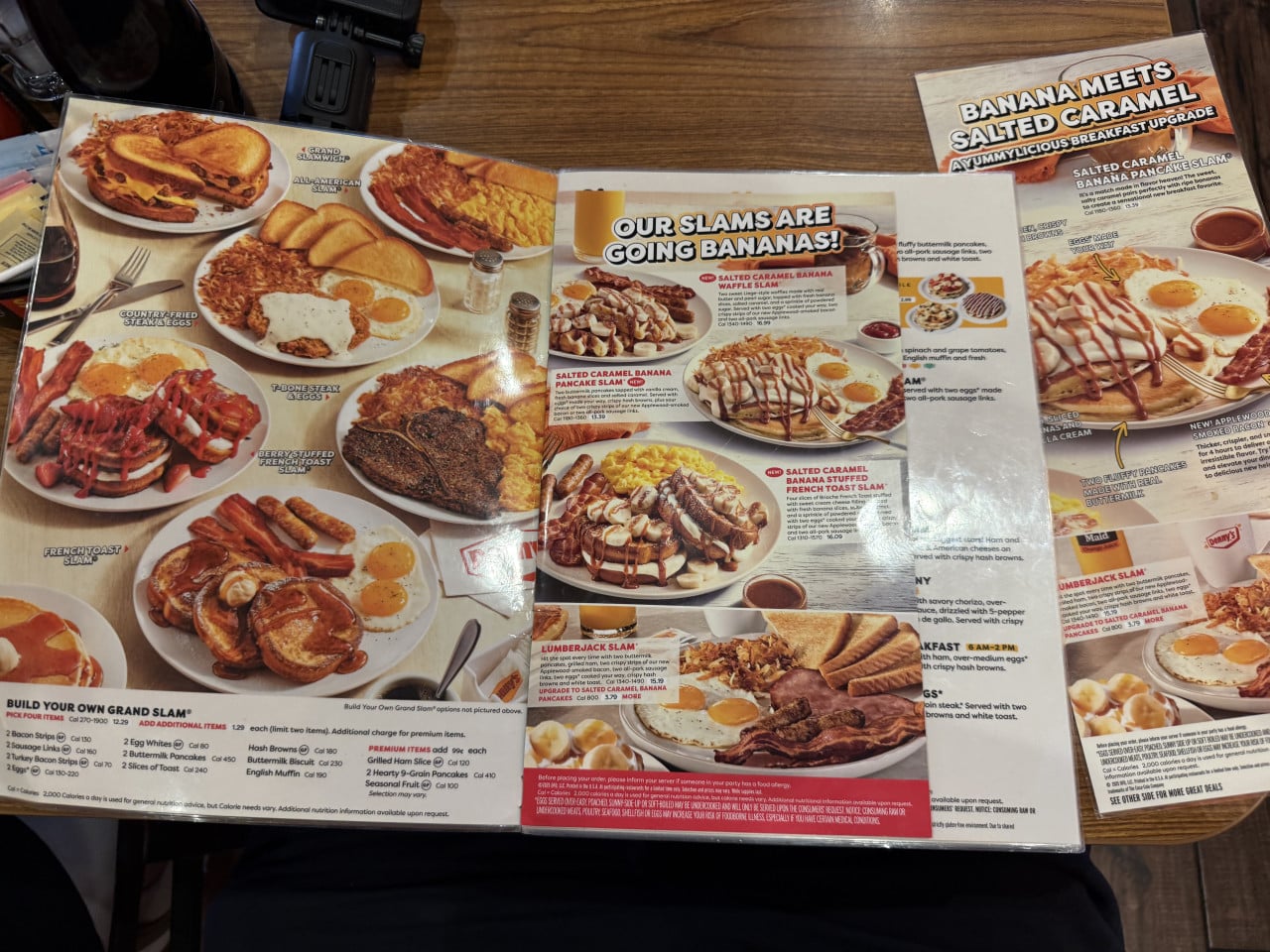
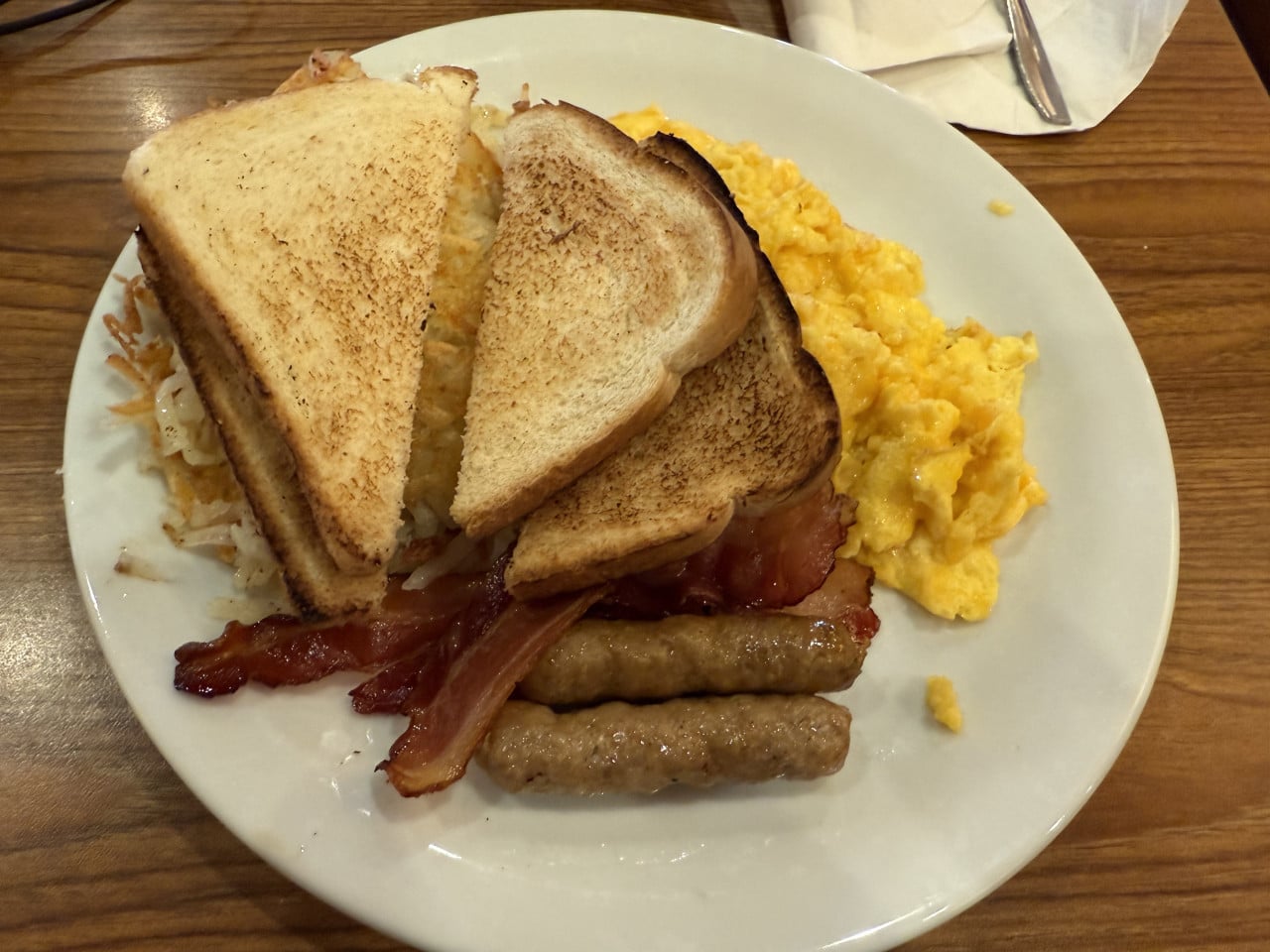
In the morning, we got up at the MGM Grand, where we were staying, and headed to Denny's for breakfast. It is a typical American fast-food restaurant where you can grab a quick meal—it is not particularly healthy, if at all, but I enjoy going there. You can get eggs, toast, and other classic American breakfast dishes that will fill you up nicely for the journey.
After breakfast, we got in the car and set off along Interstate 15 toward Los Angeles, where a visit to Universal Studios awaited us. But that is a story for another article—this one is about what we encountered along the way.
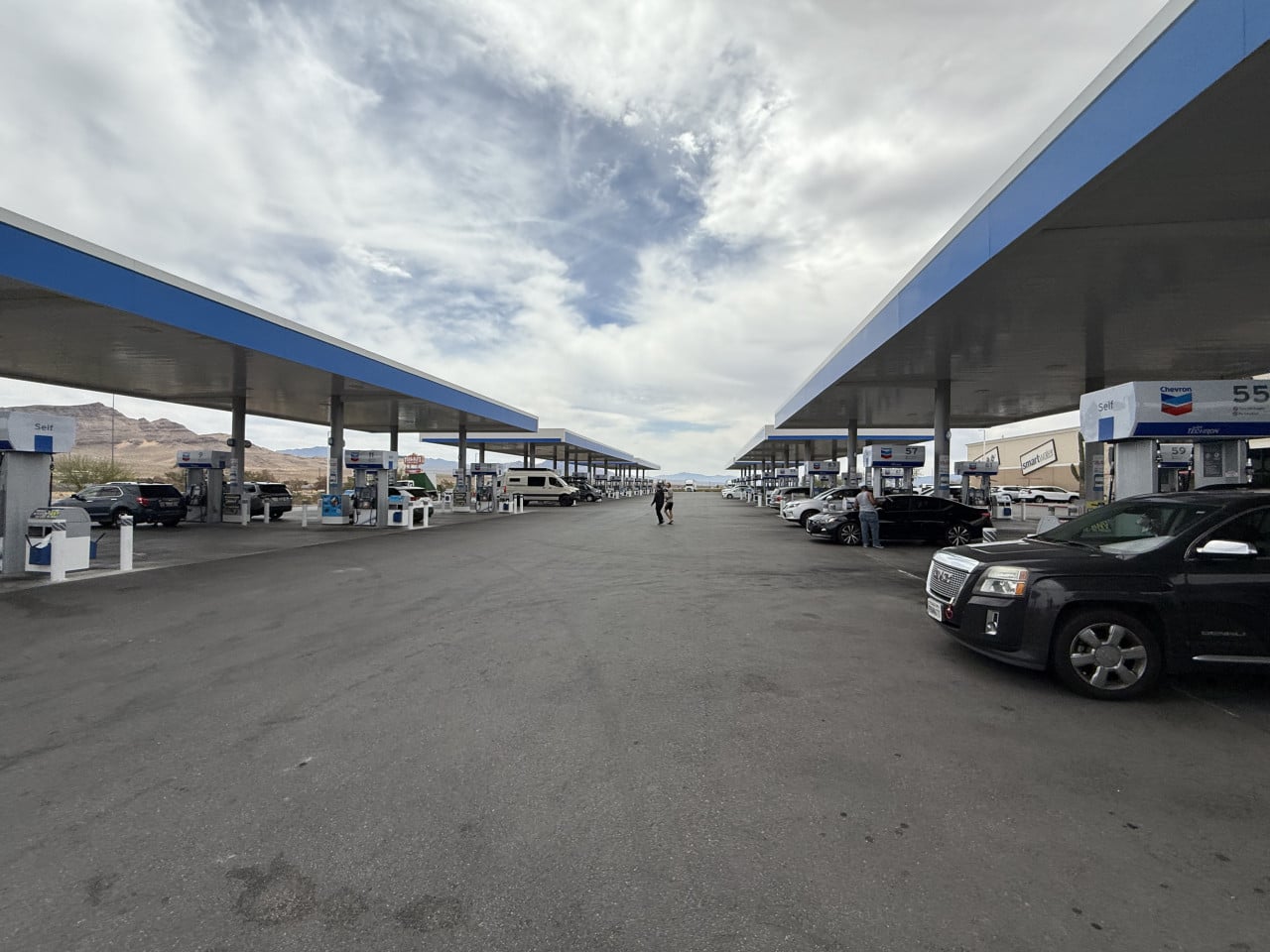
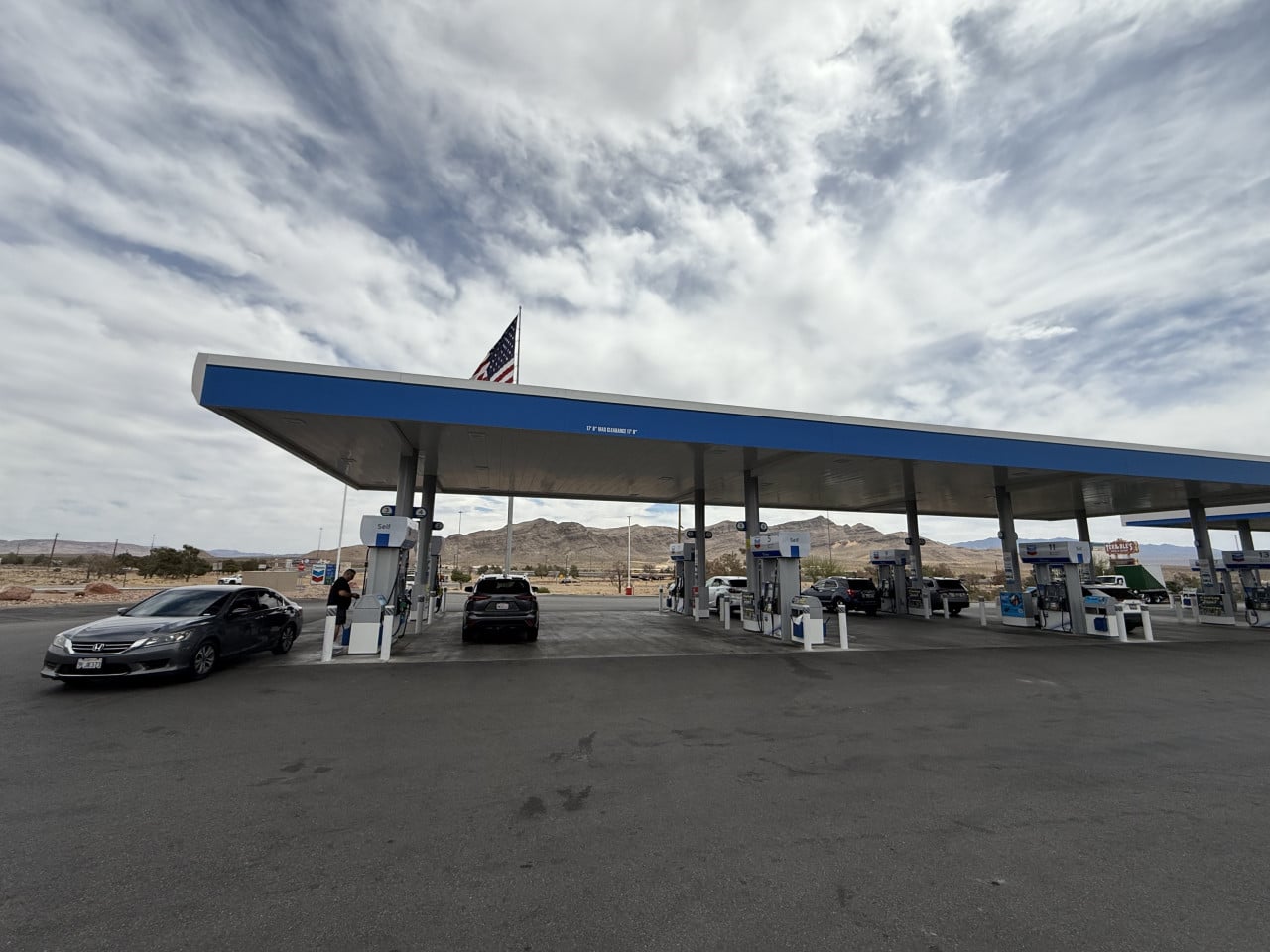
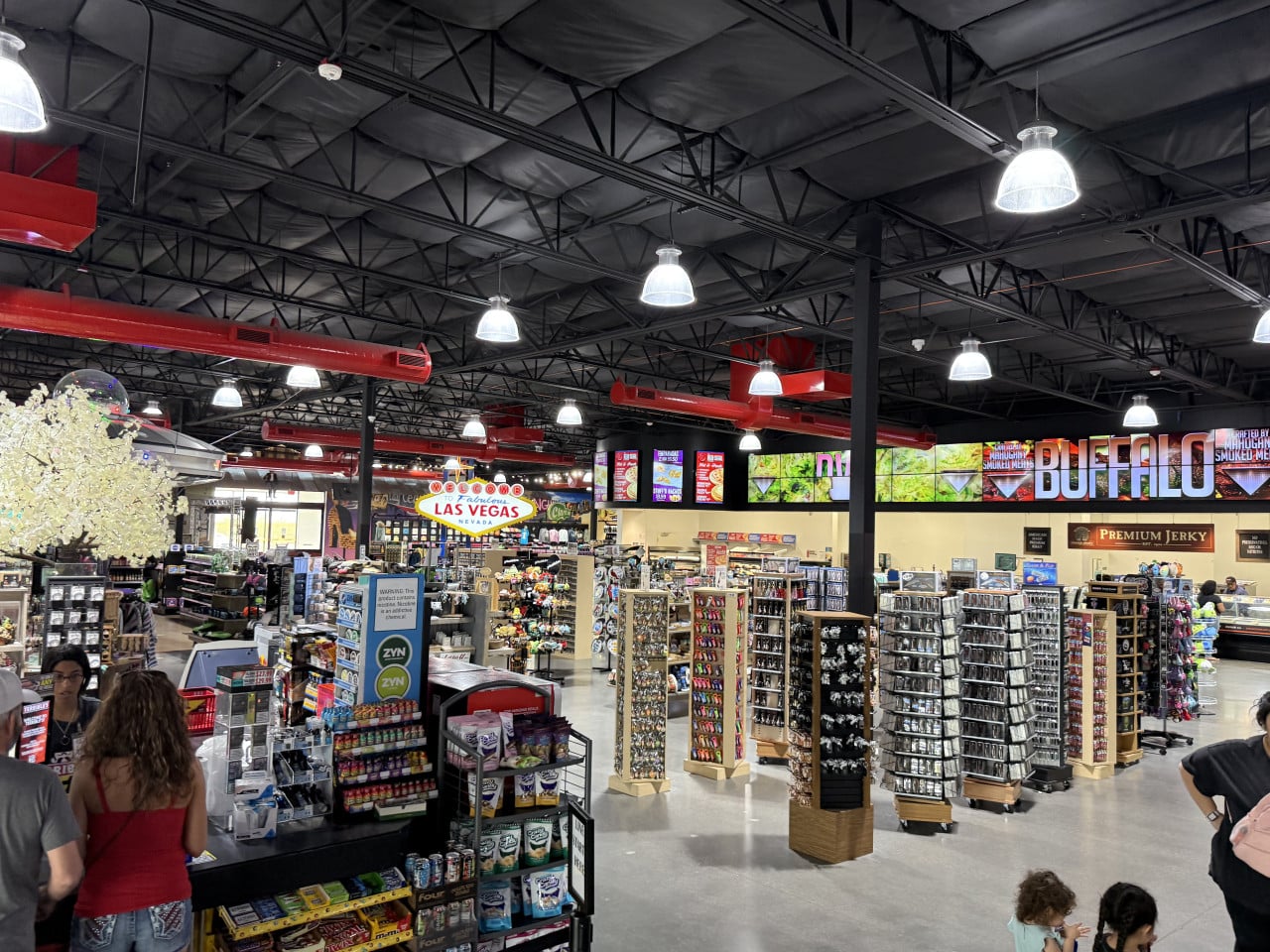
One thing that always catches my attention just outside Las Vegas is the enormous Chevron gas station. From the outside, it looks like an ordinary gas station, but inside it opens into a space resembling a smaller Walmart-style shopping center. You can find absolutely everything there—from food and souvenirs to slot machines. It is simply typically American—everything is big, and there is plenty of everything.
Practical tip: When you stop at this Chevron, fill up your tank. I always do this when driving through the desert—as soon as my tank drops to, say, three-quarters full, I stop and top it up. You never know when you might need a gas station, and this approach has paid off for me many times. Gas stations become rapidly less frequent as you head into the desert, and cell phone reception is very weak, so you cannot always rely completely on your phone's navigation system (if you were looking for a gas station, for example).
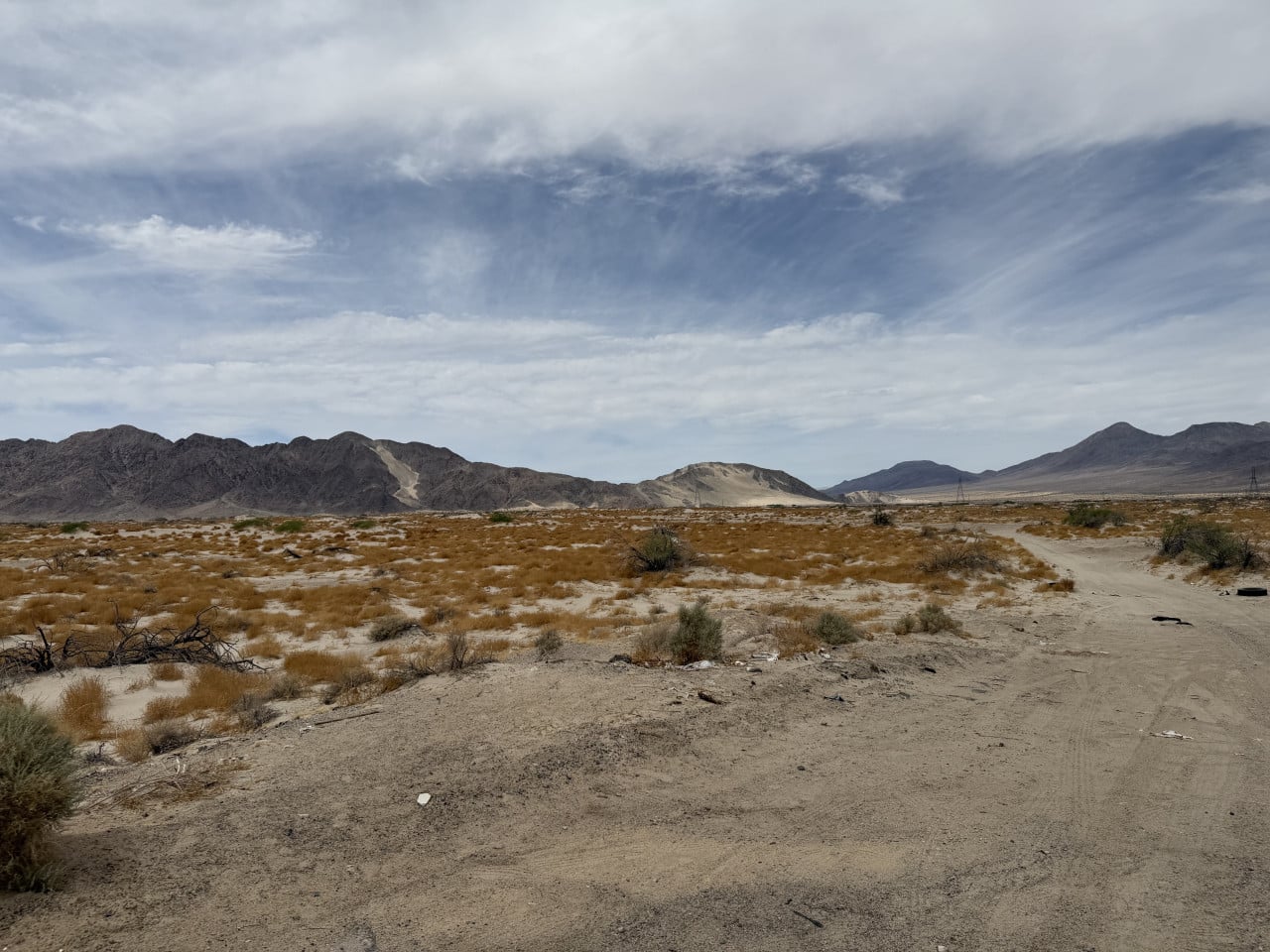
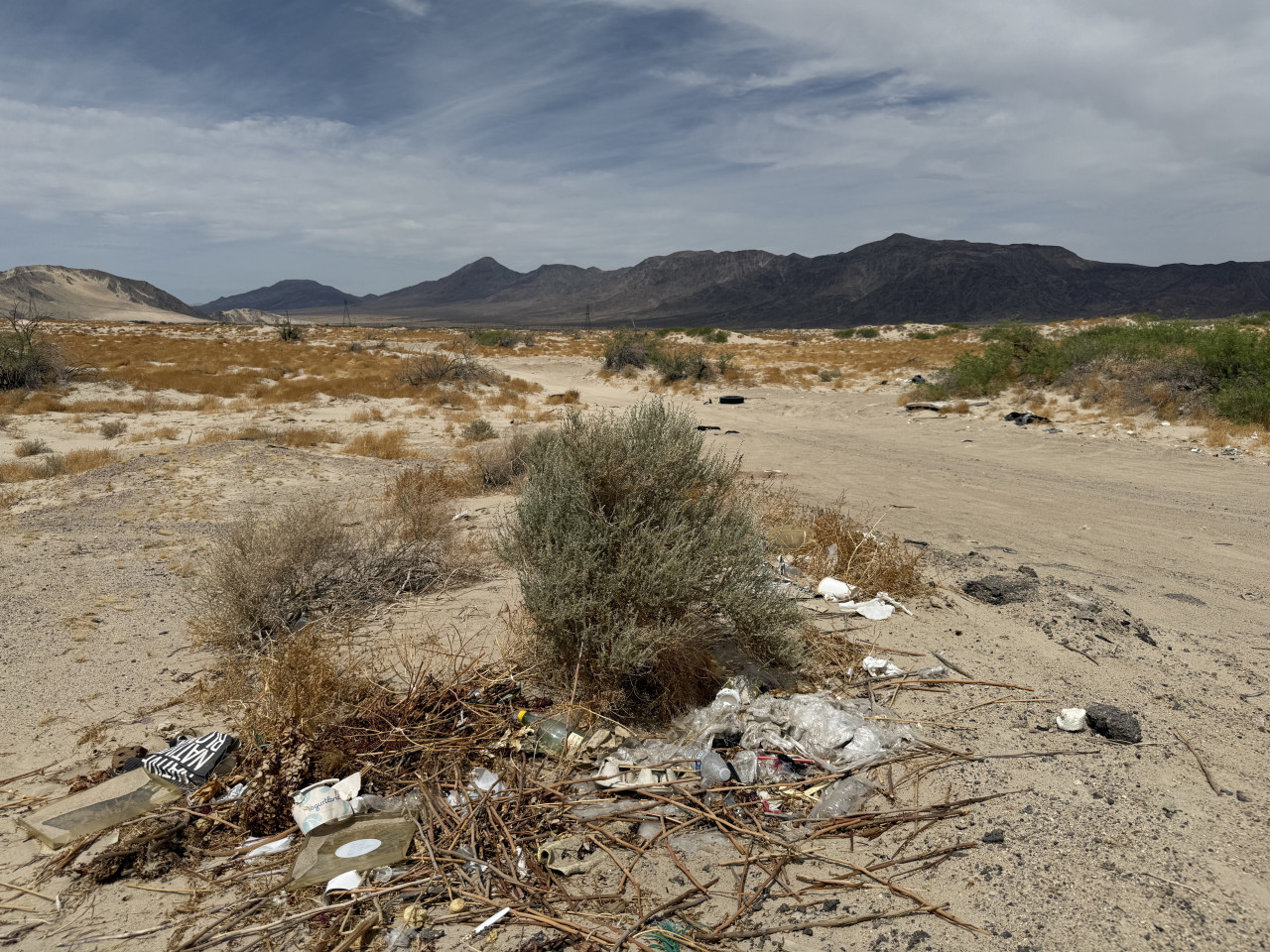
At first, you can still see various casinos and motels along the road from Vegas, but the farther you travel into the desert, the more everything disappears. An endless landscape stretches out around the highway—sand, shrubs, mountains in the distance, and an enormous sky. And it was right here, in the middle of this wilderness, that I first spotted billboards for Calico Ghost Town.
How I discovered Calico
I discovered Calico Ghost Town entirely by chance. It happened during one of my first trips from Las Vegas to Los Angeles. At the time, I lived in Atlanta and often flew out west—I have a good friend in Napa Valley, California, so I regularly bought cheap flights to Vegas, rented a car there, and drove either to LA or north through San Francisco to Napa Valley. Incidentally, if you ever travel from Napa Valley through Reno, Nevada, you will drive through beautiful mountains, and it is one of the most scenic road trips I have experienced in America—but that is just an aside.
So one day, I was driving through the desert with nothing around me, when suddenly I saw billboards saying: “Calico Ghost Town.” I thought—why not? Ghost towns and abandoned villages like this have always fascinated me. I entered it into the navigation system (fortunately, I had reception at the time) and turned off the main highway.
A little history most people do not know
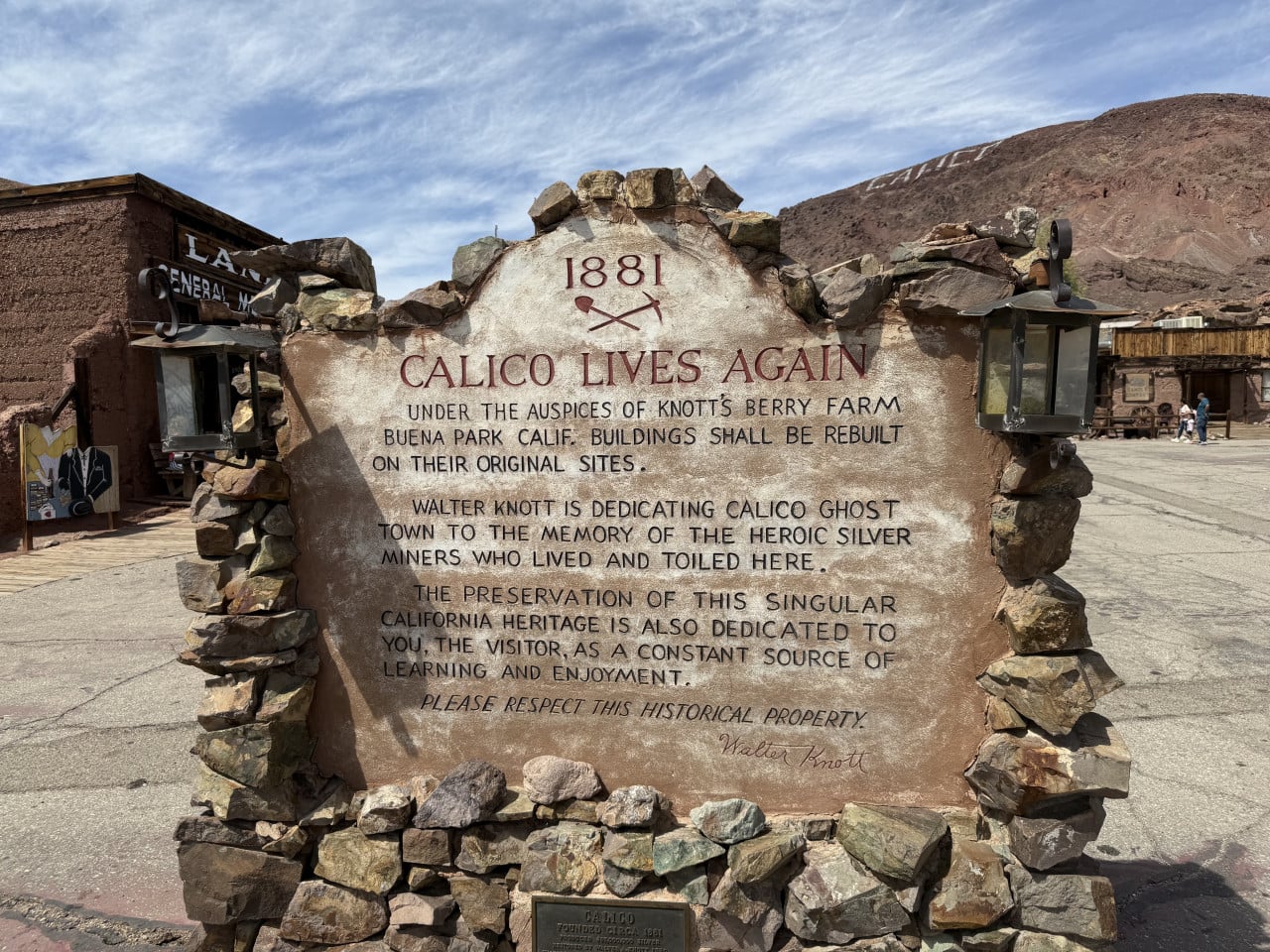
Calico is not an artificial attraction built for tourists. It is a genuine historic town founded in 1881, when four prospectors discovered rich veins of silver in the surrounding mountains. The mountains had multicolored hues—red, purple, yellow, and green shades of minerals resembled the pattern of “calico” fabric, so they gave the town the same name.
Within just a few years, Calico became one of the busiest mining towns in all of California. At its peak in the mid-1880s, more than 500 mines operated here, and the town had around 1,200 permanent residents—and by 1890, as many as 3,500 people of many different nationalities lived there: Americans, Chinese, English, Irish, Greeks, French, and Dutch.
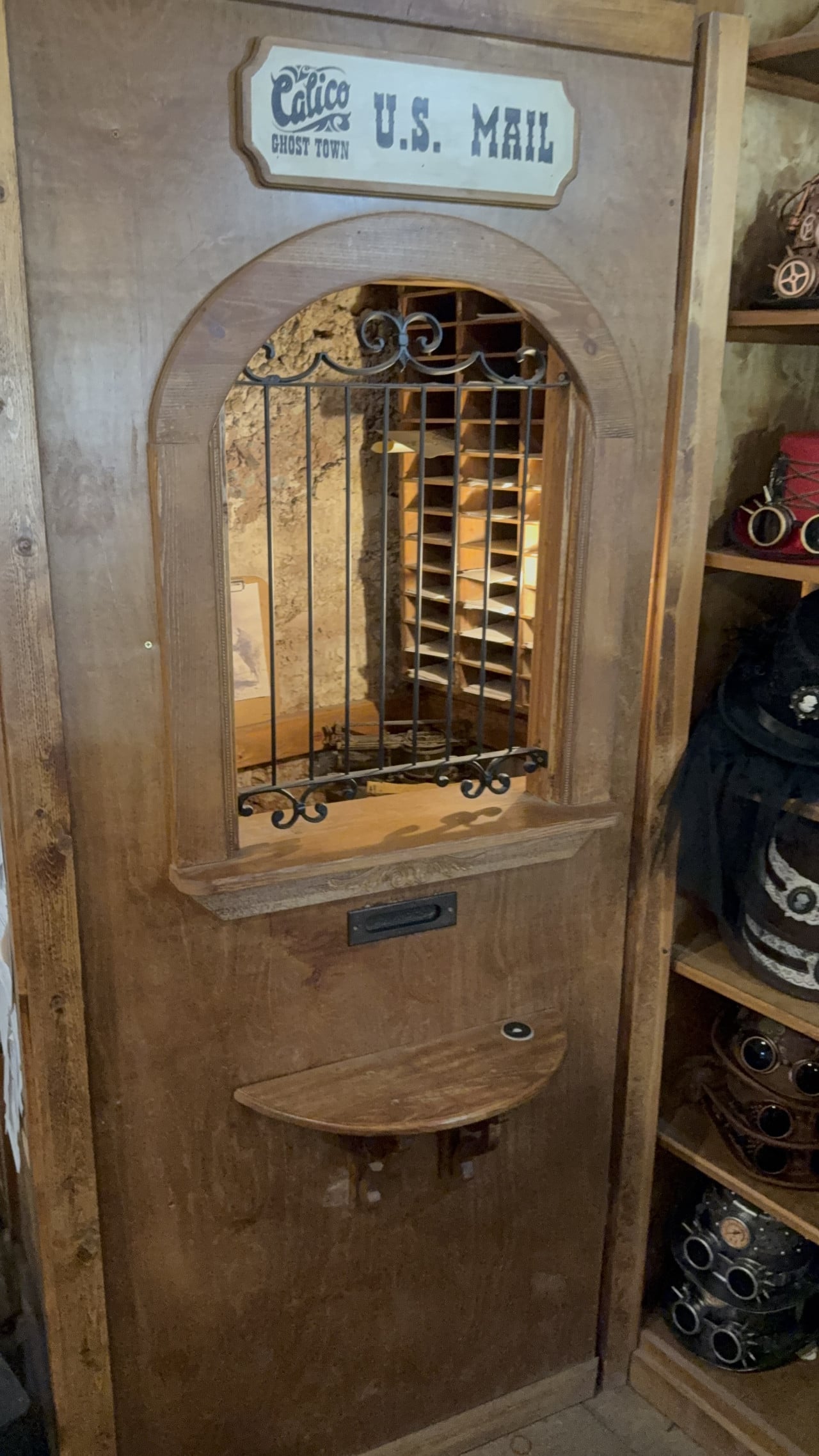
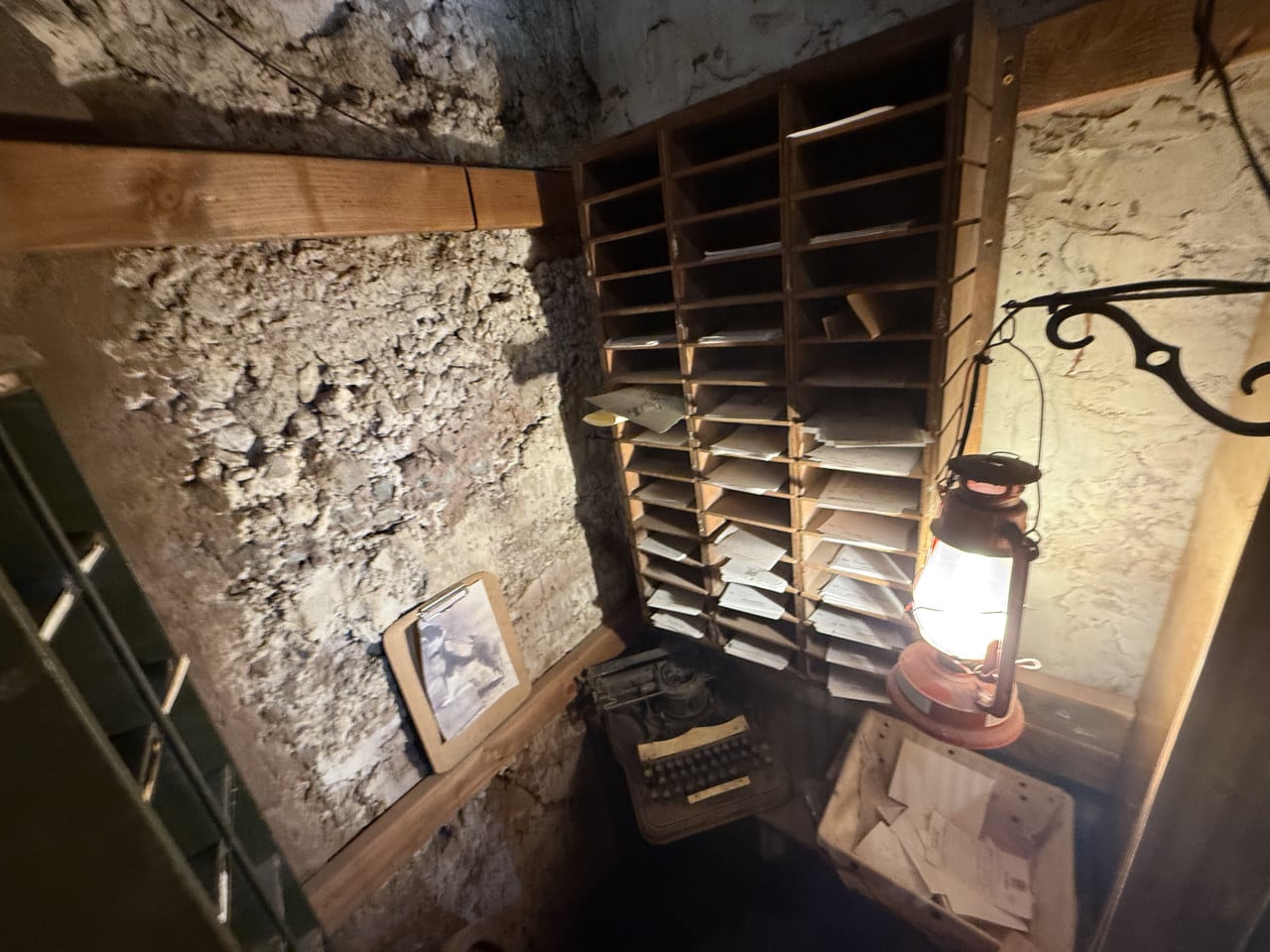
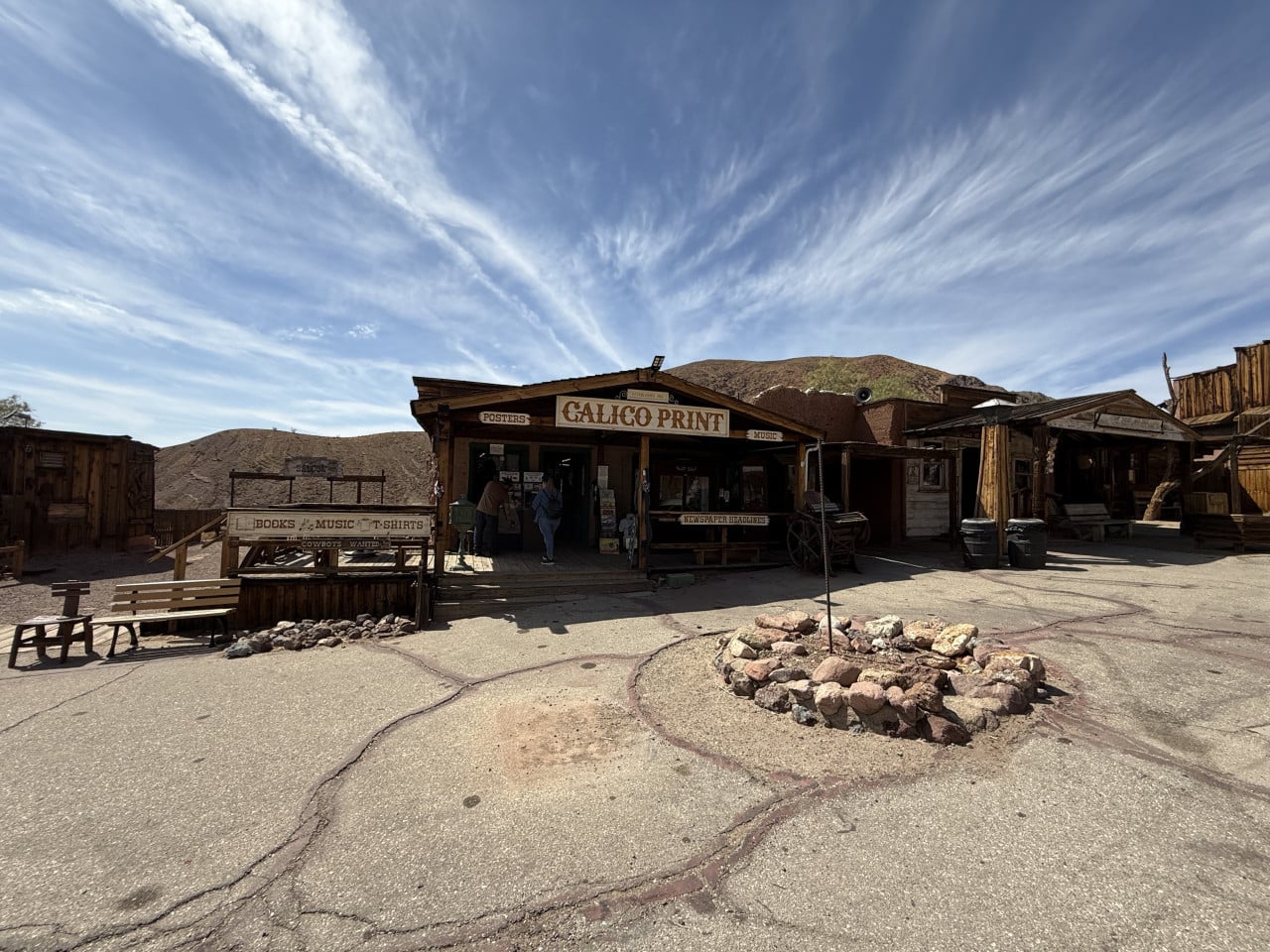
The town had everything needed for daily life—three hotels, five general stores, a butcher shop, bars, brothels, three restaurants with lodging, a school, a post office, a telegraph office, a Wells Fargo office, two lawyers, two doctors, a justice of the peace, and its own newspaper called “The Calico Print.” Over the entire period in which the local mines operated, they produced approximately $20 million worth of silver, along with another $9 million worth of borax minerals.
But then came 1890 and the Silver Purchase Act—a law that devastated the price of silver. By 1896, the value of silver had fallen to just 57 cents per troy ounce, and mining was no longer profitable. The miners packed their belongings, loaded their mules, and left. The post office closed in 1898, followed shortly afterward by the school, and by the turn of the century, Calico was virtually abandoned. Many of the original buildings were dismantled and moved to the nearby towns of Barstow, Daggett, and Yermo.
The town would probably have disappeared forever if it had not been for Walter Knott—yes, the same Knott who founded the famous Knott's Berry Farm amusement park. Knott had a personal connection to Calico: his uncle, John C. King, was one of the first prospectors to discover silver here, and the richest mine—the Silver King Mine—was even named after him. In 1951, Knott purchased the entire town from the Zenda Mining Company and began restoring it according to old photographs from the 1880s. He preserved five original buildings and carefully reconstructed the others to look as they had in the old days. In 1966, he donated all of Calico to San Bernardino County.
And that is not all—in 2005, then-governor Arnold Schwarzenegger officially declared Calico “California's Silver Rush Ghost Town”—the official silver-rush ghost town of the State of California. Calico was thus designated California Historical Landmark No. 782.
Arriving at Calico Ghost Town
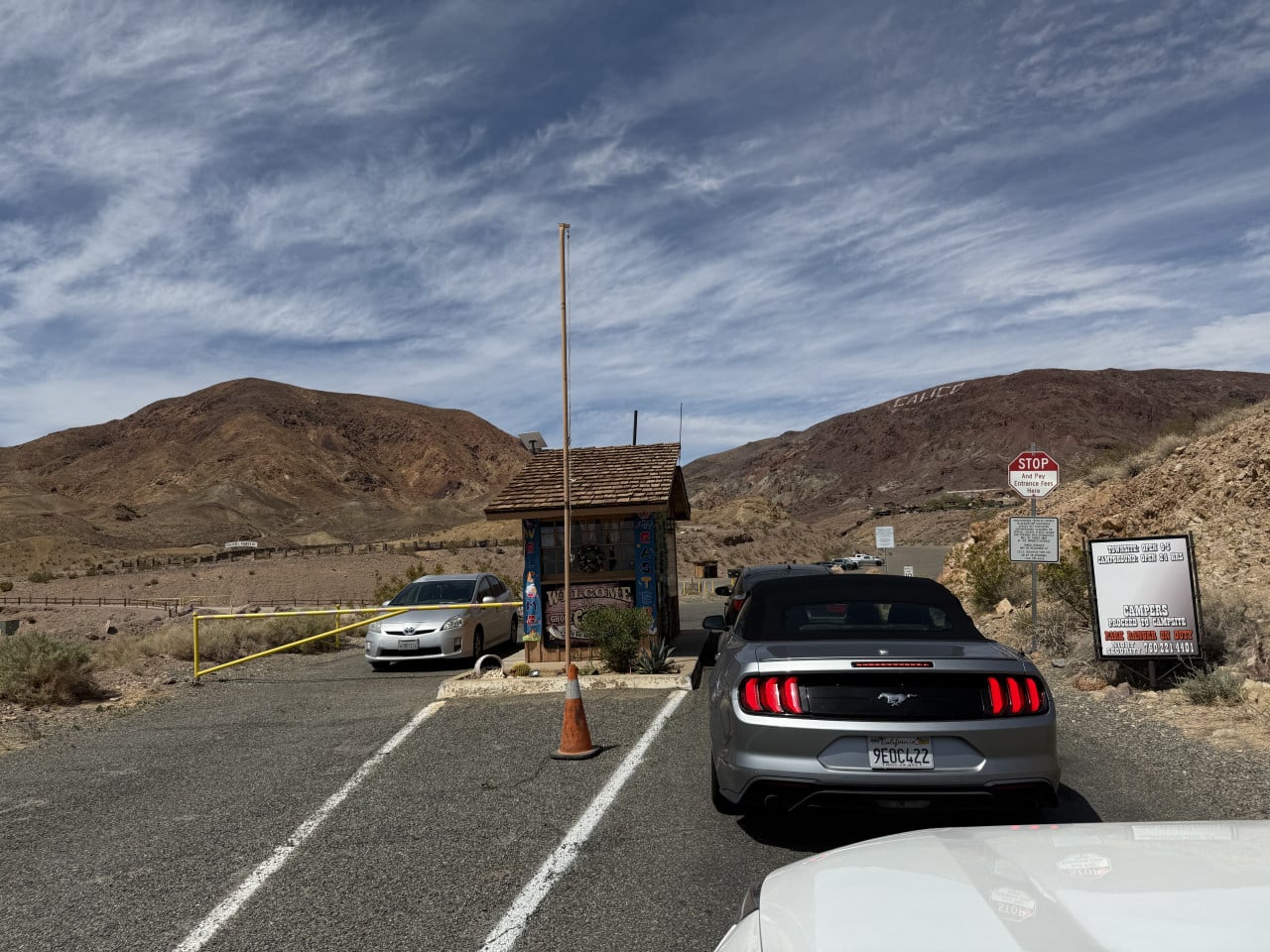
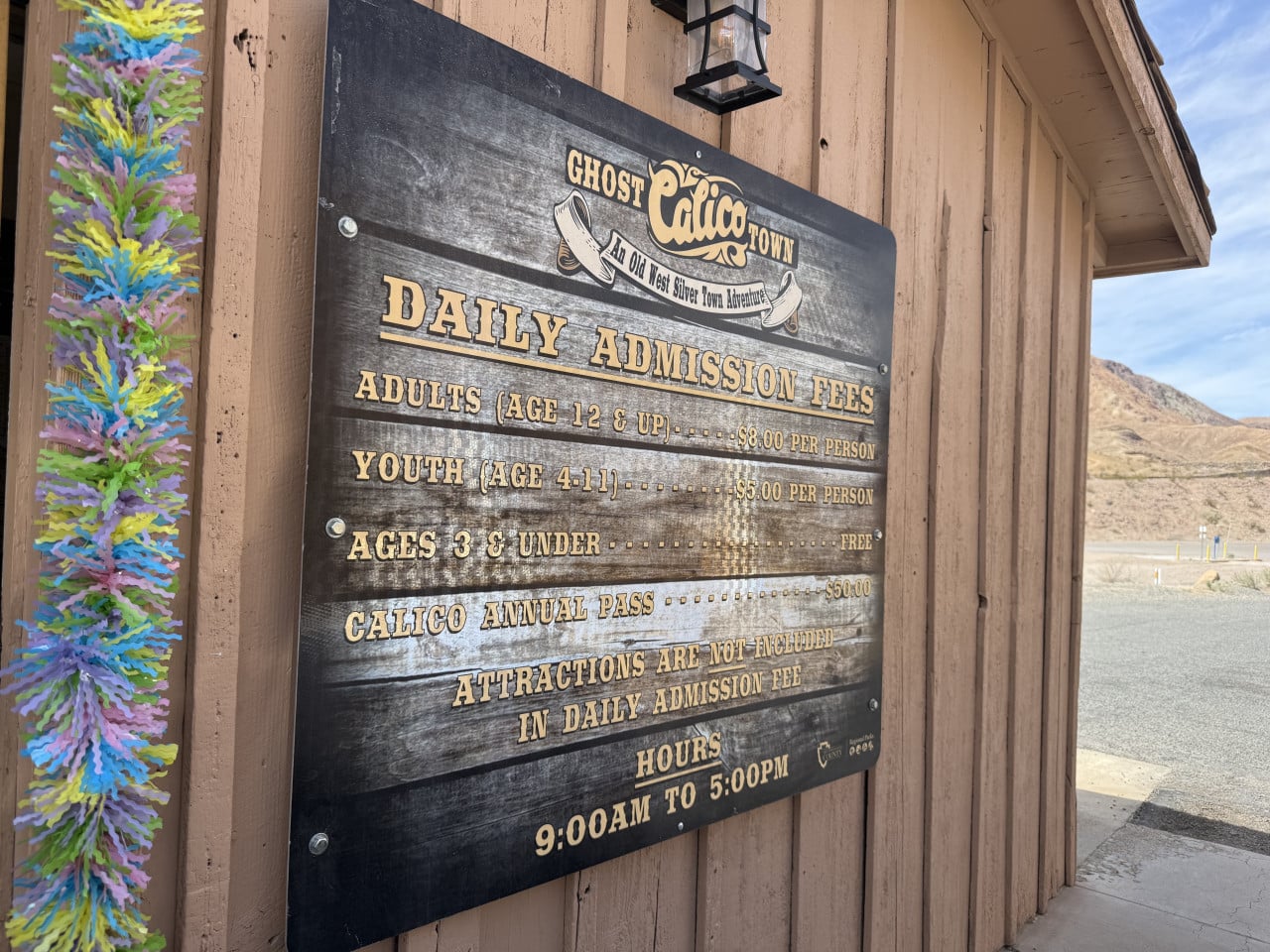
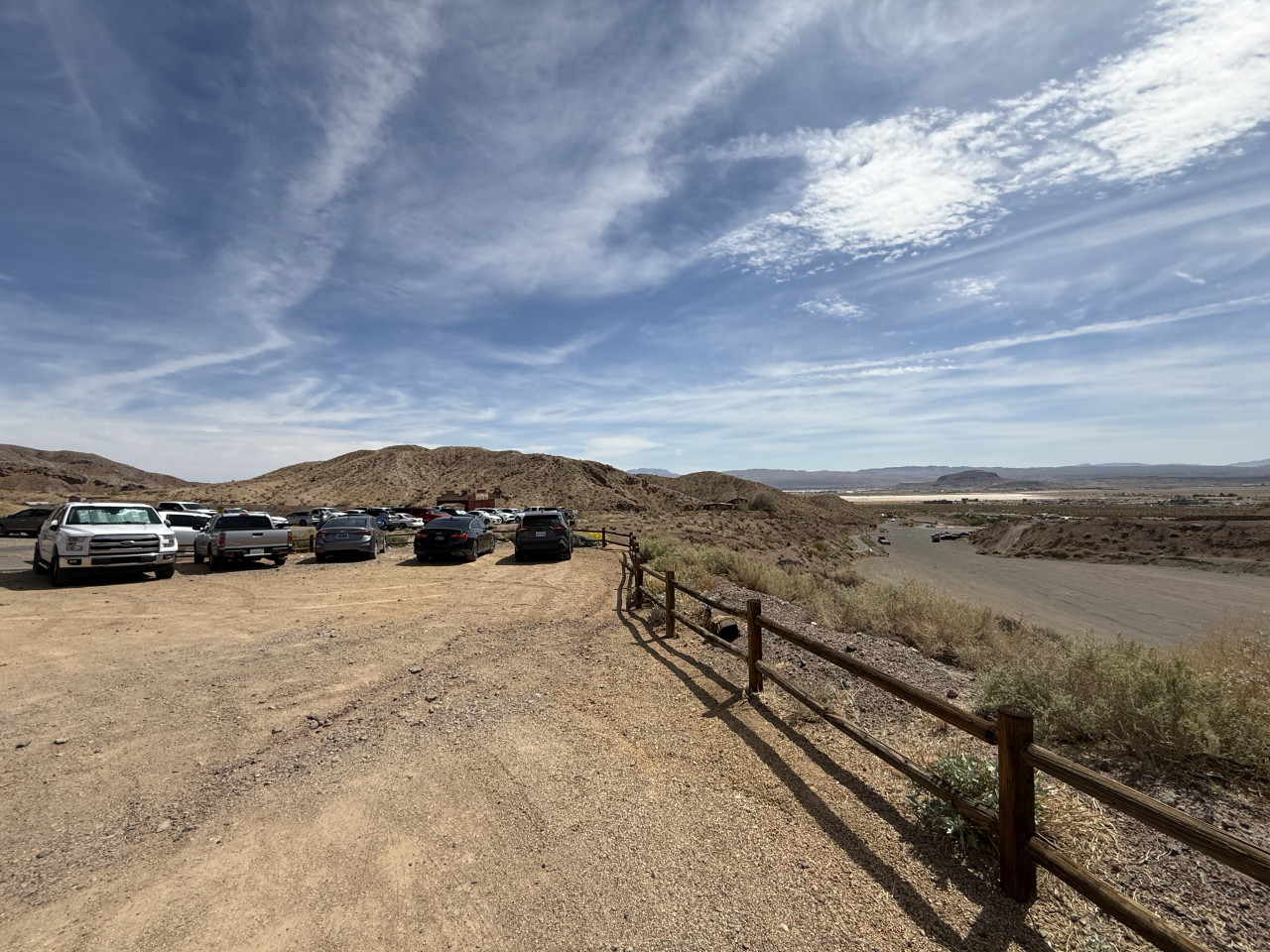
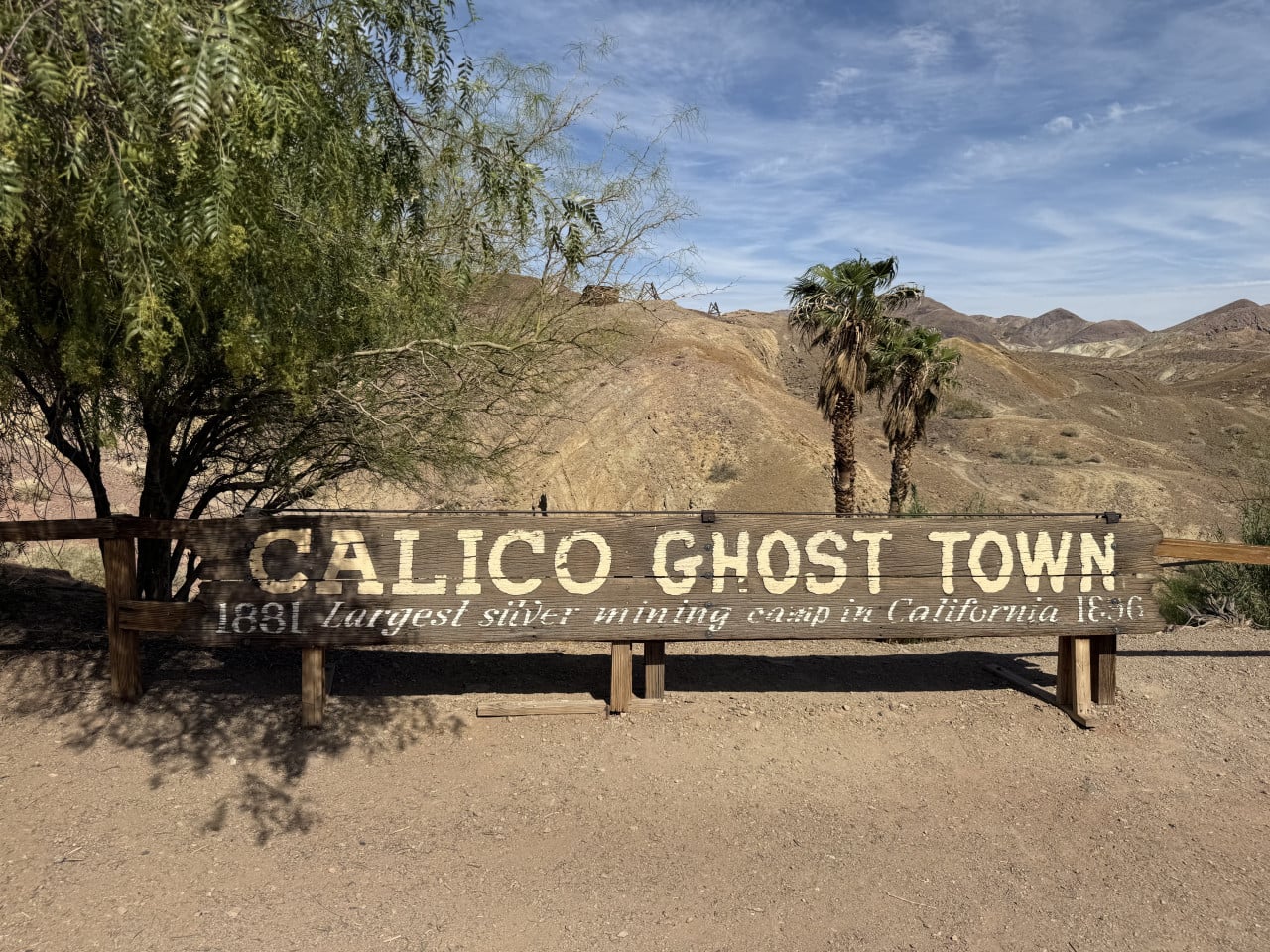
When you arrive, you first stop at the ticket booth by the parking lot. Admission (in 2025, when I photographed the sign) was $8 per adult and $5 per child; children under three were admitted free. Even from the parking lot, there is a beautiful view of the surrounding hills and the large “CALICO GHOST TOWN” sign on the mountainside—just like the famous Hollywood sign, only in a Western style.
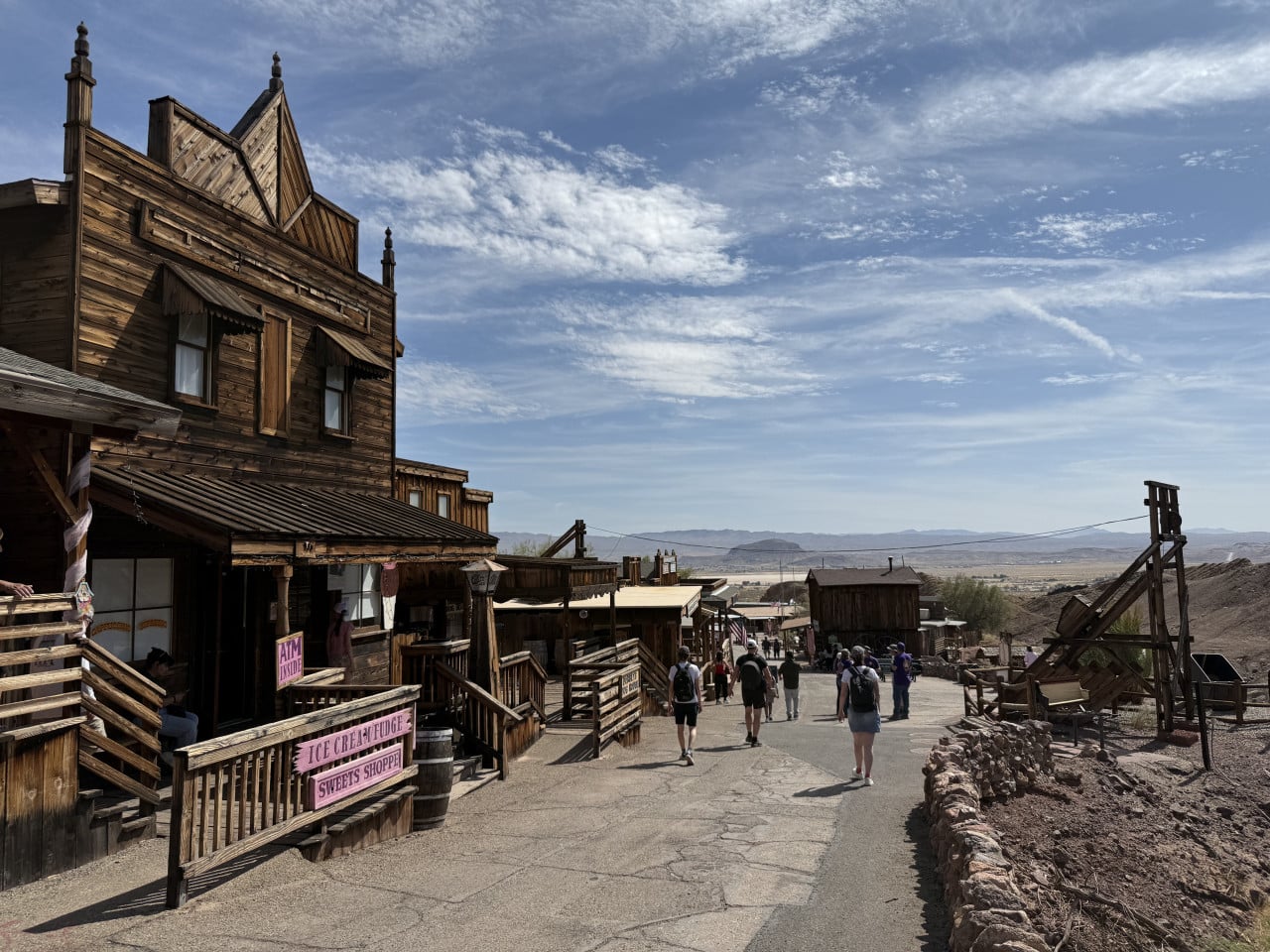
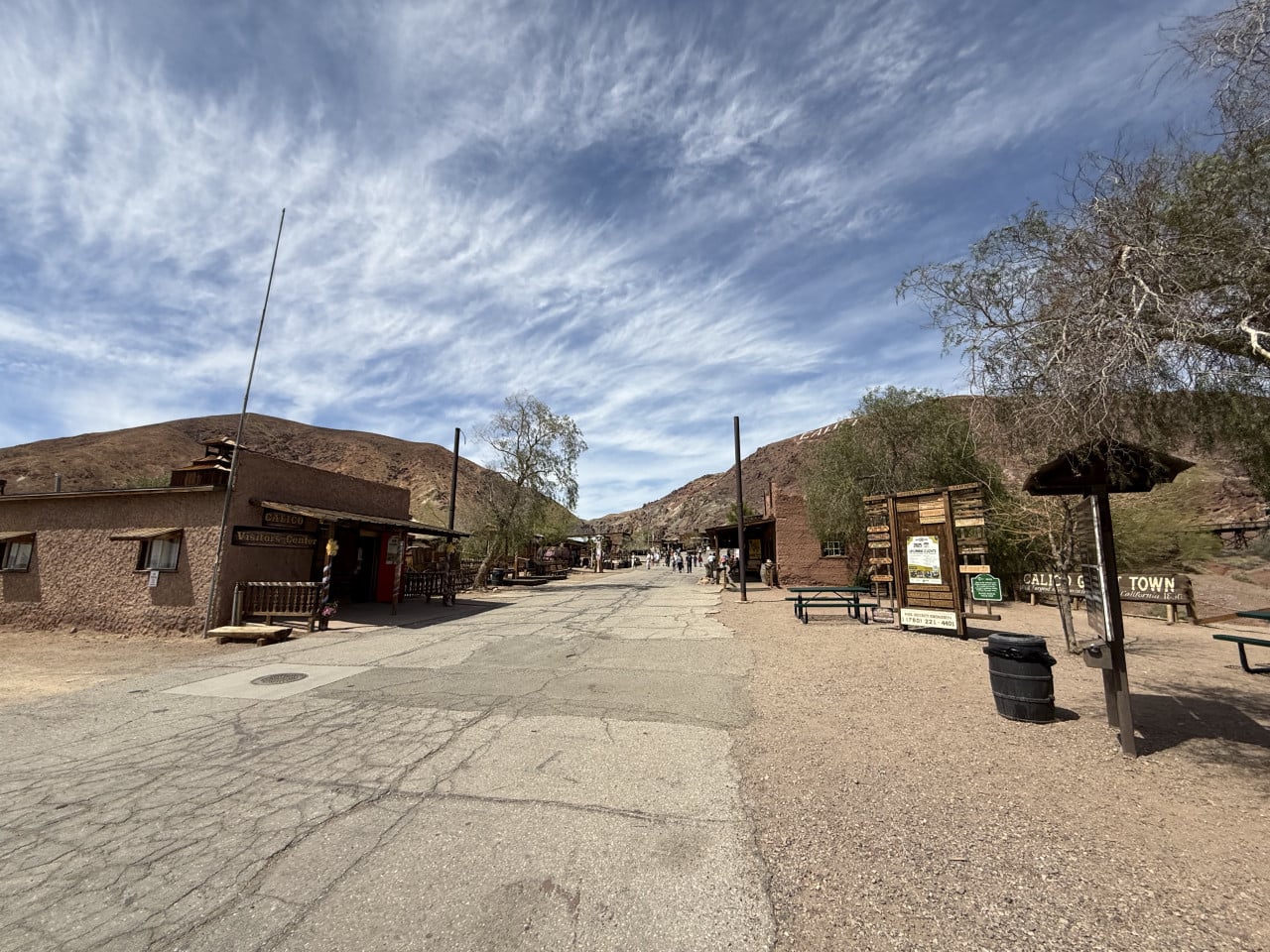
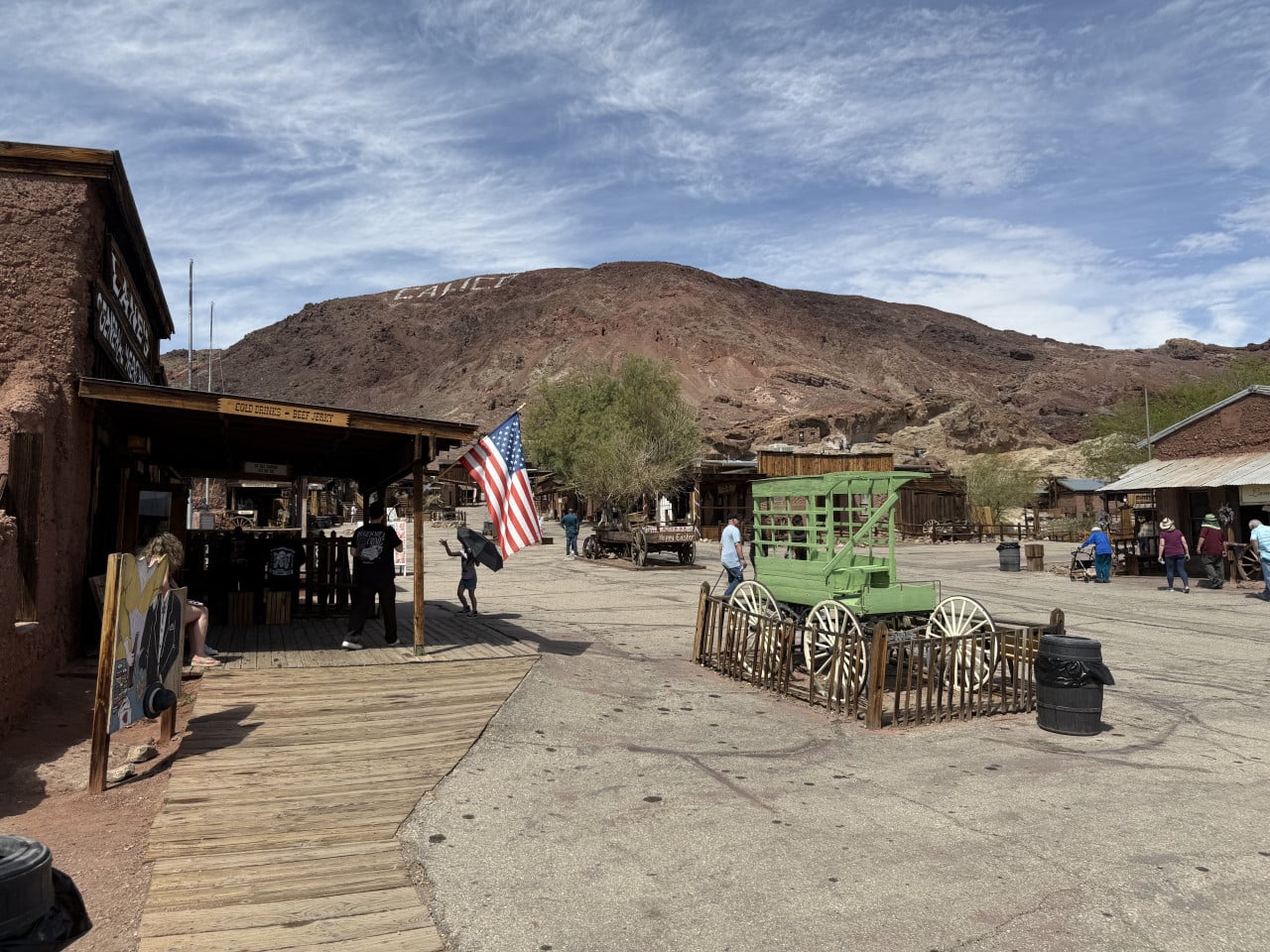
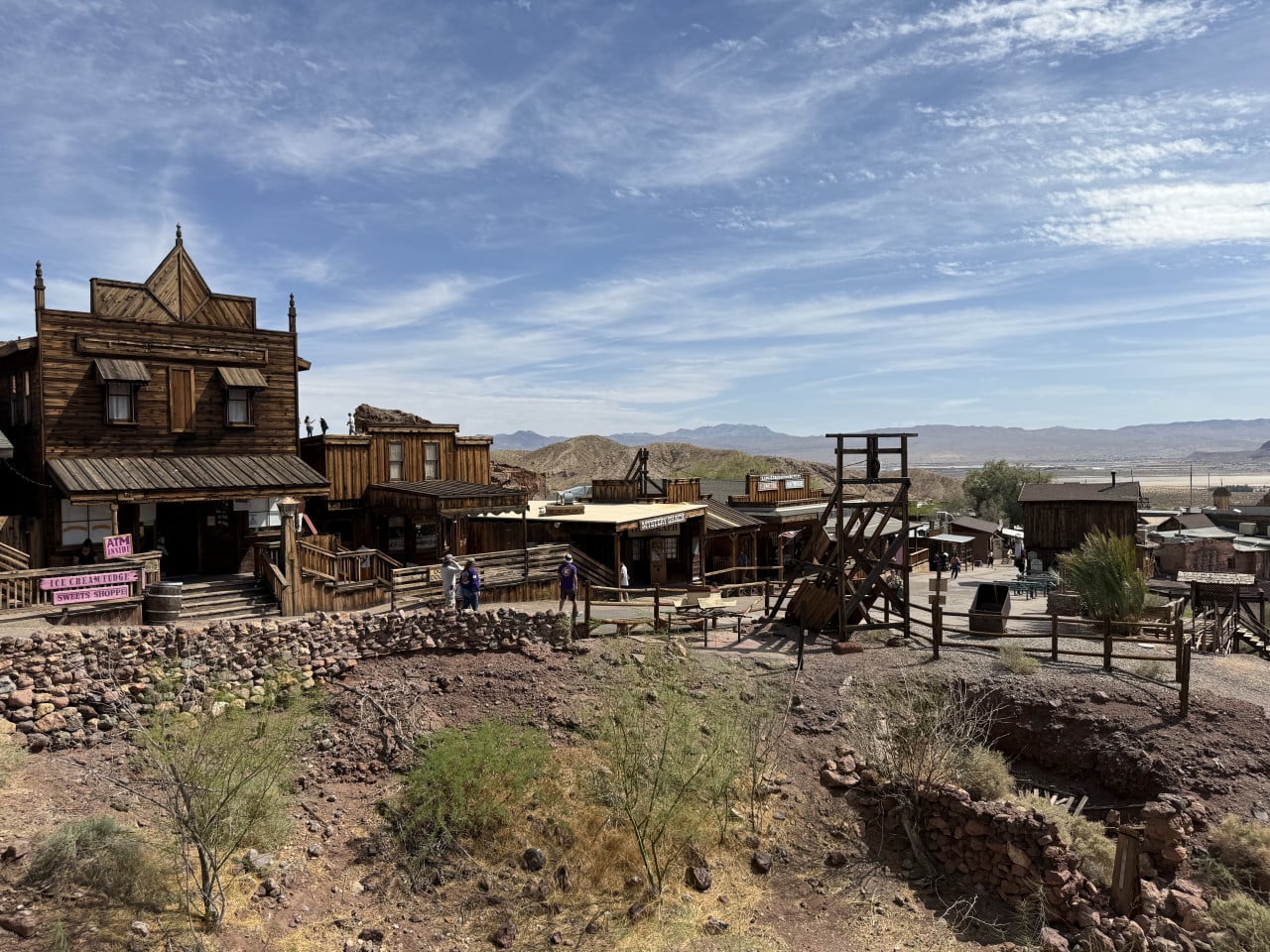
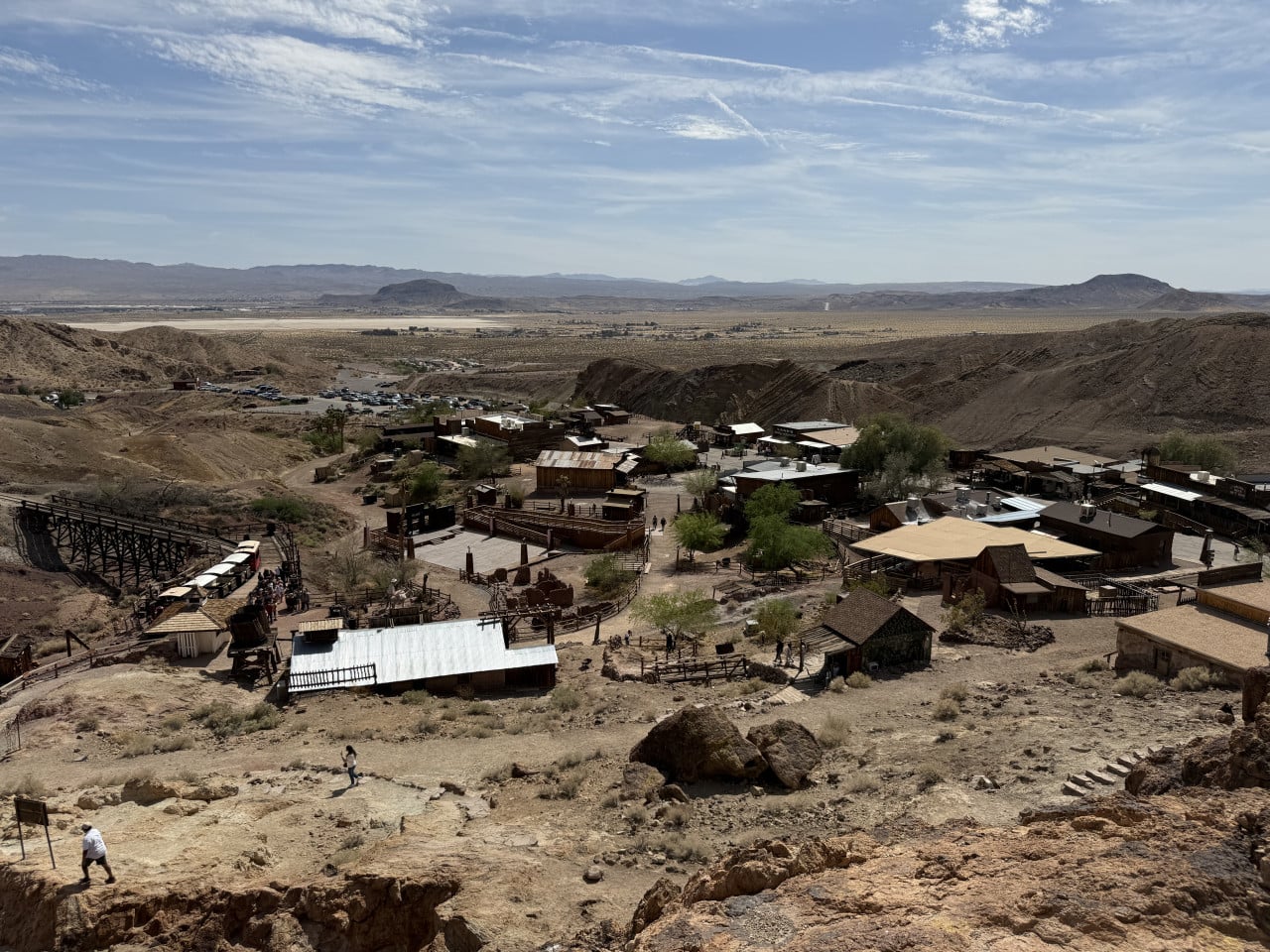
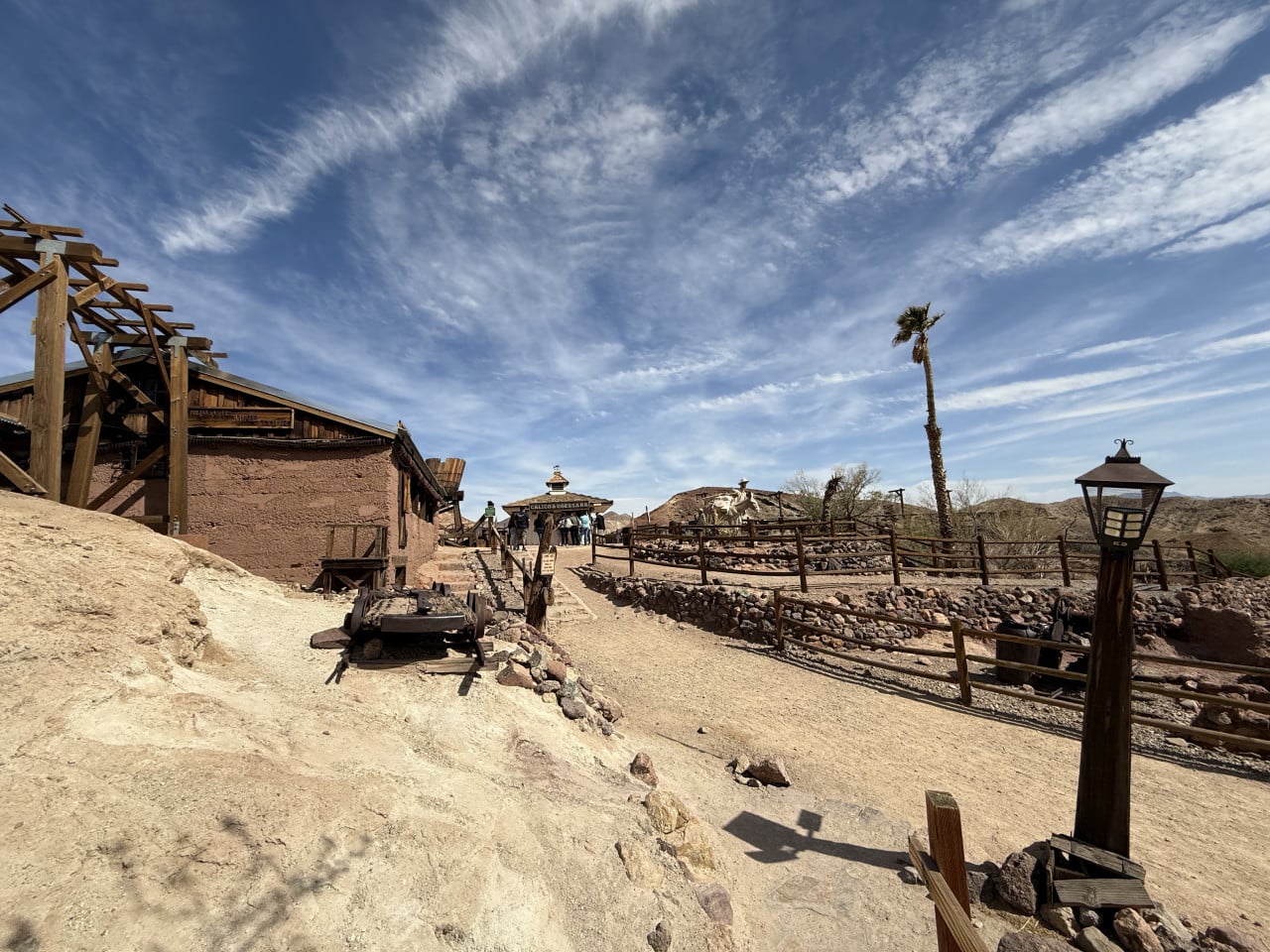
Then you climb up, and the entire town opens up before you. At that moment, you feel as if you have truly stepped into a Western.
What you will see and experience in Calico
Calico Ghost Town is not a museum behind glass—it is a place you walk through, where you enter buildings and feel the spirit of the Old West at every turn.
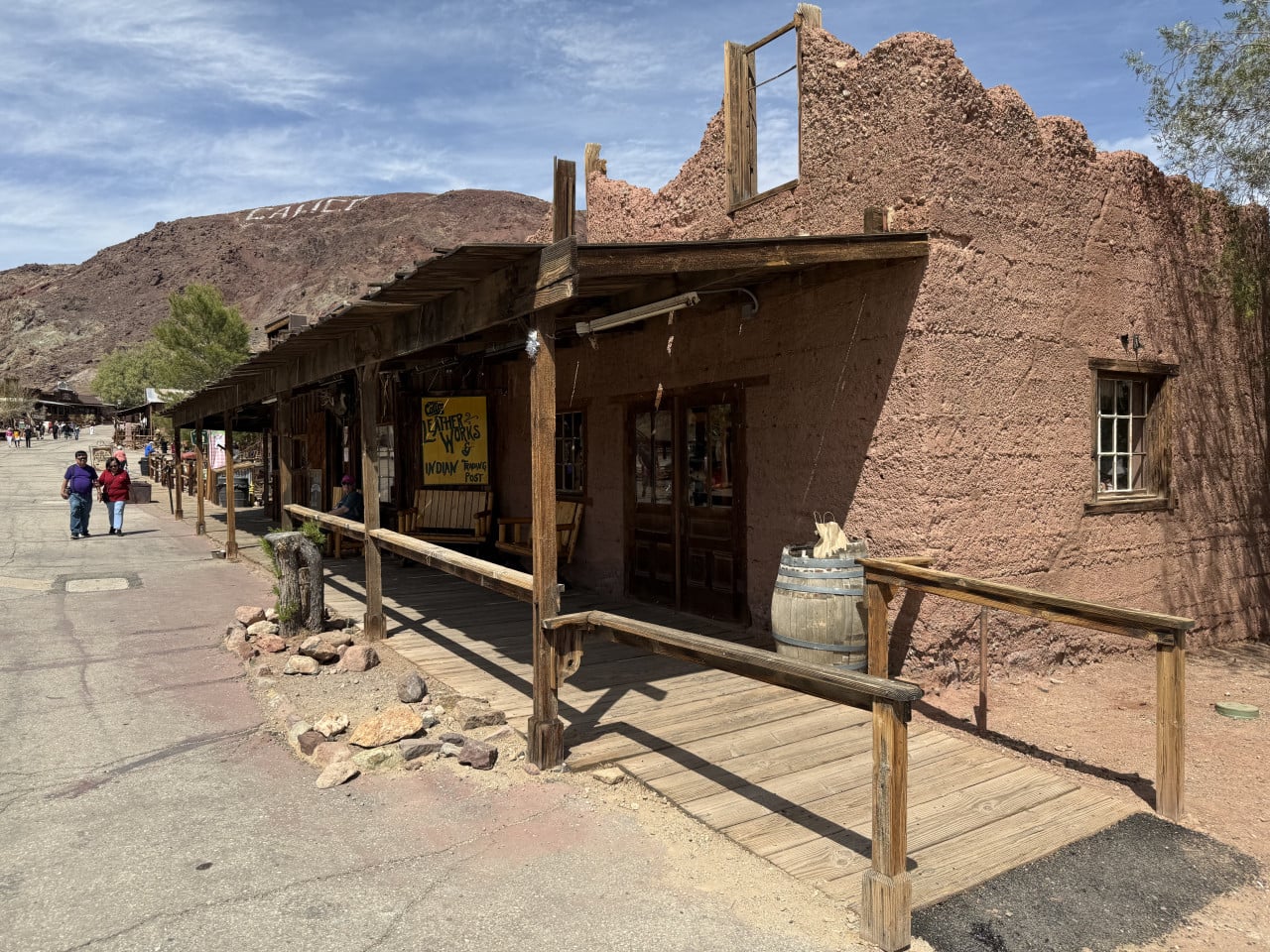
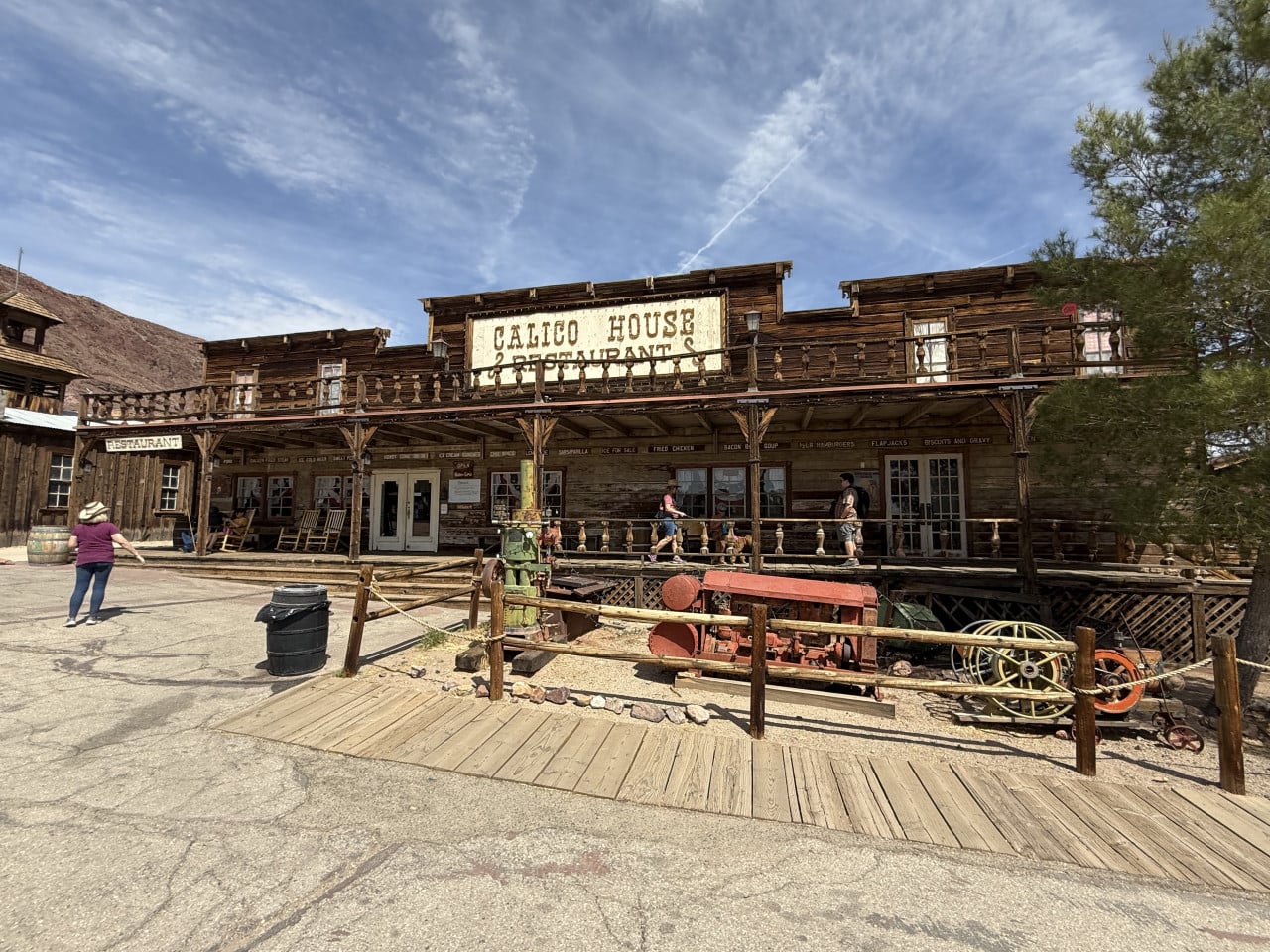
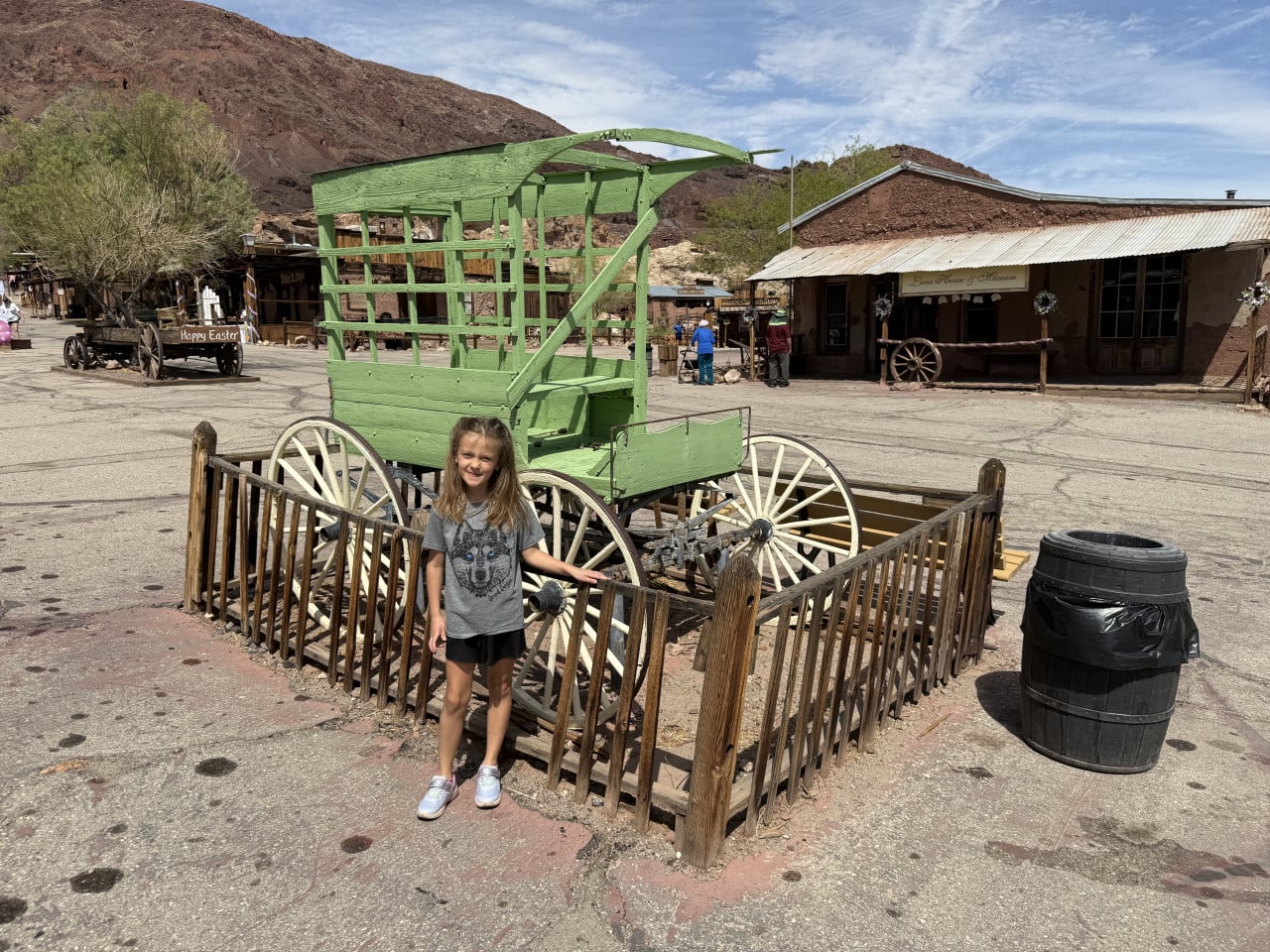
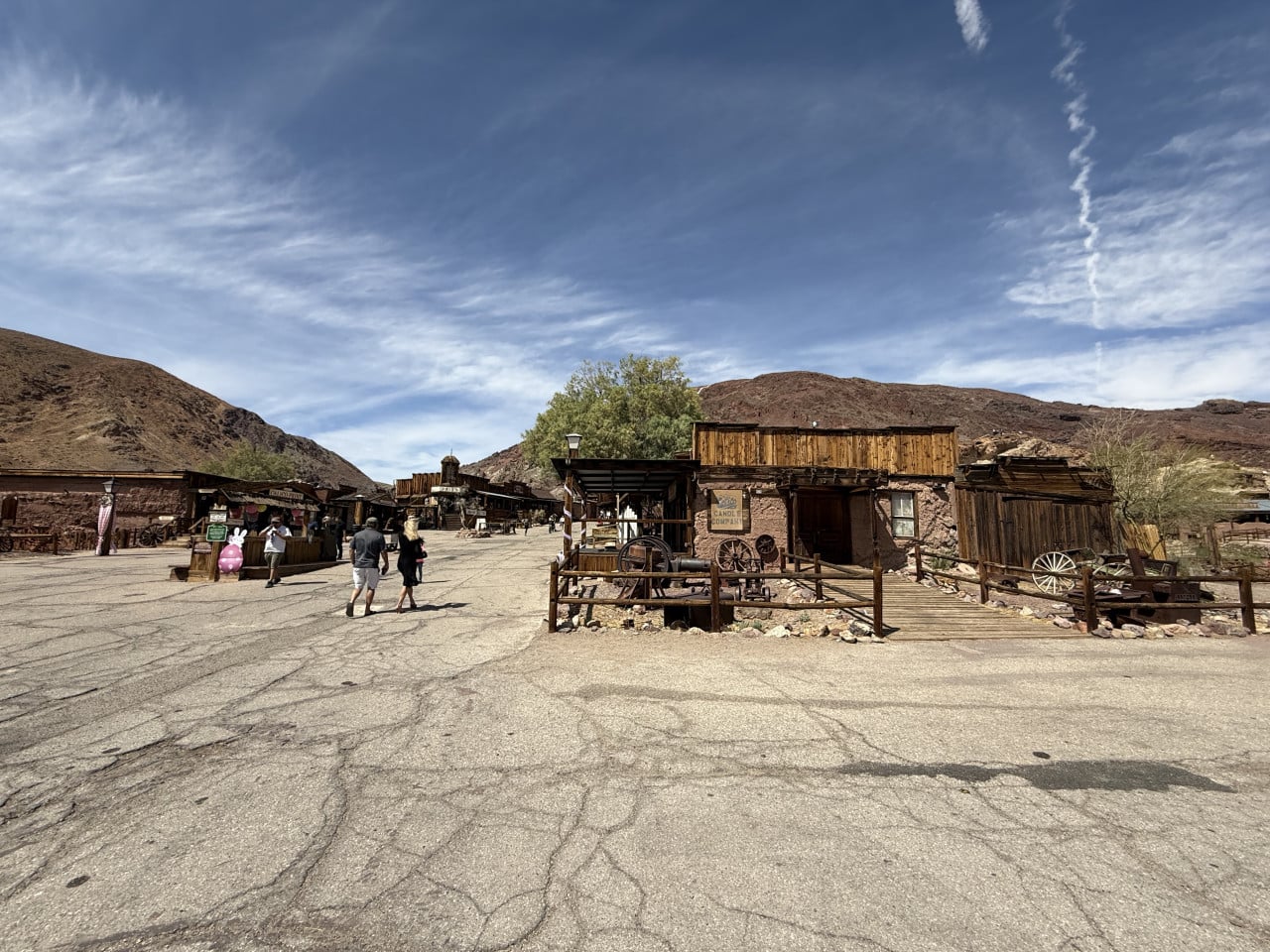
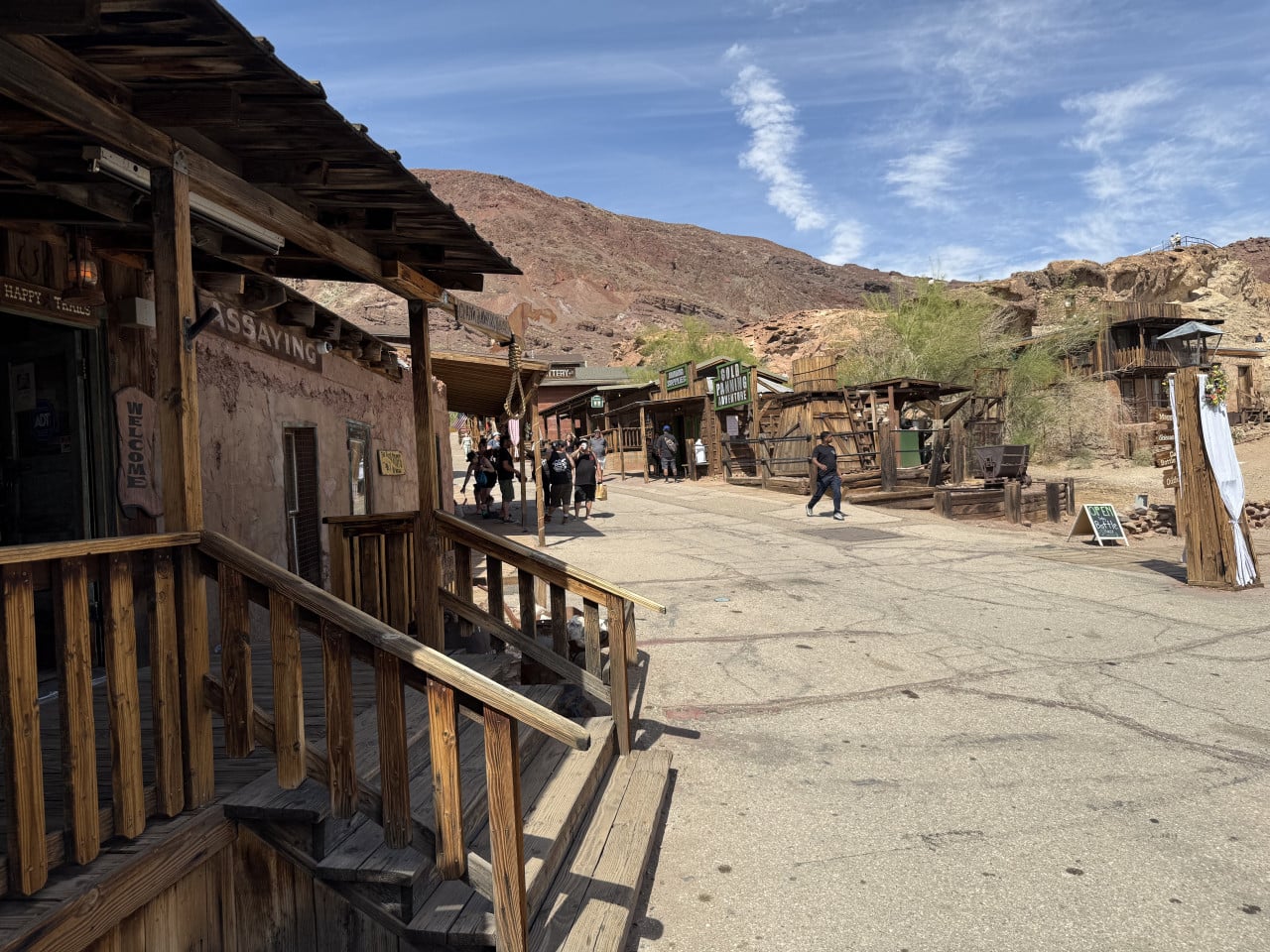
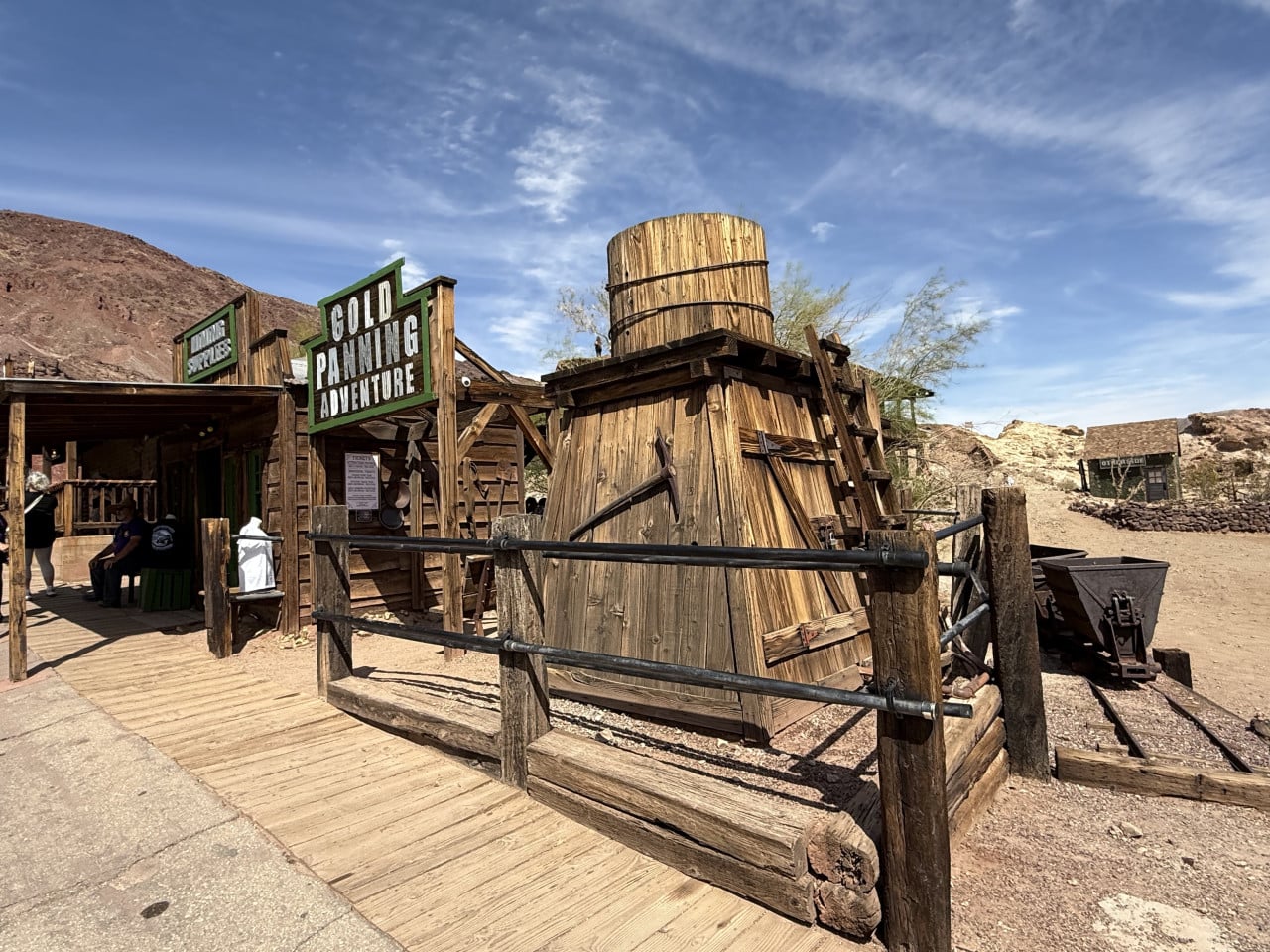
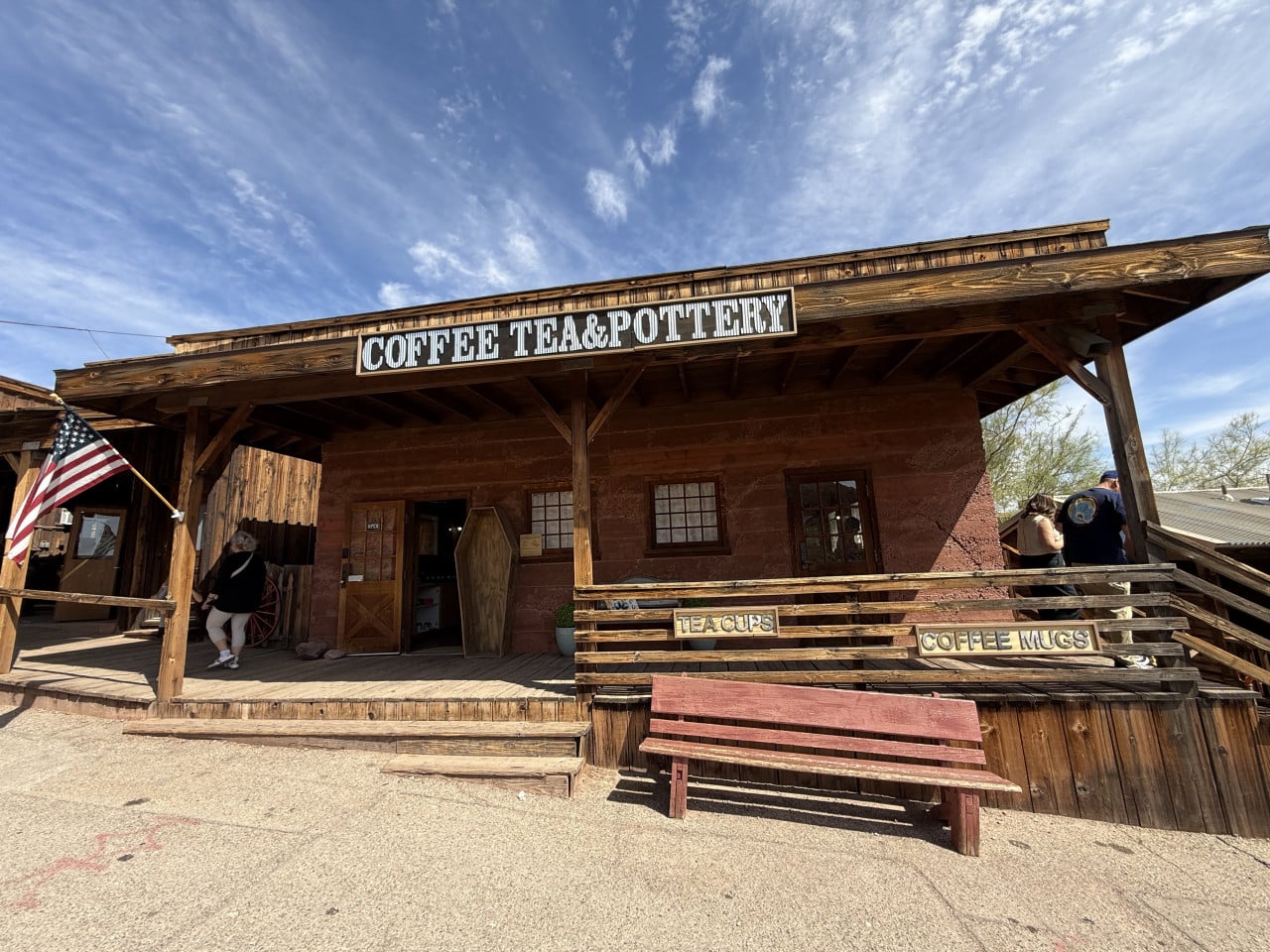
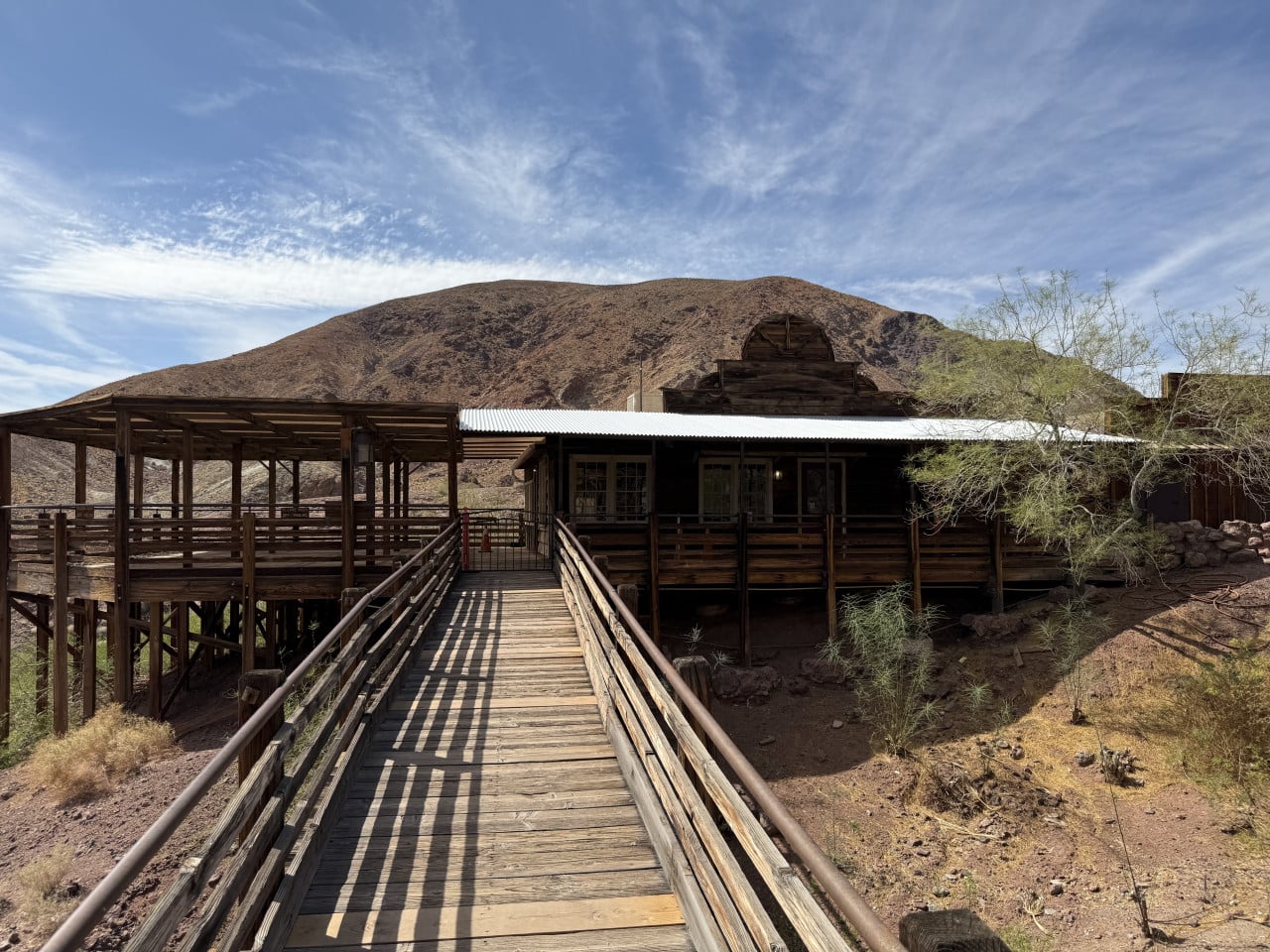
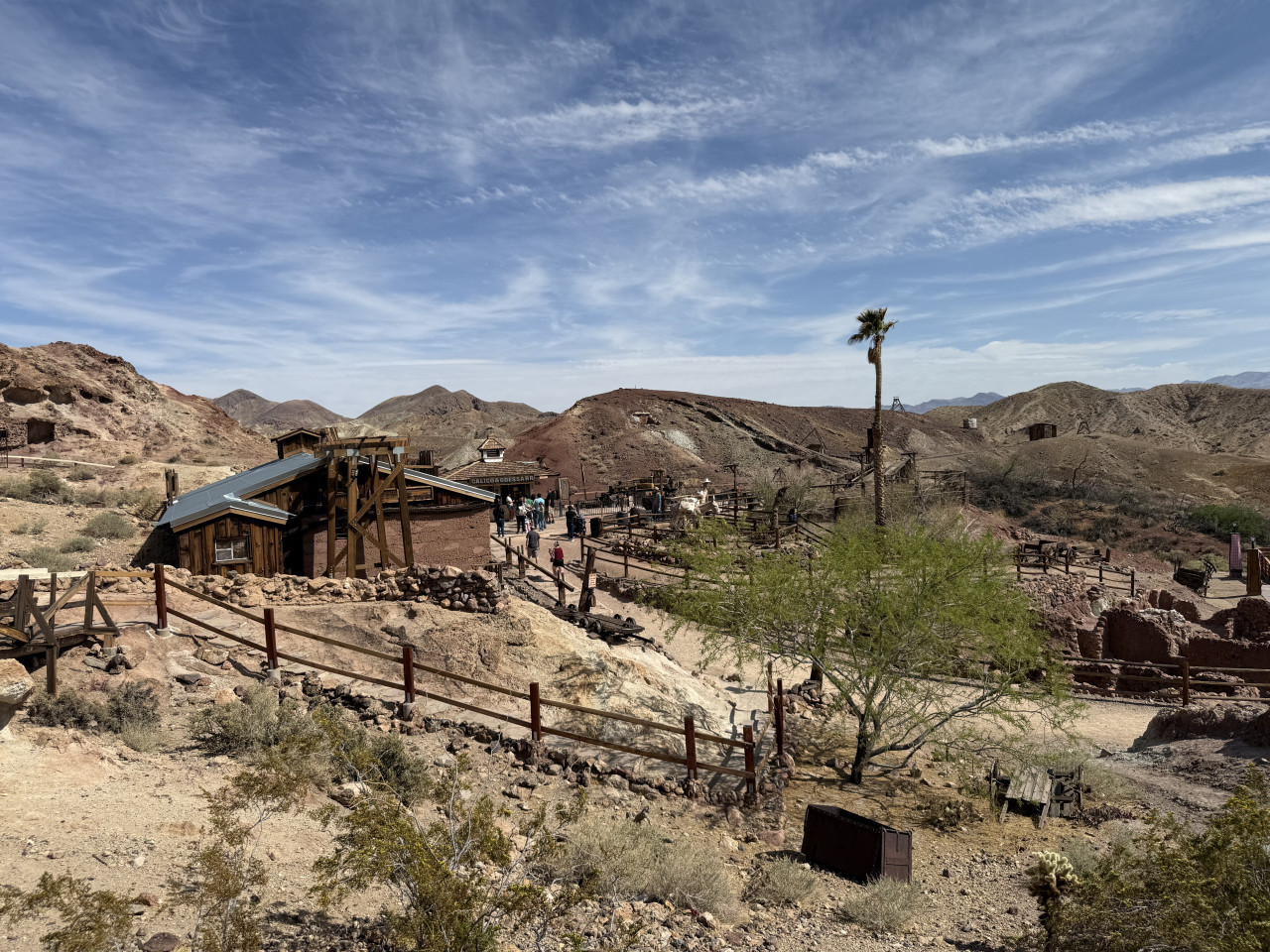
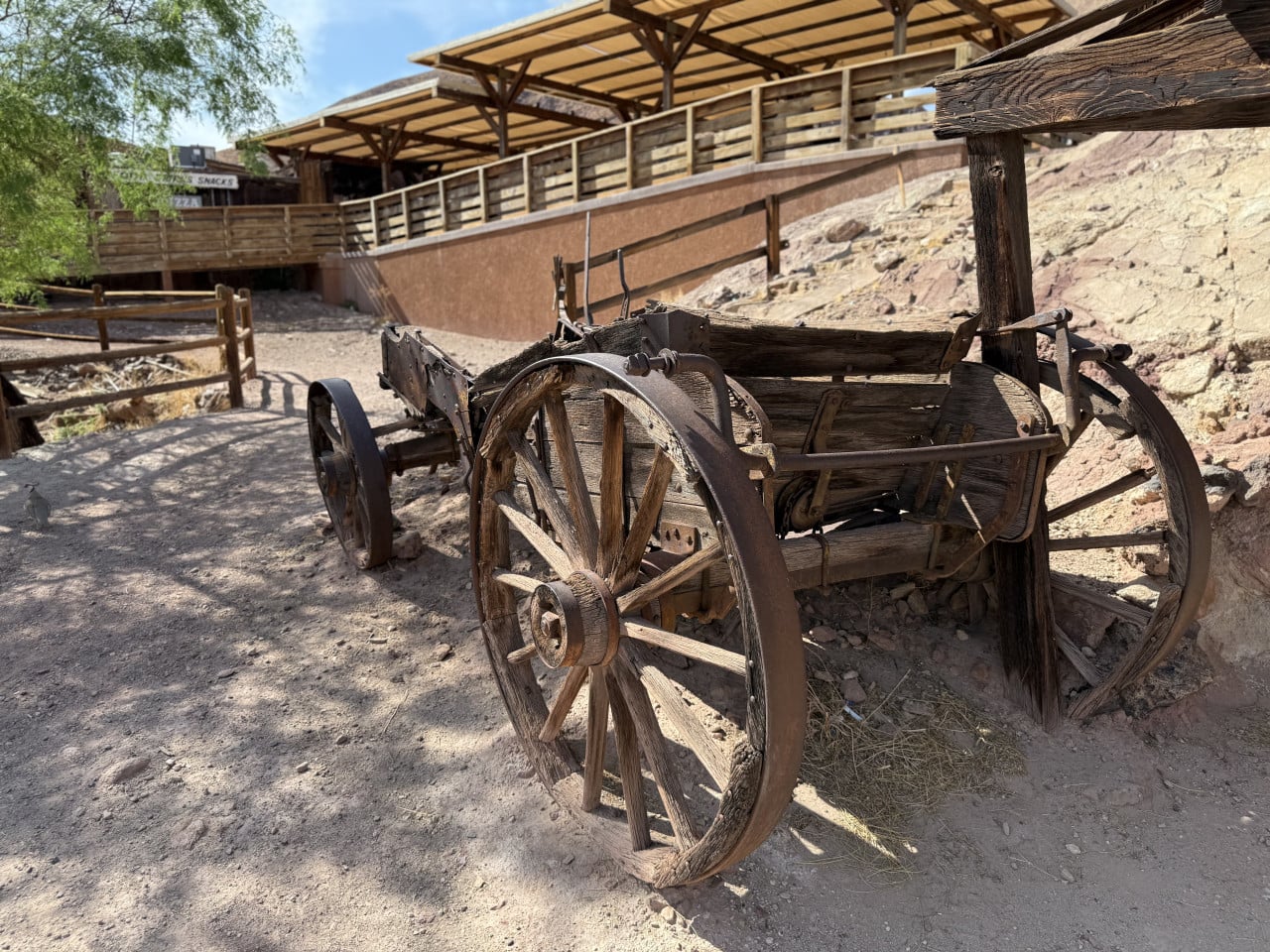
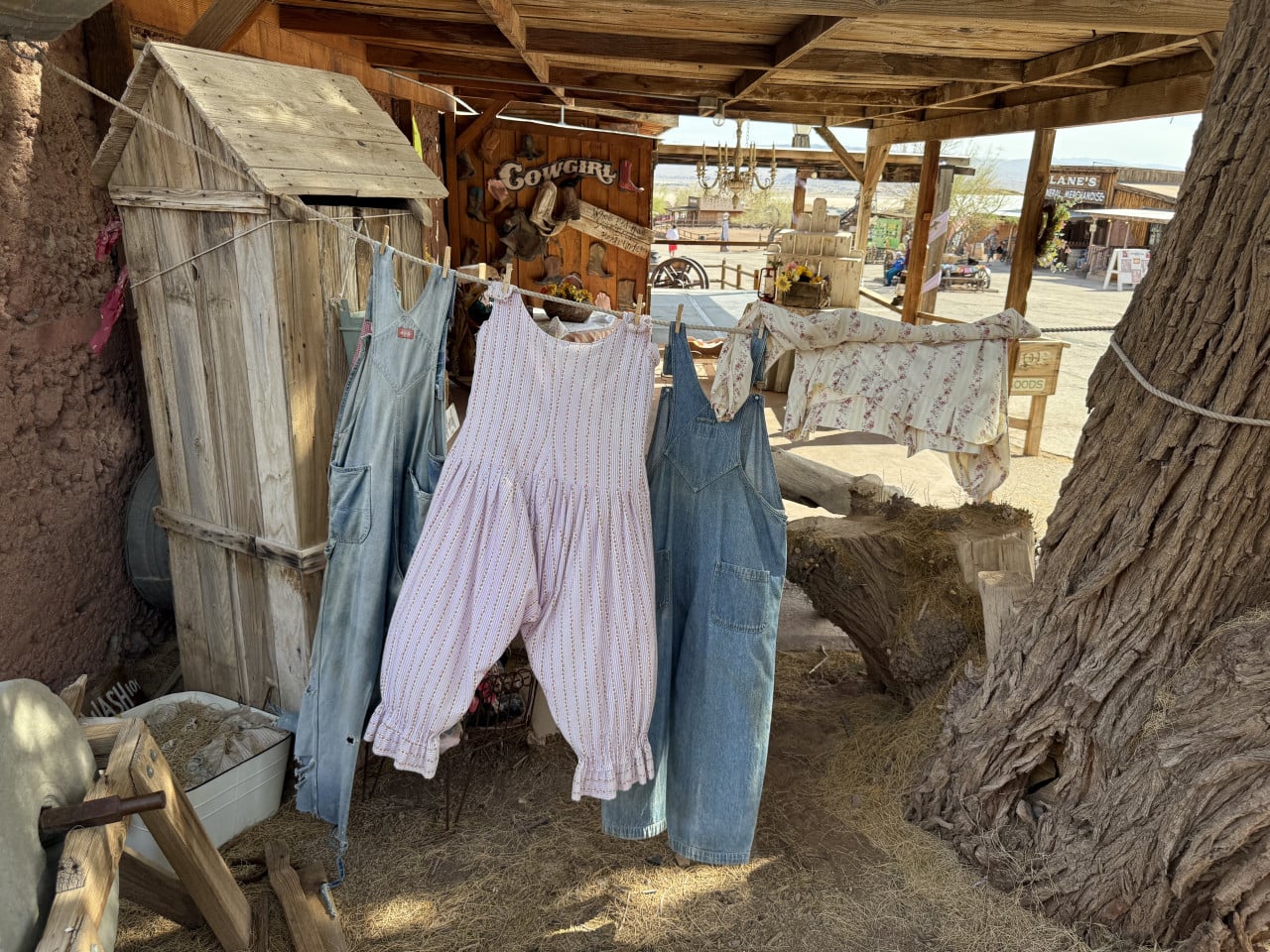
Right at the beginning, you are greeted by a wooden boardwalk lined with old buildings and porches, exactly as you know them from Western movies. American flags fly from the buildings, and everything is maintained in period style.
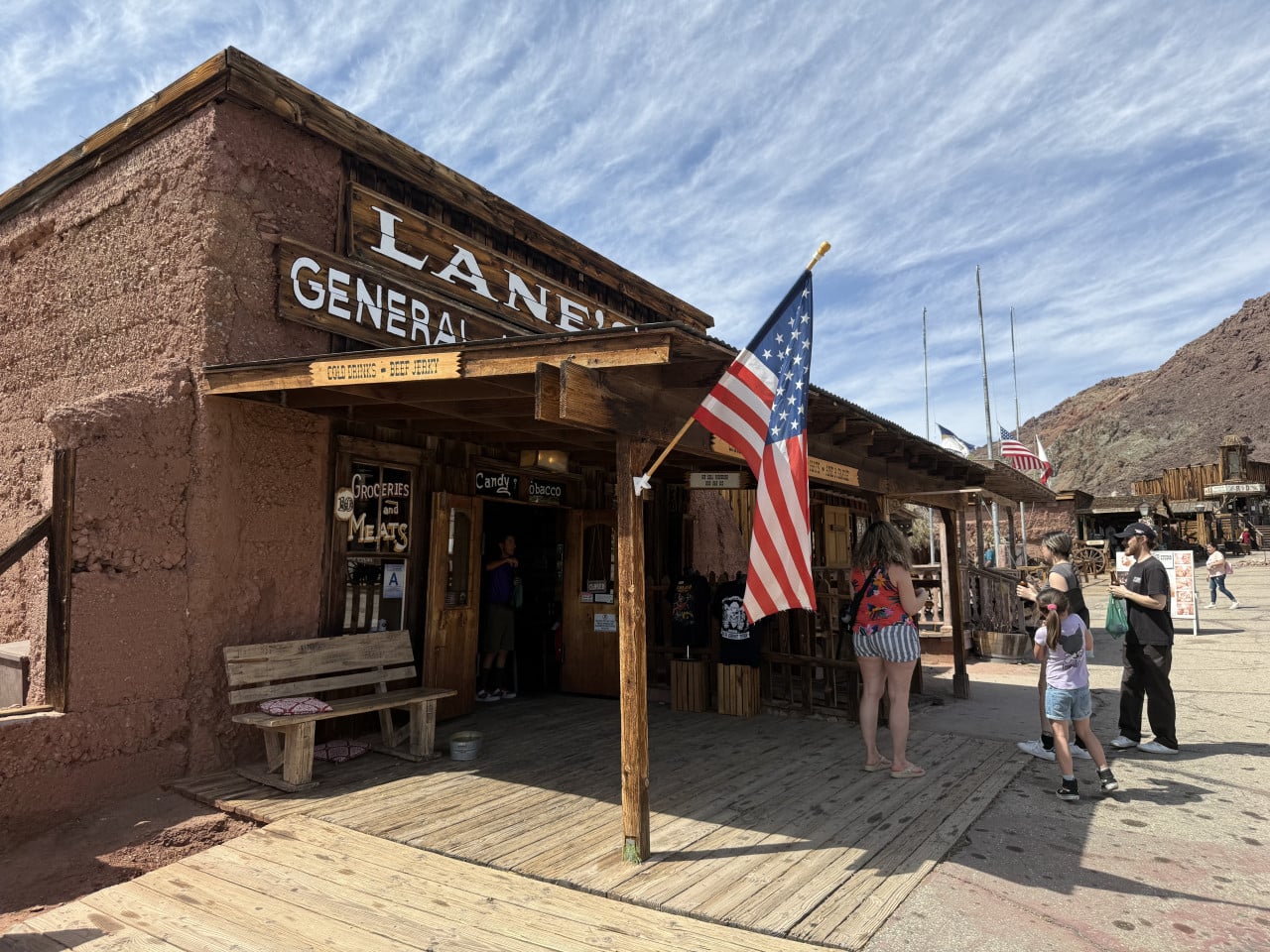
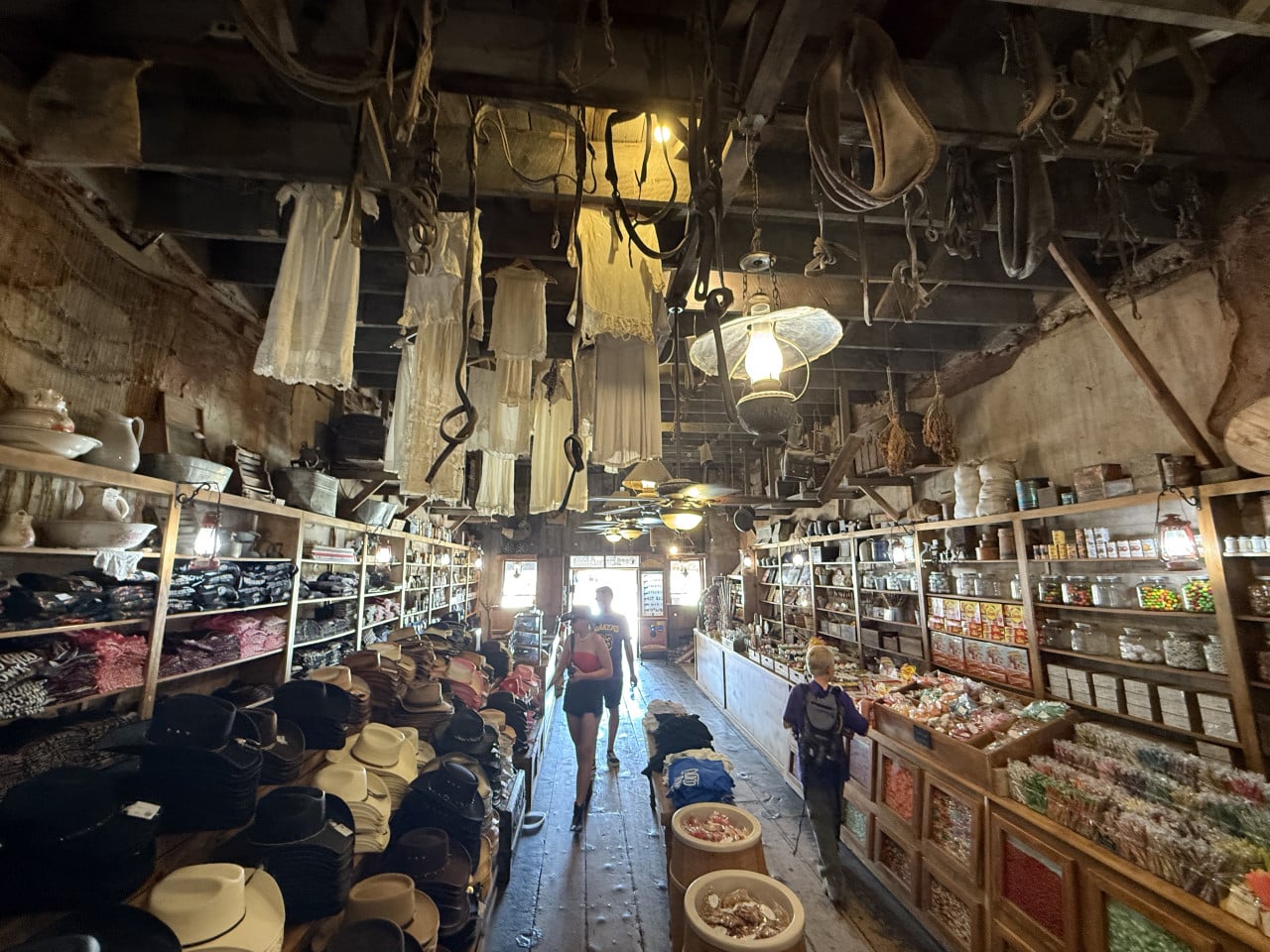
Lane's General Store—one of the original stores, where you can now find souvenirs, sweets, and tobacco, but most importantly, the authentic atmosphere of an old general store. The original “Groceries” and “Meats” signs can still be seen on its façade.
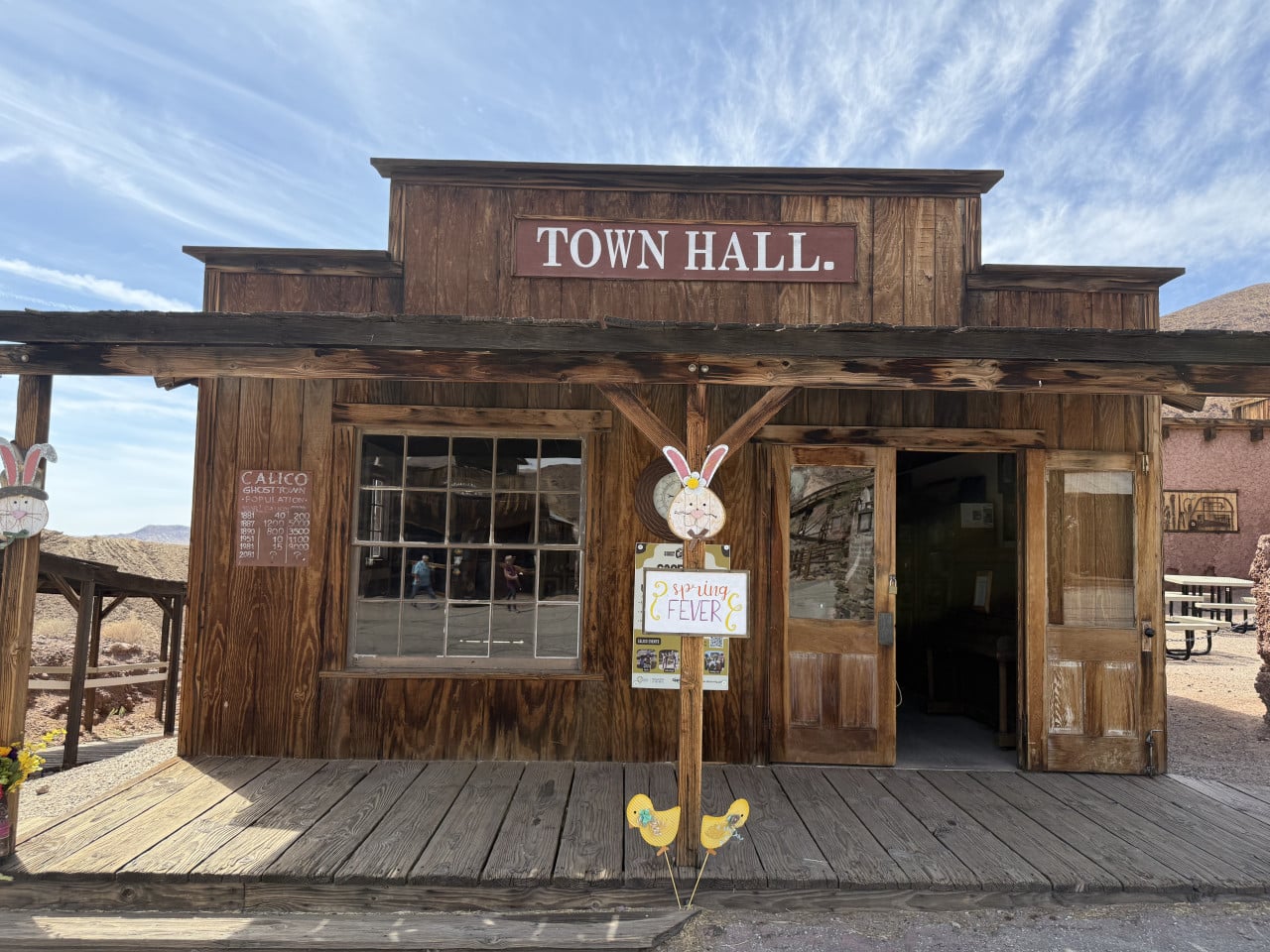
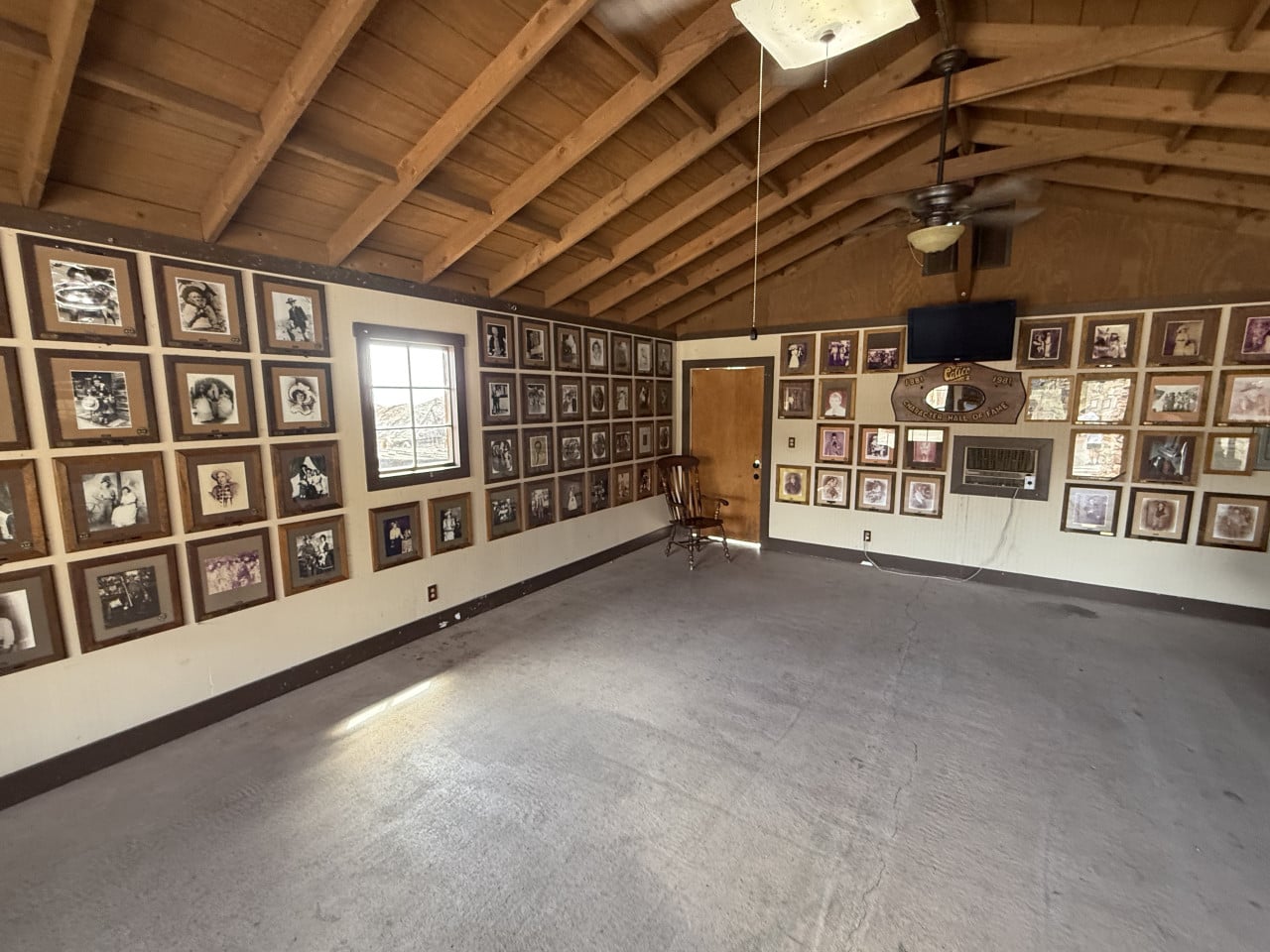
Town Hall—the town hall also serves as a small museum featuring period artifacts, photographs, and documents from the town's heyday.
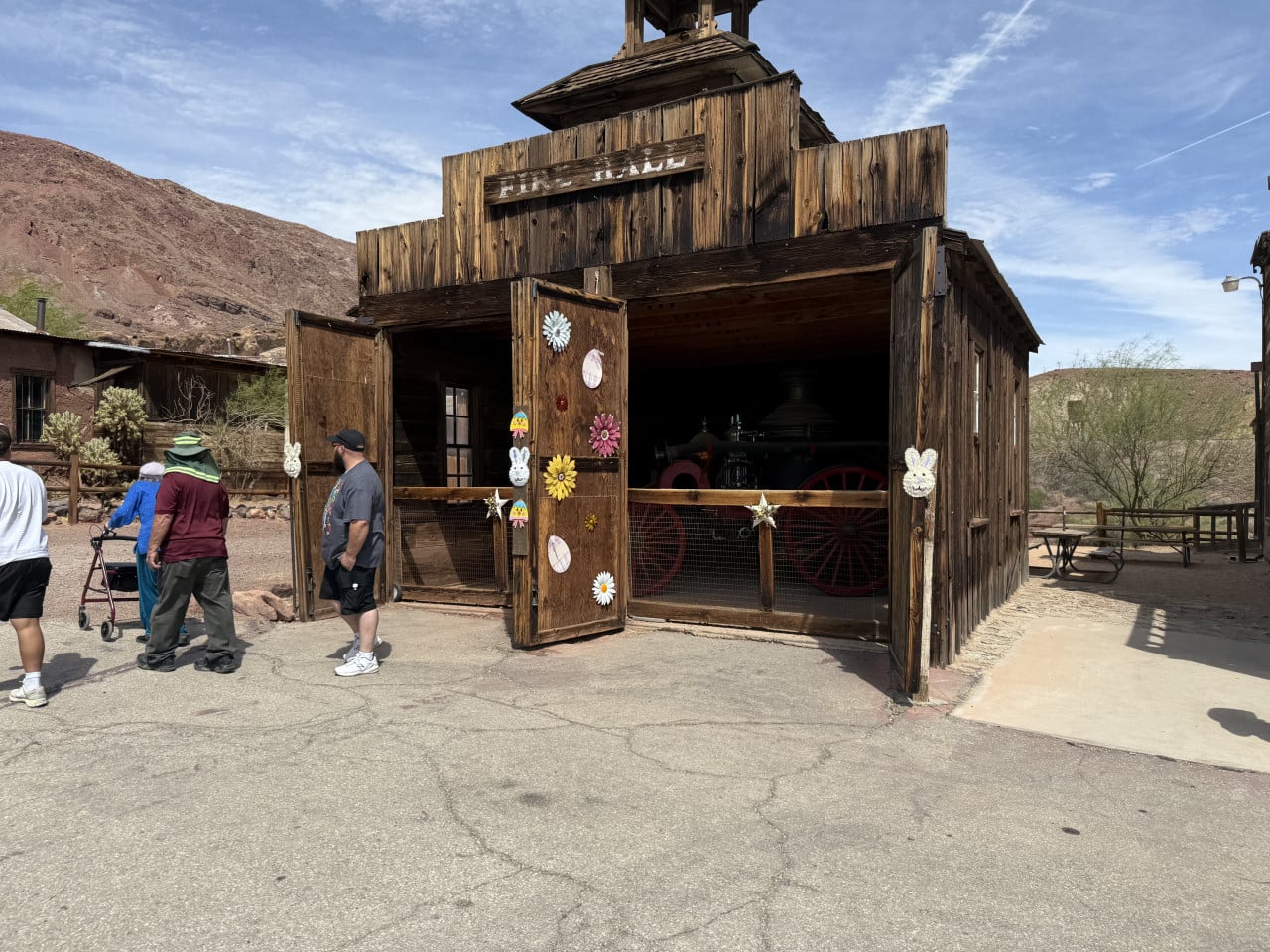
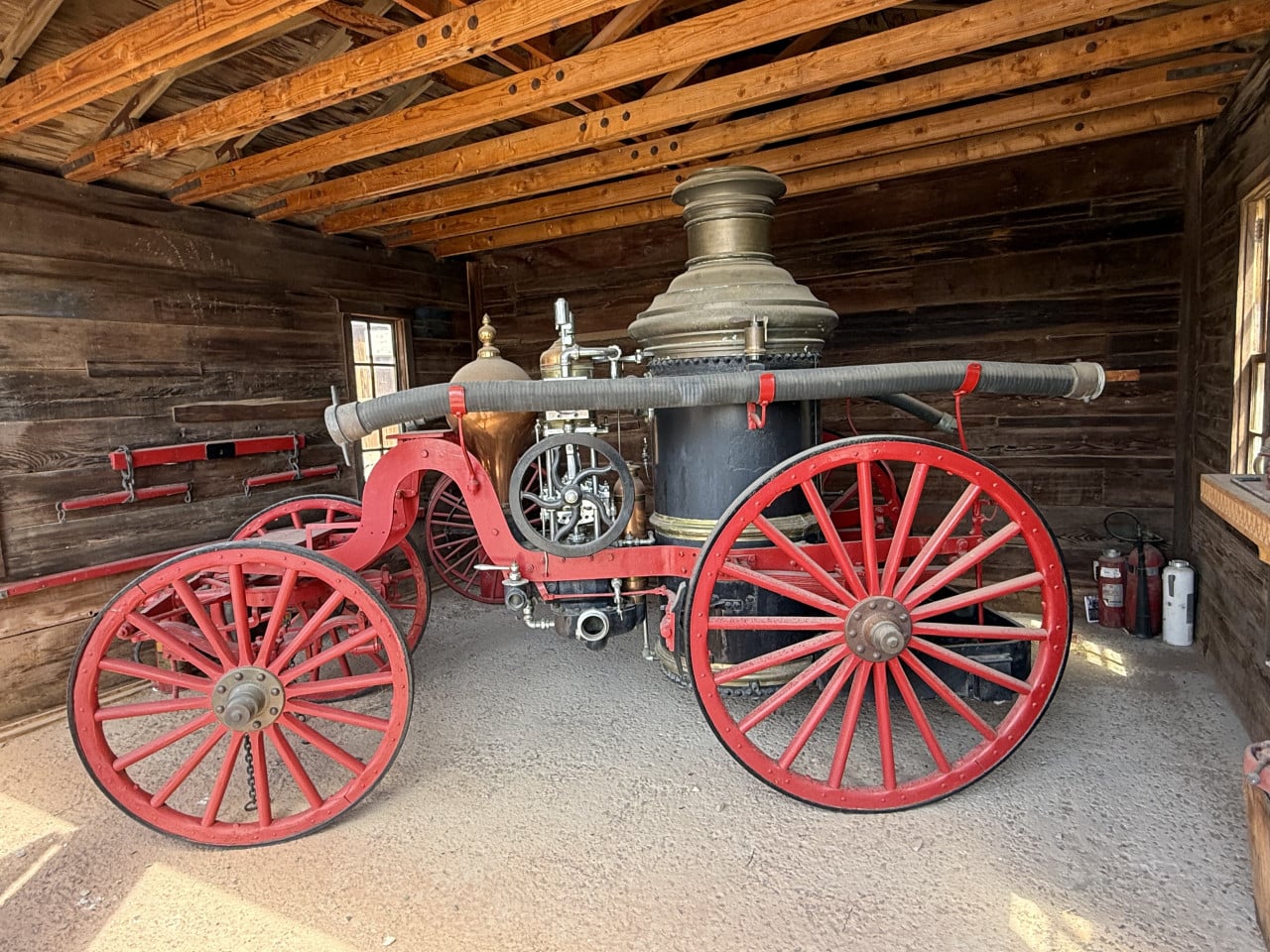
Fire Department—the fire station houses a beautiful old fire engine with large red wheels and a steam-powered pump. This is one of those exhibits that makes you stop and simply stare—it is perfectly preserved and steeped in history.
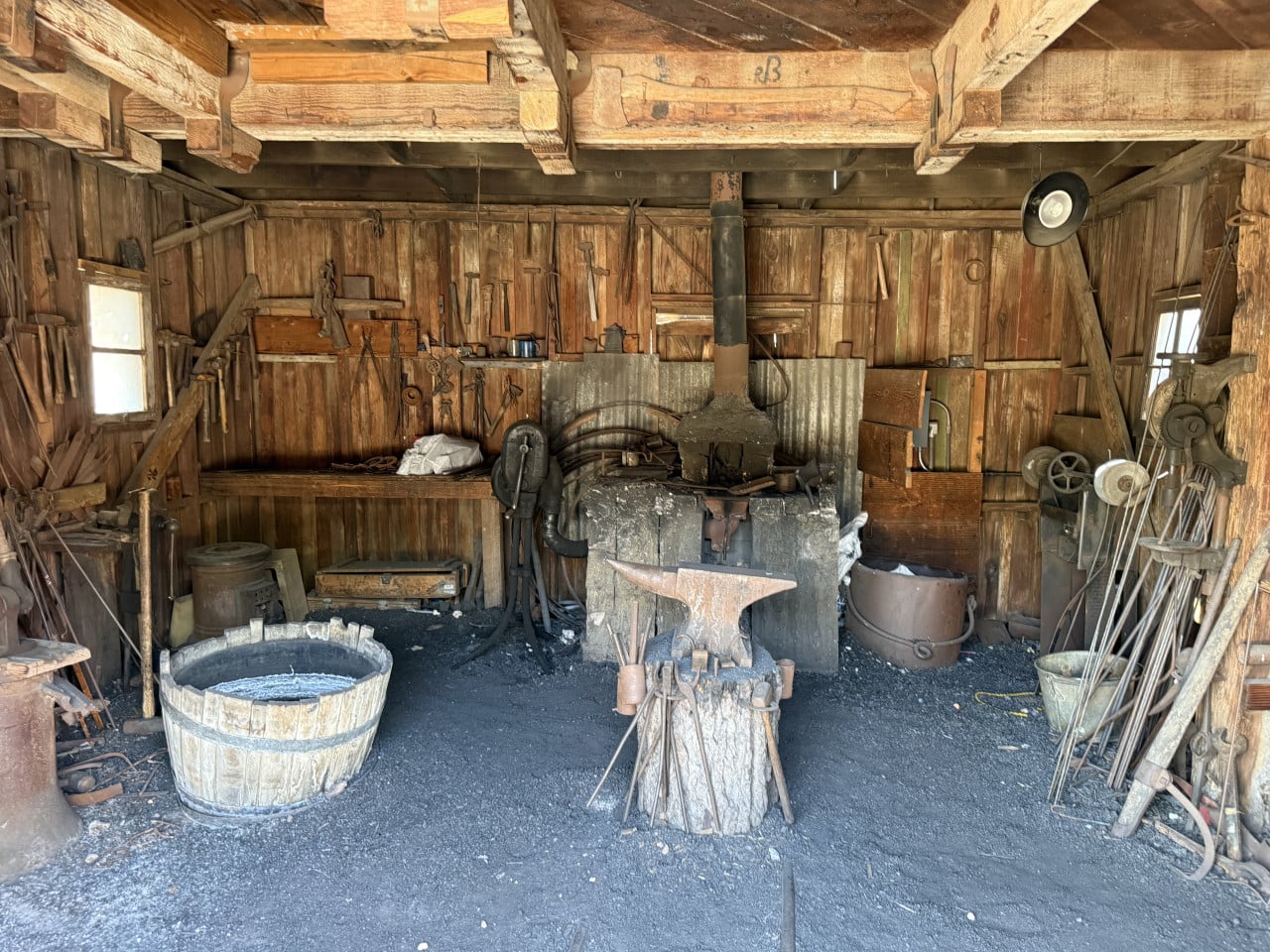
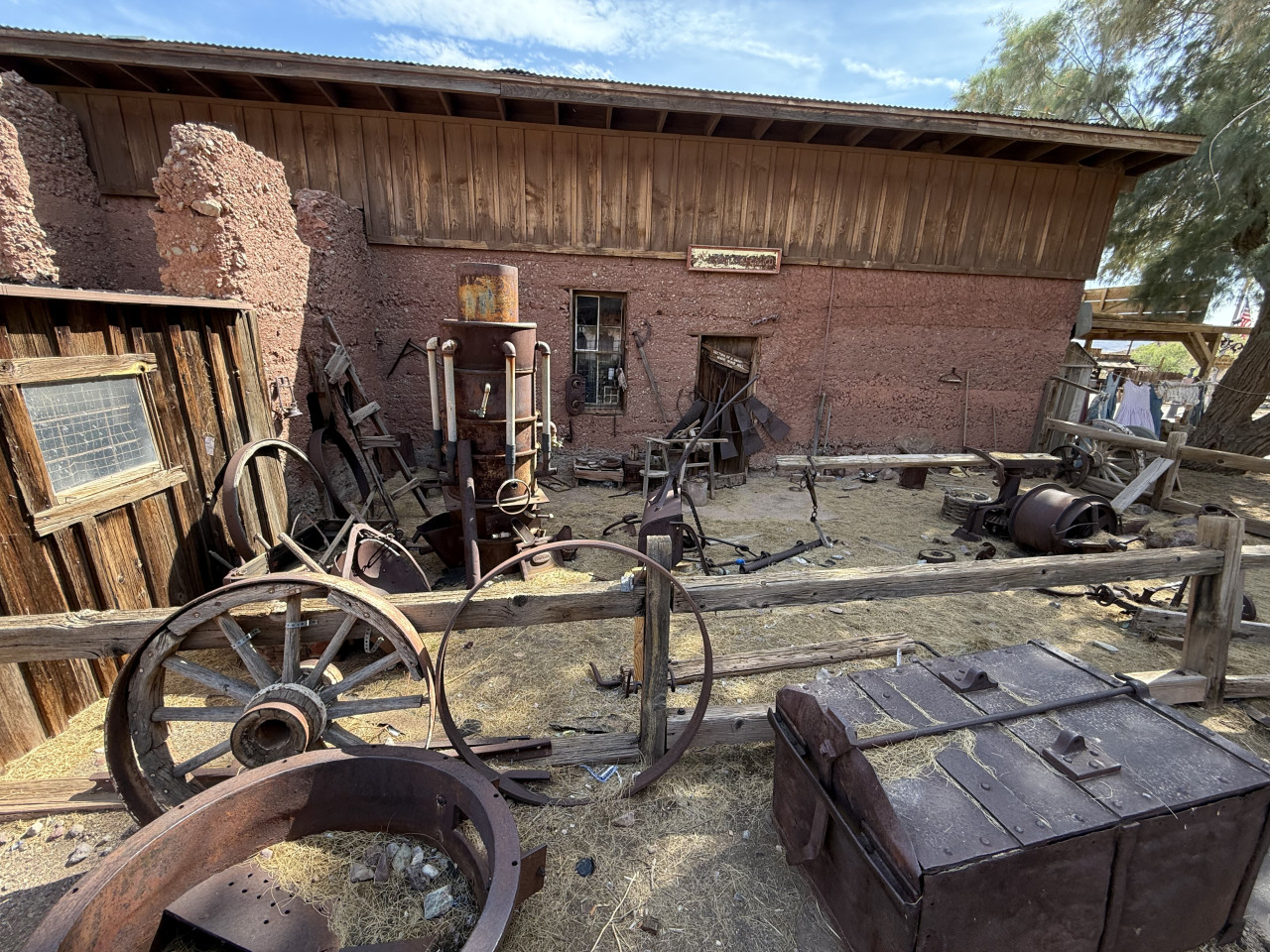
Blacksmith shop—a fully equipped blacksmith's workshop with an anvil, bellows, tools, and a wooden quenching barrel. Everything looks as though the blacksmith has just stepped out for lunch.
Barbershop—you can see what haircuts and shaving looked like in the 19th century. A price list hangs on the wall: a regular haircut for 50 cents, a shave and haircut for 75 cents, a beard and mustache trim for 25 cents, and a bath for 50 cents. Today, those prices would not even buy you a piece of gum.
Lil's Saloon—a saloon with oil paintings of Western legends on the walls, where you can have a drink and rest in the shade.
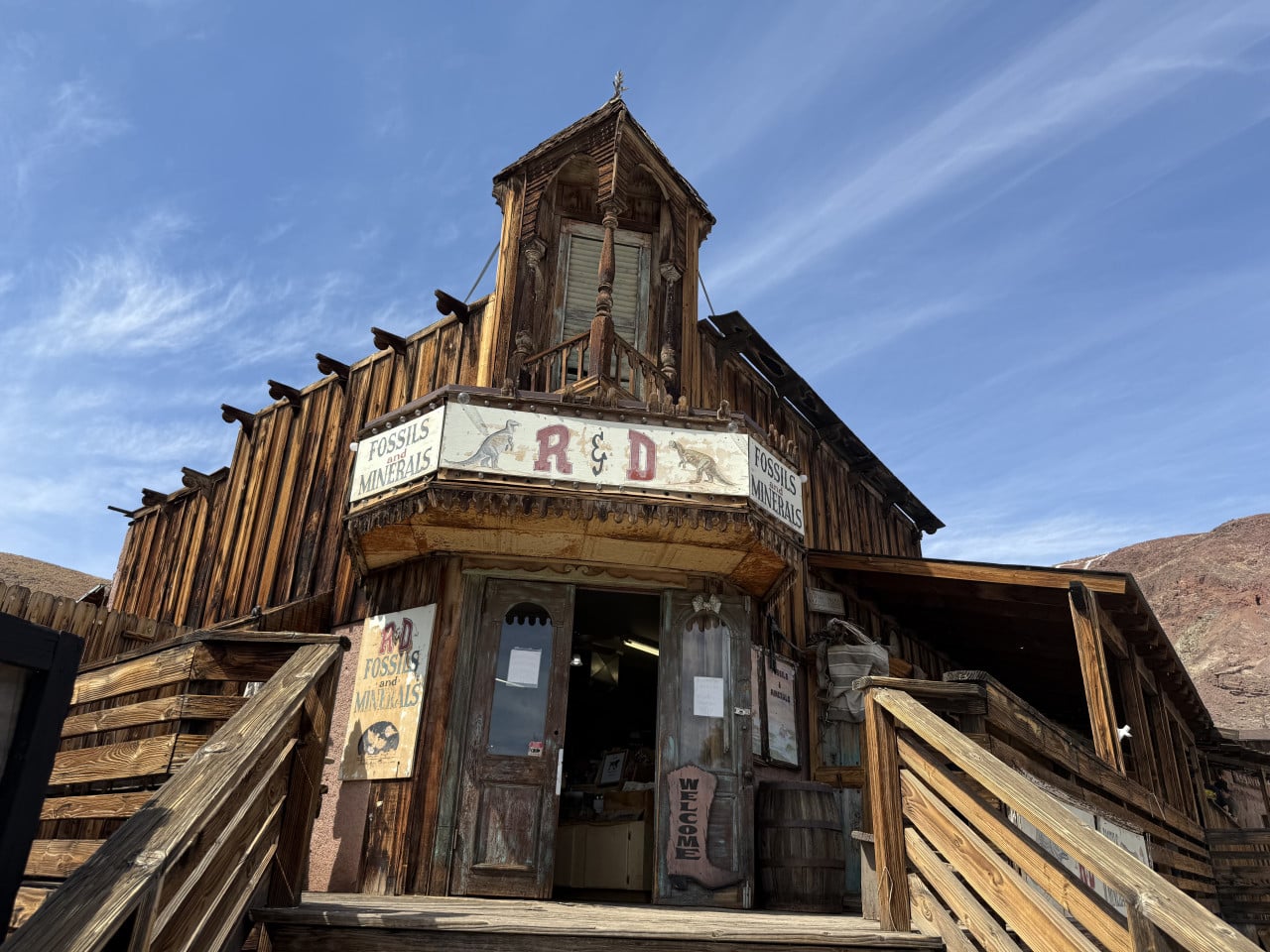
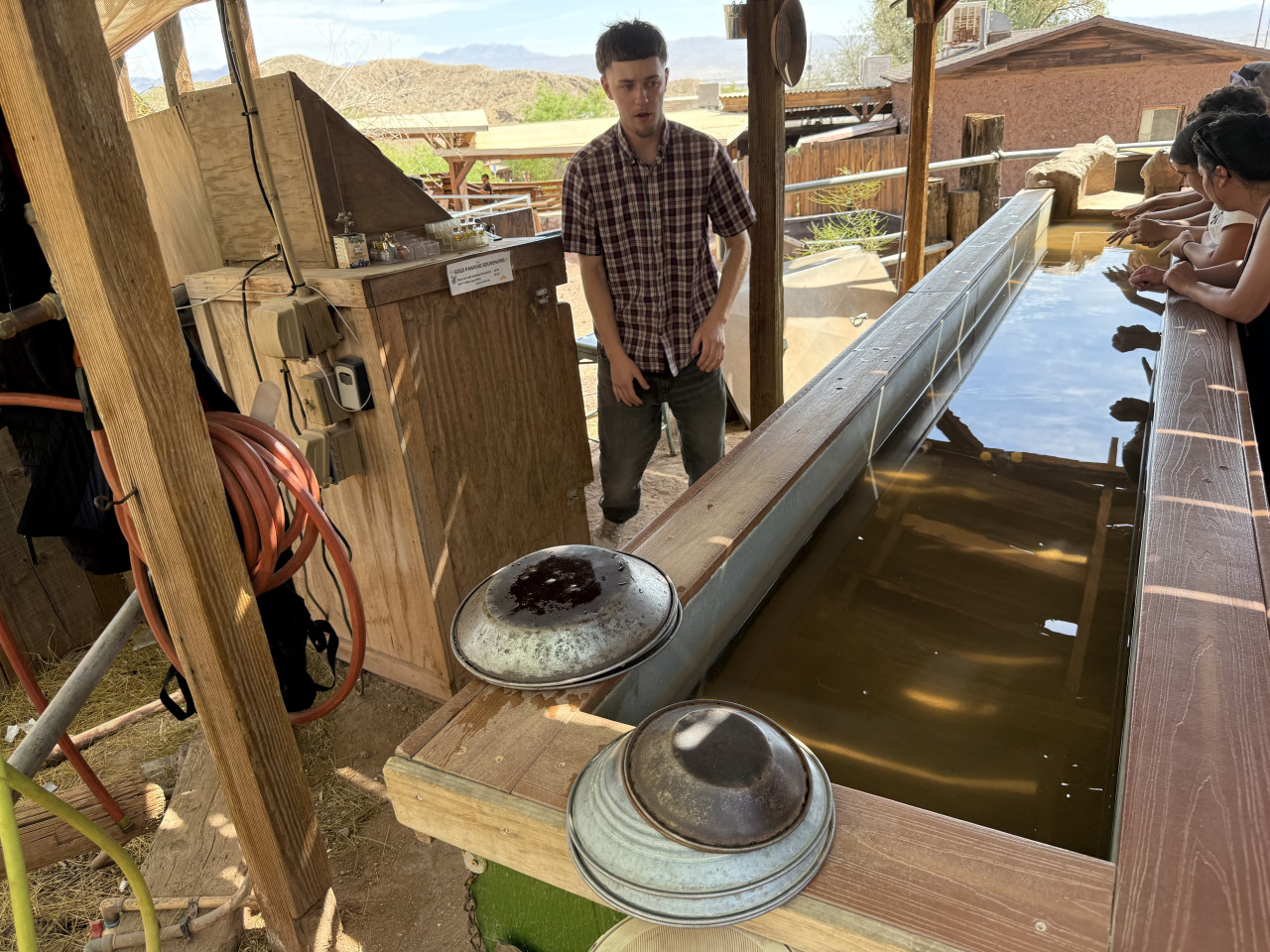
In the center of town, you will also find a fossil and mineral store, “leatherworks” (leather goods), a candy shop with ice cream, and other small stores. Children can try gold panning—even though they will actually find only “fool's gold” (pyrite), the experience is authentic, and as a parent, I can confirm that children love it.
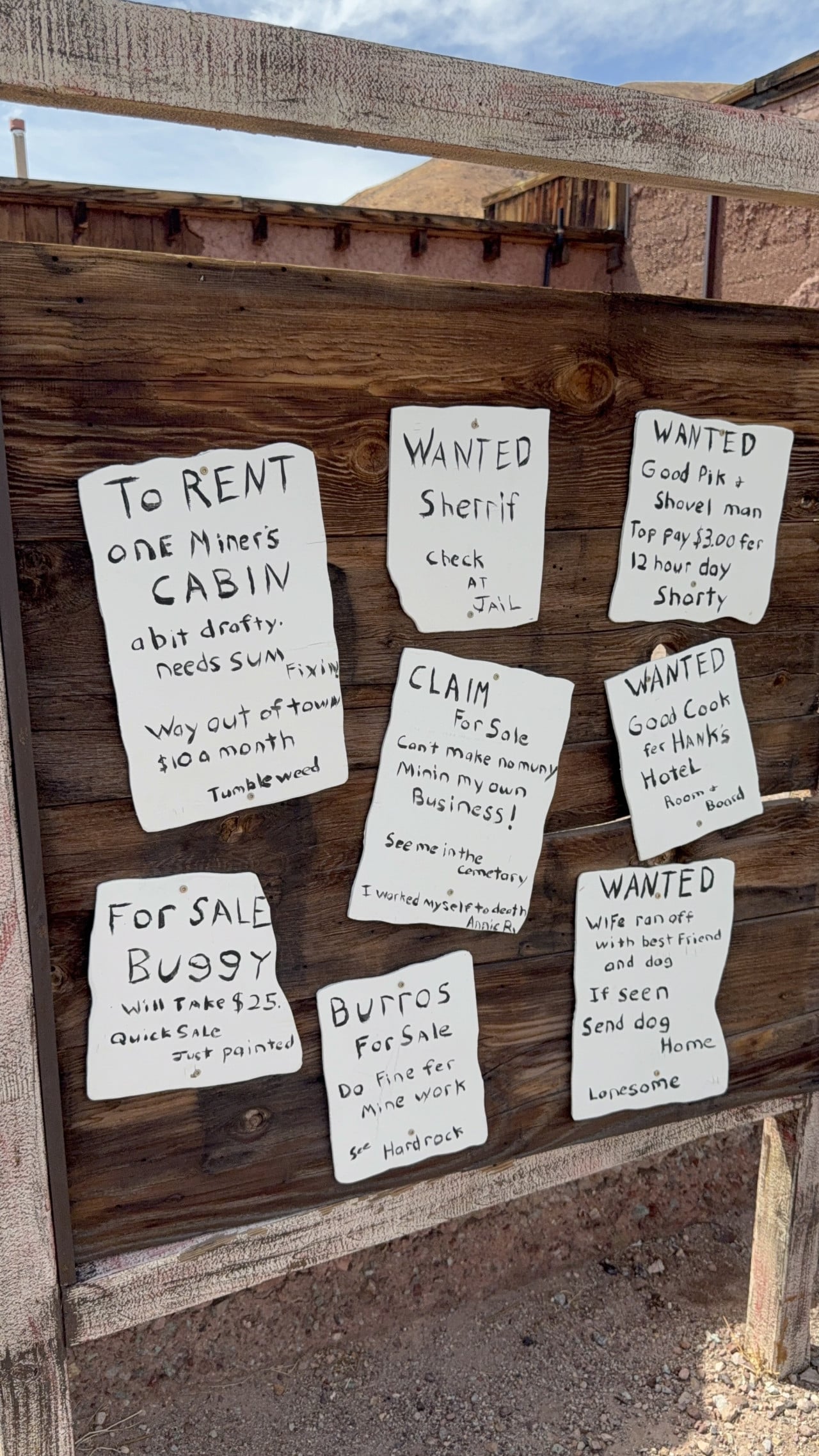
Several places feature humorous period-style “advertisements” posted on wooden boards—a sheriff is wanted (apply at the jail), a miner's cabin is available for $10 a month (a little drafty and in need of repair), donkeys suitable for mine work are offered, a carriage is for sale for $25 (freshly painted), and my favorite: “WANTED—wife ran away with best friend and dog. If you see them, send the dog home. Signed: Lonesome.” This is exactly the kind of humor that will entertain you around every corner in Calico.
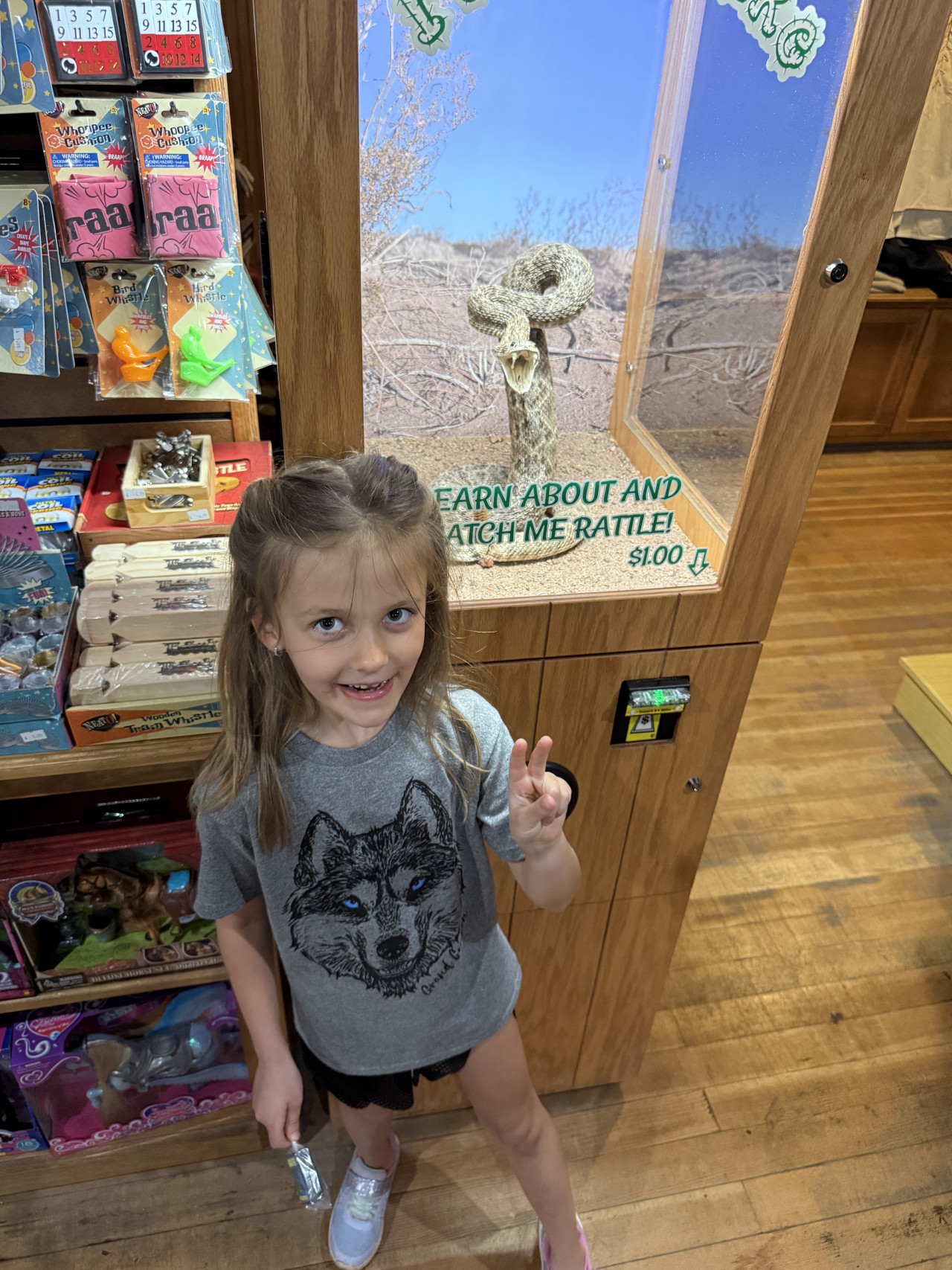
What naturally delighted my daughter was the rattlesnake display—although it was artificial, it rattled and moved realistically. It certainly impresses children.
Maggie Mine: descending underground
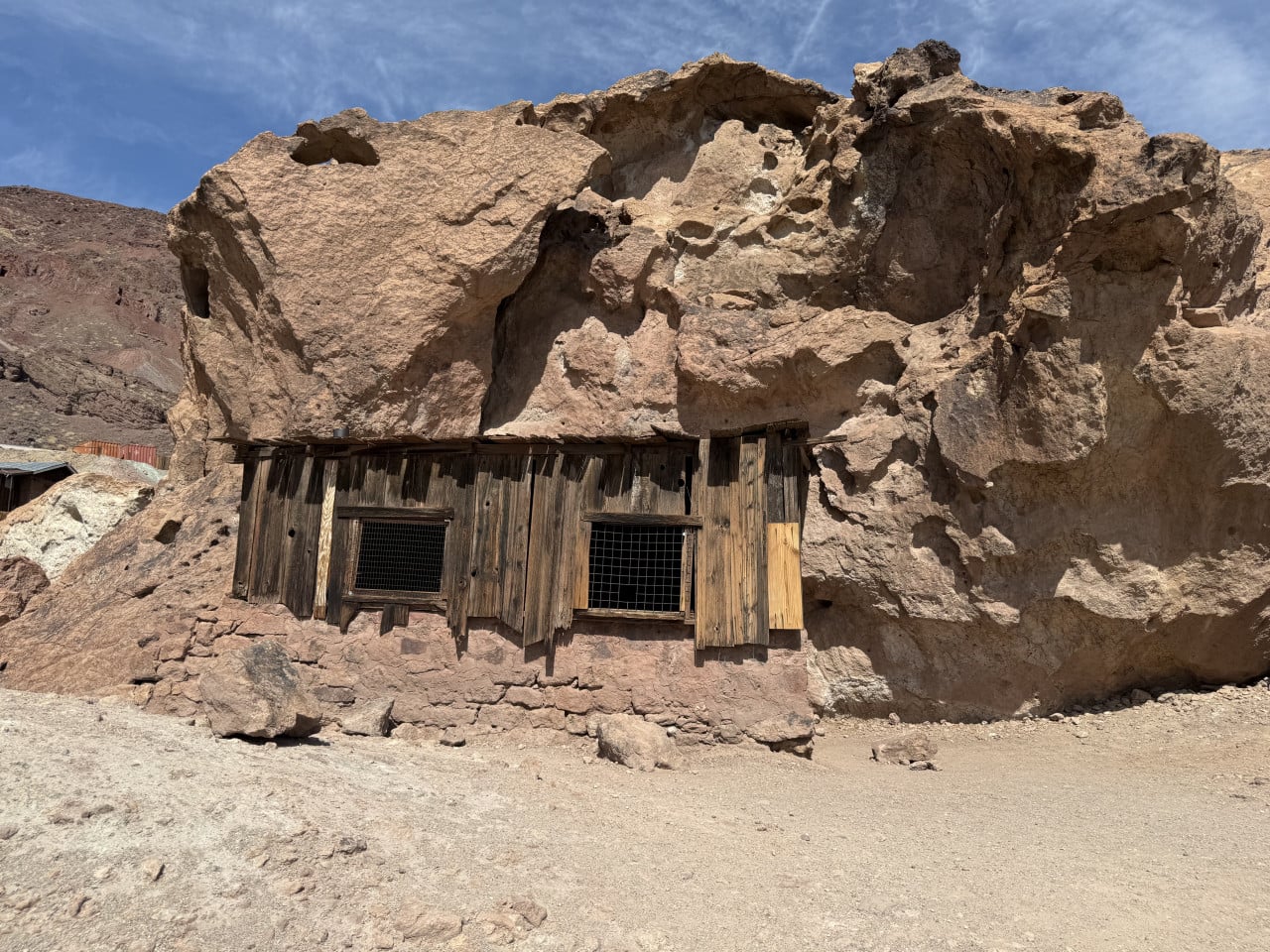
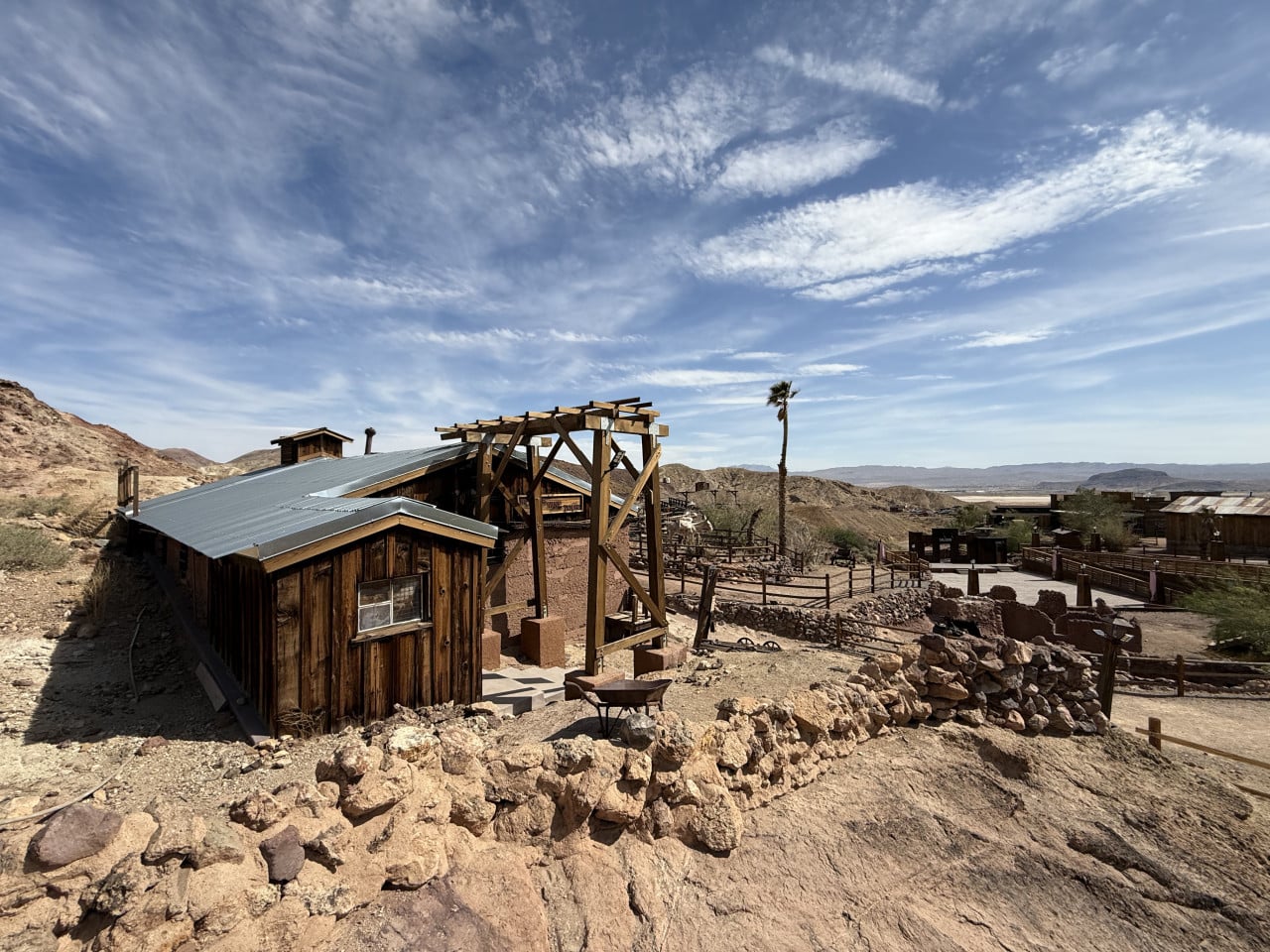
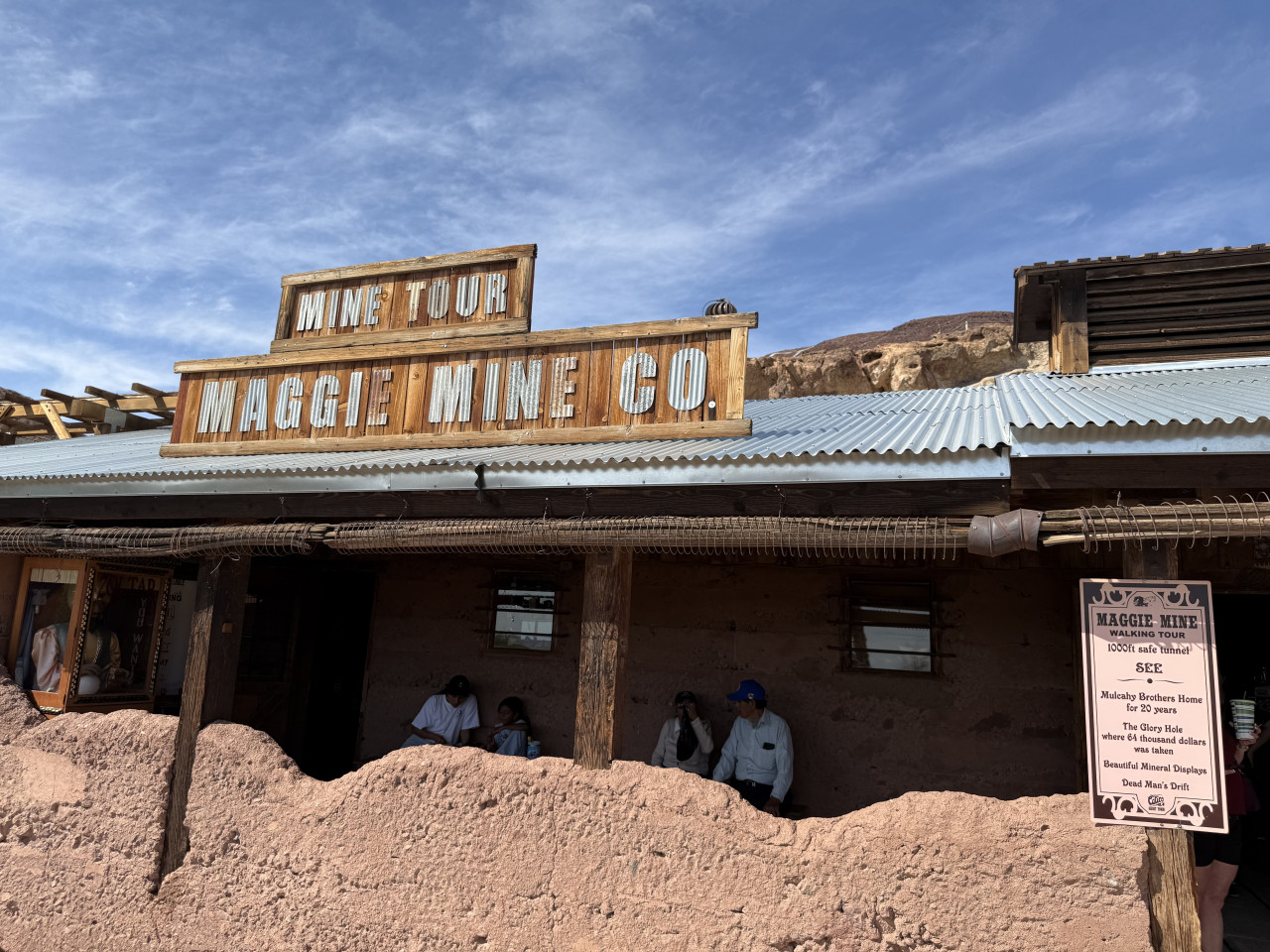
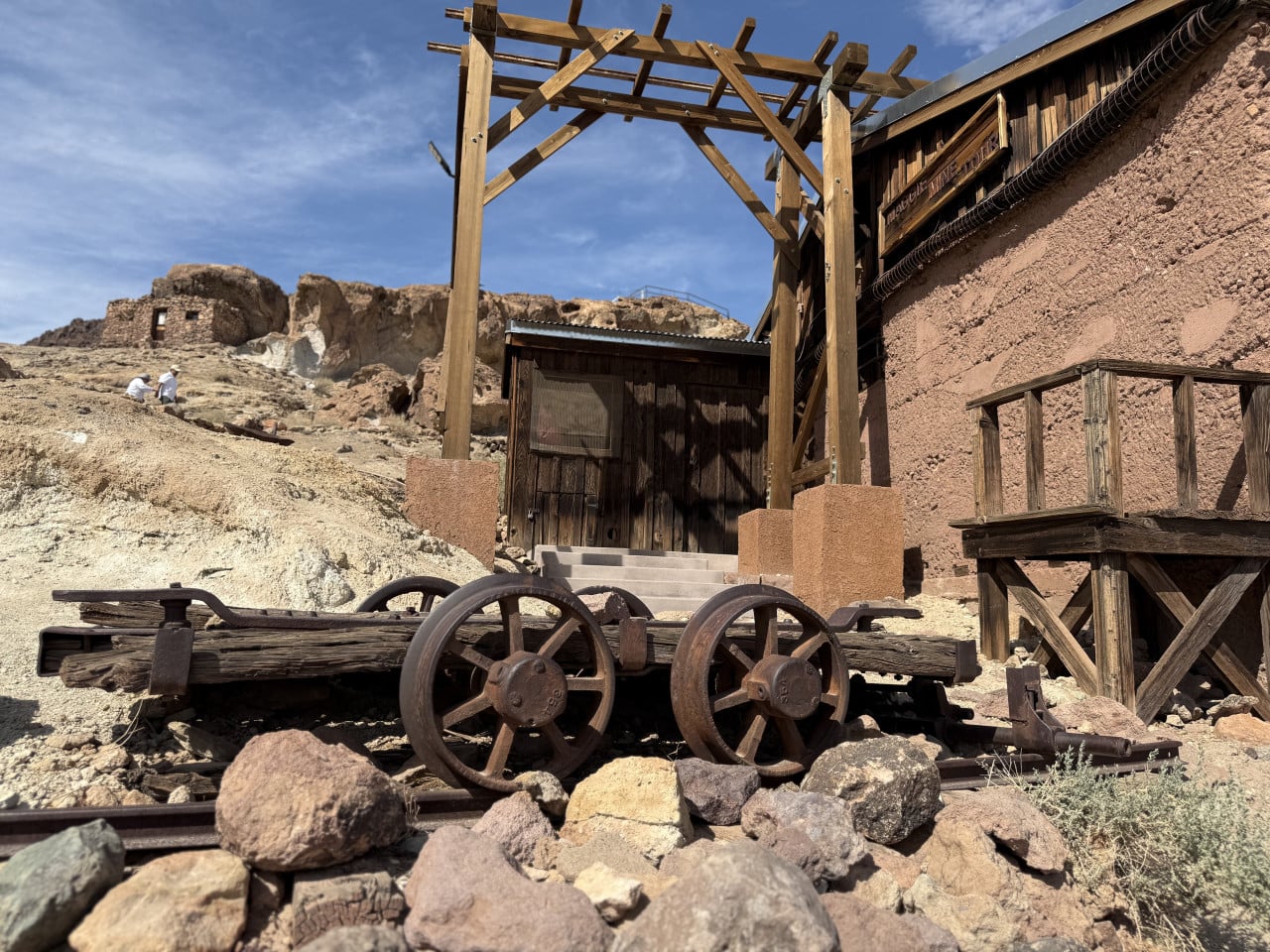
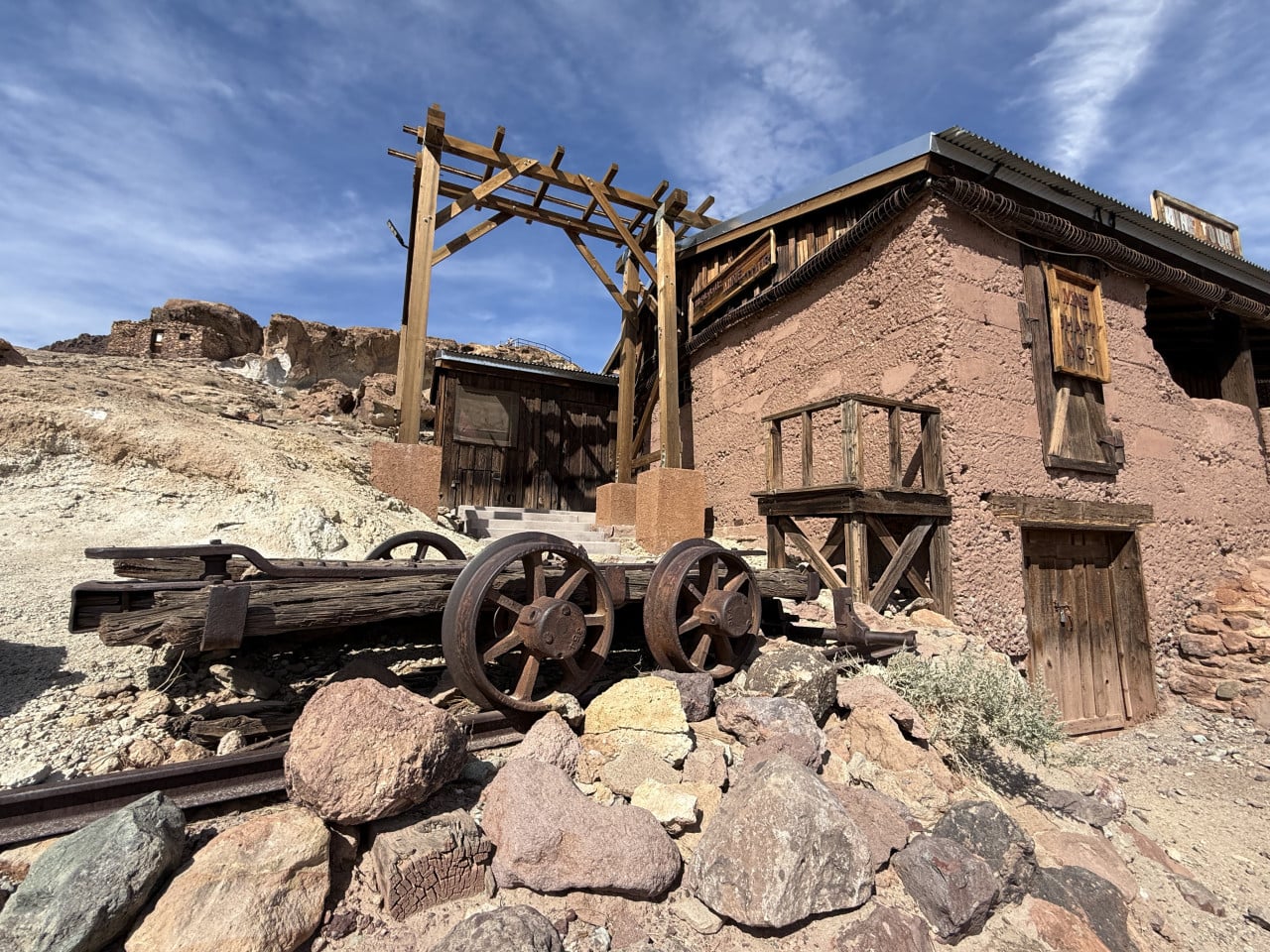
At the very end of town, on the hillside, is the entrance to Maggie Mine—and it is here that Calico's history literally gets under your skin.
Maggie Mine operated from the 1880s, and its name has an interesting story. John Mulcahy named it after a popular song of the time. John's widowed mother moved to Calico with six other siblings in 1884, and the Mulcahy brothers worked and lived at this mine for nearly twenty years.
Today, Maggie Mine is the only mine in all of Calico that is safe for visitors. The tour is self-guided and leads approximately 300 meters (1,000 feet) into the mountain. Right at the beginning, there is a UV-lit display where you can examine minerals from the local rocks—they glow in incredible colors. You then continue through a tunnel approximately five feet wide and six and a half feet high—exactly as the miners once carved it. No wasted space, just enough room for a person and an ore cart.
Inside, you will learn about the famous “Glory Hole”—the site from which $65,000 worth of silver was extracted, a fortune at the time. You will also see an exhibit about processing silver ore, a replica assay office, and examples of the crushers used in mining.
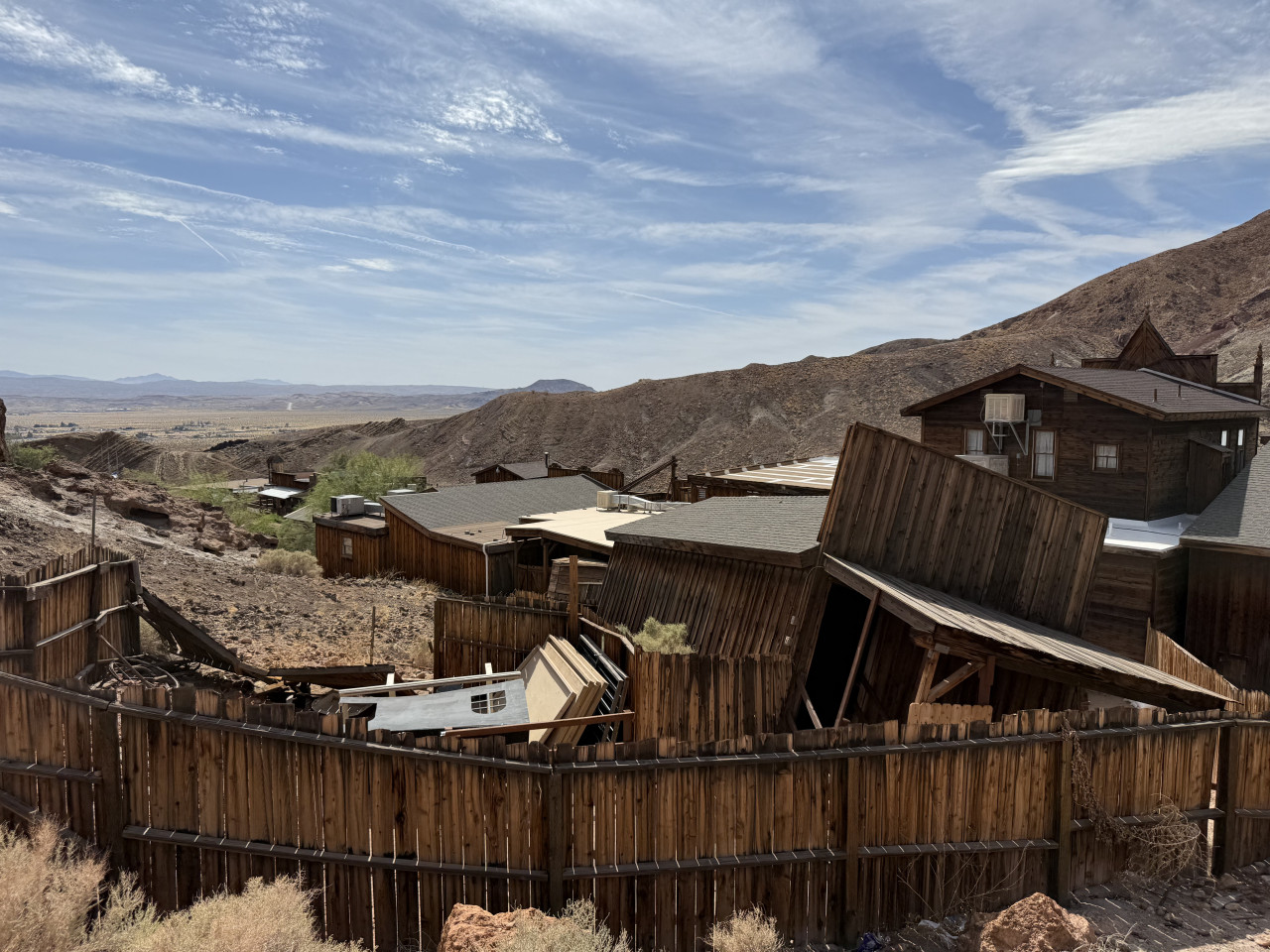
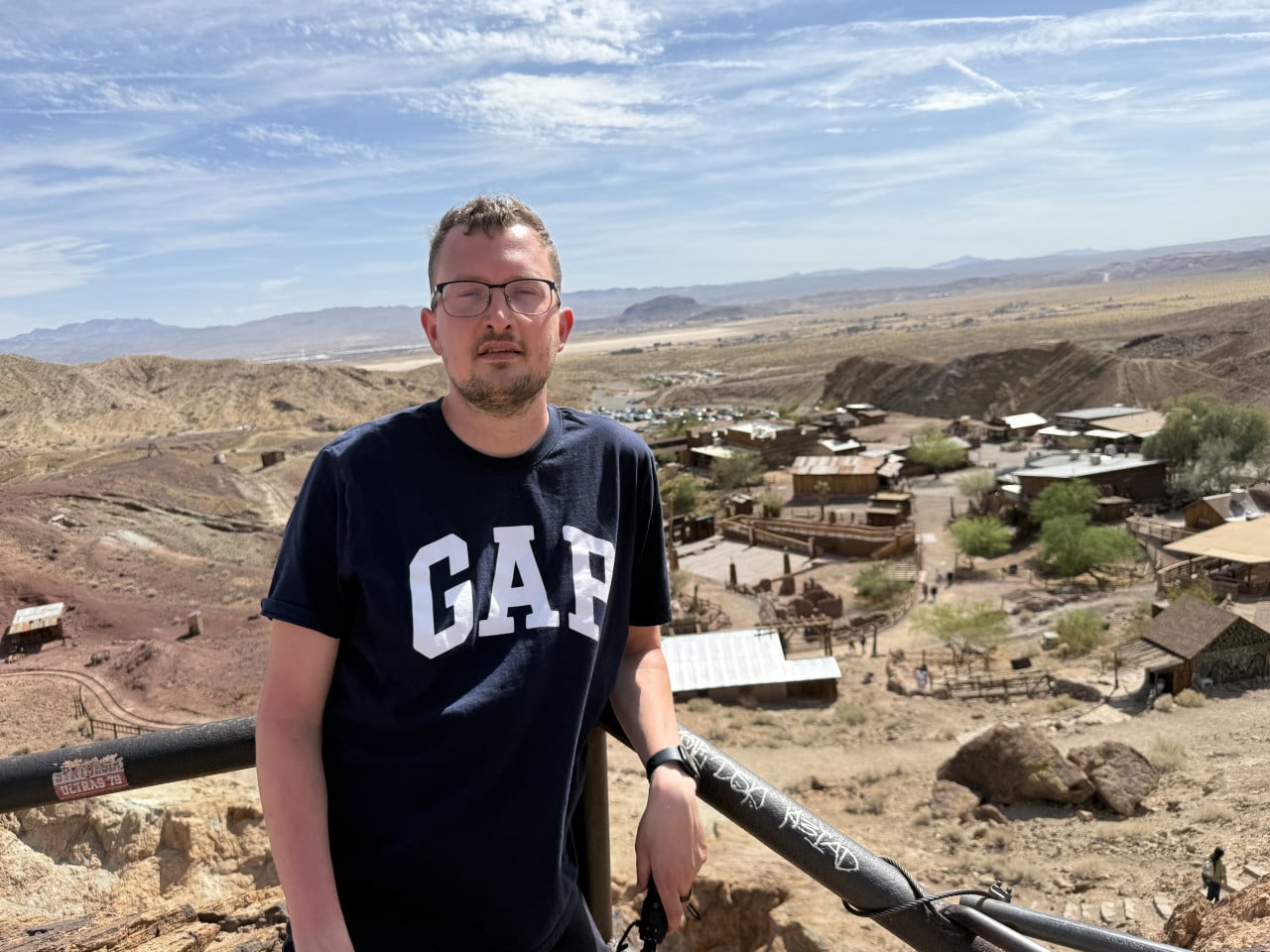
Once you have walked through the mine and emerged on the other side, a reward awaits you—a beautiful panoramic view of the entire town and the surrounding desert. You stand on the hillside above the wooden roofs and look out across miles of open landscape. There is no shade, so in summer you should bring water and a hat, but the view is worth it.
The narrow-gauge Calico & Odessa Railroad also departs from the mining area—a small train that takes you around the surroundings while you listen to stories about the history of the town and its mining industry.
Interesting facts that may surprise you
The town with a mail dog: During its heyday, Calico had its own mail dog named Dorsey, which delivered mail between the town and surrounding settlements. Yes, a real dog carrying mail through the desert.
More than 30 miles of tunnels: Beneath the colorful hills around Calico were more than 30 miles (48 km) of tunnels that miners blasted and dug while searching for silver veins.
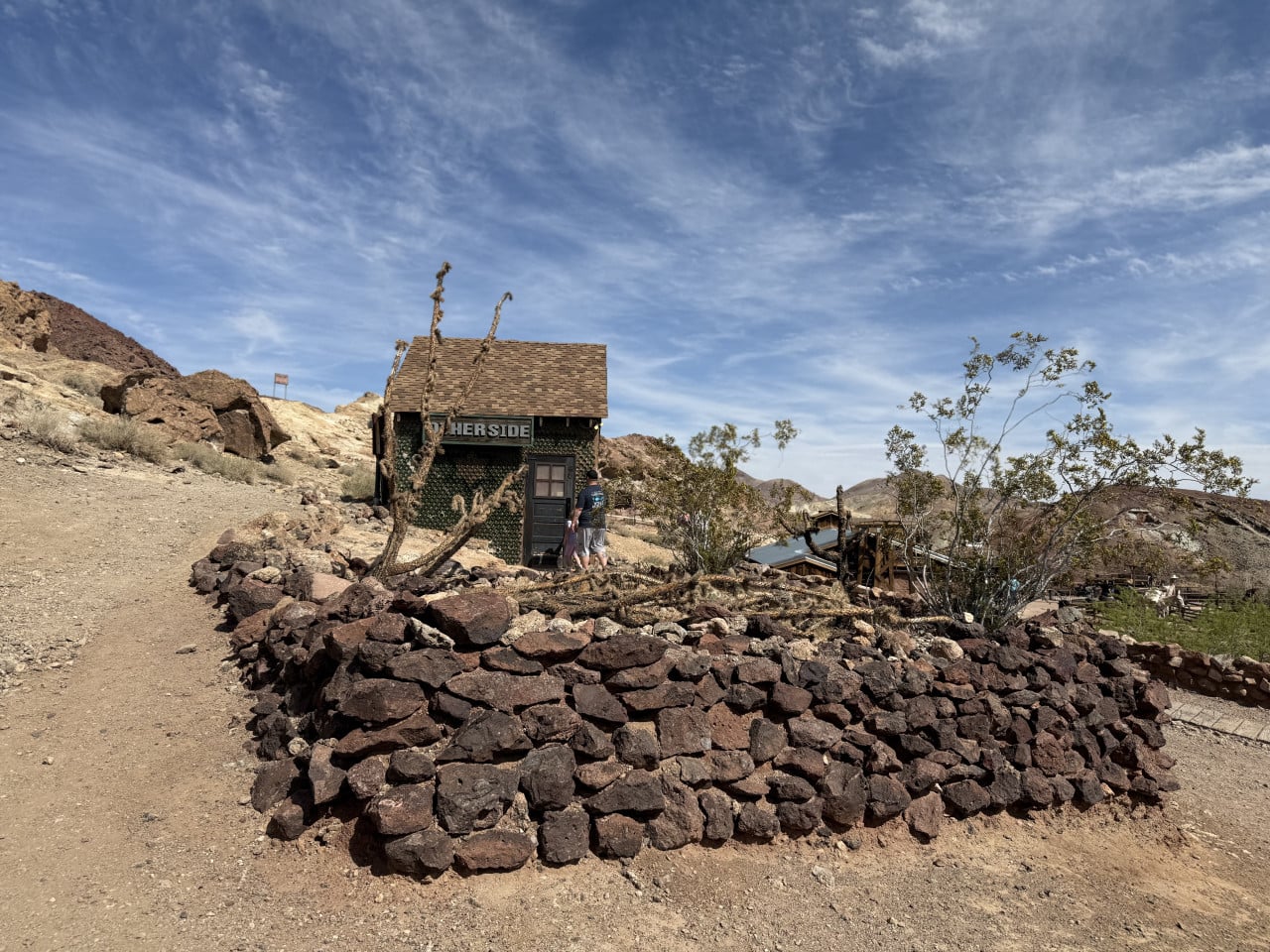
The bottle house: The town contains a house built by Walter Knott from 5,419 bottles. It is uncertain whether such a house actually existed in the original Calico, but bottle houses were common in other mining towns—the miners simply built with whatever they had at hand, and there was no shortage of whiskey bottles.
Connection to Knott's Berry Farm: Walter Knott first built a fictional ghost town in his Knott's Berry Farm amusement park and only later decided to reconstruct the real Calico. His experience from the park helped him restore it authentically.
Mystery Shack: The town also has a mysterious shack where gravity seems not to work—water flows uphill, a broom stands by itself, and people lean over without falling. It is fun for both children and adults.
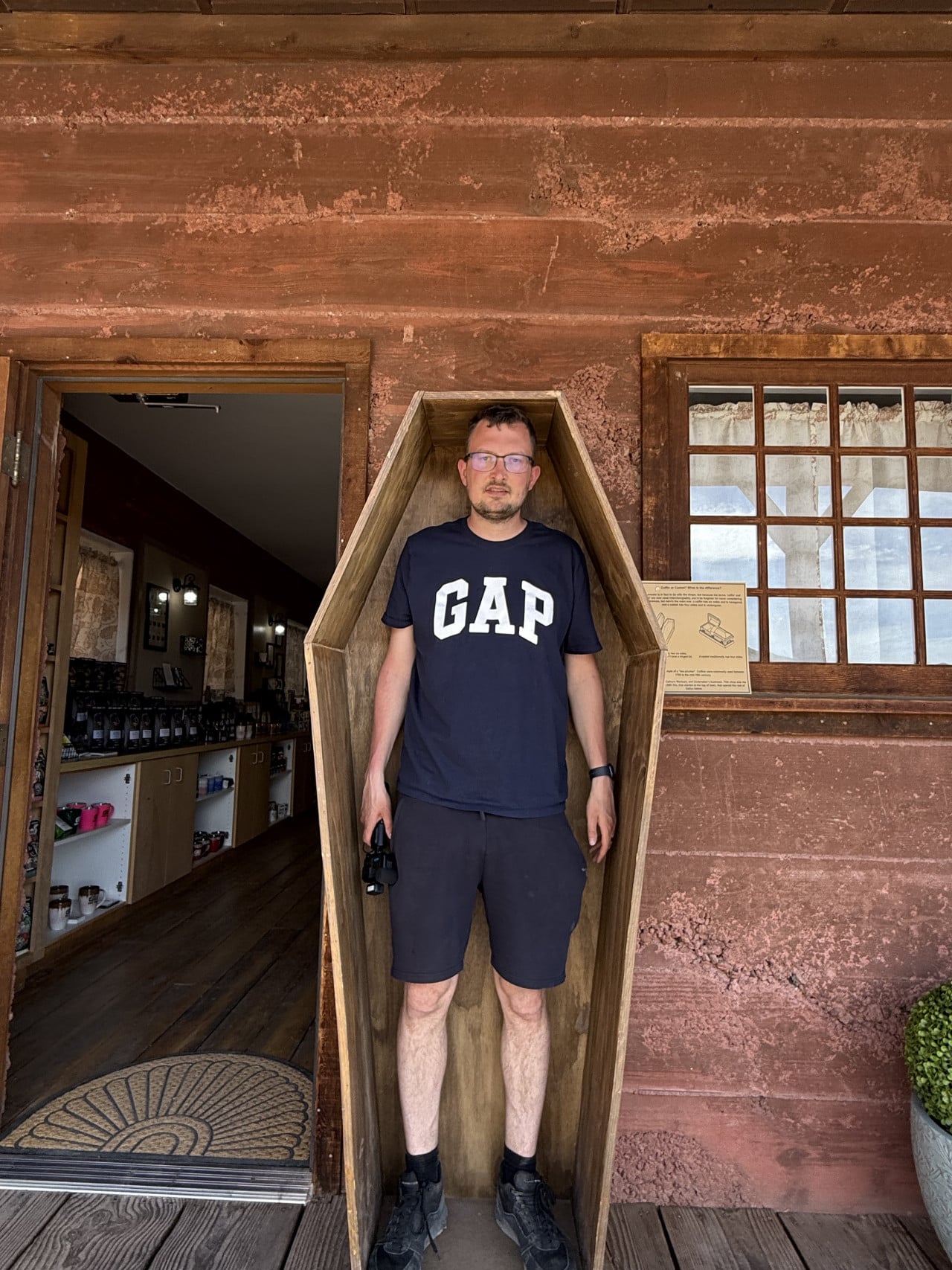
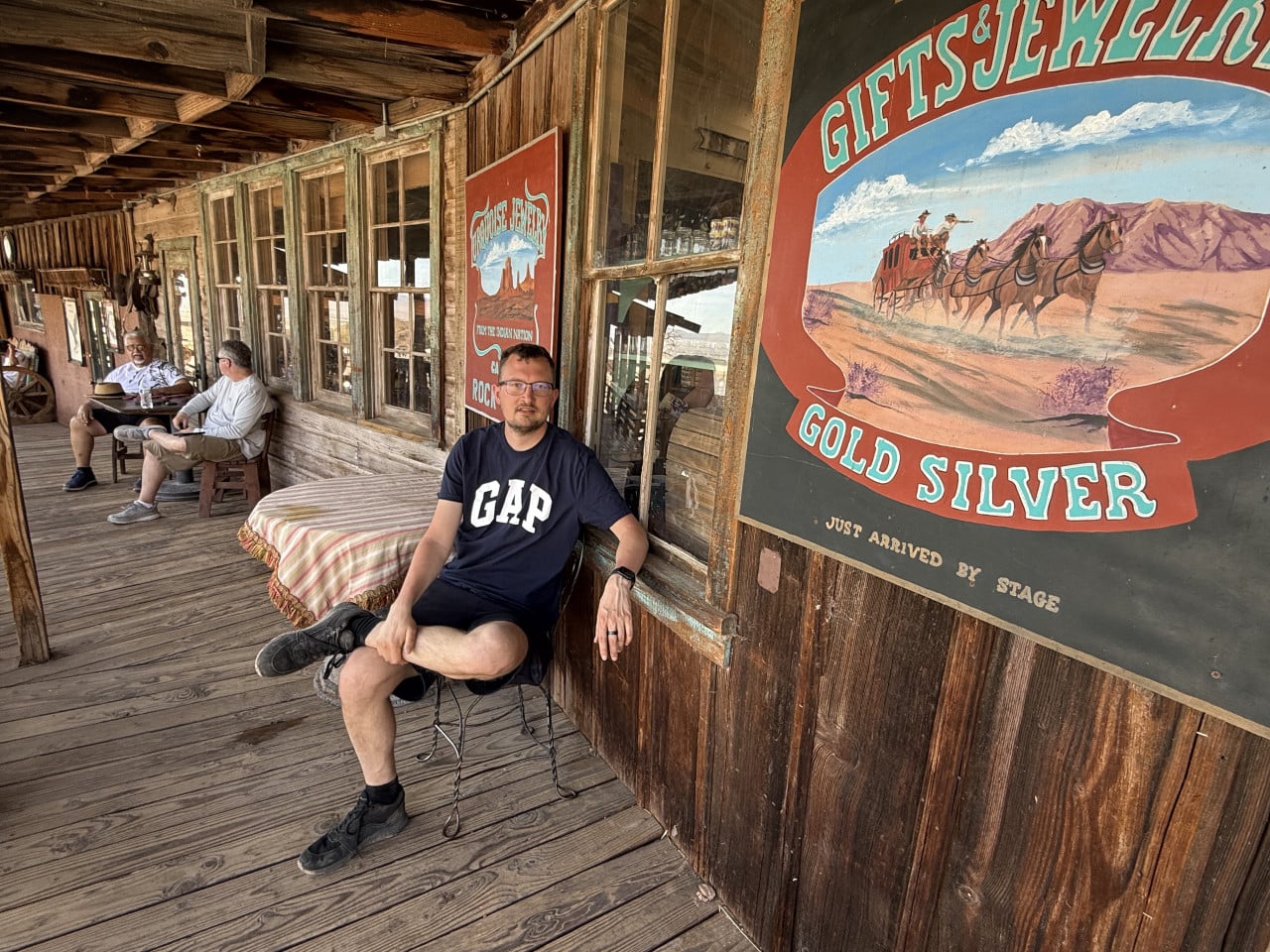
Peggy Sue's 50's Diner—a retro stop you should not miss
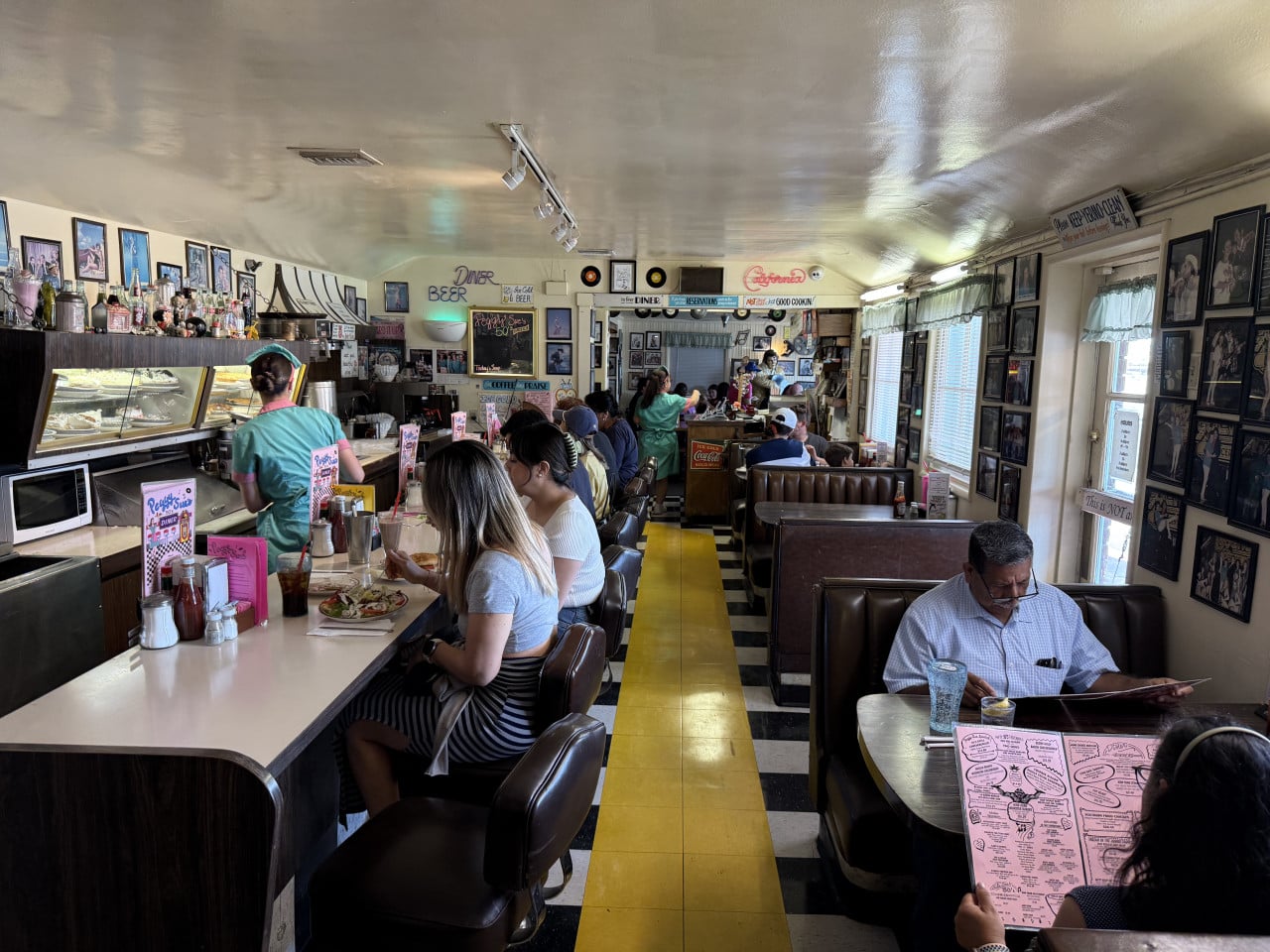
When you leave Calico and return to Interstate 15, I recommend stopping at Peggy Sue's 50's Diner. It is a legendary 1950s-style American restaurant located right by the Ghost Town Road exit in the town of Yermo—so it is literally on the way.
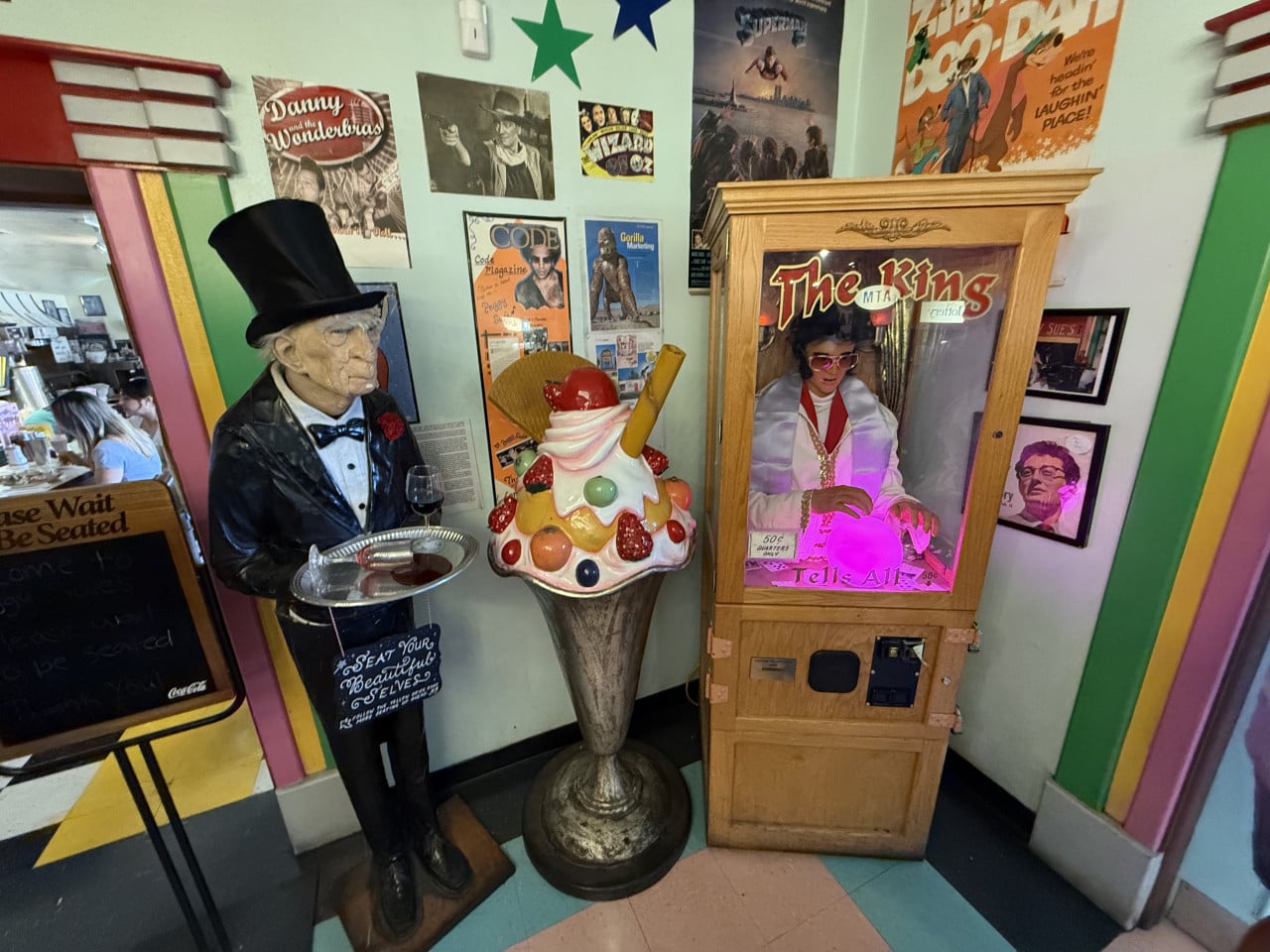
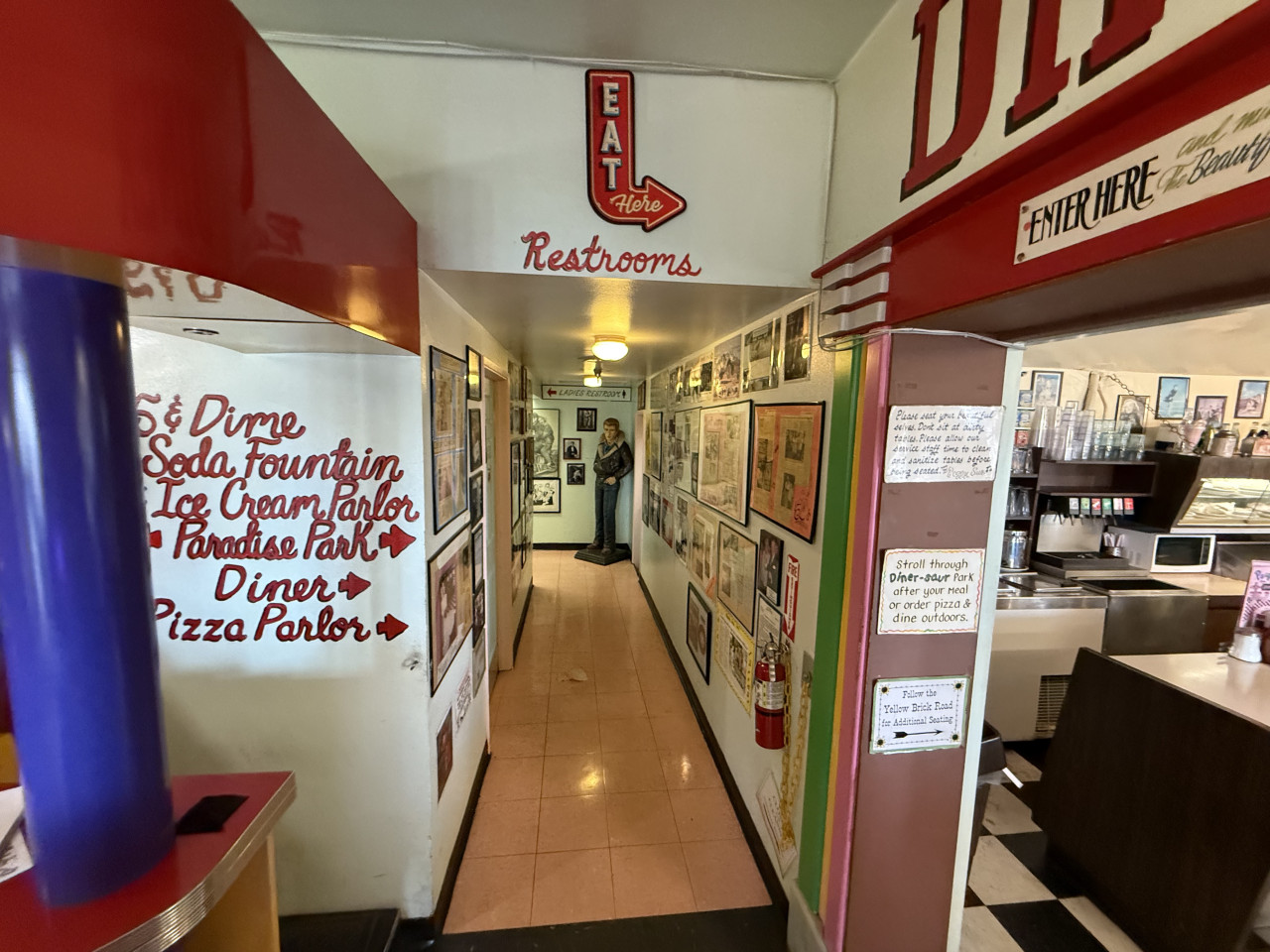
The restaurant was founded in 1954 and originally had only nine counter stools and three booths. It was built from railroad ties and mortar from the nearby Union Pacific railroad station. In the 1980s, it was taken over by Peggy Sue and her husband Champ, who had previously worked in the Hollywood film industry and at the Knott's Berry Farm amusement park. They filled the restaurant with their enormous collection of film and television memorabilia—every wall is covered with posters, photographs, and props from classic American movies.
You enter the restaurant through giant “jukebox” doors, a statue of Betty Boop welcomes you at the entrance, and the waitresses wear retro-style uniforms. Behind the restaurant is a garden with giant metal dinosaurs—the “Diner-Saur Park”—which makes it a particularly enjoyable stop for children.
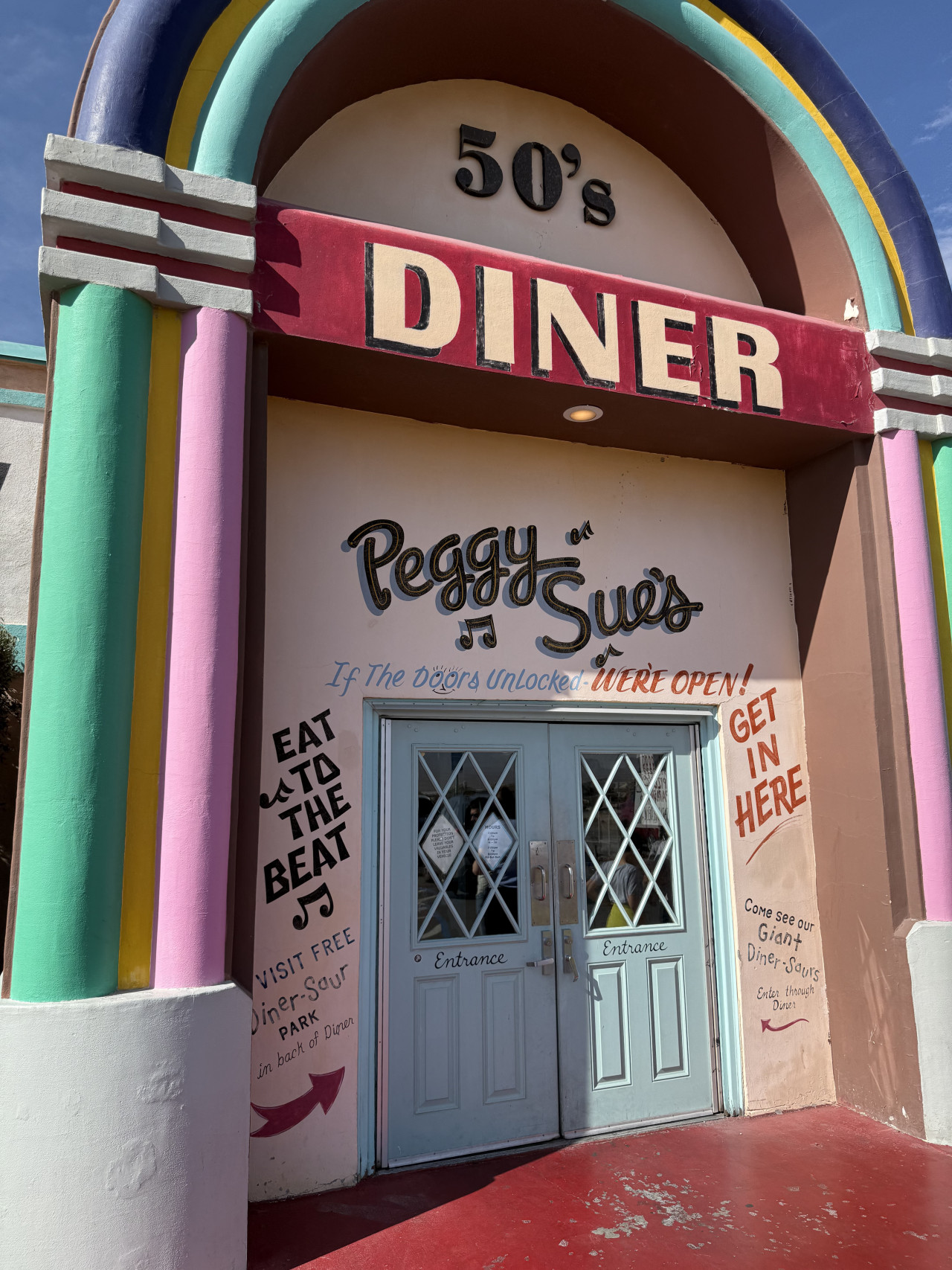
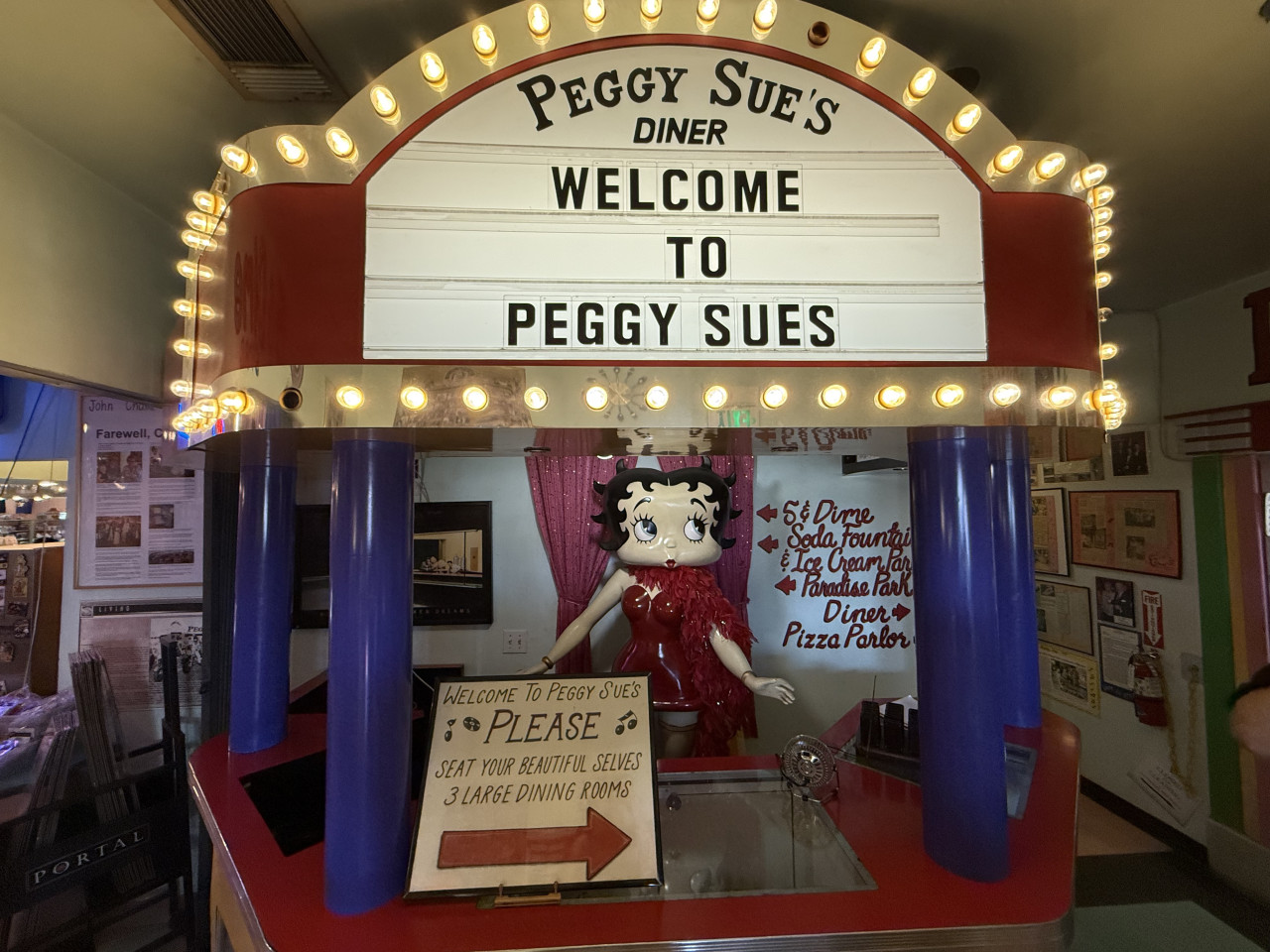
Is Calico Ghost Town worth visiting?
Calico Ghost Town is a special experience for me every time. I have been there three times, and each time I discover something new—a detail, a story, or a corner I had previously overlooked. The last time I visited, I was there with my daughter and my friend Verča, whom I wanted to show this place, and they both loved it.
It is an ideal stop on the journey from Las Vegas to Los Angeles (or vice versa)—it will take you two to three hours, let you stretch your legs after sitting in the car for a long time, immerse you in the atmosphere of the old Wild West, and the children will genuinely enjoy it more than many an amusement park.
So if you are traveling along Interstate 15 between Vegas and LA, be sure to turn off onto Ghost Town Road. It is worth it—and the view from the hill above the town across the endless desert will remain in your memory for a long time.