

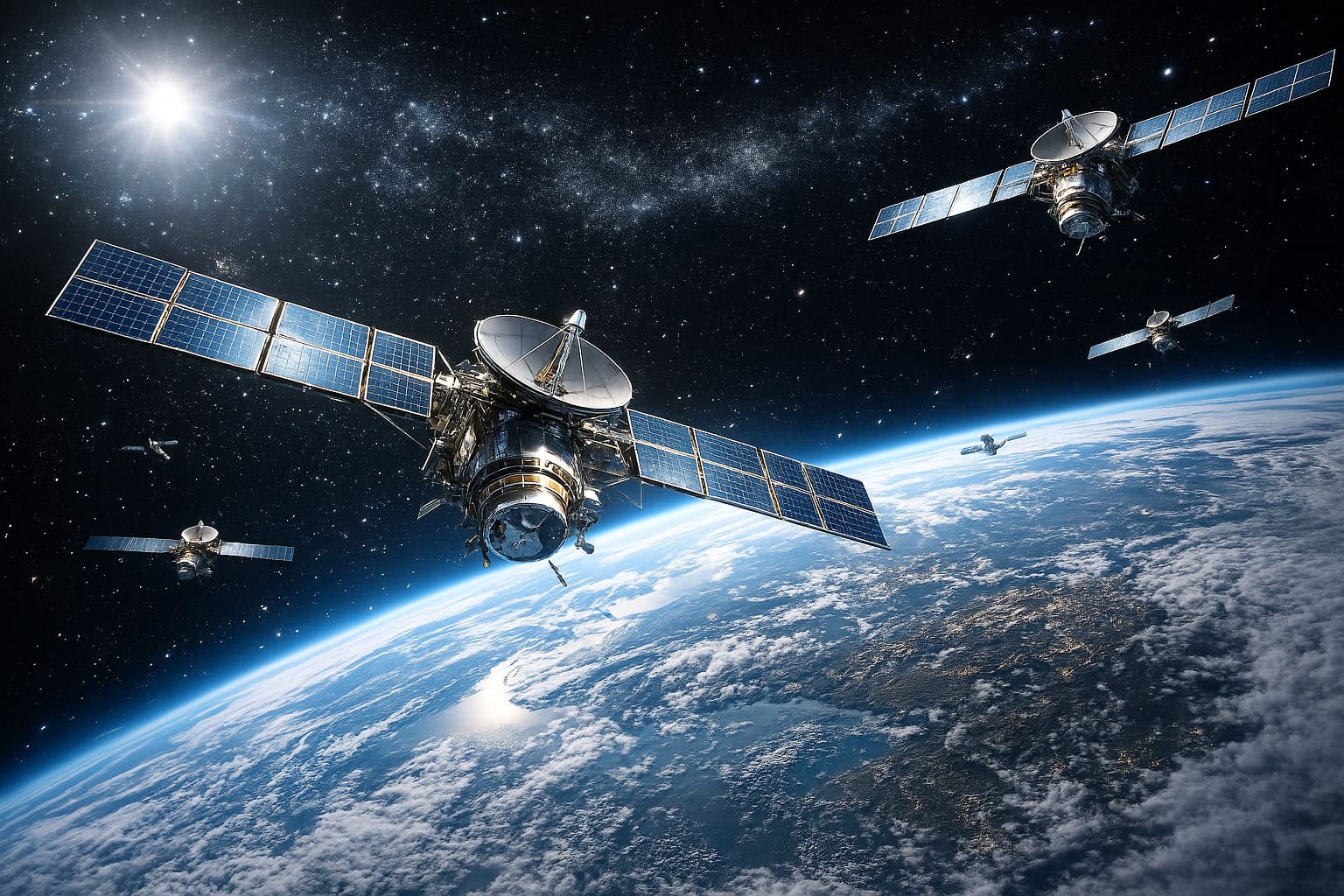
Elon Musk and Jeff Bezos have been competing for years in building rockets and launching satellites. Now they have entered a new race—they want to move the enormous data center boom directly into space. Blue Origin, led by Bezos, has a team that has been working on technology for orbital artificial intelligence (AI) data centers for more than a year. This was according to a person familiar with the matter. Meanwhile, Musk's SpaceX plans to use upgraded versions of its Starlink satellites to host computing power for AI. They are promoting this idea as part of a share sale.
Such satellites are expected to provide massive computing power for AI directly in orbit. However, engineers face many challenges, such as keeping chips at the right temperature in space, protecting them from radiation, and rapidly transmitting data back to Earth without latency. These people acknowledge the difficulties but believe they can be overcome. Skeptics, however, argue that the risks are being underestimated and that space-based data centers will not be cost-competitive with those on Earth, especially as energy supplies and other conditions on the ground improve.
Why space?
The main idea is simple: satellites could harness virtually limitless solar energy in space to power AI chips. This would help avoid problems on Earth, such as obtaining the enormous amount of electricity required to train AI models. Imagine satellites filled with chips orbiting Earth, processing data for applications used by people and businesses, and transmitting the results back down. Will Marshall, CEO of Planet Labs, which builds and operates satellites, said that moving resource-intensive infrastructure off Earth is an idea that has been around for years, but launch and satellite costs are only now falling enough to make it possible.
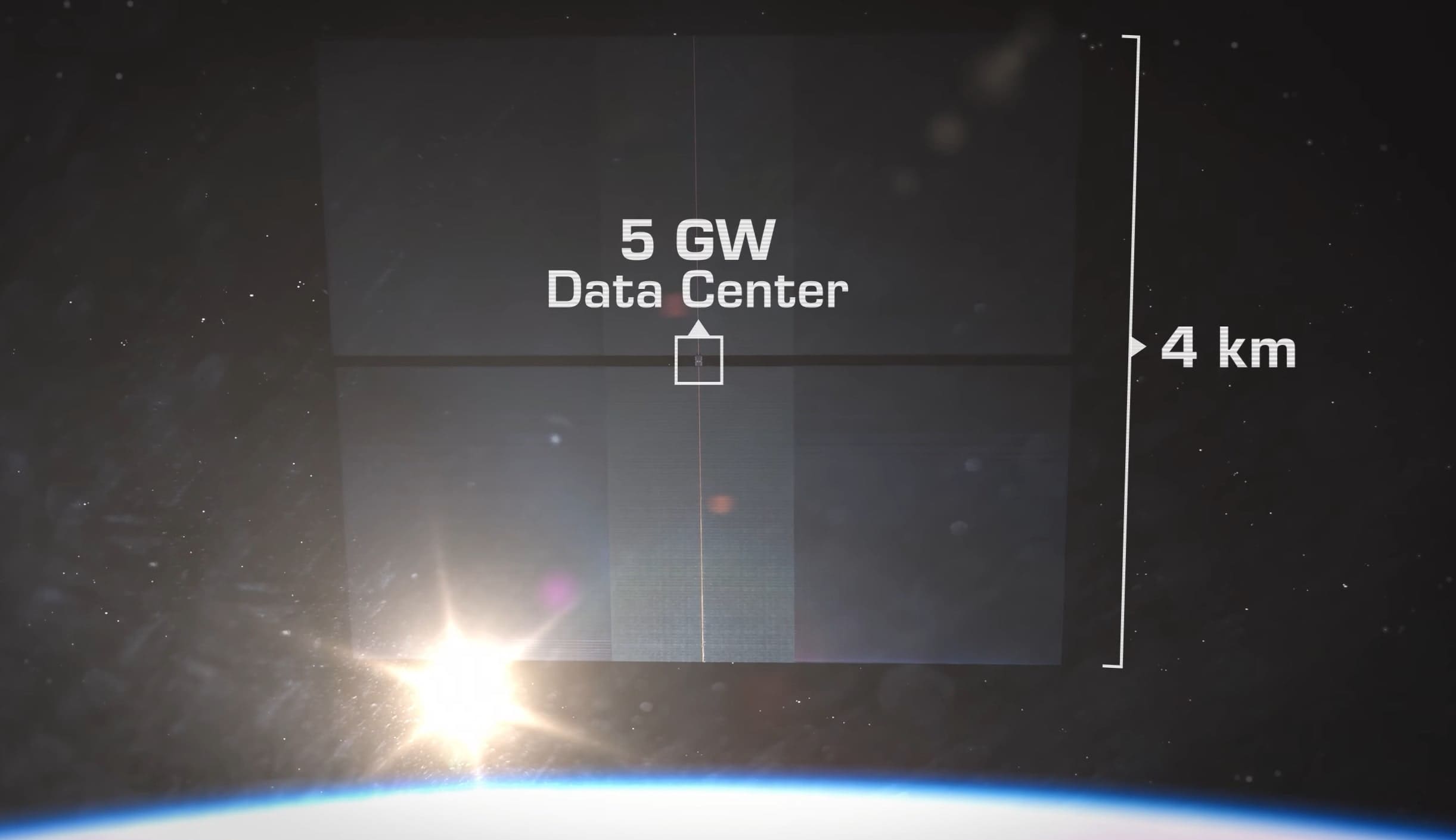
In 2027, Google and Planet Labs plan to launch two test satellites equipped with Google's chips, known as tensor processing units—TPUs. Google describes this as one of its major projects, although building an entire network of such satellites on a massive scale will be difficult. Travis Beals, a Google manager working on the project, explained that 10,000 satellites, each with 100 kilowatts of power, would be needed to match the capacity of a single one-gigawatt data center. The 2027 test is primarily intended to demonstrate whether the key components work, after which a long process of improvements and cost reductions will follow.
Other players in the race
Musk and Bezos are not the only ones getting involved. At an event in Italy in October, Bezos said that moving data centers into orbit makes sense because of the solar energy available there. He predicted that within 20 years or sooner, these systems would be cheaper than those on Earth. His company Blue Origin has made significant progress this year with the New Glenn rocket, which is partially reusable and has a large capacity for transporting satellites.
Sam Altman, CEO of OpenAI, explored whether his company could acquire a rocket company to launch AI satellites into space. Eric Schmidt, former CEO of Google, took over Relativity Space, which is developing its own rockets, and has spoken about orbital data centers. IBM's Red Hat division and Houston-based Axiom Space launched a data computing prototype in August. Investor-backed startups such as Aetherflux and Starcloud are also planning their own versions to compete with the major players.
Technical challenges
Operating satellites as data centers means addressing many technical obstacles, including chip temperatures, radiation protection, and rapid data transmission without latency. Jonny Dyer, CEO of Muon Space, which contributed to Google's research on orbital data centers, said that these problems are solvable, but launching is the key issue. If thousands of such satellites were needed, it could energize the entire space industry, including rocket manufacturers. Frequent launches would help reduce costs and increase profits.
Texas-based SpaceX is aiming for even lower prices with the enormous Starship rocket it is developing. AI technology would be installed on specially designed satellites that fit inside Starship. The rocket is not yet fully operational, but SpaceX plans to introduce a new version early next year. Musk wrote on X that Starship could deliver around 300 gigawatts of solar-powered AI satellites per year, possibly as much as 500 gigawatts. Other companies seeking to deploy AI in space will have to figure out how to get their satellites into orbit.


