

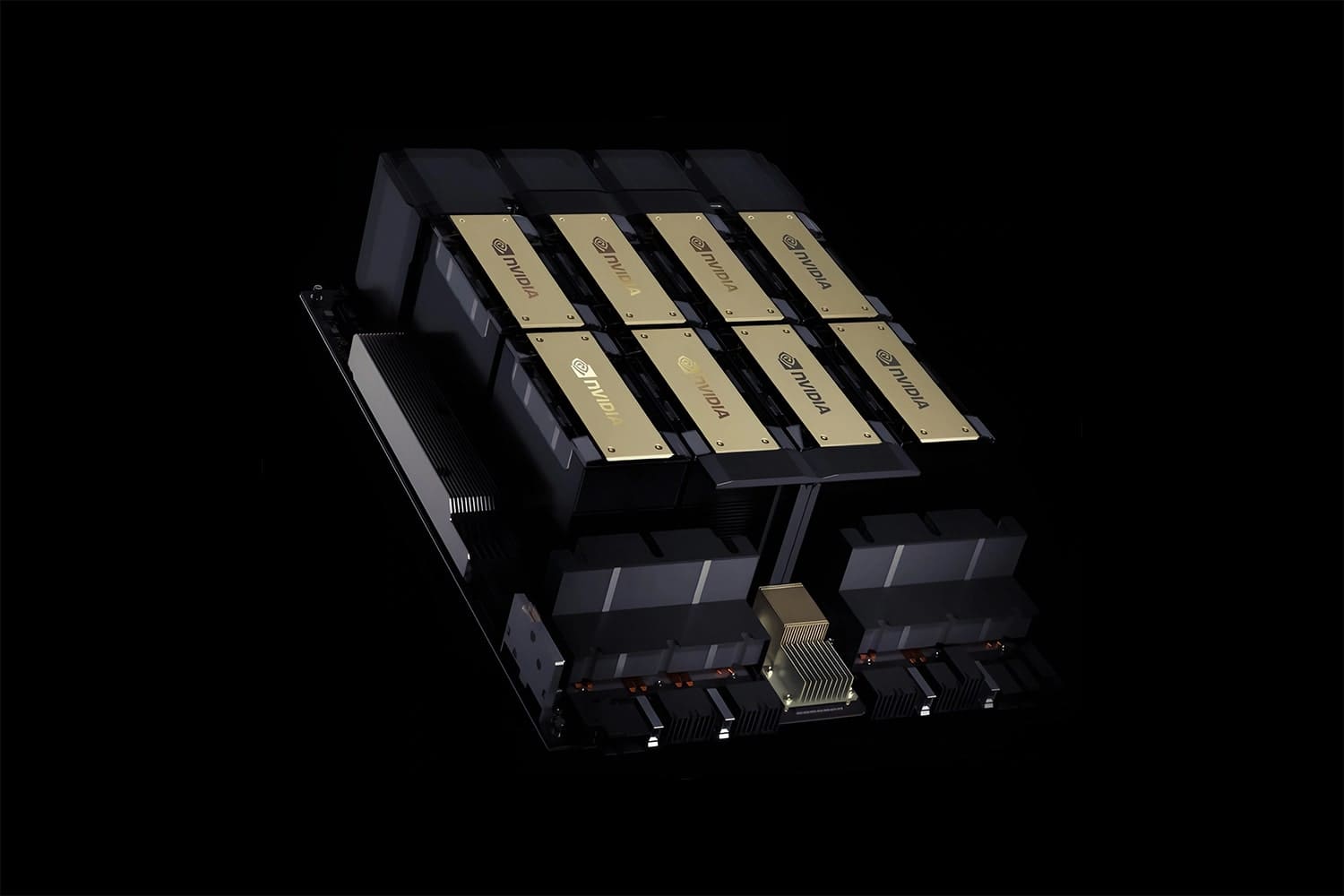
China has decided to reject Nvidia H200 chips from the United States, which are designed for artificial intelligence, and instead prioritize its own domestic alternatives. This stance comes just days after President Donald Trump announced that his administration would allow shipments of these chips to China. David Sacks, who is responsible for artificial intelligence at the White House, commented on the matter in an interview with Bloomberg. According to him, China is rejecting these chips because it wants to achieve complete independence in the semiconductor sector. "They are rejecting our chips. Apparently, they do not want them, and I think the reason is that they want semiconductor independence," Sacks said, referring to an unspecified newspaper article.
According to Sacks, China's stance means that Beijing has seen through the American strategy. By exporting less advanced chips such as the H200, the United States wanted to gain a share of the Chinese market and weaken local giants such as Huawei. Sacks previously supported Trump's decision because he believed it would help the United States compete with Chinese rivals. But he now acknowledges that China has uncovered this tactic and is instead supporting its domestic companies, such as Huawei, with substantial subsidies.
Secret Meetings With Technology Giants
Despite the public rejection, secret meetings are taking place in Beijing between Chinese regulators and major companies such as Alibaba, Tencent, and ByteDance. These companies were summoned to disclose their demand for Nvidia H200 chips. According to reports from the Economic Times, China could restrict access to these chips even though Trump approved their export. Companies would have to submit detailed applications and explain why they cannot use domestic chips, which do not offer the same performance.
These meetings reveal an internal conflict in China. These companies still prefer the Nvidia H200 for demanding artificial intelligence tasks because these chips offer better speed, efficiency, and reliability than domestic alternatives. For example, the H200 is significantly better for natural language processing or deep learning. Nevertheless, the government could ban purchases of these chips for the public sector and restrict them to selected private companies only.
China has also stepped up customs inspections of foreign chip imports and provides energy subsidies to data centers that use domestic hardware. All of this supports local manufacturers and reduces dependence on American technology.
Support for Domestic Chips
China plans to provide enormous support amounting to $70 billion (approximately CZK 1.61 trillion) for the development of its domestic chip industry. This initiative is intended to help companies such as Huawei become fully independent of foreign suppliers. Earlier this year, China rejected the less powerful Nvidia H20 chip, which Trump approved for export in the summer.
Liu Pengyu, a spokesperson for the Chinese embassy, stated that cooperation in technology and the economy is in the interests of both countries. "We hope that the United States will cooperate with China and take concrete action to maintain the stability and smooth operation of global supply chains," he said, according to Bloomberg. Beijing has not yet publicly confirmed or rejected imports of the H200.
This stance is linked to China's long-term plans, such as the Made in China 2025 initiative and the 14th Five-Year Plan, which aim for 70% domestic chip production by 2025. The figure currently stands at around 40%, but state funds exceeding $100 billion (approximately CZK 2.3 trillion) are supporting companies such as Huawei with its Ascend chips, YMTC in memory chips, and Cambricon in inference tasks.
Nvidia's and the Market's Response
Nvidia stated that it continues to work with the administration on licenses for verified customers. According to Bloomberg Intelligence analysts, the H200 could generate up to $10 billion (approximately CZK 230 billion) annually in China, but only if the chips are accepted. "We do not yet have any results to announce, but it is clear that three years of overly broad export controls have supported America's foreign competitors and cost American taxpayers billions of dollars," the company said in a statement.
The change in U.S. policy came after an assessment that Huawei's artificial intelligence systems offer performance comparable to the H200, which was introduced in 2023 and is Nvidia's second-best chip after its Blackwell series. Nevertheless, Nvidia sees annual potential of up to $50 billion (approximately CZK 1.15 trillion) in China if the market were open.
Nvidia's market share in China has fallen to zero due to U.S. restrictions and subsequent Chinese support for domestic chips. In the first quarter of fiscal year 2026, China contributed about 12.5% of Nvidia's revenue, but no H20 shipments were made in the second quarter.
China's Approach to Foreign Chips
Companies such as Alibaba, ByteDance, and Tencent may have to combine foreign and domestic chips, using the H200 only for key projects. This could slow the development of advanced artificial intelligence applications in China and affect their competitiveness. Some companies may seek partnerships with other manufacturers outside China to supplement domestic capabilities.
Nvidia shares remain largely stable, but analysts say that demand for the H200 in China depends on regulatory approval and whether companies can justify purchasing foreign chips. China continues its long-term effort to develop competitive domestic artificial intelligence chips, suggesting that foreign GPUs will be permitted only in limited cases under strict supervision, if at all.
The coming months will show whether Chinese companies gain actual access to the H200 or whether the push for self-sufficiency outweighs U.S. export approvals.


