

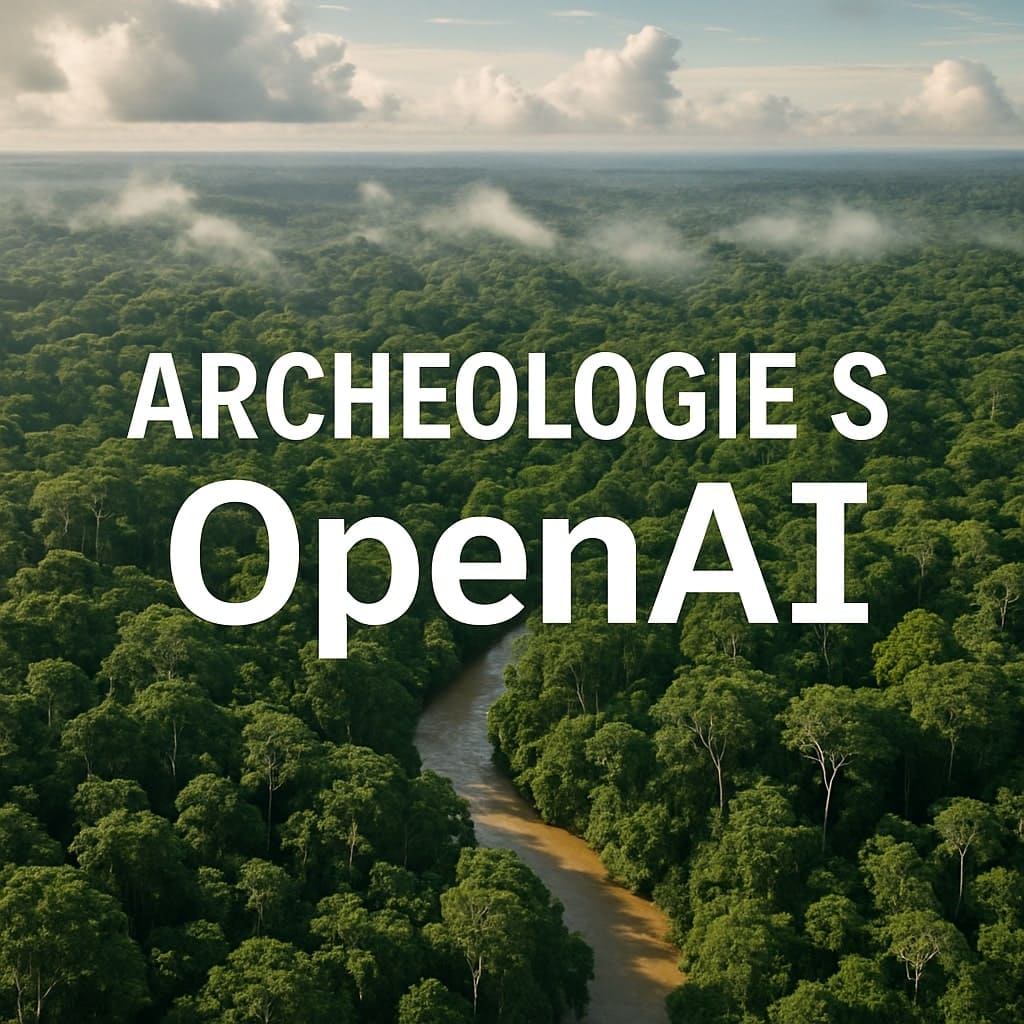
OpenAI’s Ambitious Archaeological Initiative Combines Cutting-Edge Artificial Intelligence with Ancient Mysteries
OpenAI has unveiled an extraordinary new competition called "OpenAI to Z Challenge", launched on May 15, 2025. This groundbreaking developer competition invites participants from around the world to use OpenAI’s most advanced models - including GPT-4.1 and the o3/o4 series - to solve one of archaeology’s most enduring mysteries: the existence of lost ancient civilizations in the vast Amazon rainforest. The challenge’s name cleverly references the legendary "lost city of Z", a mythical place that has captivated explorers and researchers for generations, along with other fabled sites such as Paititi and El Dorado, which have remained elusive despite centuries of searching.
The Vast Rainforests of South America
The Amazon rainforest represents a unique archaeological frontier, spanning more than 6 million square kilometers across nine different countries. This immense region contains rich historical evidence of sophisticated past civilizations, yet much remains undiscovered due to the incredibly dense forest canopy, which has effectively concealed potential sites from traditional research methods. The OpenAI to Z Challenge presents a progressive approach to archaeological discovery, encouraging participants to combine publicly available satellite imagery, including crucial LIDAR data that can penetrate forest cover, with existing archaeological maps, the oral traditions of Indigenous peoples, and AI-supported analytical techniques to identify promising new archaeological sites that might otherwise remain hidden for decades.
Time is critical for these potential discoveries, as the challenge documentation emphasizes the urgent need to accelerate collaborative research before these irreplaceable historical sites face threats from ongoing deforestation, agricultural expansion, and development projects throughout the Amazon basin. By harnessing the collective intelligence of developers and researchers working with advanced artificial intelligence systems, OpenAI hopes to dramatically accelerate the process of identifying and documenting these sites before they are lost forever to human activity or natural degradation.
Conditions
The competition has established strict guidelines regarding which artificial intelligence tools may be used. Participants must specifically use the latest OpenAI models, including GPT-4.1 and the o3/o4-mini series, for their submissions to qualify for consideration. This requirement ensures that all projects use the most advanced capabilities currently available in artificial intelligence language and multimodal systems. The submission deadline was set for June 29, 2025, at 9:00 PM PST, with organizers emphasizing that late submissions will not be considered under any circumstances.
Submissions will be evaluated according to a comprehensive framework focused on three main criteria. First, archaeological impact will assess how convincingly the discovery advances understanding of Amazonian historical development and settlement patterns. Second, investigative ingenuity will measure the creativity and depth of insight demonstrated in the research approach. Third, reproducibility will evaluate how easily archaeological experts can verify and follow the evidentiary steps outlined in the submission. Critically, all qualifying submissions must demonstrate substantial use of OpenAI models throughout their investigative process.
Rewards
The reward structure for the OpenAI to Z Challenge reflects the importance OpenAI places on this initiative. The five best teams will be nominated for live presentations judged by a prestigious panel comprising established archaeologists, OpenAI experts, and a currently unnamed mysterious leader from the artificial intelligence industry. The first-place team will receive $250,000 in a combination of cash and API credits, along with significant financial support for further collaboration with professional archaeologists - potentially including fieldwork opportunities, subject to the relevant permits.
To further support participants’ progress throughout the competition period, OpenAI has implemented an innovative system of progressive checkpoints with mini-rewards. These are strategically designed to guide teams through foundational tasks, such as correctly loading relevant datasets or successfully identifying candidate geographic anomalies from satellite imagery. This incremental approach helps ensure that participants methodically build toward complex analyses rather than pursuing fragmented approaches.
OpenAI has generously provided starter packs of resources containing vital background information distinguishing Amazonian archaeological myths from established facts, along with technical guidance for effectively working with complex datasets, including Sentinel-2 satellite imagery and LiDAR elevation tiles. Participants are encouraged to share their progress publicly using the hashtag #OpenAItoZ while complying with the competition’s official rules regarding publication rights and data use. You can sign up here.


