Both the public and private hospitals in Cairns, Queensland, Australia, have announced investments in robotic and AI-powered surgery within the space of several months. For patients, this means one thing: complex procedures that once required travelling south are gradually becoming available closer to home.
Robots at the private hospital
Cairns Private Hospital has welcomed its second ROSA surgical robot. It is used for both partial and total knee replacements, and its arrival has doubled the hospital's capacity for robot-assisted procedures. The hospital acquired its first ROSA only at the end of 2021. In less than four years, doctors have performed more than 1,000 procedures using it.
“During surgery, the robot provides the doctor with detailed feedback on how the prosthesis is functioning. This allows the surgeon to adjust the implant's position in real time without having to improvise. It is a reliable and repeatable tool that helps achieve surgical goals," said orthopaedic surgeon Dr Ben Parkinson.
Having two robots makes it possible to perform more knee replacements on the same day while also making the technology available to more surgeons. Previously, doctors had to wait until the first robot became available.
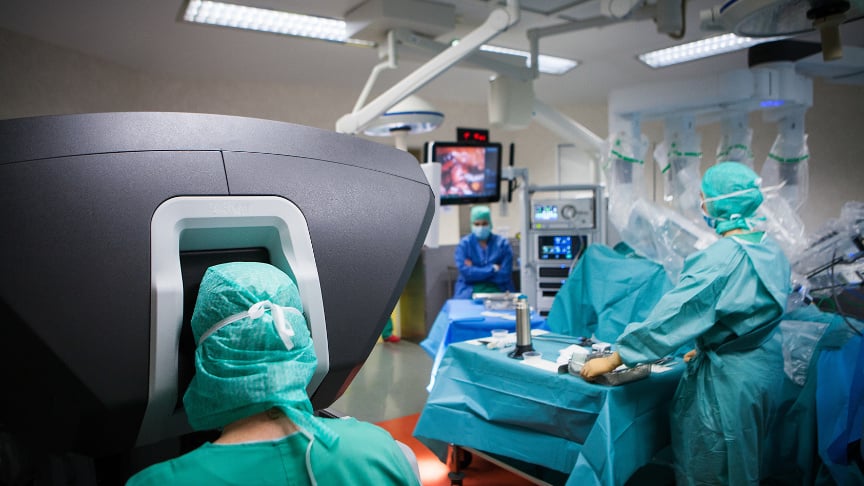
Later this year, a MAKO robot will arrive, joining the two ROSA units and the VELYS robotic assistant. All three systems are used for orthopaedic procedures. The hospital already has a Da Vinci Xi robot, which doctors use for urological, gynaecological and colorectal surgery. Robotic surgery at Cairns Private is therefore gradually expanding to cover an increasingly broad range of specialties.
The public hospital, robots and AI
While the private hospital is strengthening its orthopaedic services, the public Cairns Hospital has focused on oncology. It is acquiring a new surgical robot for AUD 4.3 million, funded entirely by the Far North Queensland Hospital Foundation. The robot is expected to be operational by the end of 2026. It will primarily be used for urological procedures, particularly prostate cancer surgery.
In the Far North Queensland region, an average of 253 men are diagnosed with prostate cancer each year. Within four years, experts expect the number of cases among men over 70 to increase by 40 percent. This is not a distant threat. Cairns and Hinterland Hospital and Health Service Chief Executive Leena Singh says the robot will make it possible to perform up to 200 urological procedures per year. The hospital currently handles around 50 of them externally.
Cairns Hospital is also looking ahead. Once commissioned, the new robot will initially be installed in the hospital's existing facilities. It will then be moved to the planned Health Innovation and Surgical Centre, which is scheduled to open in 2031. The centre is expected to offer four operating theatres, a 32-bed unit and outpatient facilities. Robotic systems will thus have a permanent place within a facility designed for them from the ground up.
AI in the ophthalmic operating theatre
Robotic surgery is not the only innovation. Cairns Hospital is also planning to acquire an AI-powered device for cataract surgery. The device evaluates the progress of the procedure in real time, maintains stable intraocular pressure and adapts to the surgeon's technique to ensure the best possible outcomes.
Director of Intensive Care, Women's and Perioperative Services Deborah Clark emphasises that the new technology is not only for patients. Robotics and artificial intelligence directly in the operating theatre are also exceptional teaching tools. Young doctors train on state-of-the-art equipment and leave prepared to work to world-class standards.
Source: cairns-hinterland.health.qld.gov.au and cairnsprivate.com.au