Artificial intelligence learns from human texts, and more and more authors are openly resisting this. And that has consequences. That is precisely why Anthropic, the creator of the chatbot Claude, now has to pay writers $1.5 billion. A court decided this at the end of July, and according to the available information, it is the largest copyright settlement in US history. Why so much money? And will Anthropic finally be out of trouble?
Pirated Books
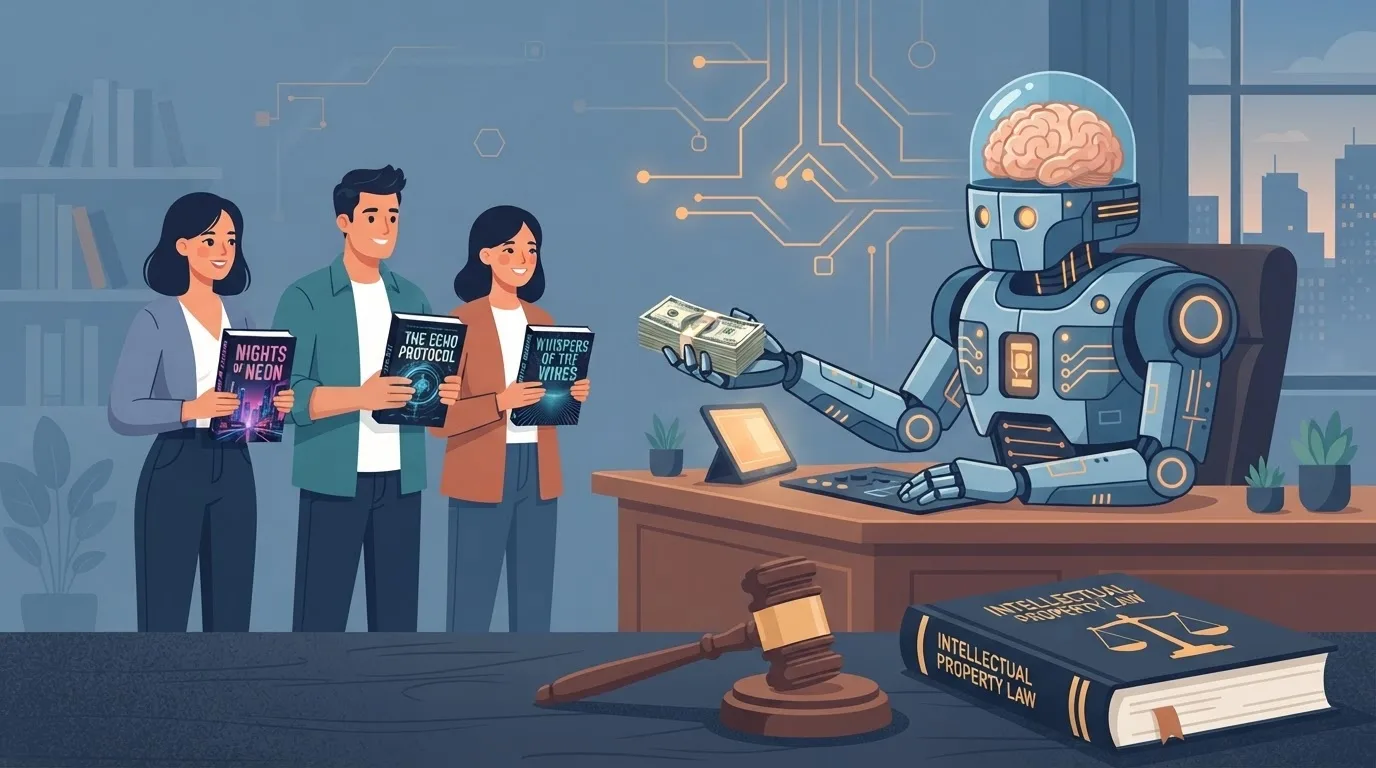
The lawsuit was filed by writers Andrea Bartz, Charles Graeber and Kirk Wallace Johnson, back in 2024. According to Reuters, they accused Anthropic of using thousands of illegally obtained titles for training its Claude chatbot without addressing the matter with the authors in any way.
The key ruling in this case was delivered by Judge William Alsup in July 2025. According to him, training AI is permissible and falls under the fair use doctrine. However, the entire case showed that Anthropic had also stored millions of illegally downloaded books, and this conduct clearly did not fall under the fair use doctrine.
A Fine for Every Book
Once the court recognized that storing pirated books was illegal, Anthropic began facing statutory fines of up to $150,000 for each individual work. However, with hundreds of thousands of titles, this could have been completely devastating for the company. According to the Guardian, authors and publishers will therefore receive approximately $3,000 for each of the 482,000 illegally obtained works.
Judge Araceli Martínez-Olguín approved the agreement on July 20, 2026, stating that it provides authors and publishers with a “meaningful settlement,” and she did not want to increase the amount any further. According to the Guardian, claims have already been filed for more than 91% of the affected works.
What Does This Mean in Practice? The Example of Harry Potter
This is not just about unknown titles or authors. Major publishers such as the British publisher Bloomsbury, home to J. K. Rowling, Sarah J. Maas and Susanna Clarke, have also been affected. Bloomsbury has 14 087 titles included in the agreement, and after legal fees are deducted, approximately $19 million. will be divided among publishers and authors.
The London-based publisher expects to receive the money in installments from the second half of the fiscal year and will gradually distribute it among those affected.
Are Anthropic’s Troubles Over? Not by a Long Shot
And here is the small catch. As TechCrunch pointed out, the agreement Anthropic reached does not constitute a binding precedent. The company reached an out-of-court agreement with the authors, meaning that other judges may rule entirely differently in similar cases, and the fines may vary significantly.
That is not exactly ideal for Anthropic. It is currently also facing a lawsuit from music publishers (Universal, Concord, ABKCO). According to Music Business Worldwide, they are seeking more than $3 billion for more than 20,000 songs, whose lyrics allegedly also ended up in the training data.
Anthropic Is Not Alone in This
Anthropic is far from the only AI company in lawyers’ sights. OpenAI, Meta, Google and Midjourney are dealing with very similar disputes. It appears that the era of “first we use other people’s data and only then deal with the consequences” is slowly coming to an end, and AI companies will start paying for these resources.