Until recently, you could buy a decent laptop or mobile phone for just a few thousand crowns. However, those days are slowly coming to an end. The culprit is not a shortage of raw materials or war; the problem is caused by the high demand for memory chips from AI systems. This phenomenon has already become so noticeable that it has even earned its own name: “RAMageddon.”
Data centers are to blame
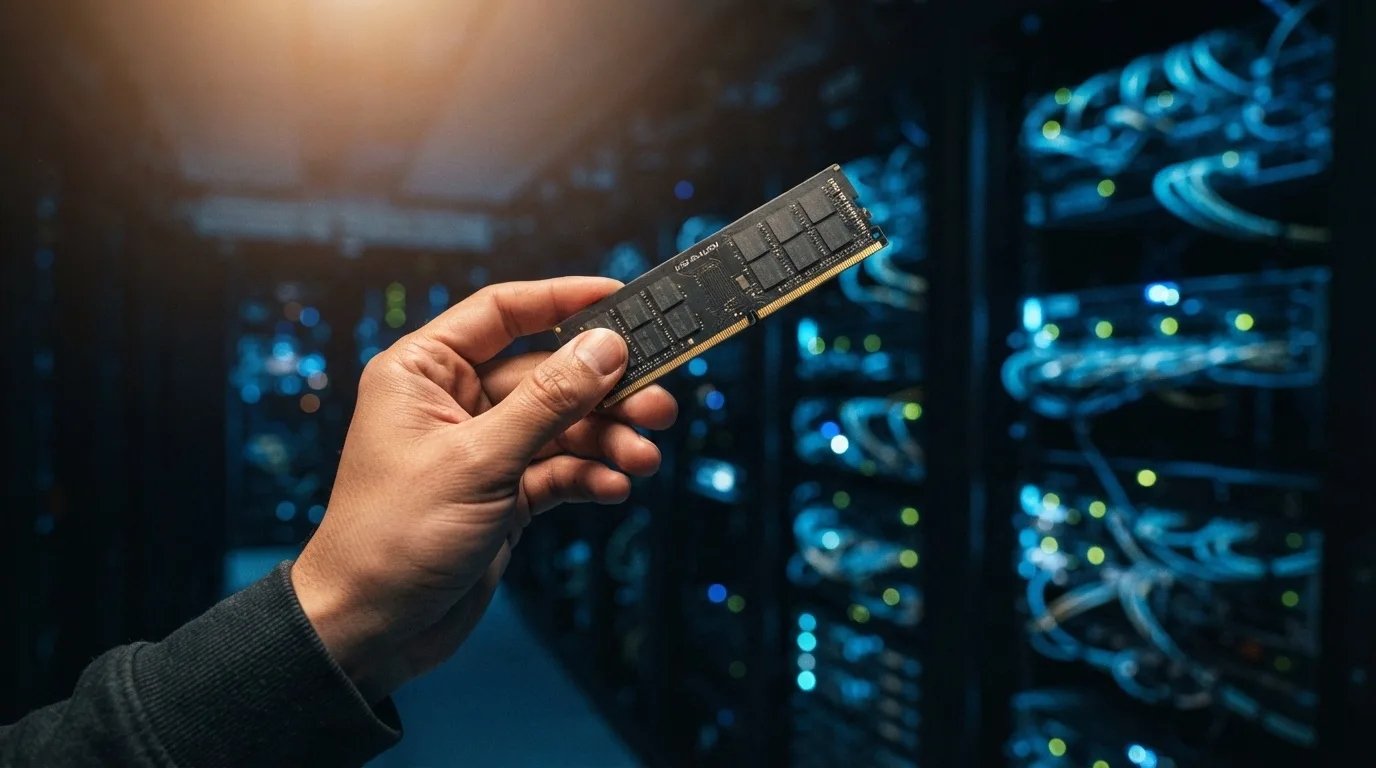
Memory chips, including random-access memory (RAM), can be found in many electronic devices. But the artificial intelligence boom has triggered the construction of enormous data centers that are not only consuming the world’s current supply of memory, but also tying up production capacity for several years to come. Manufacturers are also adapting to this trend and shifting production lines to more profitable AI chips. As a result, cheaper processors and SSDs are becoming noticeably scarcer on the market. The price of some components has risen by as much as 450%.
We will have to pay more
This will be most apparent in low-cost devices, where memory accounts for a large share of the price. According to analysts quoted by The Guardian, memory accounts for roughly 30% of the cost of a low-cost smartphone and 23% of the cost of an entry-level laptop. Gartner therefore predicts that the market segment for computers priced below $500 will disappear completely by 2028.
Moreover, price increases are already in full swing. According to The Guardian, Apple has raised the price of the MacBook Air by £100, Sony has increased the price of the PlayStation 5 console by £90, and you will also face higher prices when buying Meta Quest headsets or selected Samsung phones.
According to CNET, retailers are skillfully taking advantage of this situation. They entice customers with “AI features” on new computer models, but AI itself requires more memory. Microsoft itself states that although its basic Windows Copilot Plus PC has 16 GB of RAM, more advanced tasks require closer to twice as much memory. And that is only available in premium models.
It is not a temporary fluctuation, but a permanent state
Moreover, this new pricing policy is not a short-term fluctuation. Lenovo representatives have indicated as much. As Tom's Hardware reports, the company even presented a five-step guide to surviving RAMageddon, and its executives said that the memory market has changed permanently. And the reason? Even if memory production capacity were increased, AI-related demand would once again absorb it completely. According to CNET, Samsung’s production capacity is reportedly fully booked through the end of 2026, and an analysis by consulting firm Deloitte warns that relief may not come before 2029.
This is not the first time
The market experienced a similar shock in 2020–2021, during the pandemic, when demand for semiconductors skyrocketed. As a result, buyers had to wait months for new cars, and the problem also affected game consoles and graphics cards, which cryptocurrency miners were buying up in large quantities. However, today’s situation is not fully comparable to what happened then. Why? Because this time it is not just a temporary trend. Interest in AI continues to grow and certainly will not subside anytime soon.
You do not have to overspend; you just need to choose wisely
So does this mean you will have to pay more for a new computer or phone? Not always. Experts recommend looking for older models that have not yet been affected by the price increases and not being afraid of refurbished electronics either. In both cases, you can get the performance you need at an affordable price.