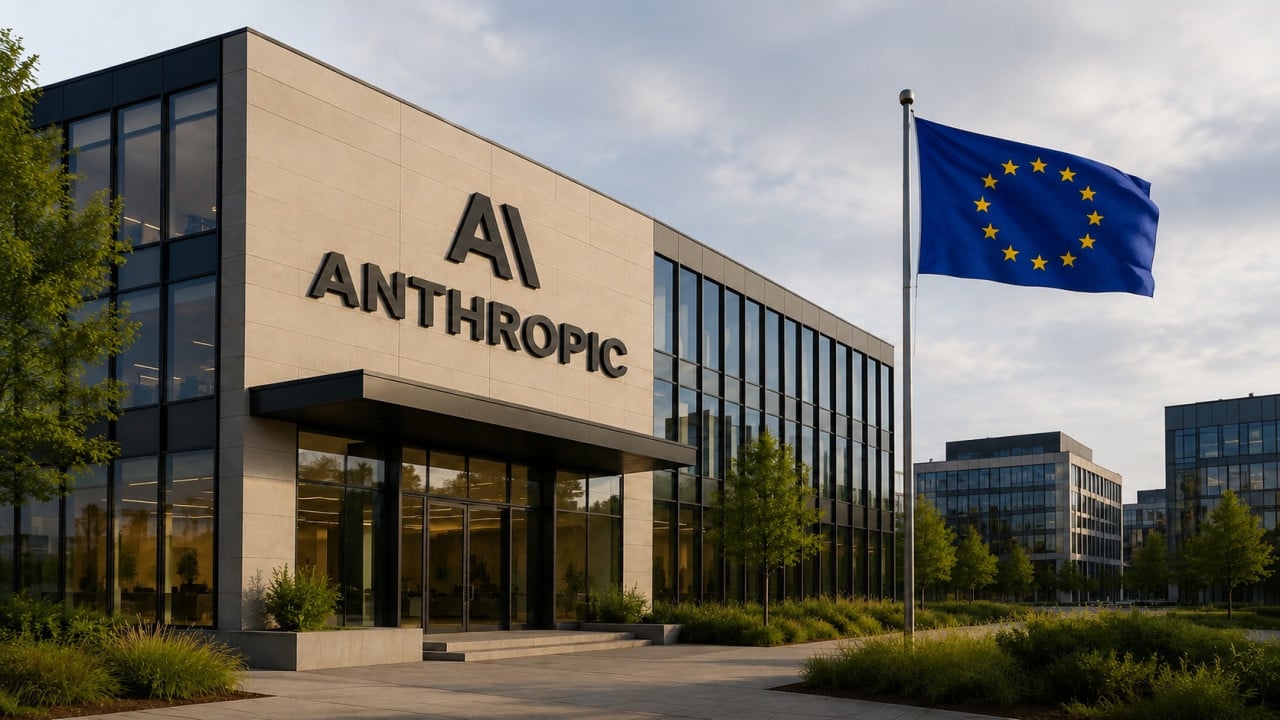
Vienna has sent Brussels a proposal that would have sounded almost unthinkable just a few weeks ago. Austrian State Secretary for Digitalization Alexander Pröll has called on the European Union to consider relocating Anthropic directly to its territory. The move comes in response to US restrictions that blocked foreigners from accessing the company's most advanced models.
It all began in early June, when the US Department of Commerce ordered Anthropic to suspend access to the Fable 5 and Mythos 5 models for all foreign users. Washington justified the decision by citing national security concerns. The models are reportedly so good at finding vulnerabilities in software that they could pose a threat to critical systems.
The problem was that Anthropic was unable to block access for only some users. It had to disable both models completely for the entire world. Overnight, millions of users across platforms lost access, from AWS Bedrock through Google Cloud and Microsoft Foundry to Claude's direct interfaces. The company objected to the measure. It described the technique cited by the US government as a non-universal way of bypassing safeguards. It argued that the same method could be used to unlock similar capabilities in other widely available models that are not subject to any restrictions.
A partial easing came later. A confidential letter from the Department of Commerce restored limited access to Mythos 5 for roughly one hundred approved US companies and institutions. Customers outside the US, however, remained cut off.
Austria sees the right values in Anthropic
Pröll sent his proposal to Henna Virkkunen, Executive Vice-President of the European Commission for Technological Sovereignty. "Let us jointly explore the strategic establishment and participation of Anthropic in the European Union. With legal certainty, market access, capital, and a set of values that suits this company," he wrote in the letter.
Why Anthropic in particular? Pröll points to the company's philosophy. According to him, Anthropic does not treat the ethical use of artificial intelligence as a marketing gimmick, but as a genuine principle. In Austria's view, this makes it a partner that would fit into Europe. He himself acknowledged that it would not be easy and that doubts would arise as to whether such a move was even feasible. "The real question is not whether it is easy," he wrote. "The question is whether we Europeans are prepared to be the architects of our technological future, or whether we want to remain mere administrators of decisions made elsewhere." He also added a warning. When the key technology of our time lies beyond Europe's reach and access to it can be revoked with a single stroke of a pen, it shows just how vulnerable Europe is.
Vincenz Kriegs-Au, a spokesperson for the State Secretary, confirmed that Pröll was referring to a complete relocation of Anthropic, not merely the opening of a European branch. The company already has its EMEA regional headquarters in Dublin, Ireland. Pröll also warned that the window of opportunity for such a move would close quickly. "If we want to act, we must act now," he said.
The letter does not address how the entire relocation would be carried out legally or technically. It contains no specific procedure for moving Anthropic's cutting-edge infrastructure to European soil.
Brussels is already charting its own course
At the beginning of the month, the European Commission unveiled legislation intended to strengthen domestic cloud services, artificial intelligence, and semiconductor manufacturing. The goal is to reduce dependence on US technology companies. Washington immediately criticized the move. Brussels, however, has no intention of backing down, and Pröll's letter fits squarely into this effort to achieve greater independence. Anthropic has not yet commented on the Austrian proposal.
Realistically speaking, a letter from one member state is still just a letter. It merely calls on the Commission to consider the proposal, nothing more. Skeptics point out that although the company presents itself as cosmopolitan and values-driven, it is in fact strongly American. In its dispute with the Pentagon over artificial intelligence, Anthropic was primarily concerned with protecting US citizens.