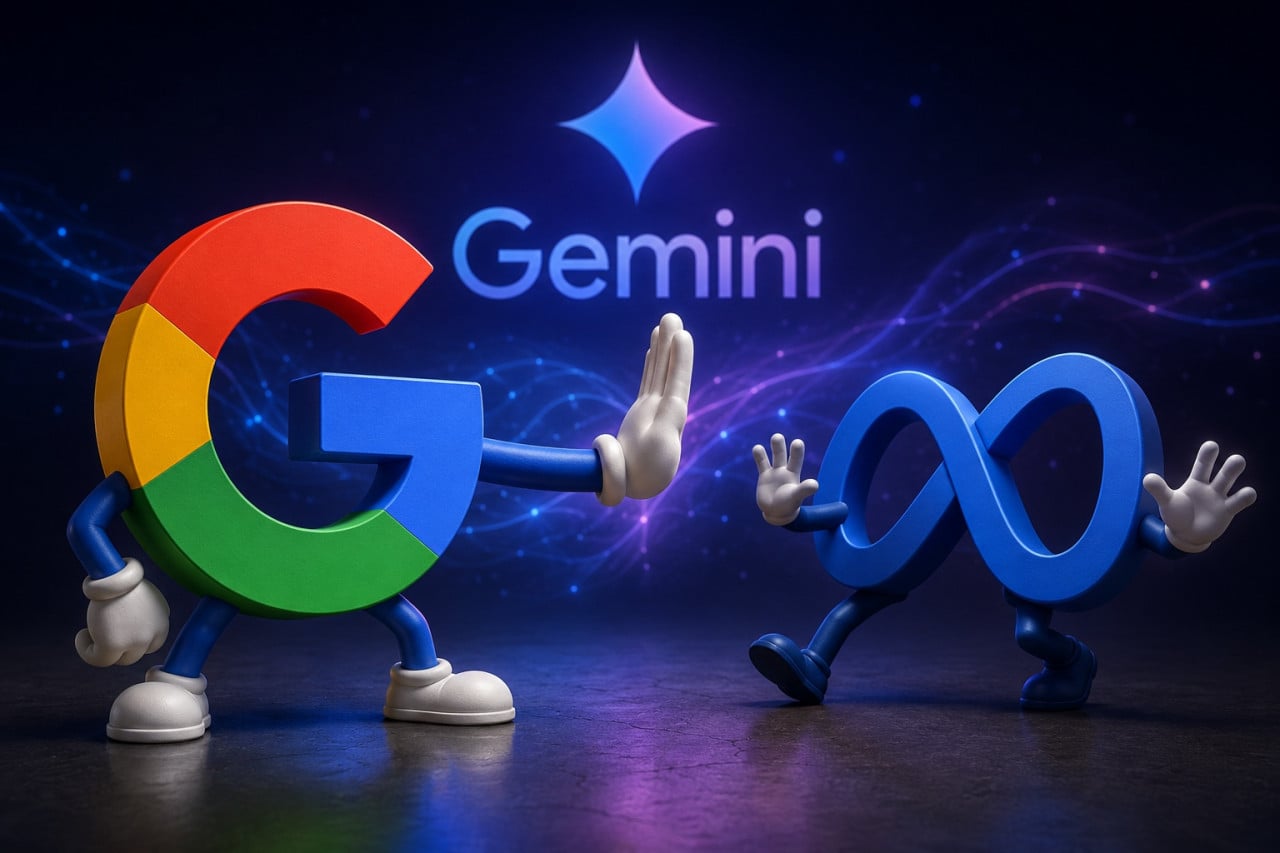
What happens when even one of the world’s wealthiest technology companies finds that it cannot buy enough computing power? That is exactly what Meta is experiencing now. Google has restricted its access to its Gemini artificial intelligence models because it was unable to provide Meta with as much capacity as it wanted. The Financial Times reported the news, citing three sources familiar with the matter.
Google notified Meta of the decision around March. At the time, the company said it could not provide all the Gemini capacity Meta wanted to purchase. The shortfall hurt. It delayed some of Meta’s internal projects and brought part of its work to a standstill.
Meta was hit the hardest
The restrictions did not affect Meta alone. Google also tightened limits for some of its other customers, but they felt the impact less severely. Meta was hit the hardest, and there is a reason for that. Its demand for Google’s models was exceptionally high, so when the cuts came, it felt them most acutely.
Meta was relying on Gemini for a simple reason. It worked better for the company than its own open Llama models. It deployed Gemini primarily in areas involving safety: automatically removing harmful content and eliminating fraudulent posts. However, it gradually began relying more heavily on its new Muse Spark model because it wants to eliminate its dependence on third-party models.
What does a company do when it runs out of fuel? It starts rationing it. After Google imposed the restrictions, Meta urged its employees to use AI tokens more sparingly. A token is the basic unit used to measure artificial intelligence usage—that is, how a model processes prompts and generates responses. The pressure to conserve resources came at an inconvenient time. Artificial intelligence is now the top priority for Meta CEO Mark Zuckerberg and underpins his vision for the company’s future. Meta does not sell cloud computing services itself, so it has to buy computing power elsewhere. That made Google’s restrictions all the more painful.
Everyone is short on computing power
Meta’s story illustrates a broader problem. Companies are pouring billions into chips and data centers, yet they still do not have enough computing power to meet the growing demand for artificial intelligence services.
This is also evident in Google’s own figures. Google Cloud division revenue climbed to twenty billion dollars in the first quarter ending in March. However, Alphabet CEO Sundar Pichai admitted that a lack of computing power had held back further growth. As a result, the cloud division’s backlog of unfulfilled orders nearly doubled quarter over quarter.
And so Google is seeking capacity wherever it can. In early June, it reached an agreement with Elon Musk’s SpaceX to pay it 920 million dollars per month for computing power. This is part of a thirty-billion-dollar cloud agreement that will run until mid-2029.
Meanwhile, Meta is undergoing a painful cost-cutting program. At the beginning of the year, it announced plans to lay off ten percent of its employees, or roughly eight thousand people, to offset its heavy spending. It reassigned another seven thousand employees to new positions related to artificial intelligence.
Sources: ft.com and bloomberg.com