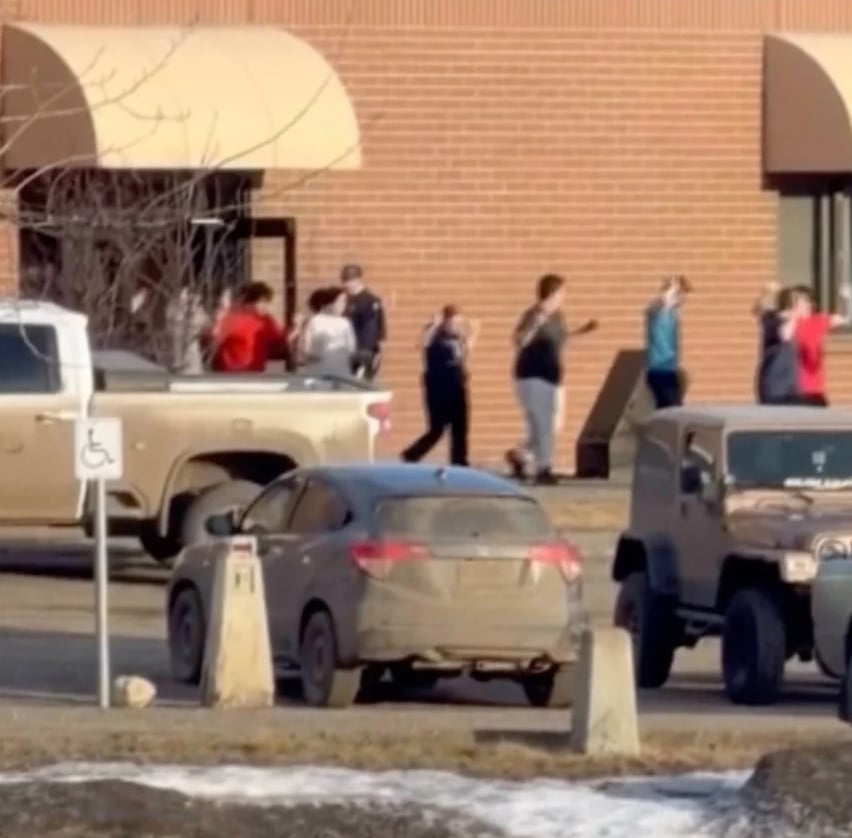
In early February, eighteen-year-old Jesse Van Rootselaar took a gun and headed to places she knew well. First, she killed her mother, Jennifer Jacobs, and stepbrother, Emmett, inside their home in Tumbler Ridge, a small mining town in northern British Columbia. She then went to the nearby Tumbler Ridge Secondary School. There, she shot and killed five children and one teacher before turning the gun on herself. A total of eight people lost their lives. Another twenty-five were injured.
OpenAI Blocked Her Account but Did Not Tell Police
Investigators soon discovered that Van Rootselaar had an active ChatGPT account. They also found that OpenAI had blocked it as early as June 2025, several months before the attack. The reason? The company’s own systems had detected that the user was describing scenarios involving shootings and violence.
OpenAI employees noticed this internally. They considered whether to refer the case to the Royal Canadian Mounted Police. Ultimately, the company decided that the activity on the account did not meet its internal criteria for reporting. A specific and imminent threat? That had allegedly not been established. The account was blocked. The police were not informed. And that decision has now become the focus of a heated debate over what AI companies may do, must do, and have failed to do.
Altman’s Apology After More Than Two Months
Sam Altman addressed the letter directly to the Tumbler Ridge community. British Columbia Premier David Eby shared it on social media. “I deeply regret that we did not notify law enforcement about the account that was blocked in June,” Altman wrote. “I know words are not enough, but I believe an apology is necessary to acknowledge the pain and irreparable loss your community has suffered.”
Altman also spoke more personally in the letter. “I cannot imagine anything worse in this world than losing a child. My heart remains with the victims, their families, and the entire province of British Columbia,” he wrote. He also said that in recent months he had personally spoken with Tumbler Ridge Mayor Darryll Krakowka and Premier Eby, hearing directly from them about the anger and grief gripping the community.
Premier Eby published the letter but did not hide his disappointment. “An apology is necessary, yet grossly inadequate for the devastation suffered by the families of Tumbler Ridge,” he wrote alongside the post. Altman’s apology came too late. Families had buried their children. OpenAI is also facing a lawsuit. The family of one of the injured children sued OpenAI, claiming that the company had specific knowledge of the shooter’s plans and nevertheless failed to act.
OpenAI Promises Changes
After the shooting, the company acknowledged its failure and announced changes to its procedures. Mental health and behavioral experts now help assess high-risk cases. The criteria for referring information to law enforcement have been relaxed. Ann O’Leary, OpenAI’s head of global policy, wrote in a letter to Canada’s minister of artificial intelligence: “If we discovered today an account that had been blocked in June 2025, we would refer it to law enforcement under our new protocol.”
But Tumbler Ridge is far from an isolated case. Roughly ten months before the shooting in Canada, Florida State University student Phoenix Ikner carried out an attack on campus that left two people dead and seven others injured. Transcripts of his conversations with ChatGPT that became public revealed detailed and horrifying plans. Companies such as OpenAI have therefore come under pressure over a question with no simple answer: exactly when do they have a duty to act?
At the end of the letter, Altman promised that OpenAI would continue working with all levels of government to prevent a similar tragedy from happening again. But Tumbler Ridge will remain a scar that no letter can heal.
Sources: cnn.com, futurism.com and heguardian.com