European aviation giant Airbus is entering a new era of manufacturing. The company has signed an agreement with Chinese firm UBTech Robotics, which will supply humanoid robots for use in the aviation industry. This is a groundbreaking project that could change the way aircraft are manufactured.
Walker S2 heads to assembly lines
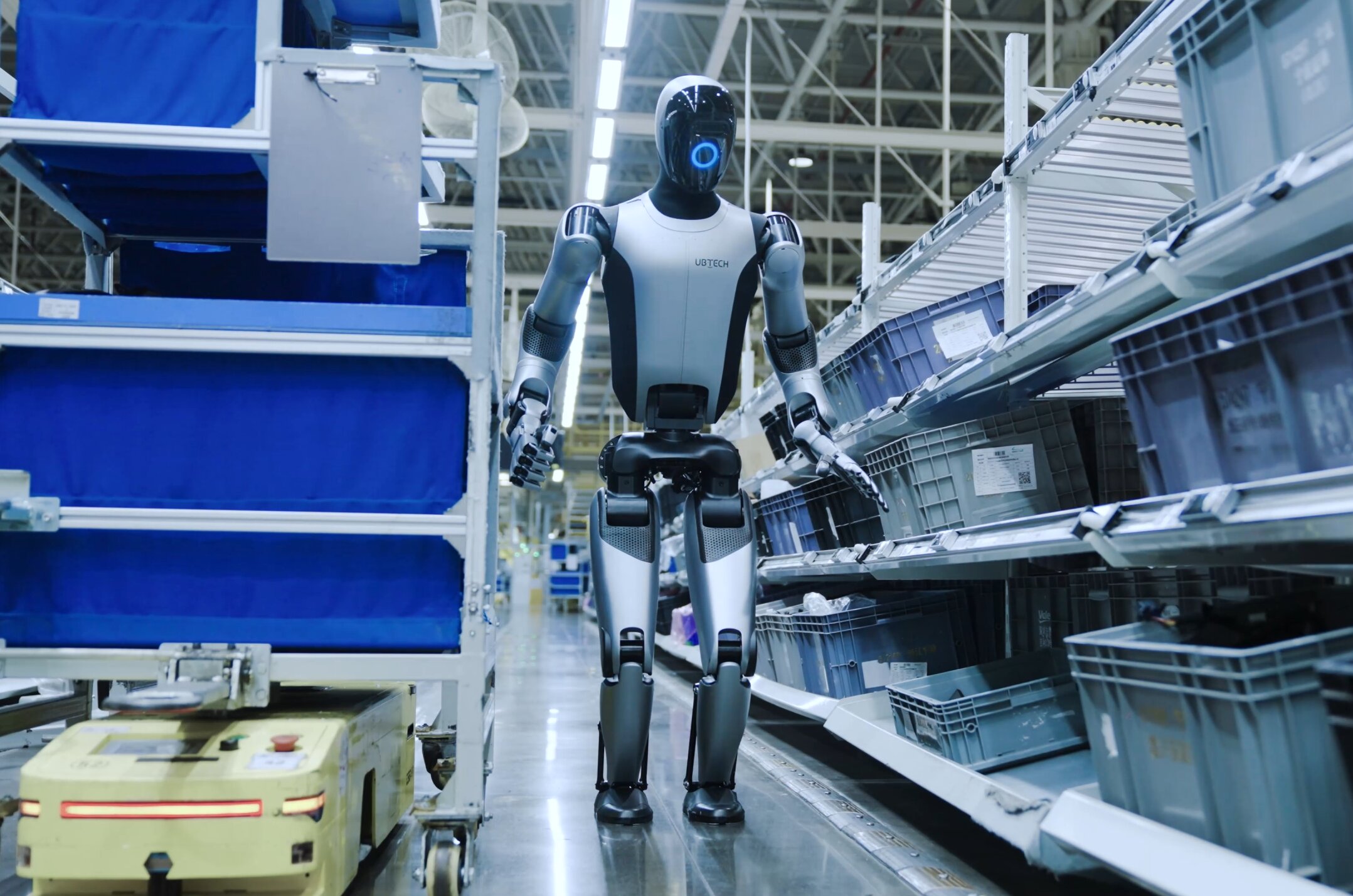
Airbus has already purchased UBTech's latest industrial humanoid robots, known as the Walker S2. According to an official statement from the Chinese robotics company, the two parties will jointly expand the use of humanoid robots in aviation manufacturing environments. However, Airbus clarified that its collaboration with UBTech is still in the early conceptual testing phase.
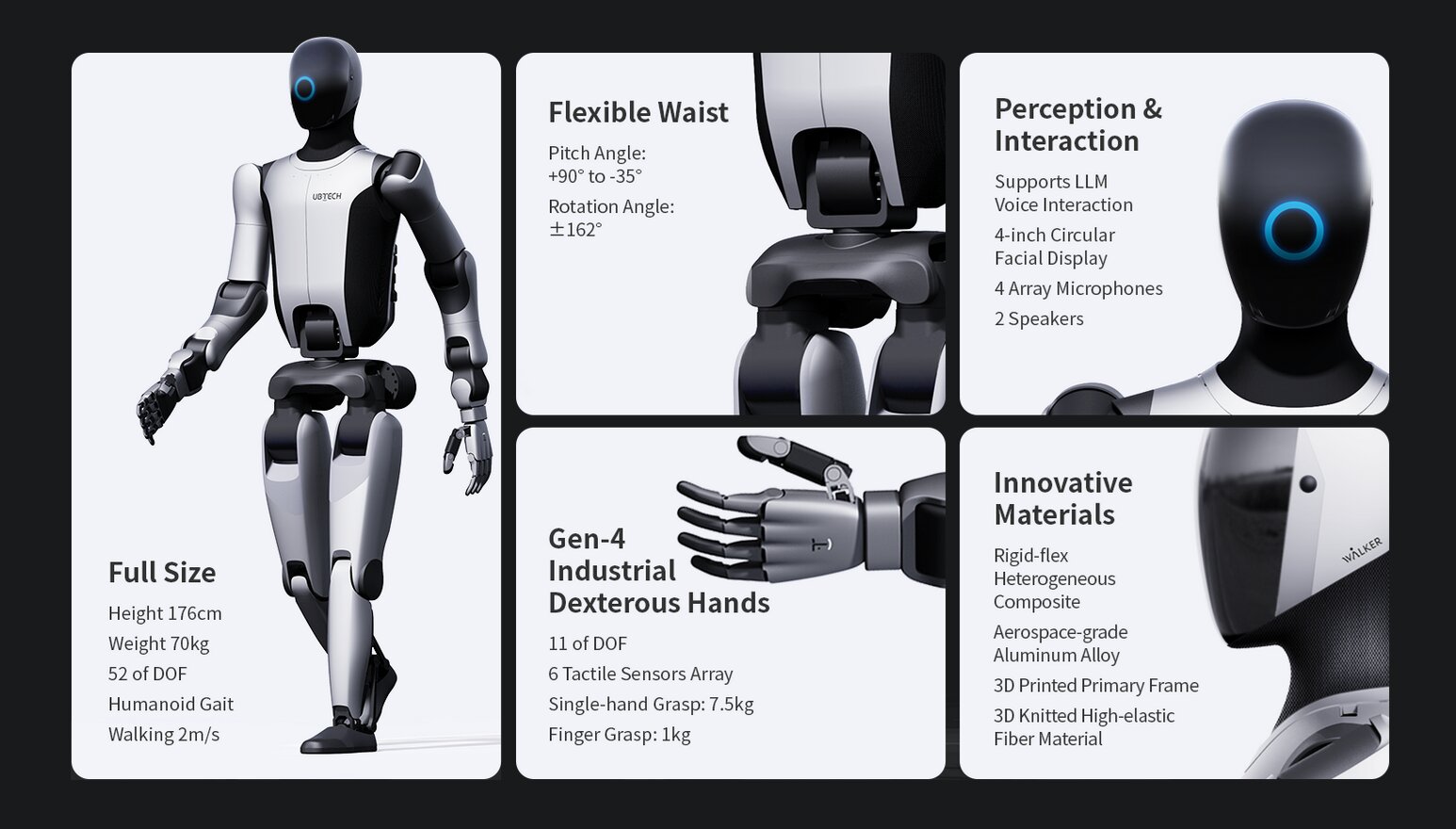
The Walker S2 robot was unveiled in 2024, and its specifications are truly impressive. The machine stands 176 centimeters tall, weighs 70 kilograms, and can move at a speed of approximately two meters per second, equivalent to roughly 7.2 kilometers per hour. This makes it a fairly agile assistant for factory environments.
The robot's technical capabilities
Walker S2 has highly dexterous hands with 11 degrees of freedom and tactile sensors. Each hand can carry up to 7.5 kilograms, and each finger can manipulate objects weighing up to one kilogram. The robot is equipped with microphones and speakers for AI-powered voice interaction. One of its key features is the ability to replace its own battery while operating. In November 2025, UBTech announced that Walker S2 was the first humanoid robot capable of performing this function. This means that the machine can theoretically work continuously, which is a crucial advantage in manufacturing environments.
Another interesting feature is its ability to rotate at the waist by almost 180 degrees. This allows the robot to quickly move components or work on different parts without having to reposition its feet, significantly increasing its efficiency on the assembly line.
Why humanoid robots in aviation?
Sophisticated robots have been part of assembly lines for decades, but the humanoid form offers additional advantages. Thanks to their dexterity and adaptability, these machines can switch between tasks with minimal or no intervention. Moreover, they can be added to most work environments without requiring costly modifications to production facilities.
Although humanoid robots have made significant progress in recent years, it is still not entirely clear how ready they are to perform meaningful tasks in complex industrial environments. However, Airbus's agreement with UBTech clearly demonstrates its belief that such robots can benefit the workplace.
Chinese expansion into the global market
Shenzhen-based UBTech was founded in 2012 and is rapidly becoming a major player in the humanoid robot market. In 2025, the company received orders worth approximately CZK 5.2 billion from various customers. The total value of UBTech's humanoid robot orders in 2025 exceeded 1.4 billion yuan, equivalent to roughly CZK 4.6 billion.
The company plans to manufacture up to 10,000 of its Walker S2 industrial humanoid robots in 2026. According to the company, its production capacity is expected to exceed 10,000 units per year. If the stated production figures are correct and we base the calculation on sales of CZK 2.9 billion from the delivery of approximately 1,000 robots, the average price of each humanoid robot would be around CZK 2.9 million. This price should fall rapidly in the coming years as UBTech expands production.
UBTech has already delivered approximately 1,000 humanoid robots, ranking it third behind Chinese companies Agibot and Unitree in global deliveries. It has thus surpassed Western robotics manufacturers such as Figure AI, Agility Robotics, Tesla, Apptronik, and Hyundai-owned Boston Dynamics. The company is also ahead of European humanoid robot manufacturers such as Berlin-based Neura Robotics and the recently funded Italian company Generative Bionics.
Further details
The agreement with Airbus follows a contract that UBTech signed last year with US semiconductor manufacturer Texas Instruments. The Chinese company is thus systematically building a portfolio of major international partners.
Humanoid robots are becoming increasingly important to Beijing, which sees them as a solution to urgent problems, including trade tensions with the United States, population decline, and slowing economic growth. In recent years, Chinese humanoid robots have demonstrated increasingly impressive feats, including performing somersaults, running a half-marathon, and even playing soccer.
Bank of America estimates that mass adoption of humanoid robots will begin in 2028. Jeff Cardenas, CEO of Apptronik, which has raised hundreds of millions of dollars, described the development of humanoid robots as the "space race of our time" because of its significance for labor costs and manufacturing capacity.
While details of the agreement between Airbus and UBTech, including the number of robots purchased and the price, have not been disclosed, it is almost certainly an initial agreement for demonstration and testing purposes. If the tests prove successful, we can expect these machines to be deployed more extensively in aircraft manufacturing in the future.
Humanoid robots building aircraft may sound like science fiction, but the new agreement between Airbus and UBTech suggests that such a scenario could be closer than we think.
Sources: forbes.com and digitaltrends.com