

AI Stethoscope Detects Hidden Heart Conditions in 15 Seconds
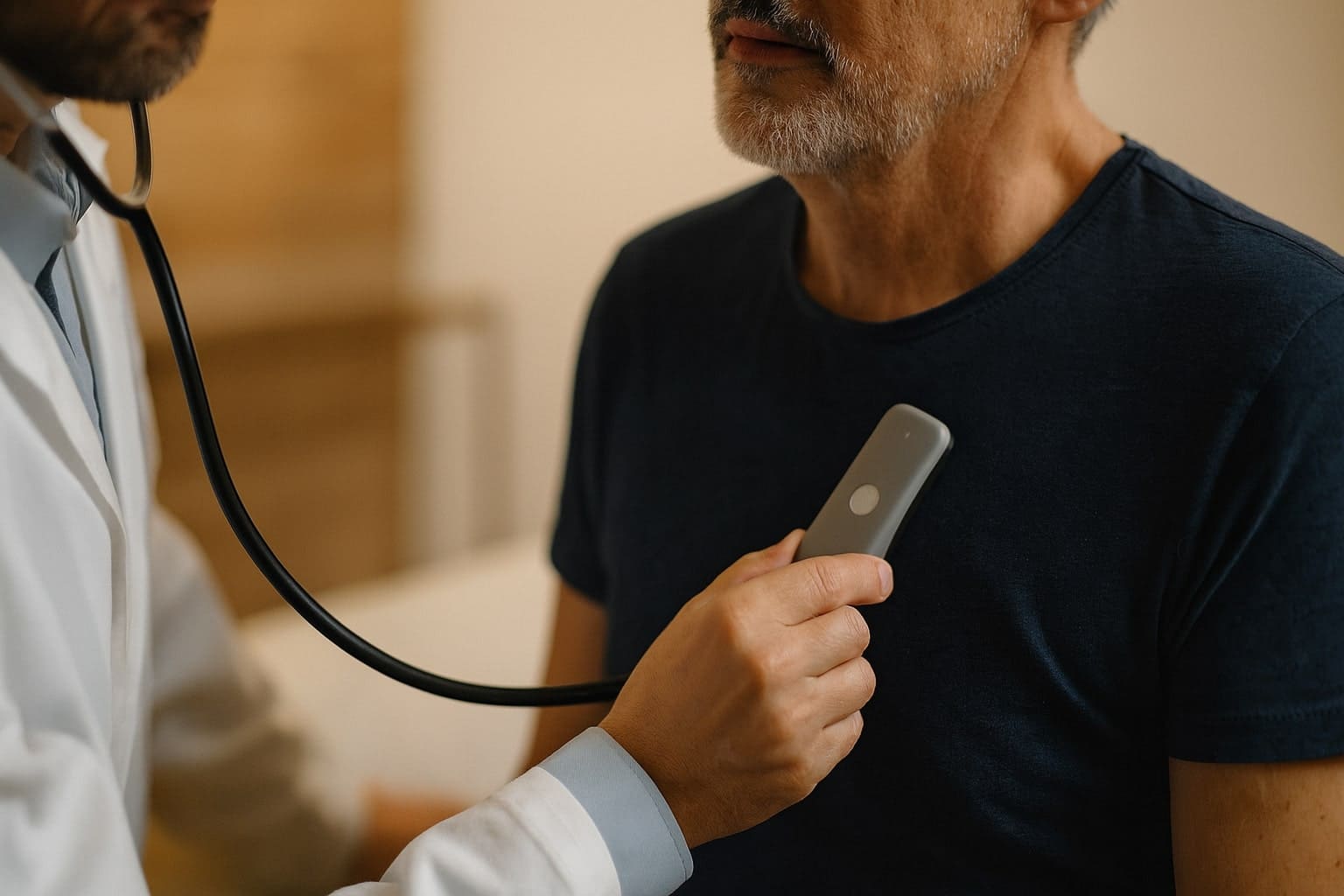
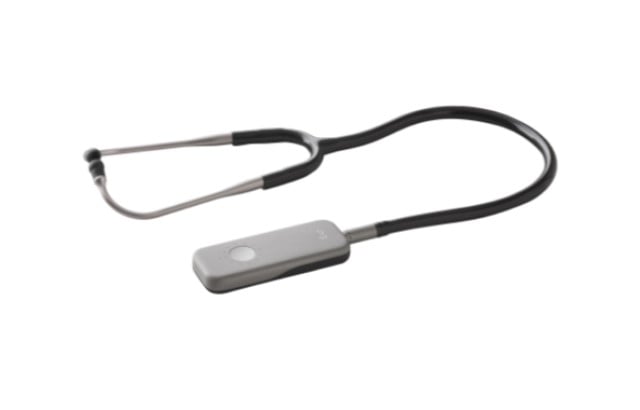
The stethoscope, invented in 1816, is an essential tool used by every doctor to listen to sounds within the body. However, the new AI (artificial intelligence) stethoscope goes much further. It can analyze subtle differences in heart rate and blood flow that the human ear cannot detect, while also performing a rapid ECG (electrocardiogram). The device, which is the size of a playing card, is placed on the patient's chest, where it records electrical signals from the heart and the sounds of blood flow. This data is securely sent to the cloud, where it is processed by artificial intelligence algorithms trained on data from tens of thousands of people. The result—whether or not the patient is at risk of heart failure—is sent directly to a smartphone. A separate algorithm detects atrial fibrillation, an abnormal heart rhythm that increases the risk of stroke, and valvular heart disease, in which one or more heart valves do not function properly.
Real-World Study Results
Researchers from Imperial College London and Imperial College Healthcare NHS Trust conducted a real-world study partly funded by the British Heart Foundation. It involved more than 200 GP practices with over 1.5 million patients. They focused on people with symptoms such as shortness of breath, fatigue, or swelling of the lower limbs. Patients examined with the AI stethoscope were twice as likely to be diagnosed with heart failure as those without the technology. They were also approximately 3.5 times more likely to be diagnosed with atrial fibrillation and almost twice as likely to be diagnosed with valvular heart disease. A total of 12,725 patients were examined at 96 practices in northwest London and compared with patients from another 109 practices without the AI stethoscope. If the device identified a patient as being at risk, this was followed by a blood test for the hormone BNP (a higher level indicates heart failure) and a heart scan. The study, called TRICORDER, was supported by the National Institute for Health and Care Research (NIHR) and Imperial Health Charity, and the device was manufactured by California-based company Eko Health.
Why Is Early Detection Crucial?
Heart failure, in which the heart does not pump blood properly, affects more than one million people in the United Kingdom. More than 70% of cases are diagnosed only in hospital following an emergency admission, even though half of these people had previously experienced symptoms or consulted a GP. The AI stethoscope can help with earlier detection, allowing treatment, such as lifesaving medication, to begin sooner. Dr Sonya Babu-Narayan, clinical director at the British Heart Foundation and a consultant cardiologist, said that this is an elegant example of how to upgrade the 19th-century stethoscope for the 21st century. According to her, such innovations are needed because heart failure is often not diagnosed until it has reached an advanced stage and the patient is in hospital. Early diagnosis helps people receive the treatment they need sooner, enabling them to live longer and with a better quality of life. Professor Nicholas Peters, the lead researcher from Imperial College London and a consultant cardiologist at Imperial College Healthcare NHS Trust, added that three heart conditions can now be identified in a single session and that the technology is already available in some practices.
The Future of the Technology
The study showed that 70% of practices had stopped using the AI stethoscope or were using it only sporadically after 12 months. The researchers suggest better integration into doctors' standard procedures to encourage wider adoption. In addition, two-thirds of people identified as being at risk were ultimately found not to have heart failure after further testing, which could cause unnecessary anxiety, but for others it means detecting problems that would otherwise remain hidden. The device should be used only for patients with suspected heart problems, not for routine checkups of healthy people. The researchers plan to expand its use to practices in Wales, south London, and Sussex. This technology, presented at the European Society of Cardiology Congress in Madrid, represents a major step forward in primary care, where a rapid and accurate diagnosis can save lives.


