

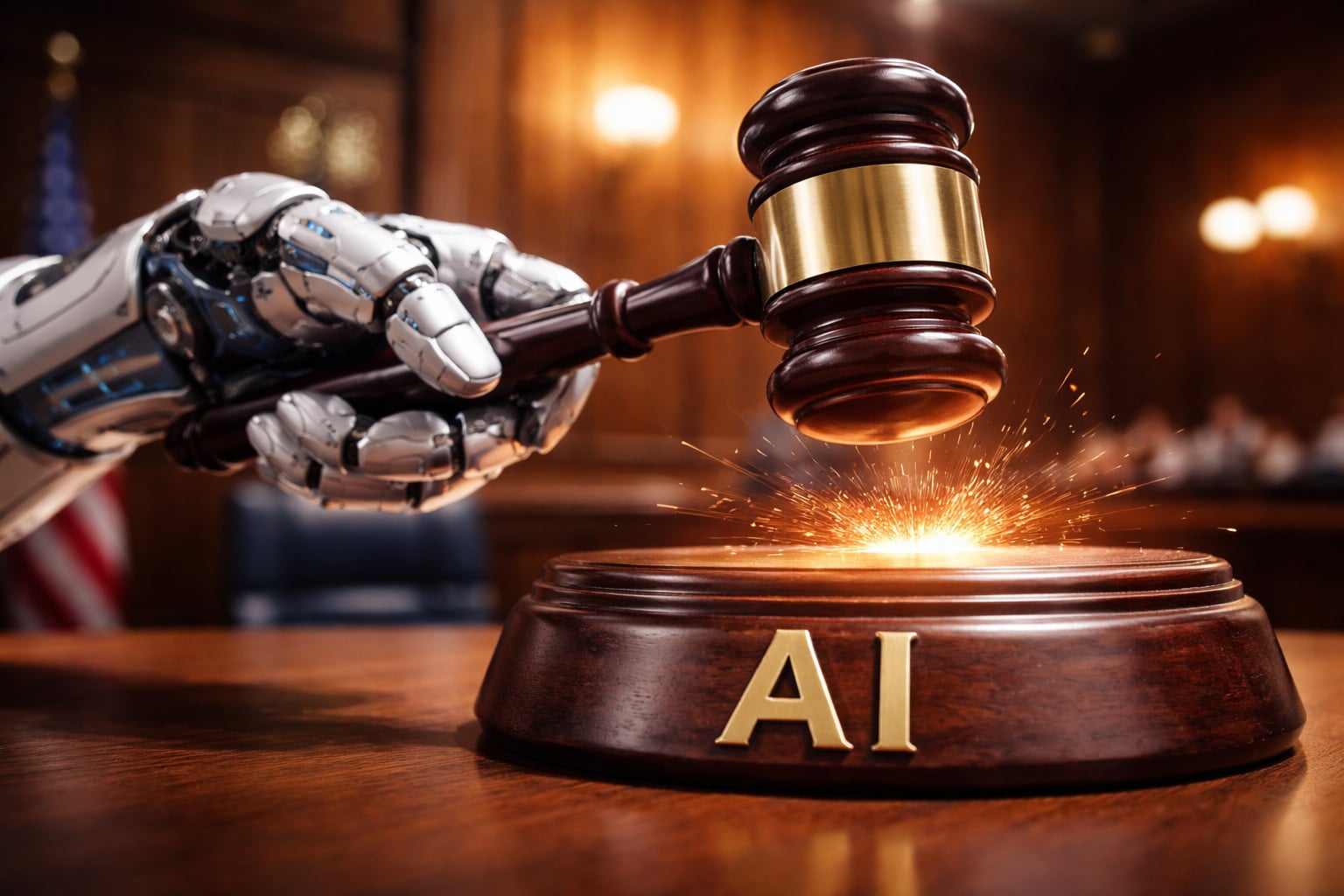
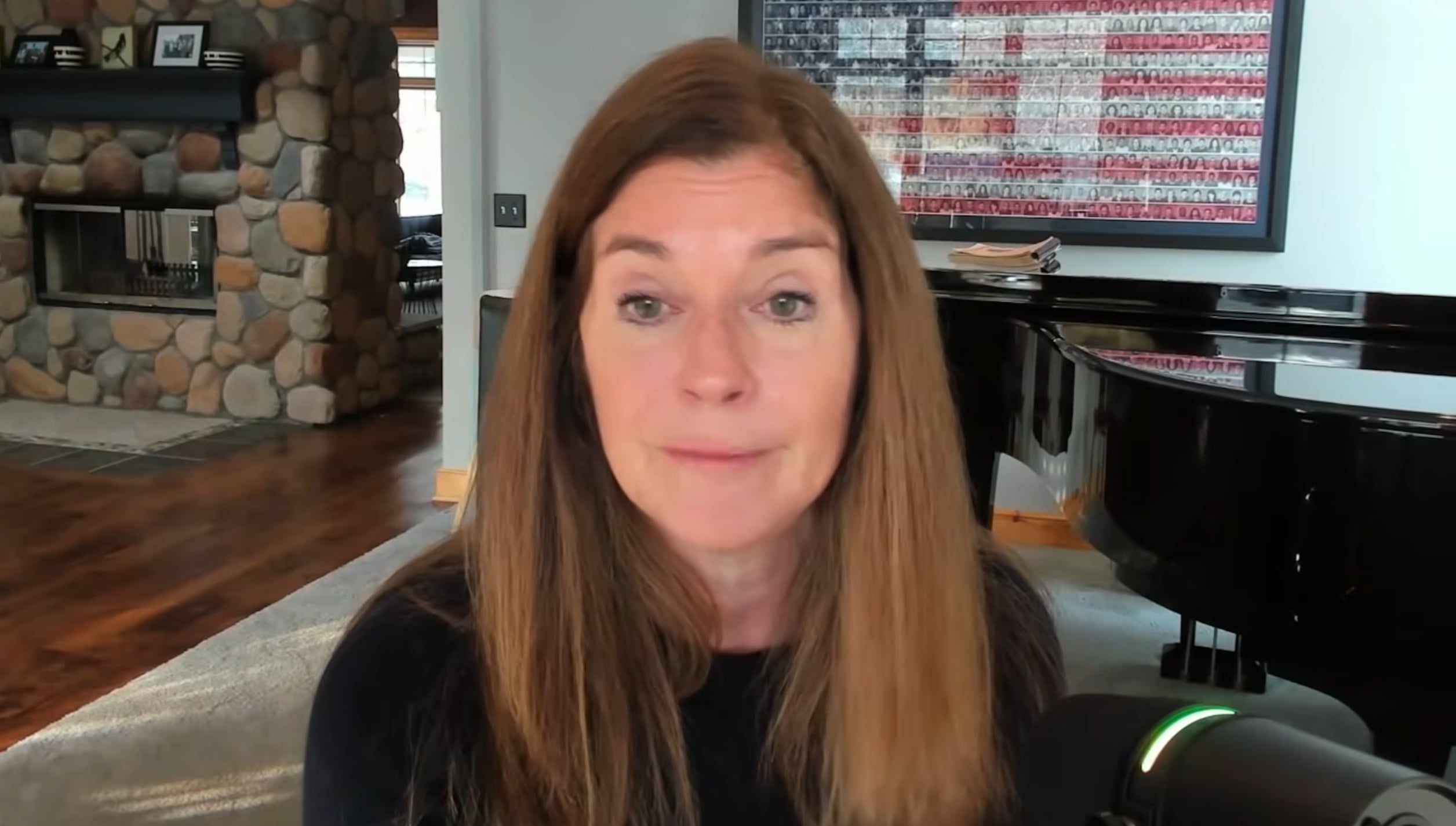
Bridget McCormack knows what it means to run a judicial system. For three years, she led Michigan's entire court system as Chief Justice of the Supreme Court. She saw thousands of judges, thousands of mistakes, and millions of people who could not afford justice. Now she heads something that sounds like science fiction: an AI system that resolves legal disputes instead of people.
The American Arbitration Association (AAA) is celebrating its centennial. McCormack leads it as president and CEO. And under her leadership, the AI Arbitrator was created—artificial intelligence designed to replace human arbitrators in certain types of disputes. It already has its first case. Does that sound crazy? McCormack argues that what we have been doing until now is even crazier.
When a judge mixes up names
"You've met people, right? They're flawed," McCormack says with a smile that suggests she has specific stories in mind. Then she tells one. As Chief Justice in Michigan, she advocated for reforms. A judge from a nearby county criticized her for it at a public forum—claiming that she had said things that were supposedly scandalous. The problem? McCormack was not at that forum at all. Her colleague Megan Kavanagh was there. Both are white women with Irish surnames.
When McCormack called the judge and told him she had an alibi, he replied, "No, you were there." And that was the end of it. What can you do about that? Human judges get tired, hungry, and make mistakes. Studies of wrongful convictions show that errors occurred in 3 to 5 percent of cases. "If you're shooting free throws, that's a low number," McCormack explains. "But if you're landing airplanes? That's not a good number. And criminal justice should be more like landing airplanes."
Arbitration is not just for the wealthy
Most of us have signed an arbitration clause without even realizing it. It is in the terms and conditions for a mobile phone plan, a smart washing machine, or an employment contract. Arbitration is a private dispute resolution system—instead of going to court, you go to a neutral third party, an arbitrator, who resolves the dispute faster and more cheaply. The AAA is the largest nonprofit organization in this field. It administers more than half a million cases each year. Most are disputes between companies, but small businesses and individuals without lawyers are also turning to it with increasing frequency.
McCormack emphasizes one surprising fact: in arbitration, you have a better chance of being heard than in a regular court. Why? Because the court system is overloaded, the rules are complex, and 92 percent of Americans cannot afford a lawyer. Most cases end up being dismissed because of procedural errors—for example, because you did not submit documents in triplicate under Rule 26.4A.
"Look at consumer debt," McCormack says. "That's the most common type of case in state courts. And how many of them are dismissed because the consumer failed to comply with some rule written in Latin? You can't go back to the refrigerator seller and say, 'That court process wasn't fair because I couldn't read Latin.'"
How the AI arbitrator works
For now, the AI Arbitrator only decides construction disputes based exclusively on documents. No witnesses, no examinations. Just contracts, invoices, delivery notes, and emails. Why construction in particular? McCormack explains: "We have a long history with the construction industry. They need speed—when you have a dispute during a major project, you don't want everything to grind to a halt. And AI is already affecting their business, so they're open to new ideas."
The system works as a series of AI agents—about 20 different programs that work together. First, they analyze both parties' claims, the evidence, and the legal framework. Then they go back to the parties and say, "This is how we understood it. Is that correct?" The parties can correct anything that is wrong. The process is repeated until both parties say, "Yes, that is exactly right."
Only then do the decision-making agents begin analyzing the dispute and preparing a decision. And this is where the crucial moment comes: a human arbitrator has the final say. They review the AI's work and only then issue the final decision. "We don't want the agents assessing witness testimony," McCormack admits. "That may come someday, but we're not ready for it today."
Hallucinations and trust
The biggest concern? AI systems hallucinate. They invent facts, data, and entire stories. How can that be prevented in a system meant to make decisions about people's money and rights? "If you took your dispute and all the documents and put them into ChatGPT, you'd get an answer right now," McCormack says. "It might be fine. It might not. But that's not what we built. That's why we're proceeding so narrowly and slowly."
The system is trained on historical AAA cases, with strict rules and human oversight. Every decision is audited. "You need a controlled, transparent, and audited system so people can build trust," she explains. Then she adds a provocative question: "What are we comparing it to? If you think the current human, overloaded justice system is one that people have a great deal of trust in, I'd be happy to introduce you to a few people who would disagree." Appellate courts overturn lower-court decisions in a surprisingly high number of cases. People make mistakes. Perhaps more than we think.
A future that raises questions
McCormack has a clear vision: "Some years from now, we'll think it was crazy to let people drive cars. And we'll also think it was crazy to let a human being, with all their flaws and biases, decide private disputes." Not all cases should go to AI. Criminal cases and disputes against the government must remain in public courts, she says unequivocally. That is where transparency and public oversight are needed.
But what about disputes between an insurance company and a hospital over payment for treatment? What about minor construction disputes? What about the thousands of cases that no one addresses today because doing so is too expensive and complicated? "Imagine if these disputes could be resolved immediately instead of taking two years," McCormack says. "Someone is waiting for the insurance company to tell the hospital that it will pay for treatment. And they die before they get an answer. If you could resolve that dispute instantly, in a system that transparently shows its work... I think some people would say, 'Yes, please. Tomorrow.'"
The first case is already underway in the system. McCormack estimates that within two years, they will have dozens of types of disputes that AI can resolve. In five to ten years? Perhaps the entire legal world will change.
Do we trust AI more than people? That is the question we must ask ourselves. Because the answer is no longer theoretical—the AI judge is here. And it is waiting for the next case.
Source: theverge.com


