

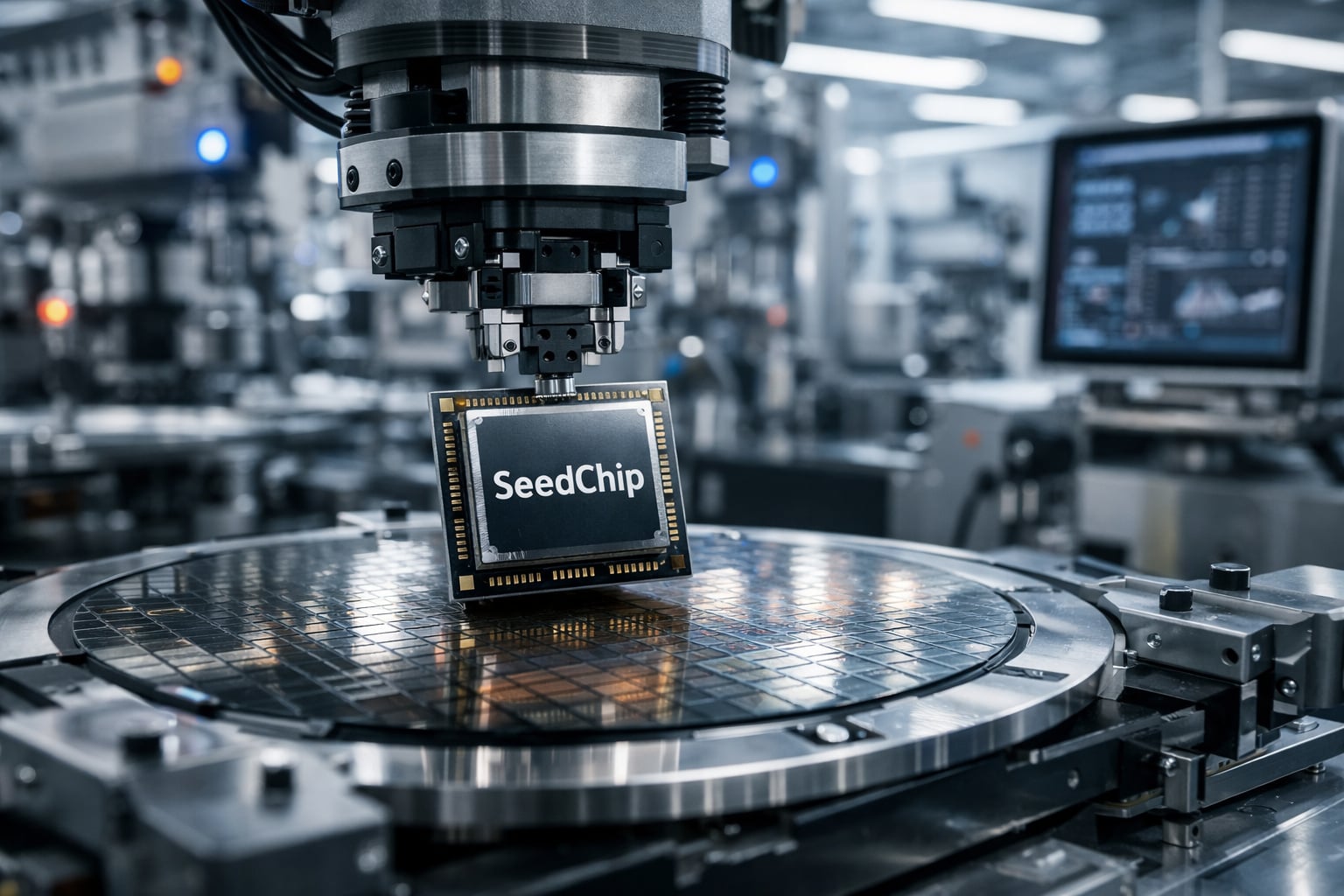
ByteDance, the company behind the popular TikTok, has decided to go its own way. It is developing its own AI chip, and according to sources familiar with the talks, it is already negotiating with Samsung, which is expected to manufacture the chips. Why? Because U.S. sanctions are squeezing Chinese technology companies, and access to advanced processors is becoming a luxury.
This is not just some experiment. ByteDance wants to have the first chip samples by the end of March and plans to produce at least 100,000 units this year. If everything goes according to plan, production could increase to as many as 350,000 units. That is enough to make a real impact.
Why does ByteDance need its own chips?
The answer is simple: control and independence. If you look at global technology players such as Google, Amazon, or Microsoft, they have all been developing their own AI chips for years. Why? To reduce their dependence on Nvidia, which currently dominates the market for advanced artificial intelligence processors.
For Chinese companies, however, the situation is even more complicated. The U.S. government has banned exports of the latest advanced chips to China, pushing ByteDance into a corner. While competitors such as Alibaba and Baidu already have their own chips (Alibaba unveiled its Zhenwu chip last year, while Baidu even sells its chips to external clients), ByteDance has so far lagged behind. But that is now changing.
Samsung as the chip manufacturer
The talks with Samsung are not only about chip manufacturing. According to sources cited by Reuters, they are also about access to memory chips, which are currently extremely scarce. The global boom in AI infrastructure has turned memory into a scarce commodity. And this is precisely where Samsung can offer ByteDance something others cannot—stable supplies.
ByteDance denied that the information about its internal chip project was accurate, but did not specify exactly what was incorrect. Samsung declined to comment on the matter. The typical silence that suggests there may indeed be something in the works.
The SeedChip project
The chip has been given the code name SeedChip and is part of ByteDance's much broader strategy. The company is not only investing in hardware but is also making a major push across the entire AI ecosystem—from large language models to cloud services. How serious is it? ByteDance plans to spend more than 160 billion yuan (roughly $22 billion) on AI technologies this year. More than half of that will go toward purchasing chips from Nvidia, including H200 models, and developing its own chip.
At an internal meeting in January, ByteDance executive Zhao Qi told employees that investment in AI would benefit all of the company's divisions. While he acknowledged that its AI models still lag behind global leaders such as OpenAI, he promised continued support for development.
China is building its own chips
ByteDance is not alone in this race. Alibaba and Baidu already have a head start. Last month, Alibaba unveiled its Zhenwu chip, designed for large-scale AI workloads. Baidu is going even further—not only does it use its own chips, but it also sells them to external customers and is preparing to list its Kunlunxin chip division on the stock exchange.
ByteDance therefore has some catching up to do. But it has one advantage—enormous financial resources and global reach thanks to TikTok and other platforms. If it succeeds in putting its own chip into production and securing stable supplies from Samsung, it could transform its position in the market. Developing proprietary chips is not merely a technological matter. It is a geopolitical game of chess. The U.S. is pressuring China with sanctions, while China is looking for ways to become self-sufficient. And technology companies such as ByteDance find themselves in the middle of this conflict. Meanwhile, Samsung could secure a lucrative customer at a time when competition for advanced chip manufacturing is intensifying.
The question is: Can ByteDance actually bring SeedChip into commercial production? And what will that do to the global AI chip market, currently dominated by Nvidia? We will find out soon—the first samples are expected to be ready in just a few weeks. One thing is certain: The battle for AI chips is only just beginning. And ByteDance has decided that it will not merely stand by and watch.


