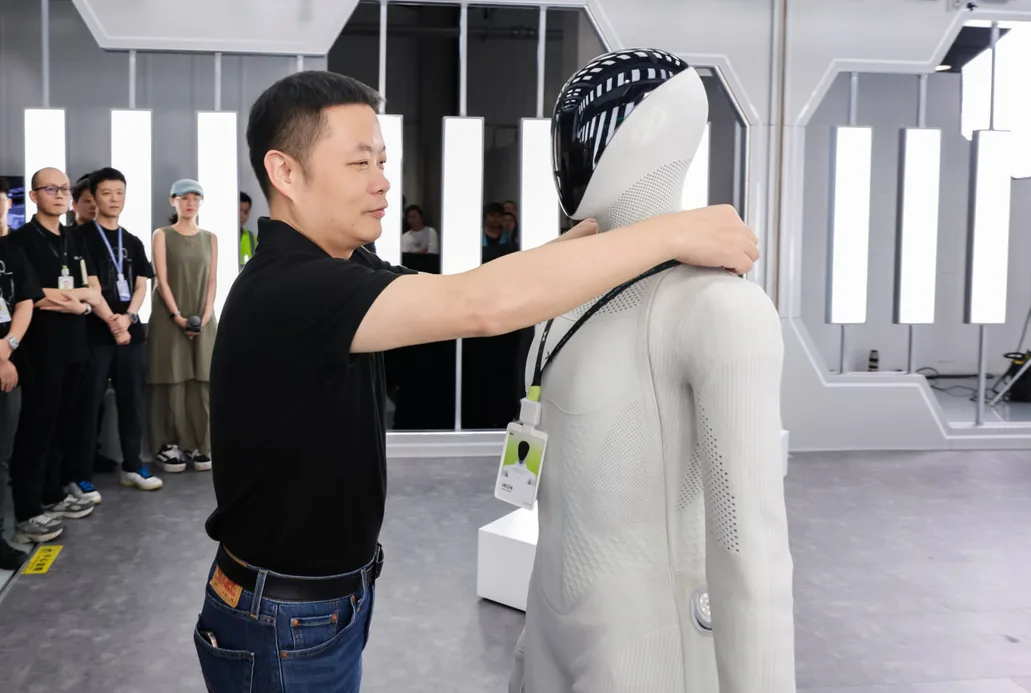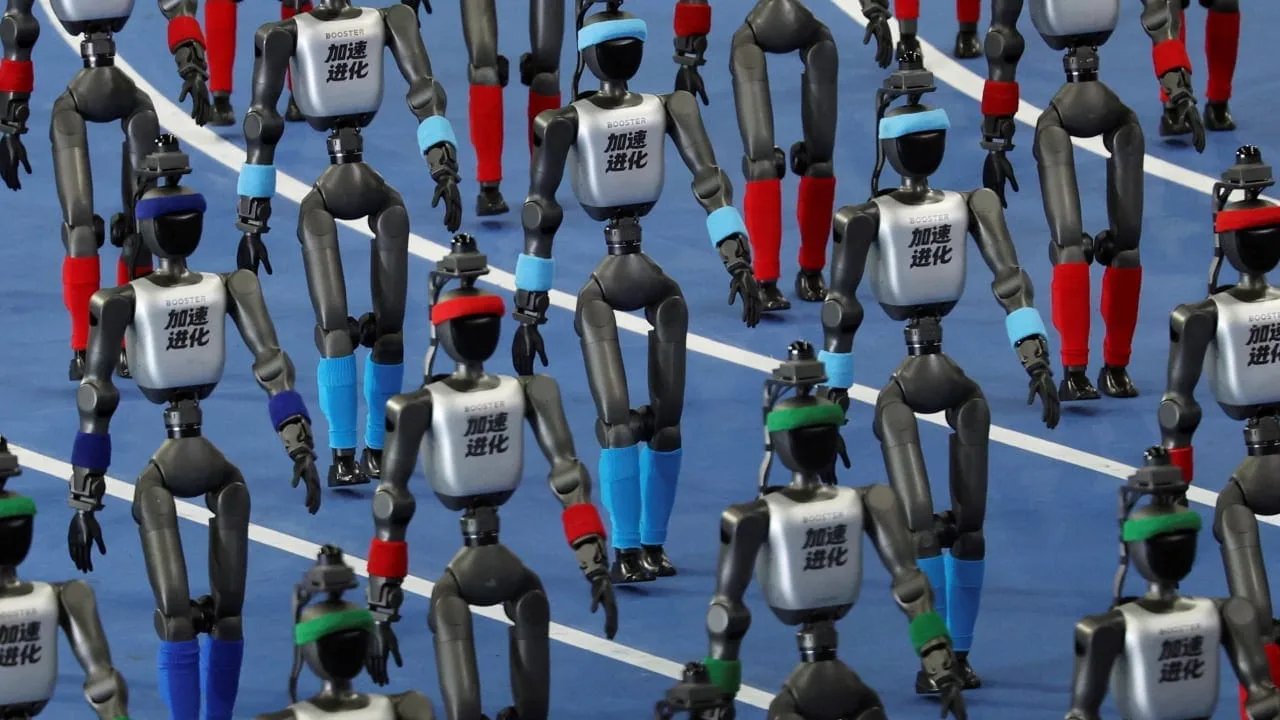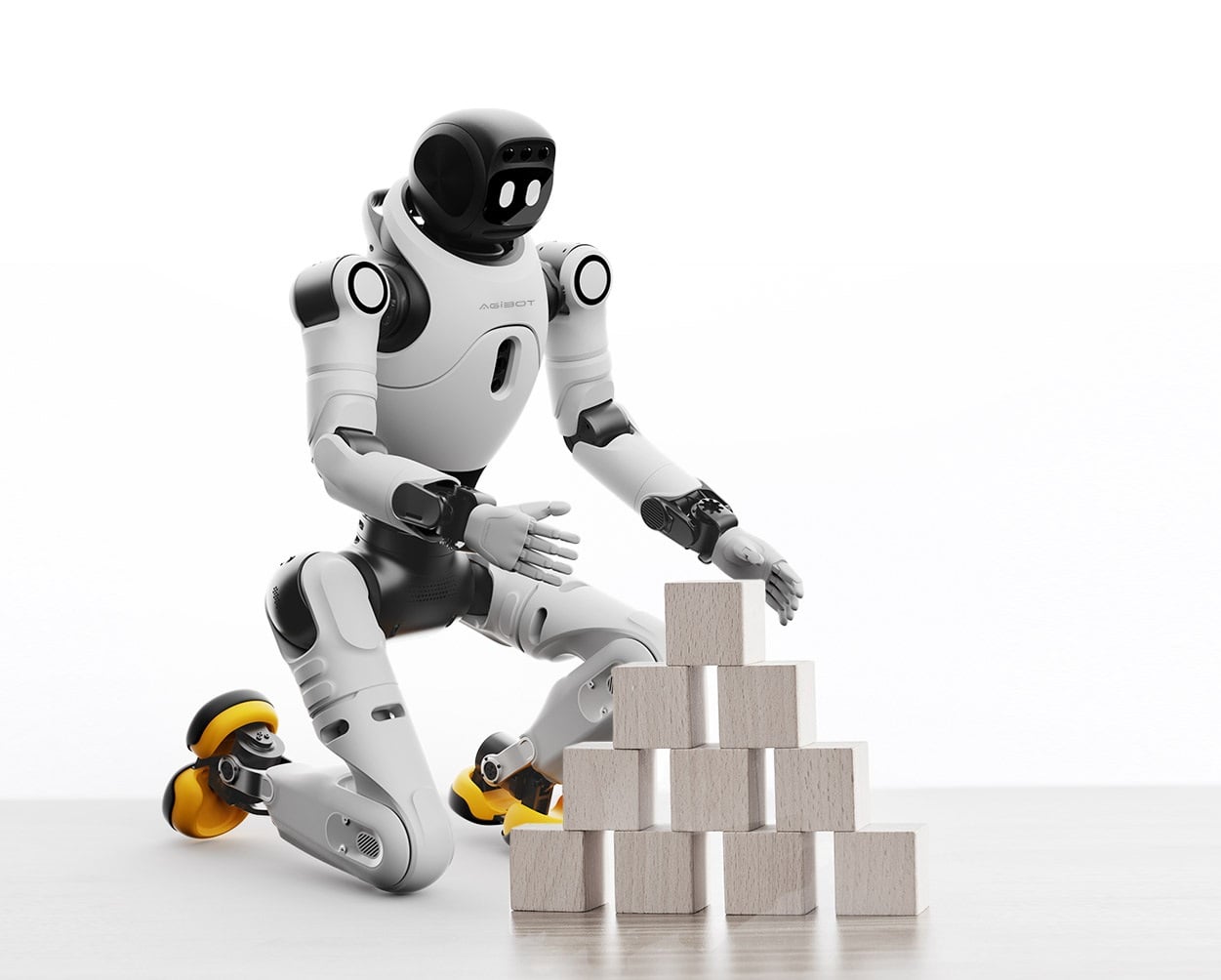
In March, the milestone 10,000th mass-produced Expedition A humanoid robot rolled off the production line in Shanghai, ready for immediate real-world deployment. With this achievement, AGIBOT became one of the first companies in the world to manufacture humanoid robots on a truly industrial scale.
It took the company almost two years to produce the first thousand units. The next four thousand, meaning the increase from 1,000 to 5,000, took approximately one year. And the final five thousand? Just three months. The production rate accelerated more than fourfold.
AGIBOT and its robots
The company Agibot was founded in Shanghai in 2023 under the name Zhiyuan Robotics. Its co-founder, president, and chief technology officer, Peng Zhihui, is one of the best-known figures in Chinese robotics. He says that scaling production is one of the most difficult technical challenges in the entire industry. "Reaching ten thousand units demonstrates our breakthroughs in manufacturing efficiency, the supply chain, and real-world deployment," he said.
The results speak for themselves. According to the analytics firm Omdia, AGIBOT led the global humanoid robot market in 2025, accounting for approximately 39% of global shipments. Over the whole of 2025, the company shipped more than 5,100 units.
Robots on the production line
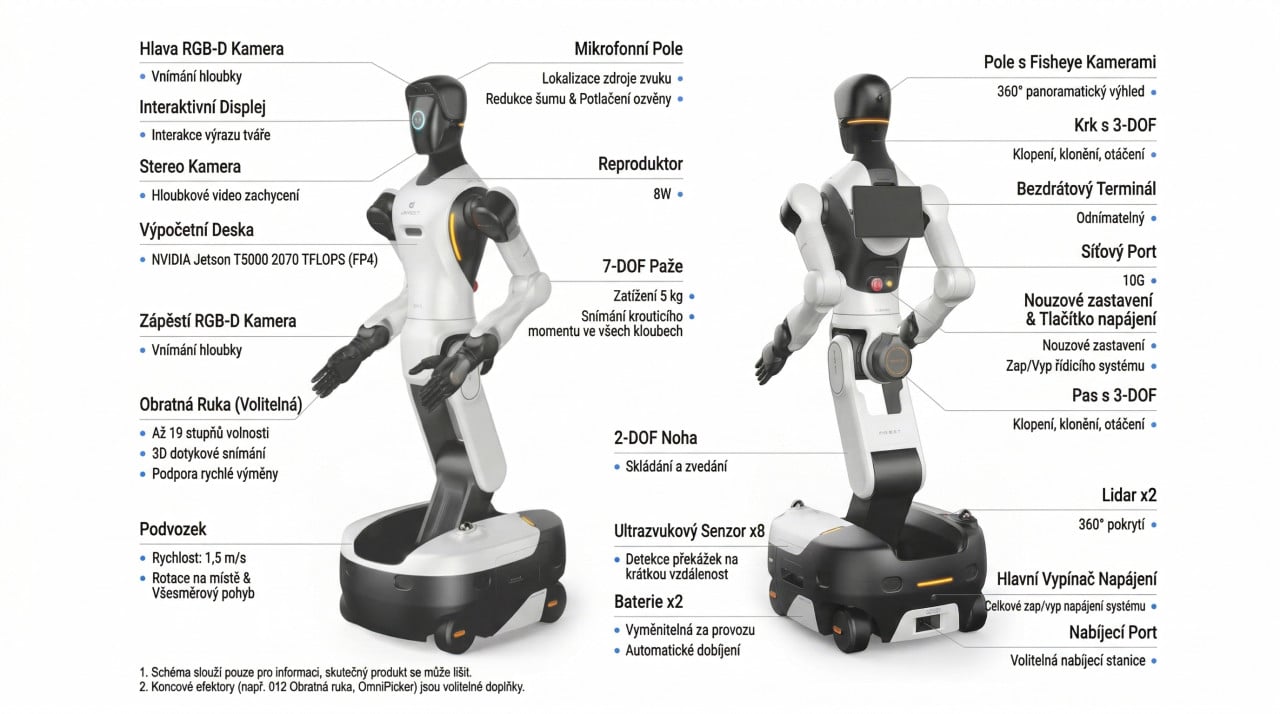
Many companies showcase robotics projects at trade shows. AGIBOT sends them straight to factories. In collaboration with Longcheer Technology, the company deployed the G2 model directly on a tablet production line. There, the robots perform precise loading and unloading at testing stations alongside high-speed conveyors. Following successful validation, a decision was made to add hundreds more units.
Even more impressive figures come from its collaboration with Joyson Electronics, an automotive parts manufacturer. There, the G2 handles high-precision assembly operations with a cycle time of just 12.97 seconds and a success rate of over 99%. The company identified more than a thousand workstations suitable for deploying humanoid robots. In essence, this marks a transition toward replacing manual labor on a large scale.
The learning system behind this is fascinating in its own right. AGIBOT developed its own method of feedback-based learning directly in operation. The robot learns new skills on site, directly on the production line, in tens of minutes rather than weeks. When the product changes, only minimal hardware modifications and rapid retraining are required.
From Singapore through Serbia to Barcelona
AGIBOT is not focusing solely on the Chinese market. At MWC 2026 in Barcelona, the company presented its complete portfolio and launched a global online store. Customers can not only buy robots there, but also rent them. The Robot-as-a-Service offering operates in 17 countries, including Germany, France, Spain, the United Kingdom, and Japan. Rental prices start at 899 euros per day.
In Singapore, the company is testing potential deployments at Changi Airport. It is a demanding, high-security environment with enormous traffic, exactly the kind of test that will show whether the robots can handle the real world.
And then there is Serbia. In early February, Serbian President Aleksandar Vučić personally attended an AGIBOT robot presentation in Belgrade. The company announced plans to begin mass production of 1,000 to 2,000 units per year directly in Serbia, where it sees a stable business environment. Vučić commented that Serbia wants to become the first manufacturer of humanoid robots in Europe.
What do the robots do when they are not in a factory?
Industrial production lines are only part of the story. A significant proportion of the 10,000 units produced work in the logistics, shopping center, hotel, and education sectors. The A2 model, a full-size humanoid, is used at reception desks, for navigation in showrooms, and at cultural events. In December 2025, an A2 appeared as a special guest at a prestigious Fortune event in Macau.
The compact X2 series targets education and entertainment, the four-legged D1 patrols logistics facilities, and the C5 autonomously cleans commercial spaces. The company therefore does not sell just one robot, but an entire suite of solutions for different environments.
Experts from the analytics firm Dao Insights note that the productivity of AGIBOT's industrial robots currently reaches approximately half that of humans, but the company estimates that it will reach 70 to 80 percent by the end of 2026. Wang Xingxing, head of rival Unitree Robotics, said at a Chinese media forum that the real tipping point for humanoid robots will come within two to three years, when the machines will be able to handle 80 to 90 percent of tasks based solely on voice commands.
Shanghai is a robotics powerhouse
AGIBOT's rapid growth is driven not only by technology, but also by China's manufacturing infrastructure. A dense supply chain, low costs for transitioning to mass production, and government support for strategic industries give Chinese companies a lead that is difficult to overcome. In January and February 2025 alone, more than 91,000 industrial robots were produced in China, an increase of 27% year over year. A further 1.5 million service robots were produced, an increase of 36%.
In June of this year, AGIBOT will open a facility operating in compliance with China's first industrial standard for humanoid robots, developed by the China Academy of Information and Communications Technology together with forty other organizations. The industry is no longer the Wild West and is getting its first rules of the game.
Sources: streetinsider.com and techinasia.com