

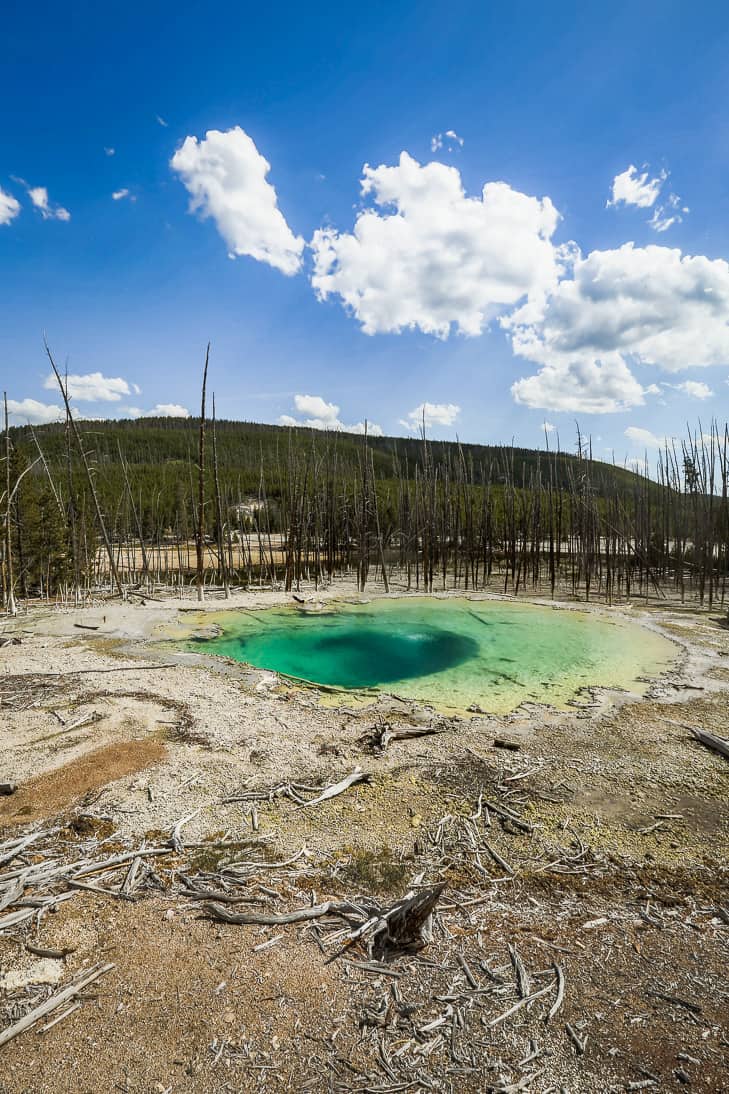
Earthquake Swarms in Yellowstone: AI Reveals Underground Secrets
Imagine one of the most powerful volcanic sites on Earth—the Yellowstone Caldera. This area is known for its geysers, hot springs, and enormous potential, but beneath the surface lies a complex world of earthquakes. A new study, published in 2025, offers a fascinating look at the long-term dynamics of earthquake swarms. Scientists Manuel A. Florez, Bing Q. Li, David R. Shelly, Mia V. Angulo, and José D. Sanabria-Gómez analyzed 15 years of data and revealed how these swarms migrate and what drives them. And what is most interesting about it? Artificial intelligence played a key role, making it possible to process vast amounts of seismic data with unprecedented accuracy.
How AI Helped Make This Discovery
Artificial intelligence has become an indispensable tool in modern geology, and this study is a perfect example. The scientists used advanced deep learning algorithms to detect and catalog earthquakes. Specifically, they applied the EQTransformer model, which analyzes continuous seismic records and identifies seismic wave phases—P-waves and S-waves—with high accuracy. This model was trained on millions of data points manually labeled by experts, allowing it to work reliably with both single-component and three-component stations.
Next came the PhaseLink algorithm, which associates these phases with individual earthquakes using a recurrent neural network (Recurrent Neural Network with GRU layers). This approach processed data from 2008 to 2022 from the WY, PB, MB, and TA networks, resulting in a catalog containing 86,276 earthquakes. Without AI, such an analysis would have taken years of manual work, but it enabled the scientists to obtain a highly accurate catalog with a relative depth error of around 102 meters. AI not only accelerated the process but also revealed details that would otherwise have remained hidden, such as hypocenter migration and complex fault structures.
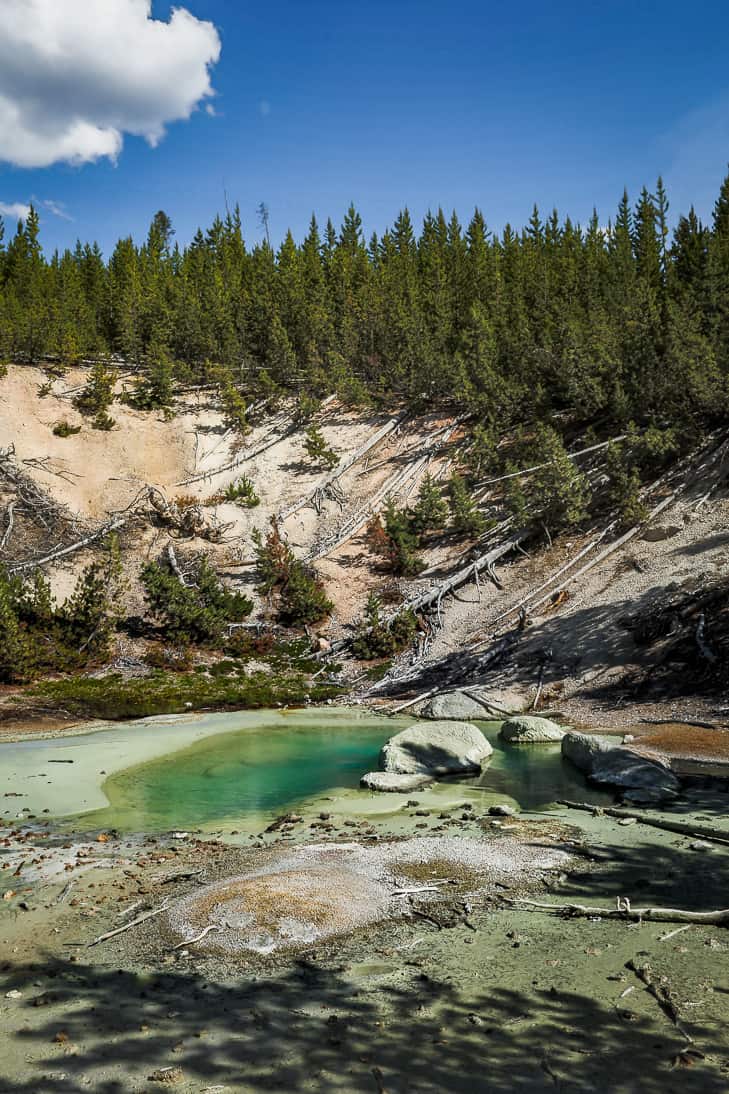
Characteristics of Earthquake Swarms in Yellowstone
The Yellowstone Caldera is one of the most seismically active places in the world, with a high heat flow of 1.4 to 2.8 W/m², many times higher than the average in the western United States. The study showed that more than half of the earthquakes (52%) cluster into swarms characterized by the expansion and migration of hypocenters. These swarms are often separated by long periods of quiescence but occur near previous activity.
For example, the 2010 swarm on the Madison Plateau contained 2,103 events with an average leaf depth of 35.9, which is greater than in other regions. Migration occurred in various directions—upward, downward, and laterally—along a structure dipping 55 degrees toward the east-northeast. The scientists suggest that these swarms are driven by the slow diffusion of aqueous fluids and rapid episodic injections that breach permeability barriers. Inside the caldera, swarms tend to migrate upward (average migration ΔZ = 1.4 km), while outside it, migration is minimal or downward.
Fault Structure and the Role of the Magmatic Reservoir
Thanks to the precise catalog, the scientists analyzed the fault structure using fractal dimension (f_dim). Inside the caldera, the faults are rougher and less developed (f_dim between 1.92 and 2.12), suggesting immature structures influenced by fluids. In contrast, faults outside the caldera are more planar (f_dim around 1.63), corresponding to more mature tectonic systems.
An interesting discovery is the depth segmentation of swarms. For example, the July 2021 swarm beneath Yellowstone Lake had 657 events, with the root earthquake at a depth of 9 km. Two separate clusters appeared here: a deeper one (8–12 km) with an inclined structure and a shallower one (less than 4 km) with a diffuse core. Between them is an aseismic gap at 4–8 km, corresponding to an S-wave anomaly (V_s below 2.3 km/s), interpreted as an upper-crustal reservoir containing partially molten mush. This reservoir influences the depth range of seismicity and enables the transport of magmatic fluids from ductile zones into brittle regions.
Long-Term Patterns and Implications
The study revealed that swarms often occur near previous ones but are separated by long periods of quiescence. For example, the 2021 swarm beneath the lake was only hundreds of meters from the 2008 swarm. Similar patterns can be seen in the northern corridor, where activity shifted in an east-west direction, as it did from 2014 to 2022. At Maple Creek in 2017–2018, clusters appeared adjacent to one another but with pauses between them.
These patterns suggest that the slow diffusion of fluids over a period of years prepares the ground for the rapid breaching of barriers, triggering short swarms lasting weeks. This is associated with deformation, as in Norris Geyser Basin, where rapid uplift and subsidence from 2013 to 2018 were linked to the accumulation of volatiles at a depth of 2–3 km. Overall, the study highlights how hydrothermal processes and the magmatic reservoir control seismic activity and provides better context for monitoring hazards in such systems.
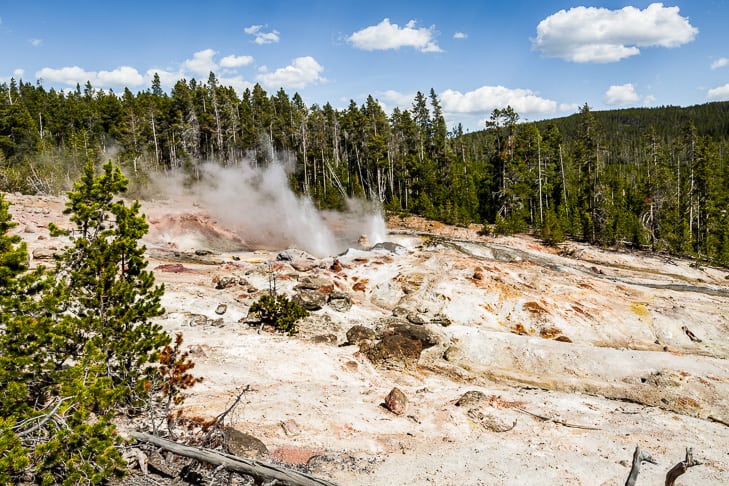
This research not only expands our knowledge of Yellowstone but also shows how AI is transforming geology. It allows us to look underground with a level of detail that was previously unattainable and gain insights that will help predict future activity. If you are interested in the volcano beneath your feet, this is a story worth following!


