

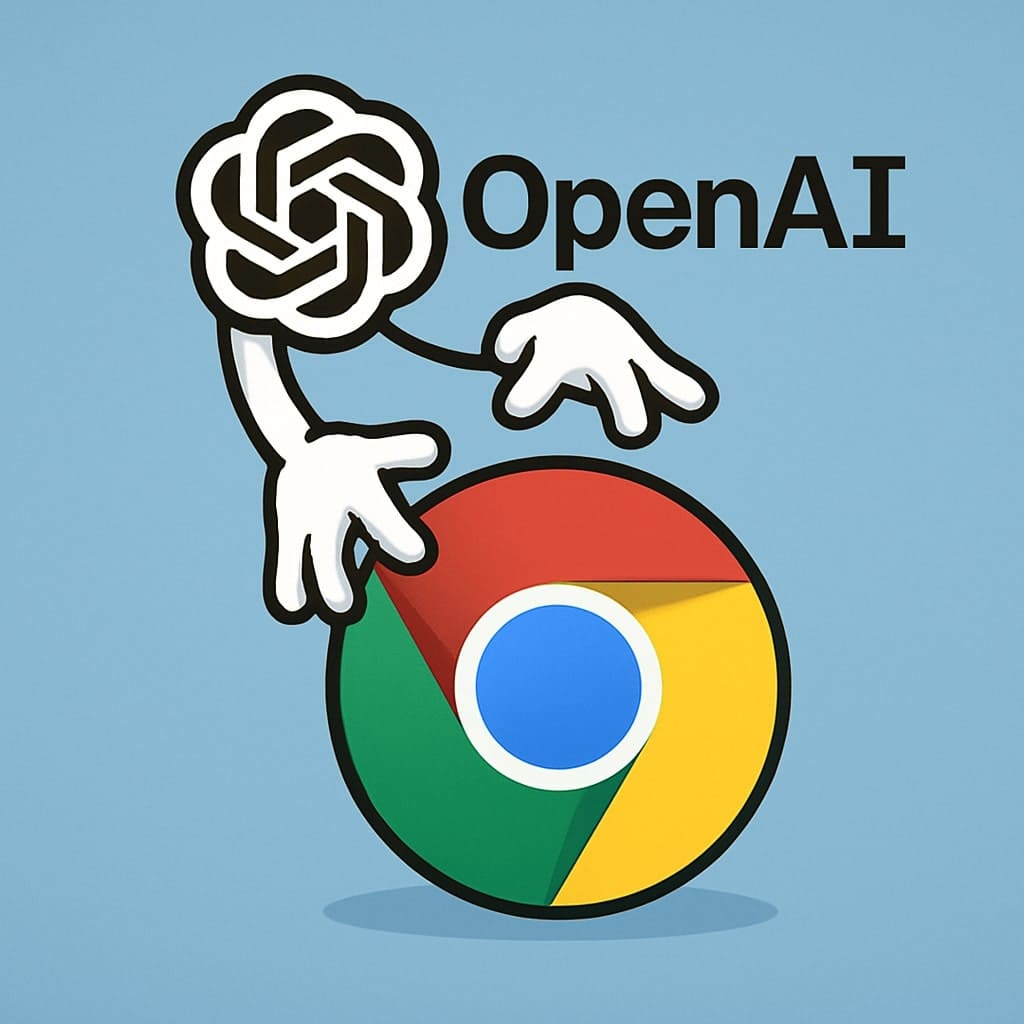
Why Would OpenAI Want to Buy Chrome?
In recent weeks, surprising news has emerged in the technology world – OpenAI, the creator of the popular ChatGPT, has expressed interest in buying the Google Chrome web browser if regulators were to force Google to sell it. This possibility arose in the context of ongoing antitrust proceedings in which the U.S. Department of Justice (DoJ) prevailed in its lawsuit against Google over an illegal monopoly in the search market. Let’s take a look at why Google could be forced to sell Chrome and why the browser could be so valuable to OpenAI.
Antitrust Proceedings Against Google and the Possible Sale of Chrome
Google came under regulators’ scrutiny several years ago because of its dominant position in the search engine market. In August 2023, Judge Amit Mehta of the federal court ruled that Google was indeed abusing its dominant position in the market, confirming the allegations brought by the U.S. Department of Justice. According to the court, Google created and maintained a monopoly through exclusive contracts that ensured its search engine was the default choice on most devices. These agreements included billion-dollar payments to manufacturers such as Apple, as well as the integration of Google Search into its own Chrome browser, which controls approximately 64% of the global browser market. One possible remedy now under consideration is that Google could be forced to divest some of its key assets, including the Chrome browser itself. This could lead to a significant redistribution of power in the digital ecosystem and open the door for new players – including companies specializing in artificial intelligence, such as OpenAI.
Why Does OpenAI Want Chrome?
OpenAI’s interest in Chrome is not accidental and has several strategic reasons:
- Creating an “AI-first” browser
Sam Altman, CEO of OpenAI, has previously suggested that the future of the internet lies in browsers primarily oriented toward artificial intelligence. Owning Chrome would allow OpenAI to create an entirely new way of browsing the internet, where ChatGPT or similar language models would be deeply integrated into the very core of the user experience. “The browser is a key point of contact between people and the internet,” said a source close to OpenAI. “Whoever controls the browser can shape how people interact with information online.” - Access to a massive user base
With a 64% market share, Chrome represents a direct path to millions of users every day. For OpenAI, which is seeking the broadest possible adoption of its AI technologies, this user base is immensely valuable. Instead of having to acquire new users with difficulty, OpenAI could immediately offer its services to hundreds of millions of people around the world. - Overcoming barriers to search integration
OpenAI previously attempted to establish a partnership with Google to access its search technology, but was rejected. Now, it appears that direct ownership of Chrome could be a way to bypass these obstacles. OpenAI could create its own search tools directly in the browser, competing with Google on its home turf. - A competitive advantage over rivals
At present, OpenAI competes not only with Google, but also with other technology giants such as Microsoft (which has invested heavily in OpenAI), Meta, and Anthropic. Owning Chrome would elevate OpenAI to an entirely new level in this competitive battle, especially in the area of integrating AI into everyday internet use.
Why Should Google Sell Chrome?
From the regulators’ perspective, there are several reasons why separating Chrome from Google could help restore healthy competition in the market:
- Disrupting vertical integration
Google currently benefits from vertical integration across numerous services – from the Android operating system through Chrome to its search engine and advertising systems. This integration allows it to strengthen individual parts of its ecosystem and push out competitors. Separating Chrome would disrupt this synergy. - Creating space for innovation
Critics argue that Google lacks sufficient motivation to significantly innovate Chrome because it is satisfied with the current state of affairs. A new owner could bring fresh energy and approaches to browser development, taking the user experience to a new level. - Reducing the ability to collect data across platforms
Chrome is an important source of data for Google about user behavior, which it then uses for ad targeting and the development of its services. Separating Chrome would limit Google’s access to this data, potentially creating more balanced conditions in the online advertising market.
Potential Impacts of Selling Chrome to OpenAI
If OpenAI were actually to acquire Chrome, we could expect a number of significant changes:
- A revolution in web browsing
OpenAI would likely integrate advanced AI features directly into the browser. Users could interact with the web through natural language, have AI analyze and summarize page content, or automatically translate and explain complex concepts. - New competition for Google Search
With direct access to users, OpenAI could develop a competing search tool that would leverage the strengths of large language models – the ability to understand context and provide specific answers instead of merely offering links. - Changes in the attention economy
AI integrated into the browser could change how users consume content online. This could have far-reaching consequences for publishers, content creators, and the advertising industry.
The Future of the Internet at Stake
A browser with deeply integrated AI could raise new concerns about privacy and data management. OpenAI would have to address how user data would be used to train models and whether users would have control over what happens to their data.
For regulators, this situation represents a complex challenge: how to balance the need to disrupt monopolistic practices with the risk of merely replacing one form of concentrated power with another. For users, it will be crucial to monitor how a potential new owner of Chrome approaches privacy protection and transparency. Whether or not Chrome ultimately becomes part of OpenAI, the very discussion of this possibility signals that we are approaching a new era of the internet, in which artificial intelligence will play a central role in how we obtain, process, and interact with information online.


