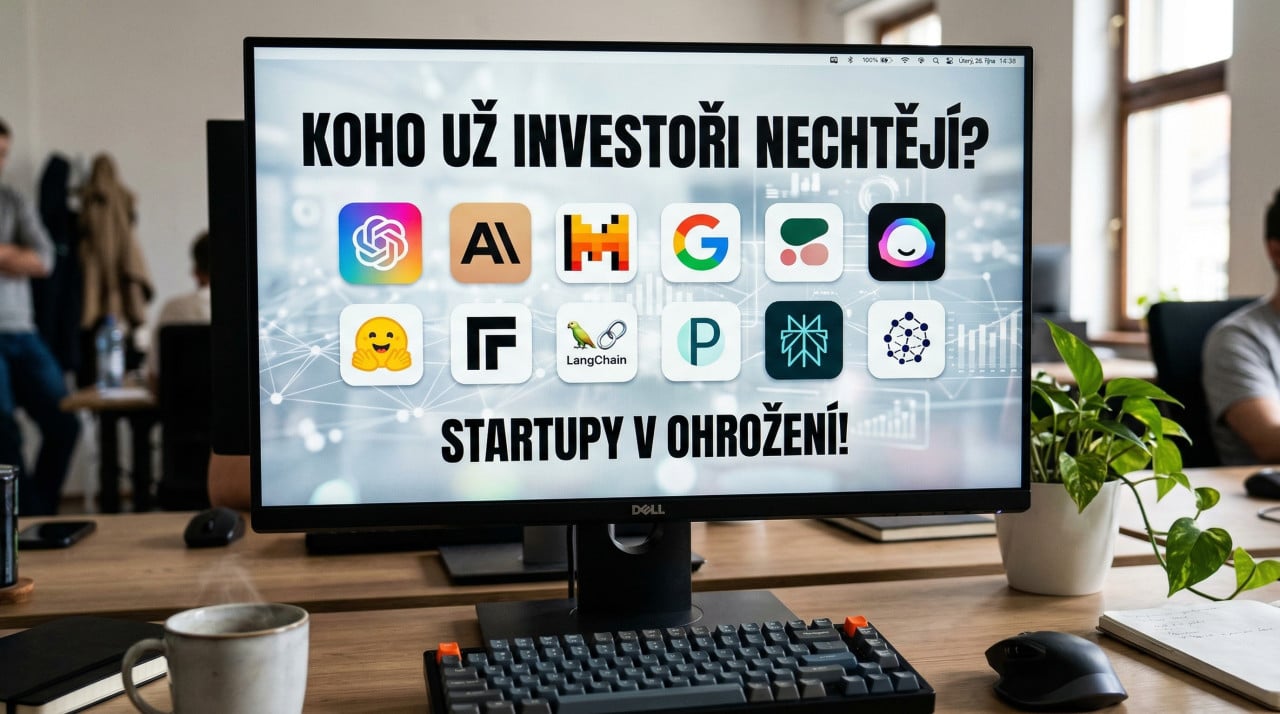
Billions of dollars have flowed into AI companies like water over the past few years. Every startup added "AI" to its name, and every startup pitch promised a breakthrough. But investors noticed. And they started becoming more selective. Much more selective.
TechCrunch asked several experienced venture capitalists a simple question: what no longer interests you at all in AI SaaS (software as a service) companies today? The answers were surprisingly candid—and perhaps a little painful for many startup founders.
What are investors no longer interested in?
Aaron Holiday, managing partner at 645 Ventures, did not mince words. Startups building tools that merely provide a thin wrapper around what already exists, generic horizontal tools, lightweight project management, or superficial analytics simply do not interest him. Why? Because an AI agent can now handle all of that on its own.
Think about that for a moment. If your product does exactly what a well-configured AI agent can do at a fraction of the cost and time, what value are you actually providing?
By contrast, Holiday says he is interested in companies building AI-native infrastructure, vertical SaaS with proprietary data, action-oriented systems (that is, systems that help users actually complete tasks), and platforms deeply embedded in processes that companies cannot operate without.
Without proprietary data, you are as transparent as glass
Abdul Abdirahman of F-Prime offered another perspective. Generic vertical software without proprietary data moats does not interest him. And Igor Ryabenkiy, founder and managing partner of AltaIR Capital, went even further.
"If your differentiation lives mainly in the user interface and automation, that is simply not enough today," Ryabenkiy said. "The barrier to market entry has fallen, making it significantly harder to build a real moat."
New companies must build around true ownership of workflows and a clear understanding of the problem from day one. Huge codebases are no longer an advantage. What matters is speed, focus, and the ability to adapt quickly. And one more thing: rigid per-user pricing models will become increasingly difficult to defend. Usage-based models make much more sense.
Cursor vs. Claude Code: A warning sign for the entire market
Jake Saper, general partner at Emergence Capital, offered a very specific example. He described the difference between Cursor and Claude Code as a "canary in the coal mine" for the entire SaaS world.
"Cursor owns the developer workflow, while Claude Code merely executes the task," Saper explained. "Developers are increasingly choosing execution itself over the process."
What does he mean? Products that try to attract as many people as possible and keep them using the product constantly face an uphill battle. Agents are taking over workflows. Before Claude existed, companies fought to get users to work inside their applications. Whoever managed that had won. But if agents are doing the work, who cares about your application?
Saper also pointed to integration tools. They are becoming less attractive, especially as Anthropic's MCP protocol (Model Context Protocol) makes it easier to connect AI models with external data and systems. No one needs to download dozens of integrations or build their own anymore. MCP is enough.
"Being the intermediary between systems used to be a major competitive advantage," Saper said. "Soon it will be just a standard service that everyone offers."
Generic tools are almost dead
Ryabenkiy was very direct when describing the companies that struggle to raise money today. Generic productivity tools, project management software, basic CRM system clones, and simple AI wrappers built on existing APIs fall into the category investors avoid.
"If a product is primarily just an interface layer without deep integration, proprietary data, or embedded process knowledge, strong AI-native teams can quickly rebuild it," he said. "That is what makes investors nervous."
Abdirahman confirmed this from another angle. Workflow automation and task management tools that coordinate human work become redundant if agents simply perform the tasks themselves. As an example, he mentioned publicly traded SaaS companies whose shares are falling while new AI-native startups emerge with better and more efficient technology.
What still attracts investors: Depth, data, and process ownership
So what actually attracts investors? Ryabenkiy summed it up as follows: depth and expertise, tools embedded in critical processes, data ownership, and knowledge of a specific domain.
He recommends that companies deeply integrate AI into their products and update their marketing to reflect that. But above all: investors are shifting capital toward companies that own workflows, data, and expertise. And away from products that can be copied without much effort.
It makes sense. The AI world is moving so quickly that a mere user interface layer on top of someone else's model is not enough. Anyone who wants to survive must have something others cannot easily copy. Proprietary data. Proprietary processes. Proprietary knowledge of the problem.
And that is a lesson that applies not only to startups seeking investment, but to every company trying to find its place in the AI world today.
Source: techcrunch.com