

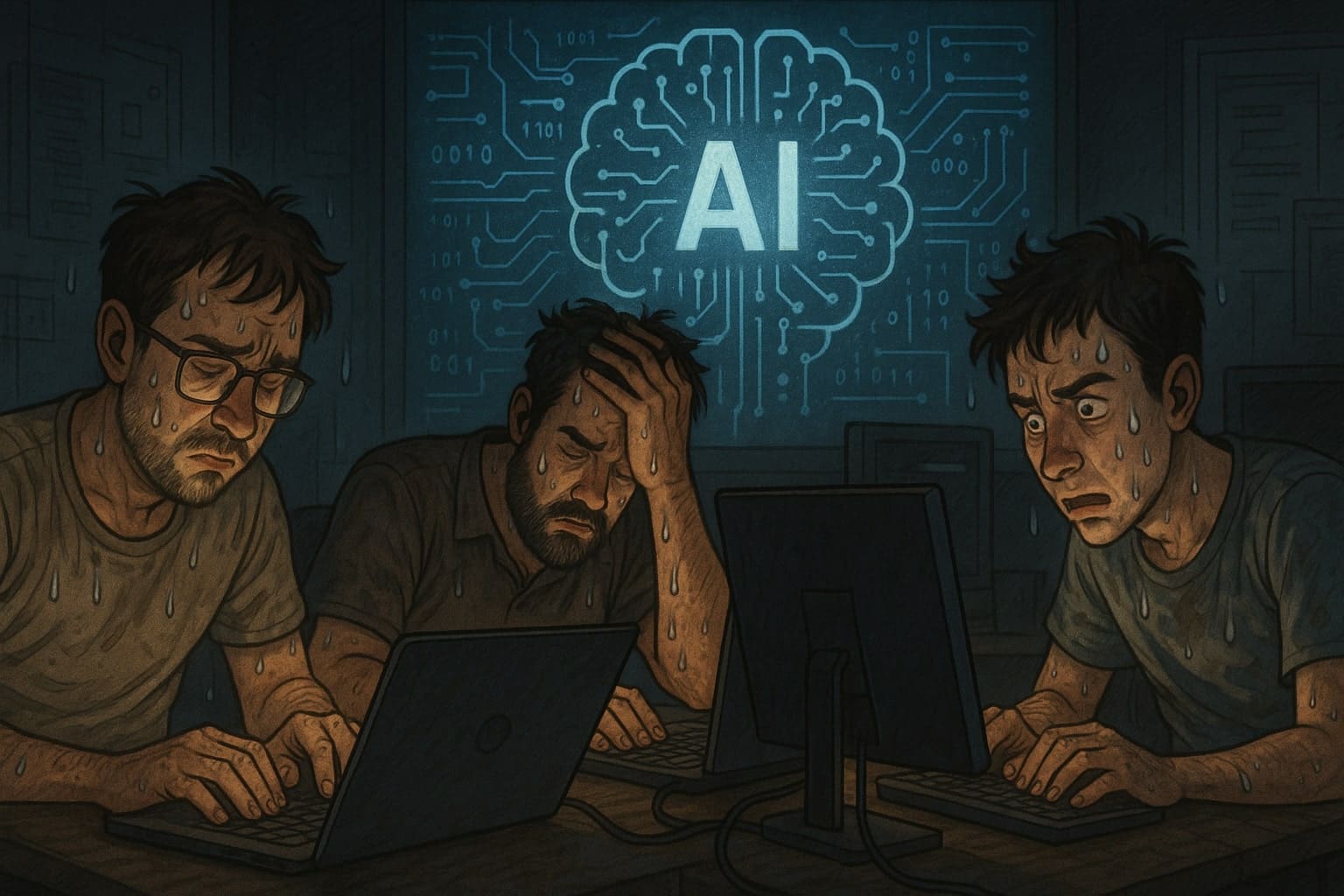
Why Are AI Startups Pushing 80-Hour Workweeks? Overwork in Silicon Valley
Recently, a troubling trend has emerged in the field of artificial intelligence (AI): many startups are introducing extremely long working hours reminiscent of China's banned "996" model—9 a.m. to 9 p.m., six days a week. This approach, long considered unacceptable in Europe and the US because of the risk of burnout and health problems, is now becoming the norm in the race to achieve artificial general intelligence (AGI). According to information from industry blogs and surveys, this phenomenon is spreading rapidly because founders believe it is the only way they can stay ahead of the competition. For example, one post discusses how companies openly advertise long hours in job listings to attract only the toughest candidates.
Examples of Extreme Work Cultures in Practice
Among the most visible examples is the startup Cognition, where employees are expected to work more than 80 hours a week. CEO Scott Wu openly acknowledged this in a post, saying that the team often works weekends and late into the night, with some even living directly in the office. According to him, this "extreme performance culture" is made clear during recruitment so that no one is surprised. Lovable takes a similar approach, emphasizing long hours and a fast pace in job descriptions because of looming AGI deadlines.
Other companies are following suit. At Replit, CEO Amjad Masad shared photos of the team toiling away in the office at midnight to meet a major launch deadline. xAI engineer Zeeshan Pate described how the team "toils away in the office day and night." At CodeRabbit, the team was still fine-tuning products at 2:30 a.m. at its San Francisco headquarters. Icon, a startup focused on creating ads, goes even further—the founder and CEO claims that they hire only the "top 0.01% of engineers with no life" and expect them to work seven days a week. Even at Google's AI unit, co-founder Sergey Brin told employees that "60 hours a week is the productivity sweet spot."

Reasons Behind This Pressure
This trend is driven primarily by the race for AGI, which many see as the point when the market closes and the winner takes all. Founders believe AGI will arrive within months, so they are pushing as hard as possible to ensure their company gets there first. For example, in the case of Windsurf, which was acquired by Google after ten months, employees likely received millions in compensation for a short but intense period of work. Another motivation is the promise of enormous wealth—for many, working 80 hours a week for a few years is appealing if it means receiving ten million dollars at the end.
Online sources indicate that this pressure is also being intensified by enormous investments in AI, which exceeded $100 billion in the first half of 2025. Competition is so fierce that companies such as Magic.dev risk losing their lead if they do not launch products quickly—for example, their model with a 100-million-token context window was surpassed by Google and Claude, which now support up to 2 million tokens.
Risks and Long-Term Impacts
Although these hours promise rapid success, they often lead to the opposite. Long shifts cause burnout, higher rates of illness, and employee turnover. Companies also exclude talented people with families or hobbies, narrowing the candidate pool. For example, Cognition boasts about its culture, but its Devin tool was one of the least-mentioned AI products in surveys. Despite seven-day workweeks, Icon is now pivoting toward an ordinary advertising agency charging $1,000 a month, which is not a billion-dollar business.
Additional information from websites shows that this trend is sparking debates about ethics and health—many warn of long-term problems such as declining productivity and personal crises. Nevertheless, extreme working hours appear to be becoming standard in AI sectors, driven by fear of missing out.
Final Thoughts
This trend is not entirely new—older engineers recall similar marathons in the 1970s with the first computers, when people worked through the night with beer in the cooling system. Today, it is about the excitement surrounding AI, but the question is: how long can it last? If you are looking for a job in AI, expect pressure to work long hours, but consider whether it is worth the risks. Ultimately, the tech world may return to normal once AI becomes a standard part of every company.
Source: blog.pragmaticengineer.com


