


WHAMM: When Artificial Intelligence Begins to Truly "Understand" the World Around Us
Microsoft is once again pushing the boundaries of what is possible in the field of artificial intelligence. Their new WHAMM system can model interactive environments in real time and predict the physical interactions of objects. The technology, demonstrated on the legendary game Quake II, is generating both enthusiasm and controversy.
What Is WHAMM?
Imagine an artificial intelligence that not only "sees" the objects around it, but truly understands their three-dimensional structure, can predict their movement and interactions with the environment. That is precisely what WHAMM (World-grounded Holistic Articulated Motion Model) is—a breakthrough technology from Microsoft laboratories that takes AI's capabilities in spatial perception and modeling to an entirely new level. Unlike traditional computer vision systems, which work primarily with a 2D representation of an image, WHAMM creates a complex 3D mental model of the world that includes objects, their articulated parts, and physical properties. This model is continuously updated based on new observations and enables the system to predict how objects will move and respond to interactions. "WHAMM represents a fundamental shift in how AI systems perceive and interpret the physical world," explains Microsoft's research team. "It is not just about recognizing objects in an image, but about truly understanding their three-dimensional structure, movement, and mutual interactions."
How Does WHAMM Work?
The technical side of WHAMM is a fascinating blend of several advanced AI techniques. The system operates in several interconnected steps:
- Object and Part Detection - Identification of all relevant objects in the scene and their articulated parts (e.g., doors and their hinges).
- 3D Reconstruction - Creation of a three-dimensional model of objects based on visual inputs, including their geometry and texture.
- Motion Estimation - Analysis of object movement over time and identification of their motion patterns.
- Physics Modeling - Implementation of basic physical principles to predict how objects will behave during interactions.
- Continuous Updating - Constant refinement of the mental model based on new observations and interactions.
The key innovation is that WHAMM can perform this complex process in real time, opening the way to practical applications in many fields—from robotics and augmented reality to the gaming industry.
Quake II as the Perfect Demonstrator
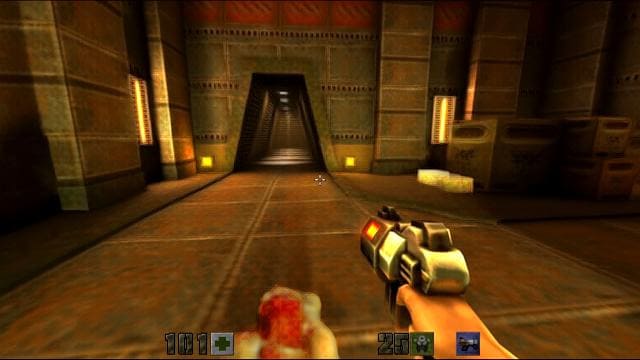
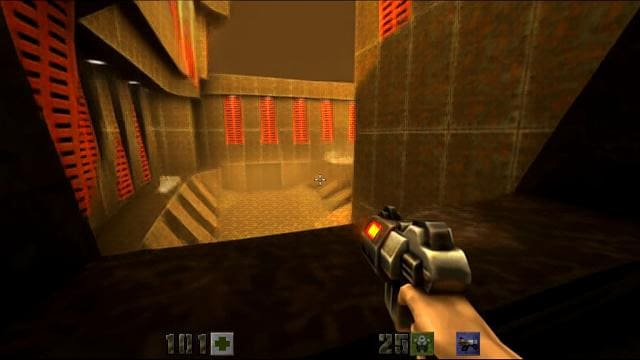
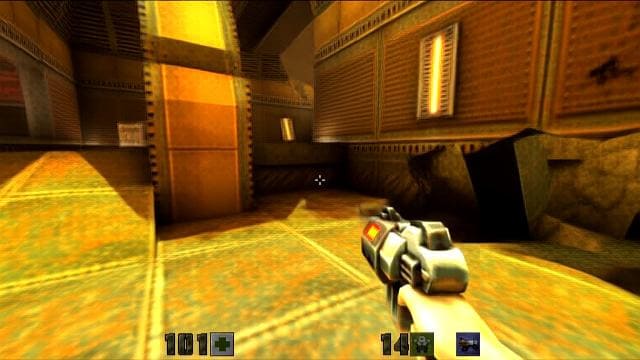
Microsoft decided to present WHAMM's capabilities in a way that immediately captured the attention of technology enthusiasts and the gaming community alike—through a demo version of the legendary game Quake II. This implementation, referred to as Muse-driven Quake II, uses the AI model Muse (which is part of the Microsoft Copilot family) to enhance the visual presentation and physical interactions in the classic 1997 FPS game. "Quake II is an ideal platform for demonstrating WHAMM's capabilities," explains Jonathan Deutsch, one of the project's developers. "It offers a complex 3D environment with numerous interactive elements, while also being simple enough to allow for the efficient implementation and testing of new technologies." The demo version of the game looks remarkable. The original low-poly models and texture-limited environment have been transformed into a detailed, realistic-looking world. The game's enemies, weapons, and environment have gained a significantly higher level of detail, improved lighting, and more convincing physical behavior.
Mixed Reactions from the Gaming Community
As is often the case with similar projects, reactions to Muse-driven Quake II have been highly varied. While technology enthusiasts appreciate the innovative approach and impressive demonstration of AI capabilities, part of the gaming community has expressed certain concerns. The Verge notes that "while the technical side is undoubtedly impressive, the enhanced version of Quake II loses some of its distinctive visual style, which is an integral part of the experience of this cult classic for many fans." On the other hand, PC Tuning emphasizes the technology's potential: "This is not just a cosmetic enhancement—AI is demonstrating an ability to understand complex 3D environments and interactions, opening the door to much more ambitious applications in the future." A lively discussion has unfolded among readers on IGN. Many point to ethical questions associated with using AI to "remake" existing works of art. One commenter wrote: "Quake II is a work of art from its time. Its visual style was deliberate and reflects both the technological limitations and aesthetic preferences of its creators. Changing it with AI is like colorizing black-and-white films—technically impressive, but artistically debatable." Other commenters, however, take a more pragmatic view of the project: "This is just a tech demo. No one is saying we have to replace the original Quake II. It is a showcase of the capabilities of a new technology, and in that respect it is exceptionally impressive."
The Future Is in 3D
Although the Quake II demo is attracting the most attention, WHAMM's potential extends far beyond enhancing old games. In its research paper, Microsoft suggests several areas where this technology could find applications:
Robotics and Autonomous Systems
Robots equipped with WHAMM could navigate and interact with the real world much more effectively. The ability to predict the movement of objects and understand their physical properties is essential for the safe and efficient handling of items.
Augmented and Virtual Reality
AR and VR applications could harness WHAMM's ability to create accurate 3D models of real-world environments, enabling much more realistic and interactive experiences.
Gaming Industry
In addition to enhancing older games, WHAMM could revolutionize the procedural generation of game worlds, AI opponents with better spatial awareness, and more dynamic gaming environments.
Digital Twins
In an industrial context, WHAMM could improve the accuracy of digital twins—virtual representations of physical systems or processes used for simulation and optimization.
"This technology provides AI systems with a much richer and more detailed understanding of the world," says one of the project's lead researchers. "This is a crucial step toward creating truly intelligent systems that can not only respond to stimuli, but also predict and plan in complex 3D environments."
Copyright, Artistic Integrity, and Security
The Quake II demo is reopening the discussion about the extent to which it is acceptable for AI systems to "rework" existing works of art. Where is the line between innovation and interference with the original creators' artistic vision?
A system capable of modeling and analyzing 3D environments in such detail also raises questions about privacy. How can we ensure that these technologies are not misused for unwanted surveillance or the mapping of private spaces?
Computational Demands and Availability
WHAMM is a computationally demanding system. At a time when the environmental impact of training and operating AI models is being discussed increasingly often, this aspect must also be considered. According to The Verge, the Microsoft team acknowledges these challenges and is actively working to address them. "Our goal is to develop technology that is not only powerful, but also responsible and accessible," Microsoft states in its announcement. "This includes optimizing computational requirements and creating clear ethical guidelines for its use."
A Step Toward Truly Intelligent Systems
WHAMM offers a fascinating glimpse into the future of artificial intelligence. It is not just another addition to the growing family of AI models, but a system that fundamentally changes the way AI systems can perceive and interact with the three-dimensional world. The Quake II demo, regardless of the controversies it may provoke, perfectly illustrates this technology's potential. It shows a future in which AI will not merely be a passive observer, but an active participant capable not only of responding to its surroundings, but of truly understanding them in all their complexity. As PC Tuning notes: "WHAMM is not a revolution that will immediately change the world, but an important step that opens the door to new possibilities in many fields—from the entertainment industry and industrial applications to medicine." One thing is certain—technologies like WHAMM are gradually changing our understanding of what "artificial intelligence" means. From systems that can recognize patterns in data, we are moving toward systems that are beginning to truly "understand" the world around us—with all the benefits and risks that this entails.


