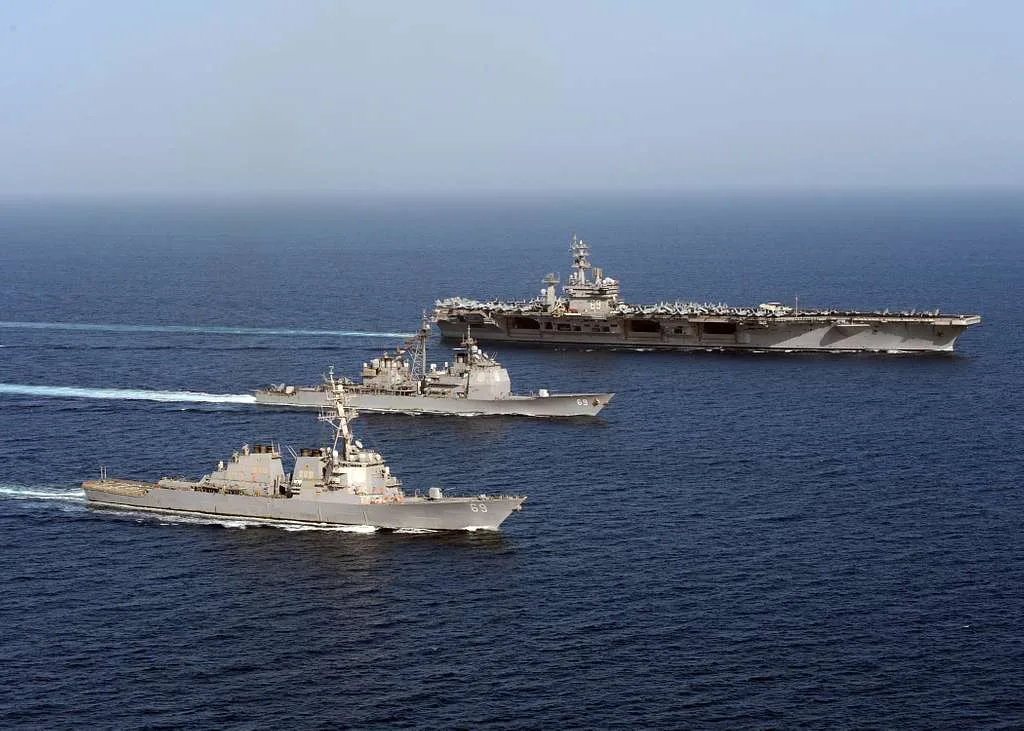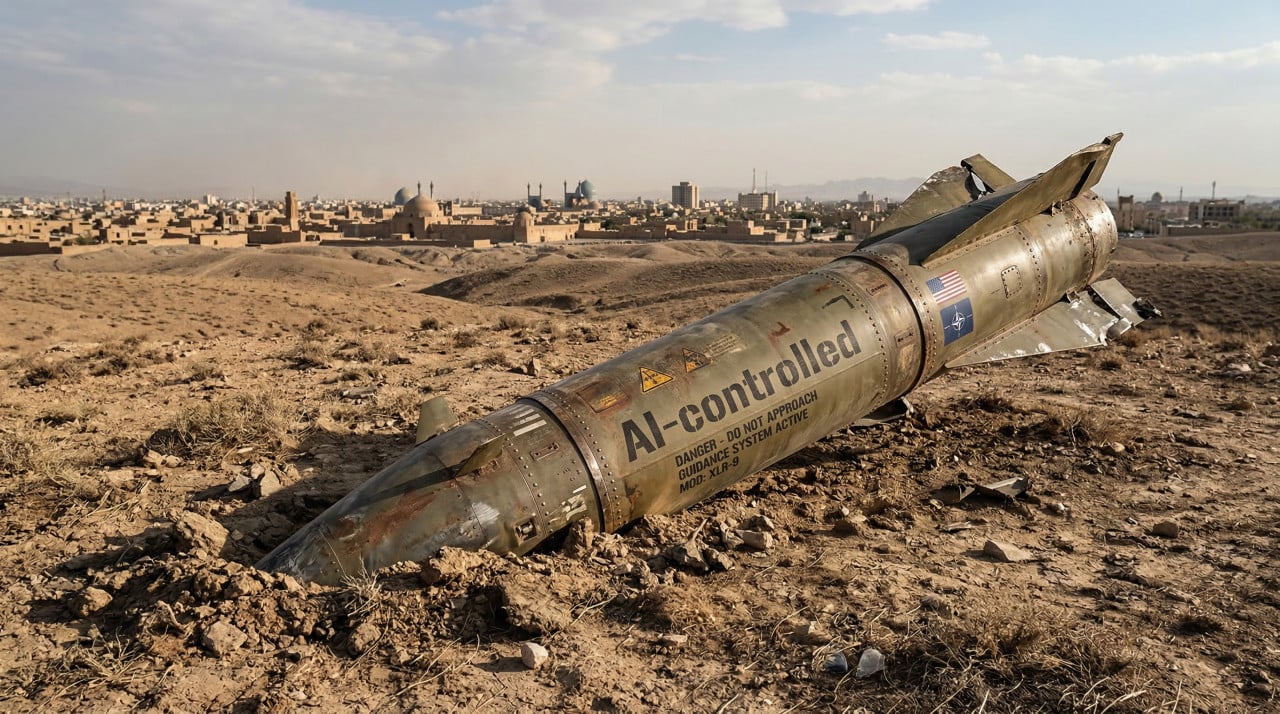
When the US and Israel launched a massive military operation against Iran in early March, the world watched in astonishment as the numbers came in. Nearly 900 strikes in the first 12 hours. More than 1,000 targets hit in a single day. Just a few years ago, such speed and scale would have been simply unthinkable. What changed? The answer is simple: artificial intelligence.
Claude Goes to War
Most people know the name Claude as the chatbot developed by the American company Anthropic. But this is not merely a tool for writing emails or summarizing documents. Claude has been deployed across the US Department of Defense and other security agencies to accelerate the planning of military operations.
Anthropic signed a contract with the Pentagon back in 2024. The goal, as the company announced at the time, was to "dramatically improve intelligence analysis and support decision-making processes." Claude became part of a system developed in collaboration with the controversial technology company Palantir, which has long supplied analytical tools to the US military.
The system processes enormous amounts of data simultaneously. Drone footage, intercepted telecommunications, intelligence from human sources. Everything is combined, and the AI uses it to create a list of recommended targets, suggest appropriate weapons, and take into account both ammunition stocks and the performance of specific weapons systems in similar past attacks. And perhaps the most striking detail: the system also automatically assesses the legal justification for each strike.
Faster Than Human Thought
Craig Jones, an expert on so-called "kill chains" at Newcastle University, described it very aptly: "The machine makes recommendations about what to strike, and in some respects that is faster than human thought. You have speed and scale at the same time. Attacks take place concurrently with the destruction of the regime's ability to respond. In historical wars, this would have taken days or weeks. Now you do it all at once."
Experts call this phenomenon "decision compression"—the compression of the decision-making process. Planning that once took days is reduced to minutes or seconds. That sounds like an advantage. And from a purely military perspective, perhaps it is. But this is where the uncomfortable question arises: what happens to human control over warfare when a machine thinks faster than a human?
David Leslie, Professor of Ethics and Technology at Queen Mary University of London, warns of a phenomenon he calls "cognitive offloading of responsibility." People who are formally required to approve a strike may feel detached from its consequences because the machine has done all the intellectual work for them. They simply click "approve" and move on. But at the other end of that click are human lives.
The Question of the School in Southern Iran
On Saturday, a missile struck a school in southern Iran. 165 people were killed, many of them children. The building was located near military barracks. The UN described the attack as a "serious violation of humanitarian law." The US military announced that it was investigating the incident.
No one has yet publicly stated whether this target was recommended by artificial intelligence. But this is precisely where the heart of the problem lies. If AI proposes targets and people approve them under time pressure, who bears responsibility for a mistake? The soldier who clicked? The programmer who wrote the algorithm? The company that sold it to the military?
Anthropic Out, OpenAI In
The story has another striking dimension. Just a few days before the Iranian operation began, reports emerged that the Trump administration intended to remove Anthropic from government systems. The reason? The company refused to allow Claude to be used for fully autonomous weapons or for the surveillance of American citizens. But removal takes time. Claude was still active when the missiles began to fall. And in the meantime? OpenAI quickly signed its own contract with the Pentagon for the military use of its models. The military AI market simply will not remain empty for even a minute.
Prerana Joshi of the British defense institute RUSI summarized it this way: "The deployment of AI is expanding. It is taking place across countries' defense organizations, in logistics, training, decision management, and maintenance. It is a way to synthesize data much faster, and that is useful for decision-making processes."
Useful. A word that sounds innocent. But behind it lies a world in which machines recommend who should die, while humans have less and less time to think about it.
Iran and Its AI
In 2025, Iran boasted that it was also using artificial intelligence in its missile systems. But the reality is different. International sanctions are significantly hindering Iran's technological development. Iran's AI program is negligible compared with American or Chinese capabilities. This conflict was a clash between two worlds: one armed with cutting-edge algorithms and the other trying to make up for decades of lagging behind.
What Comes Next?
The Iranian conflict showed that warfare is changing in ways that, just a decade ago, belonged in movies. AI shortens the time between identifying a target and taking action. Decisions that once passed through layers of command, analysis, and legal review now happen at a pace the human brain cannot keep up with. And that may be the most important lesson to take away from the entire situation. It is not only about whether AI makes mistakes. It is about whether we still have time to notice that it has made a mistake before it is too late to correct it.
War has always brought new technologies. Gunpowder, airplanes, the atomic bomb. Each time, we told ourselves that this was different. But this time, it truly is different. Because for the first time in history, a machine thinks faster than the commander who deployed it.
Sources: responsiblestatecraft.org and bloomberg.com