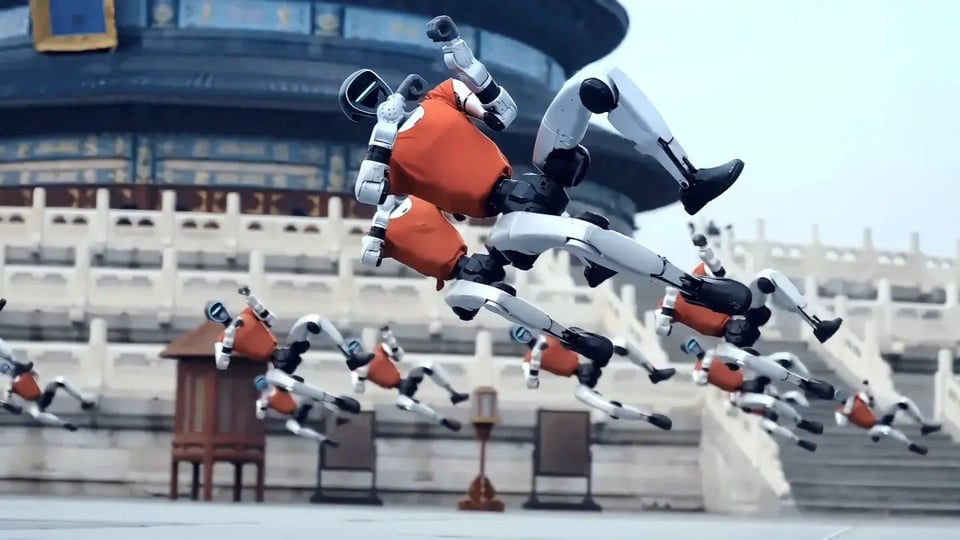
A spectacular show took place in historic Beijing. Dozens of humanoid robots marched in perfect formation in front of one of the most beautiful structures of Chinese civilization. No movie or CGI, but state-of-the-art Chinese robots.
Kung Fu Show with Robots
Chinese company Unitree Robotics released a forty-second clip showing 49 G1 humanoid robots performing perfectly synchronized martial arts in front of the iconic Hall of Prayer for Good Harvests, completed in 1420. Punches, kicks, and flips. All without any human intervention.
In just five hours, the video was reshared by more than 42,000 users on WeChat and received over 50,000 likes. Users on X did not hide their enthusiasm: “Great coordination and camera work. It’s amazing that humanoid robots are now a reality, not just something from a movie,” one of them wrote.
The Technology Behind the Performance
For this performance, Unitree used the same cluster control platform it had deployed a week earlier at the Chinese New Year Gala. The system works by having a central control station distribute trajectories and movement sequences, while each robot executes them autonomously and continuously monitors itself.
Each G1 robot navigates using onboard 3D LiDAR, which allows it to scan its surroundings in real time and precisely determine its position within the formation. If a robot lands poorly after a flip, it automatically and dynamically rebalances itself based on feedback about its current state. No operator needs to rescue it.
Unitree added an explicit label to the video: “Real footage, not AI-generated content.” And that is important—doubts about its authenticity appeared online immediately. Some people noticed the absence of shadows, while others pointed to how unusually empty the site was. The most likely explanation? Filming took place just before sunrise, when the famous site was still empty, much like trying to photograph an empty Charles Bridge.
The Unitree G1 Robot
So who is the main character in this story? The Unitree G1 is a humanoid robot measuring 132 cm tall and weighing approximately 35 kg. The base version starts at $13,500—a surprisingly affordable price in the world of robotics.
The robot has 23 degrees of freedom (up to 43 in the EDU version), is powered by low-inertia permanent magnet synchronous motors, and sees the world through a depth camera and 3D LiDAR. Computing power is provided by an eight-core processor, while the EDU version adds an NVIDIA Jetson Orin module. Battery life? Approximately 2 hours of operation.
What can the G1 do besides kung fu? Flips reaching a height of three meters, running at speeds of up to 4 meters per second, and—with a three-finger force-controlled hand—delicate object manipulation. Unitree describes it as a “humanoid agent and AI avatar” and promises ongoing software updates via a remote OTA system.
From the Gala to the Temple: A Series of Triumphs
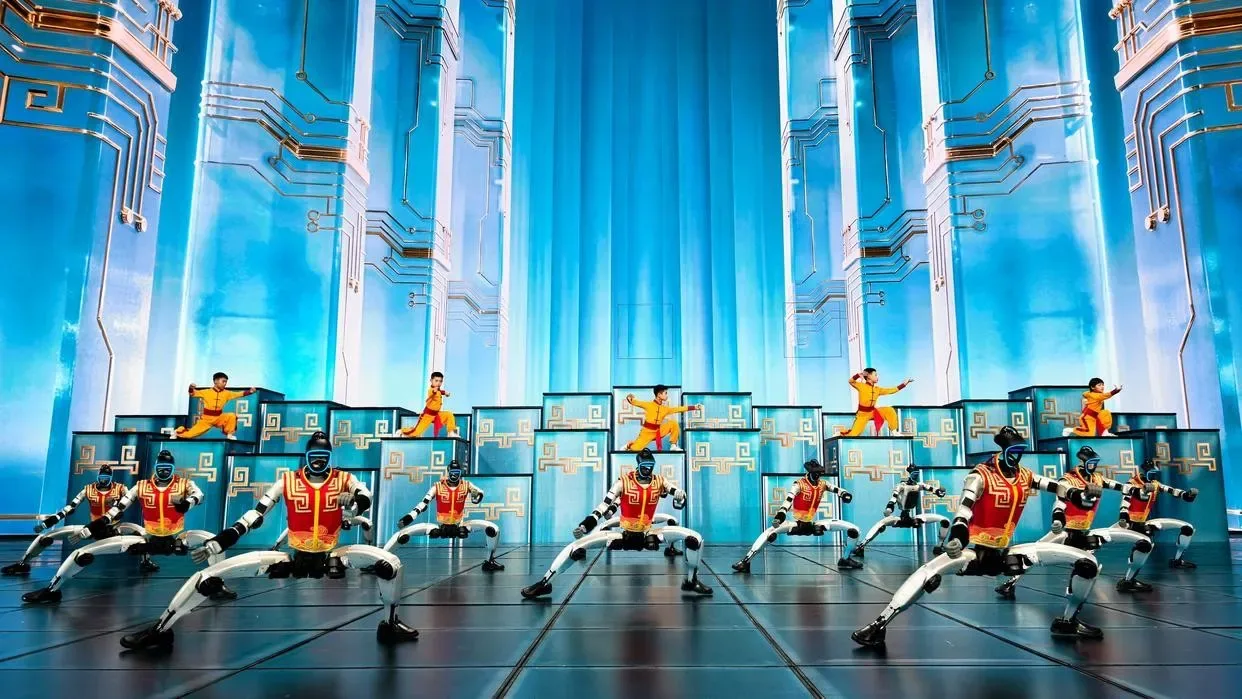
The performance at the Temple of Heaven was neither the first nor the last. It all began on February 16 at the Chinese New Year Gala, where G1 robots delivered what the organizers described as the world’s first fully autonomous kung fu performance by humanoid robots—featuring parkour, Drunken Fist techniques, and nunchaku. It marked a significant leap forward from 2025, when robots at the gala performed only the traditional Yangko dance.
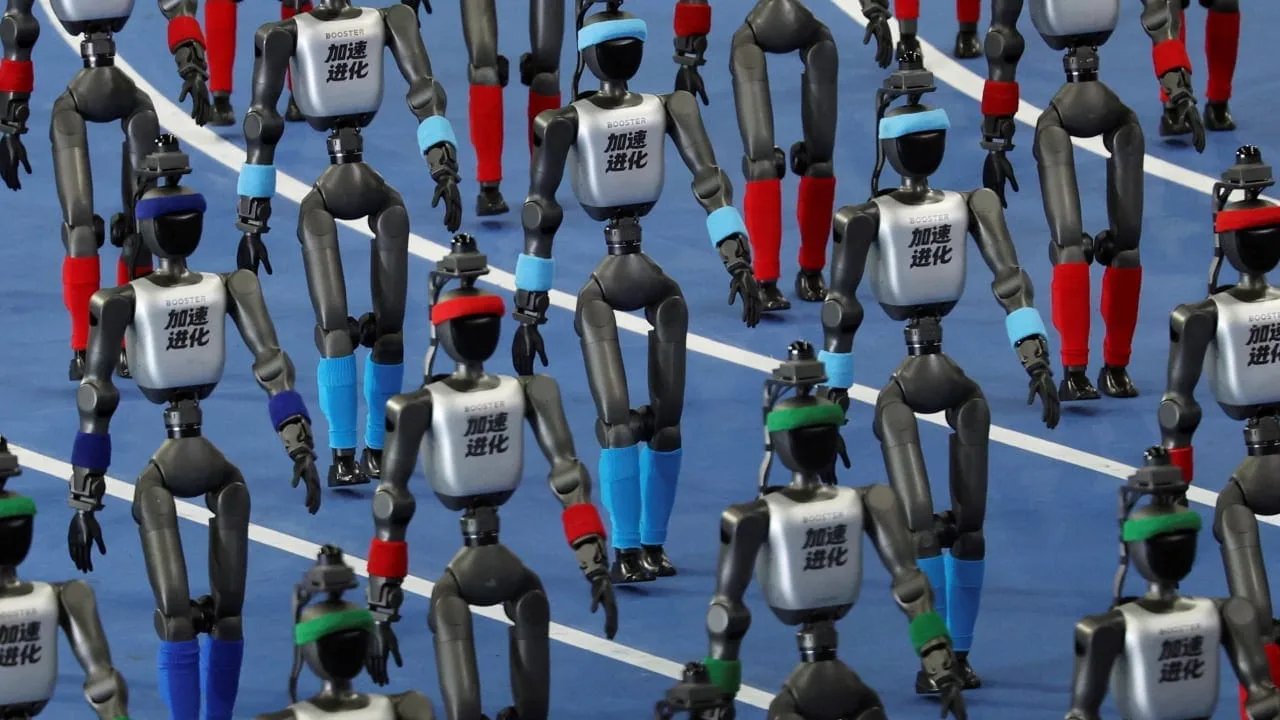
After the gala, Unitree released another video: more than 40 G1 robots lined up in formation and used their bodies to create a New Year greeting visible from a bird’s-eye view. Choreography from another world.
20,000 Robots per Year
Behind this show lies a clear business strategy. Unitree CEO Wang Xingxing announced that the company plans to deliver 20,000 humanoid robots in 2026—nearly four times last year’s 5,500 units. Unitree claims that its production last year surpassed the combined output of its main U.S. competitors.
However, cluster control technology is not intended to be used solely for shows. The company sees real-world applications in industrial facility inspections, warehouse sorting, precision assembly, and heavy-load handling. The robots are expected to navigate complex environments autonomously, and this is a challenge Unitree is addressing intensively through so-called embodied AI, meaning artificial intelligence built directly into the robot.
Sources: interestingengineering.com and globaltimes.cn