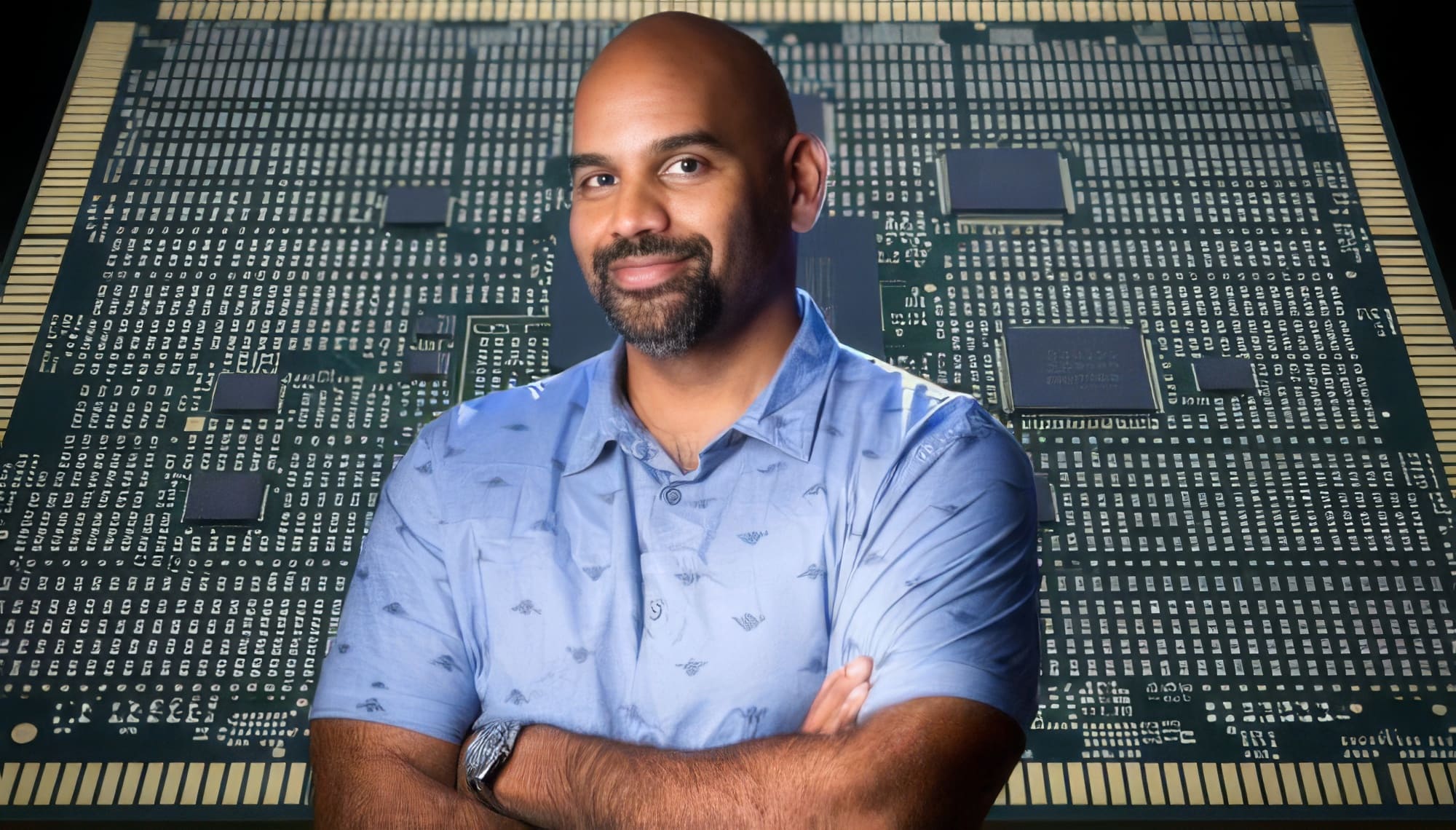
Naveen Rao, who previously headed the artificial intelligence division at Databricks, has embarked on a new project. Before that, he founded companies such as Nervana Systems, which Intel acquired for more than CZK 9.2 billion, and MosaicML, sold to Databricks for CZK 29.9 billion. These successes gave him experience in developing technologies for training and deploying large artificial intelligence models. Now Rao is returning to hardware, where he sees an opportunity to transform the foundations of computing.
Goals of the Startup Unconventional, Inc.
Unconventional, Inc. is focused on rethinking the foundations of the computer. It aims to create a new substrate for intelligence that will be as efficient as biological systems but without their limitations. Rao describes it as "brain-scale efficiency without the biological baggage." This means the startup plans to design hardware that processes artificial intelligence tasks with minimal energy consumption, much like the human brain, but without the need for biological components.
The startup aims to challenge dominant players such as Nvidia. Instead of traditional solutions, it will develop a new type of artificial intelligence machine that combines custom silicon chips (specially designed silicon chips) and server infrastructure. This approach is intended to enable faster and more energy-efficient processing of large datasets and models, which is crucial for today's artificial intelligence applications. Rao believes such hardware can overcome current limitations and bring about a genuine change in how computers operate at a fundamental level.
Hello world Unconventional, Inc.
— Naveen Rao (@NaveenGRao) September 25, 2025
I’ve gotten a new company off the ground. It’s a big swing…rethinking the foundations of a computer to build a new substrate for intelligence that is as efficient as biology. Brain Scale Efficiency without the biological baggage!
We CAN do it.…
Details of the Planned Hardware
Unconventional, Inc. is focusing on developing custom silicon chips optimized specifically for artificial intelligence workloads. These chips are intended to be part of a comprehensive system, including server infrastructure that will ensure seamless integration. The goal is to achieve an efficiency level at which the hardware consumes less energy for complex computations, potentially reducing the operating costs of large data centers. Rao emphasizes that it is a major risk, but he believes the team can succeed thanks to an innovative approach to computer architecture.
According to information available online, the startup draws inspiration from biological principles but applies them on a purely technological basis. This could mean using new materials or chip designs that mimic neural networks but without the complexities of living systems. The company has already assembled a team of experts working on a prototype and plans to scale up operations quickly.
Source: techcrunch.com