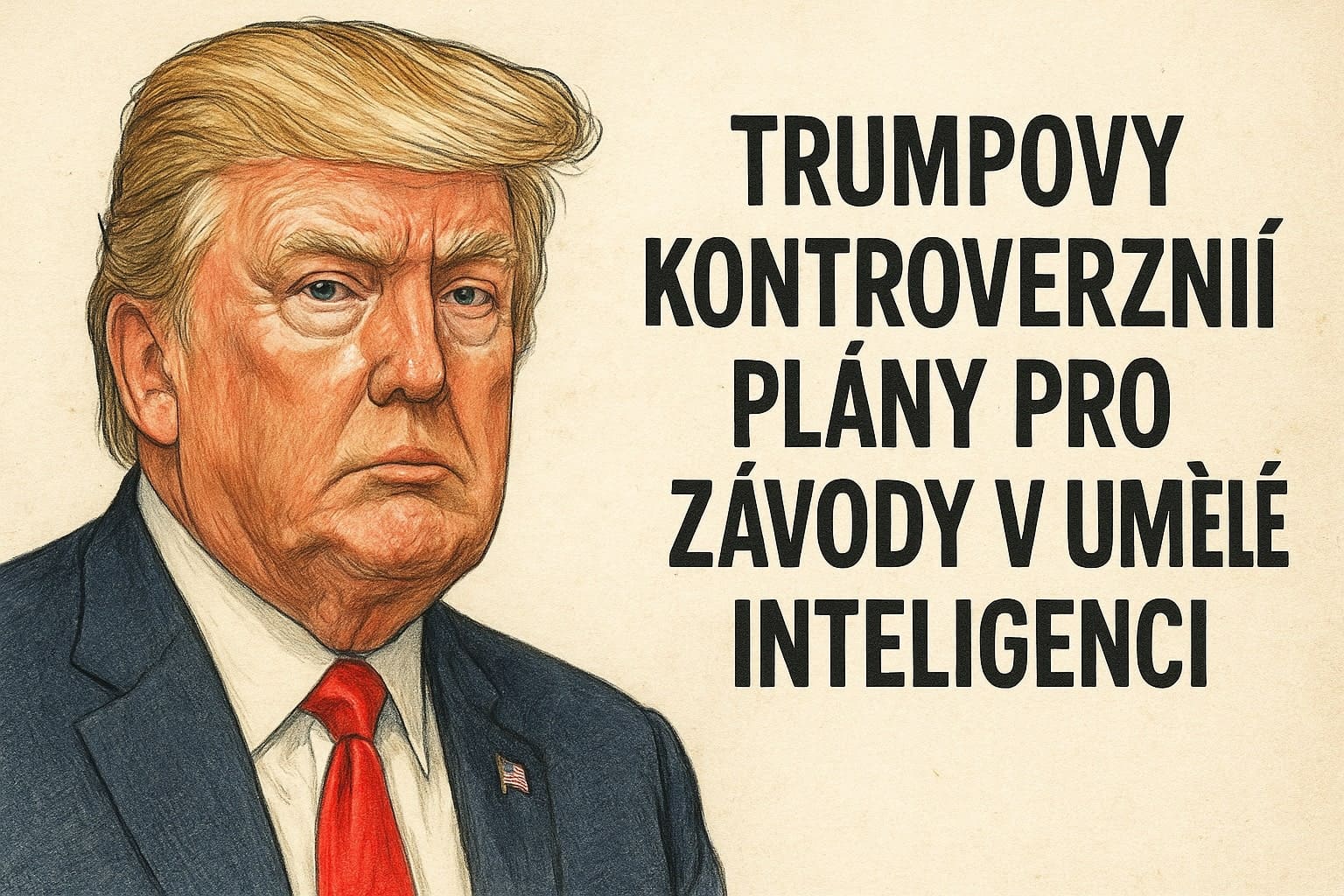
Trump's Controversial Plans for the AI Race
Donald Trump is significantly changing the direction of U.S. artificial intelligence policy. While his administration has just resolved a long-running trade dispute with China over rare earth elements, it is simultaneously preparing radical measures aimed at ensuring American dominance in the technological rivalry with Beijing.
A New Approach to AI Regulation
On January 23, 2025, President Trump signed Executive Order 14179, titled "Removing Barriers to American Leadership in Artificial Intelligence." This document represents a fundamental departure from the previous approach of the Biden administration, which focused on responsible AI development, risk mitigation, and addressing bias in algorithms.
Trump's order instead prioritizes "sustaining and enhancing America's global AI dominance," with an emphasis on economic competitiveness and national security. Federal agencies were instructed to review and suspend, revise, or rescind all regulations that could hinder rapid AI innovation and global competitiveness.
The Rare Earth Paradox and Escalation
Ironically, this escalation comes just as a critical trade dispute has been resolved. In June, Commerce Secretary Howard Lutnick announced an agreement with China on supplies of rare earth elements, which are essential for manufacturing advanced chips used in AI systems. Thanks to its near-global monopoly on these materials, China held a powerful bargaining chip.
Rather than easing tensions, however, Trump is preparing four key measures intended to accelerate U.S. AI development. These include making it easier for AI companies to connect to power grids, selling federal land for the construction of data centers, launching a public information campaign, and undertaking a propaganda effort emphasizing the existential nature of the technological rivalry with China.
Deregulation as a Key Strategy
The new policy differs significantly from Biden's approach. While the previous administration focused on the safety, trustworthiness, and equitable use of AI, Trump is concentrating on removing regulatory barriers. His order explicitly rejects what it calls "ideological biases or engineered social agendas" in AI systems. The administration was given 60 days to reassess all existing AI-related directives. The goal is to ensure that no regulation impedes rapid progress in this key technology.
China as the Main Competitor
According to reporter Garrison Lovely, who specializes in the AI industry, "only one superpower has a government commission publicly calling for a militarized race to create superintelligent artificial intelligence, and it is not China." This claim suggests that American rhetoric about an "AI arms race" may be driven more by domestic political interests than by a genuine international threat.
Trump's strategy represents a significant shift from the previous focus on responsible AI development toward aggressive competition. While the rare earth trade agreement could have offered an opportunity to ease tensions, current policy instead points to a further escalation of the technological rivalry between the world's leading powers.
The question remains whether this deregulatory strategy will genuinely strengthen America's position in global AI competition or lead to unpredictable risks concerning the safety and ethics of artificial intelligence.