Tom Landry and Charles Schulz died on the same day: February 12, 2000. Detroit Free Press cartoonist Mike Thompson paid tribute to them both with a cartoon showing them entering the pearly gates together. Schulz was depicted as Charlie Brown; Landry had his arm around his shoulders and was saying, “Now let me give you a few pointers on how to kick a football...” At least for Coach Landry, I cannot imagine a better eulogy.
I mourned Landry’s death along with millions of other fans. Almost as difficult for me was the day Landry was fired in 1989. That day, too, hit me like a death in the family. Landry had been our coach since many of us were children. He was our father on the field. He raised us through the game, teaching us to be gracious in victory and dignified in defeat. And then, with one stroke of Jerry Jones’s pen, he was gone. Devastating.
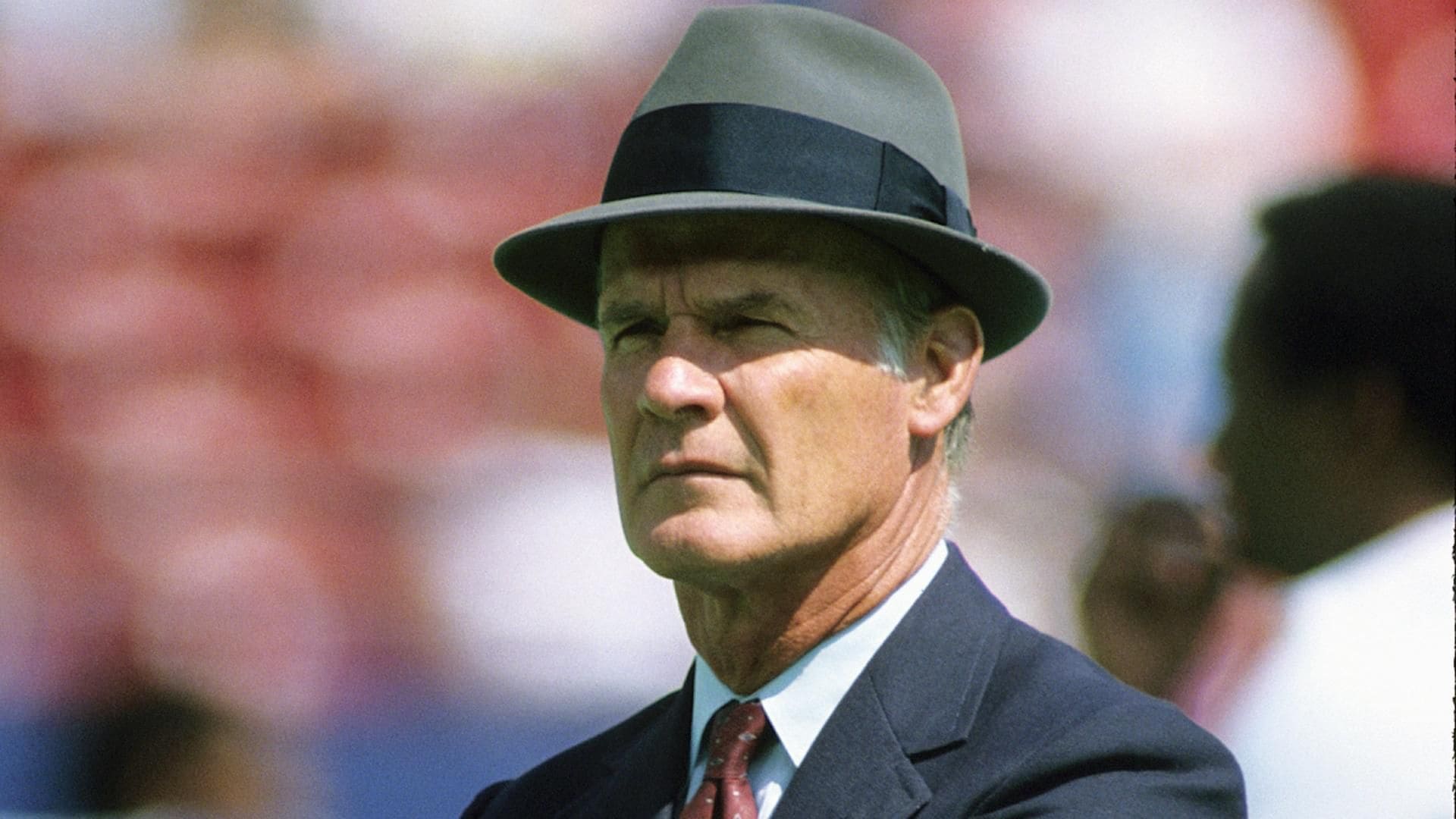
Landry was known as the man in the hat. He was the stoic leader on the Dallas Cowboys’ sideline, always impeccably dressed, with a fedora on his head. Commissioner Paul Tagliabue said at one of his memorial services, “If there were a Mount Rushmore for the NFL, Tom Landry’s profile would have to be on it, with his trademark hat, for all of us to gaze upon in awe.”
While coaching, Landry was so focused that he rarely smiled. He was often described as “emotionless.” But I think better words would suit him: a man of character, honor, integrity, and faith. He was pure class, both on and off the field. He was the embodiment of ethics.
During his 29 years as Dallas’s head coach, Landry led the Cowboys to far more playoff seasons than they have had since. And here is another statistic that is hard to grasp: the Cowboys still have not won as many games without Landry as they won with him. His playoff victories also far exceed the Cowboys’ post-Landry record.
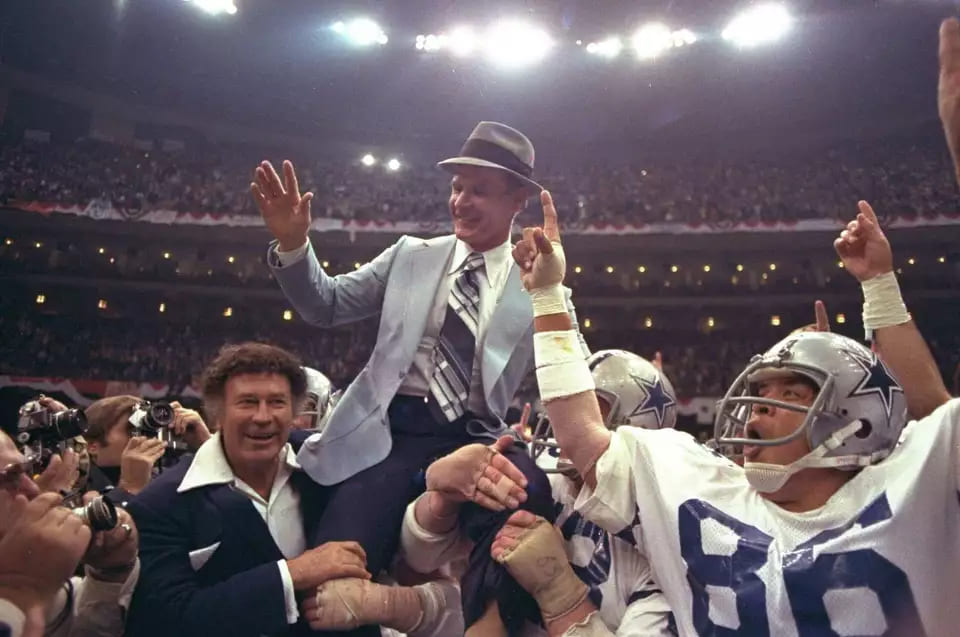
Under Landry, the Cowboys won 13 division titles and played in five Super Bowls, winning two of them. They had 20 consecutive winning seasons, a record no NFL coach has ever surpassed, either before or since.
Although those years were glorious, none matched Landry’s greatest season in football. He played professionally for the New York Giants and was once named All-Pro, but even that was not his greatest season. He played football on a scholarship at the University of Texas, but those years were not his best either.
Something truly unexpected happened while Landry was in college. After only one semester, his career at UT was interrupted by World War II. After his brother was killed in action, he volunteered for the Army Air Corps. During the war, he flew 30 missions over Germany and once made an emergency landing in Belgium. Although his B-17 (bomber) lost its wings, he and all his men walked away without serious injuries. He was only 20 years old at the time.
In the Churchillian sense, we might consider his service in World War II his finest “season,” but since we are talking about football, we must go back even further.
To reach his greatest season of all, we must go all the way back to his high school years in Mission, Texas, down in the Rio Grande Valley.
It was Landry’s senior year, 1941. He played on both sides of the ball. He was both quarterback and defensive back. Landry led the Mission Eagles to a perfect 12-0 season. They made it all the way to the regional championship, which was as far as they could go that year (there was no state championship in 1941). In the district game, they dominated Pharr San Juan Alamo 33-0. In the bi-district game, they defeated Aransas Pass 19-0. In the regional game, they humiliated Hondo 33-0. Their fans followed them everywhere and were so devoted that they were called the “Missionaries.”
The Mission Eagles won every game they played that year and did not allow any team but one to score. In 12 games, they allowed just one score, when Donna High School managed to squeeze out a touchdown against them. Ironically, that touchdown was awarded because of a pass interference penalty committed by Tom Landry. But the touchdown was incorrectly awarded to Donna because the official simply put the points on the scoreboard instead of placing the ball on the one-yard line and giving Donna a first down. In later years, Landry’s high school teammates good-naturedly teased him that he was the one who made it to the pros, even though he had been the weak link in their golden season.
In his autobiography, Landry wrote, “That autumn season of glory, shared with my boyhood friends and teammates, remains perhaps my most significant season in 50 years of football. The game was never more fun, victory never sweeter, success never more satisfying.”
Landry’s nearly flawless season, along with his impressive professional life afterward, was honored in 1975 when the Mission School District named its football stadium Tom Landry Stadium. After his death in 2000, Interstate 30 between Dallas and Fort Worth was named Tom Landry Highway.
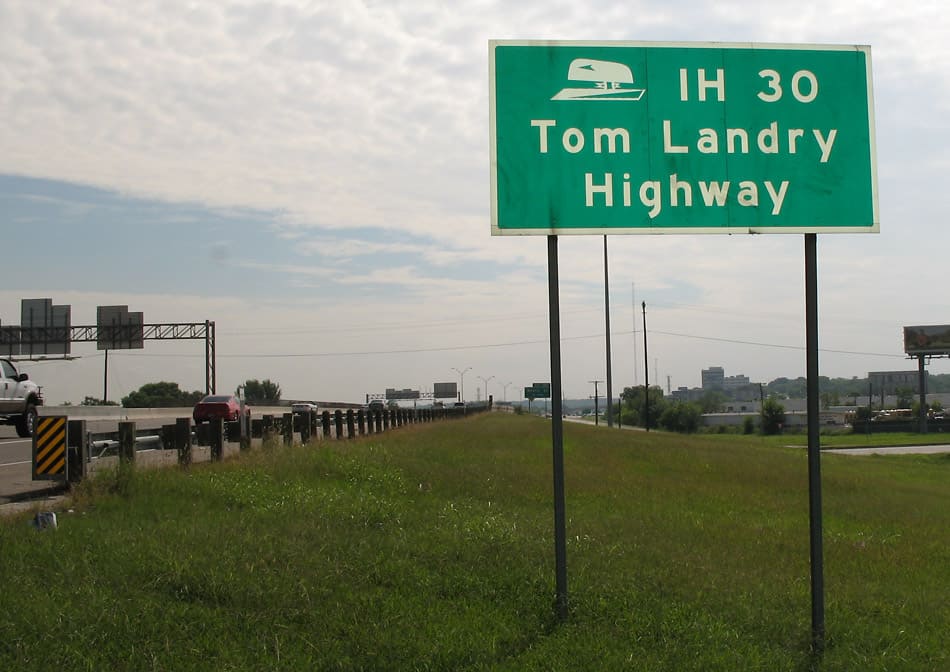
To me, one of the small truths about Landry that testifies to his greatness is that his Cowboys never gave him a Gatorade bath, never dumped a bucket of ice down his back. Too much respect, I suppose.
After his coaching career ended, he built an excellent reputation as an inspirational speaker. He always advised young players to organize their lives simply like this: faith, family, and football. He also liked to say, “As of today, you have 100 percent of your life left.”
He took his own words seriously. After he was fired, while the rest of us wasted energy raging over the disrespectful way our idol had been dismissed, Landry had already moved on with his life.
He wasted no time on anger or bitterness. With characteristic optimism, he saw the silver lining. He said, “As a boy growing up in Mission, Texas, I always dreamed of being a cowboy. For 29 wonderful years, I was one.”
FOR FURTHER READING: Tom Landry: An Autobiography, by Tom Landry with Gregg Lewis.