


Tencent's AI Tool: How to Create a Game from a Single Text Prompt in Seconds
Chinese technology giant Tencent has introduced an artificial intelligence system that can generate a fully functional video game from a simple text description in just a few seconds. This revolutionary tool, called GameGen-O, opens up entirely new possibilities in game development and could fundamentally change how interactive entertainment content is created.
What GameGen-O Can Do
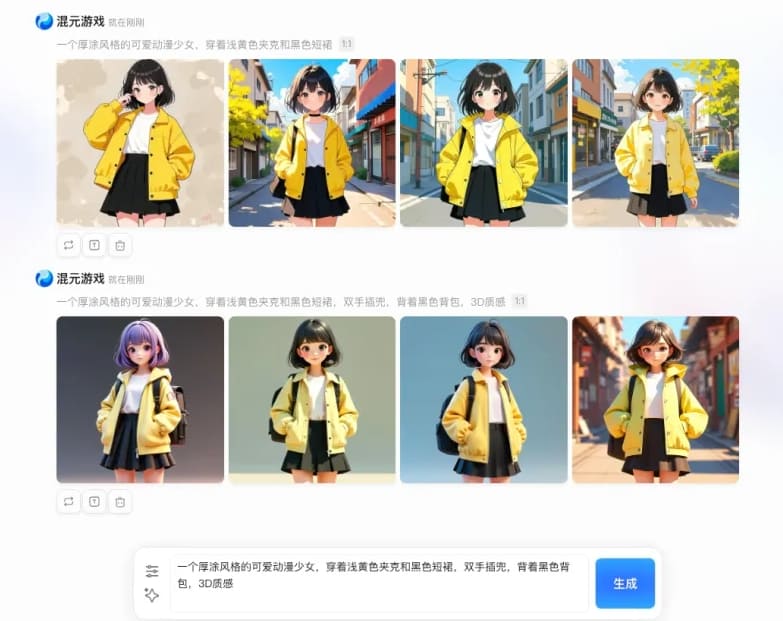
GameGen-O represents a breakthrough in generative artificial intelligence applied to the gaming industry. The system can interpret text commands and use them to create a complete game environment, including mechanics, visuals, and interactive elements. This technology uses advanced machine-learning algorithms trained on vast amounts of gaming data, enabling the AI to understand the complex relationships between game elements and their functionality. According to a demonstration published by Tencent on the social network X, users only need to enter a brief description of the game they envision, and the system generates a functional prototype within seconds. This process includes the automatic creation of game mechanics, level design, basic graphics, and game logic. Developers can therefore see almost immediately how their idea would work in practice, dramatically reducing the time required to create initial prototypes.
How the Technology Works in Practice
The process of creating a game with GameGen-O begins by entering a text prompt that describes the game's basic concept. The system then analyzes this description using advanced language models and identifies the key game elements, genre, mechanics, and visual style. Based on this analysis, the AI accesses an extensive database of game components and algorithms, which it uses to assemble the requested game. The technology uses generative neural networks capable of creating new content based on learned patterns. These networks have been trained on thousands of existing games across various genres, allowing them to understand which elements belong together and how they should work in combination. The result is not merely a visual representation of a game, but a genuinely playable prototype with functional mechanics.
Impact on the Gaming Industry
The introduction of GameGen-O marks a potential milestone for the entire gaming industry. This technology could radically change how video games are created and significantly democratize their development. Small teams or even individual creators will be able to rapidly test their ideas and create functional prototypes without requiring extensive technical expertise or a lengthy development process. For large game studios, GameGen-O could provide a way to rapidly prototype new concepts and experiment with different game mechanics. Developers could test dozens of different ideas in a single day and select the most promising ones for further development. This could lead to the discovery of entirely new game genres and innovative approaches to entertainment.
Technical Aspects and Limitations
Although GameGen-O represents impressive technological progress, it still has certain limitations. The current version of the system is best suited to creating simpler games and prototypes rather than complex AAA titles. The generated games do not yet reach the level of sophistication required by commercial projects with multimillion-dollar budgets. The system also depends on the quality of the input description—the more precise and detailed the text prompt, the better the expected result. The AI is not yet capable of fully understanding subjective aspects of game design, such as emotional impact or artistic vision, which remain the domain of human creators.
The Future of AI in Game Development
Tencent's GameGen-O represents only the beginning of what we can expect from artificial intelligence in the gaming industry. This technology indicates the direction development will take—toward greater automation of routine tasks and enabling creators to focus on the creative aspects of game development. Similar tools are expected to become capable of generating increasingly complex game content in the future, including advanced narratives, realistic characters, and sophisticated game worlds. This could usher in an era in which game creation is accessible to virtually anyone with a creative vision, regardless of their technical skills. With GameGen-O, Tencent is setting a new standard for the use of AI in creative industries and demonstrating that the future of digital content creation will be far more automated and democratized than we ever imagined.


