He was nearly 24 years old and was riding south of Corpus Christi through an area that would one day become known as the King Ranch. But the ranch would not exist for another two decades.
In some ways, it was an eerie, ghostly place. Everywhere you looked, you would see horse tracks, but no people. The well-trodden trails might have suggested a dense population, but the population was entirely equine.
These horses were believed to be descended from the steeds Cortez had brought to conquer the Aztecs. Some of them escaped, migrated north, and bred freely in their new environment. Because of them, the area became known as the Wild Horse Desert, including to Texas writer Brian Robertson, who used the name as the title of his book about South Texas.
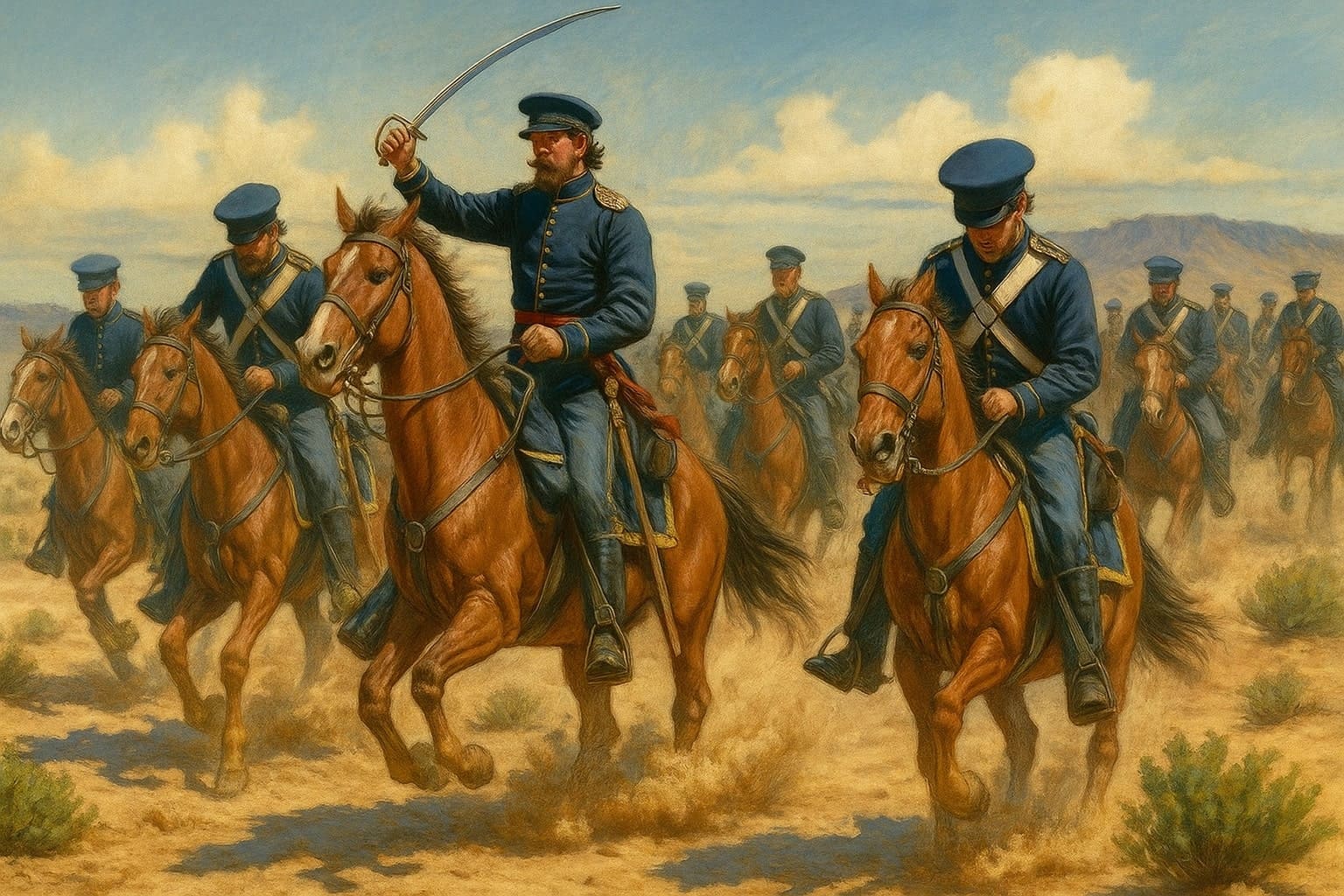
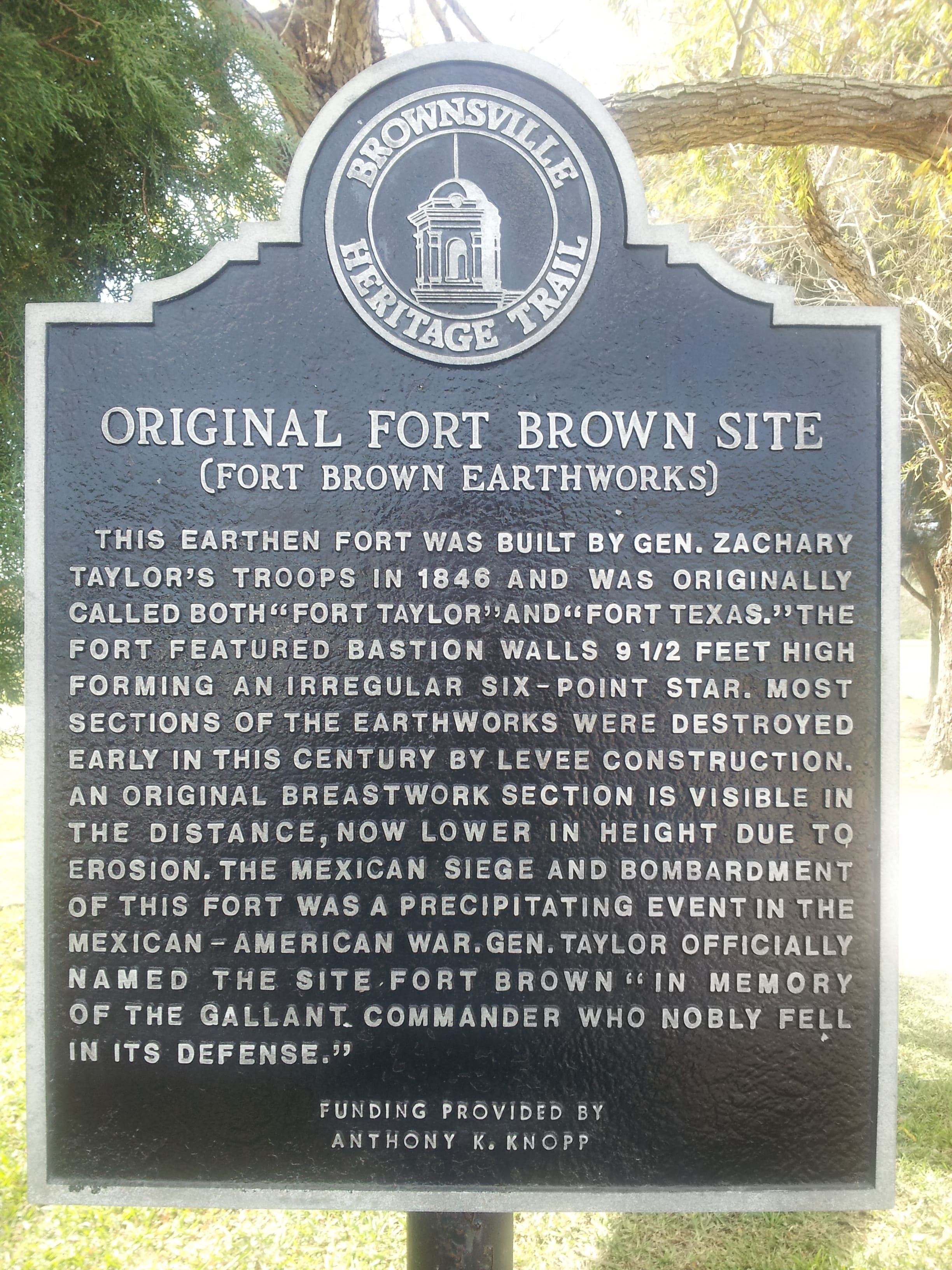
Our young man, a second lieutenant three years out of West Point, was riding with a regiment of soldiers under the command of General Zachary Taylor. The year was 1846. Texas had recently been annexed by the United States, and Taylor was leading the "Army of Observation" (Army of Observation) under orders to establish Fort Texas on the Rio Grande to assert the river's status as the southern border of the United States. Fort Texas soon became Fort Brown, the fort after which the city of Brownsville, Texas, was named.
The young second lieutenant loved horses. He had been an enthusiastic and skilled rider while growing up in Georgetown, Ohio, and excelled as a horseman at West Point. He was so impressed by the seemingly endless herds of wild horses in South Texas that he made a note of them in his journal and later recalled in his memoirs:
A few days out from Corpus Christi, an immense herd of wild horses, which at that time roamed between the Nueces and the Rio Grande, was seen directly ahead of the column and only a few miles away. It was the very herd from which the horse I was riding had been captured only a few weeks before. The column halted to rest, and several officers, including myself, rode two or three miles to the right to see the extent of the herd. The countryside was rolling prairie, and from the higher ground the view was limited only by the curvature of the earth. As far as the eye could see to the right, the herd extended. To the left, it stretched just as far. It was impossible to estimate the number of animals in it; I do not imagine they could all have been gathered at one time in the state of Rhode Island or Delaware. If they had been, they would have been so densely packed that the grazing would have given out on the first day.
Zachary Taylor was on the threshold of the Mexican-American War; his army would fight its first battle at Palo Alto on May 6, then cross into Mexico and head for Monterrey. His actions in that war helped him become the 12th president of the United States.
His second lieutenant would also rise to the presidency 20 years after him.
The young man on the high ground, observing the vast scene of thousands of mustangs grazing before him, would become the hero of many battles in the years that followed. He would ultimately win the Civil War and become the youngest American president of his time. His presidential memoirs would be regarded as the finest of all such memoirs, a bestseller in their day, a book published by Mark Twain, who called it the most remarkable work of its kind since Caesar's Commentaries. It was titled Personal Memoirs of Ulysses S. Grant, and it is this book that brings us this story.
FOR FURTHER READING: Personal Memoirs of Ulysses S. Grant has never gone out of print.