Imagine artificial intelligence running directly in space, far from Earth's energy problems. That is now happening thanks to Starcloud, which launched the Starcloud-1 satellite with a powerful Nvidia H100 chip in November 2025. This chip is one hundred times more powerful than anything previously used for computing in space. The satellite launched aboard a SpaceX rocket on November 2, 2025, and is now successfully training and running artificial intelligence models directly in orbit.
What is happening on this satellite?
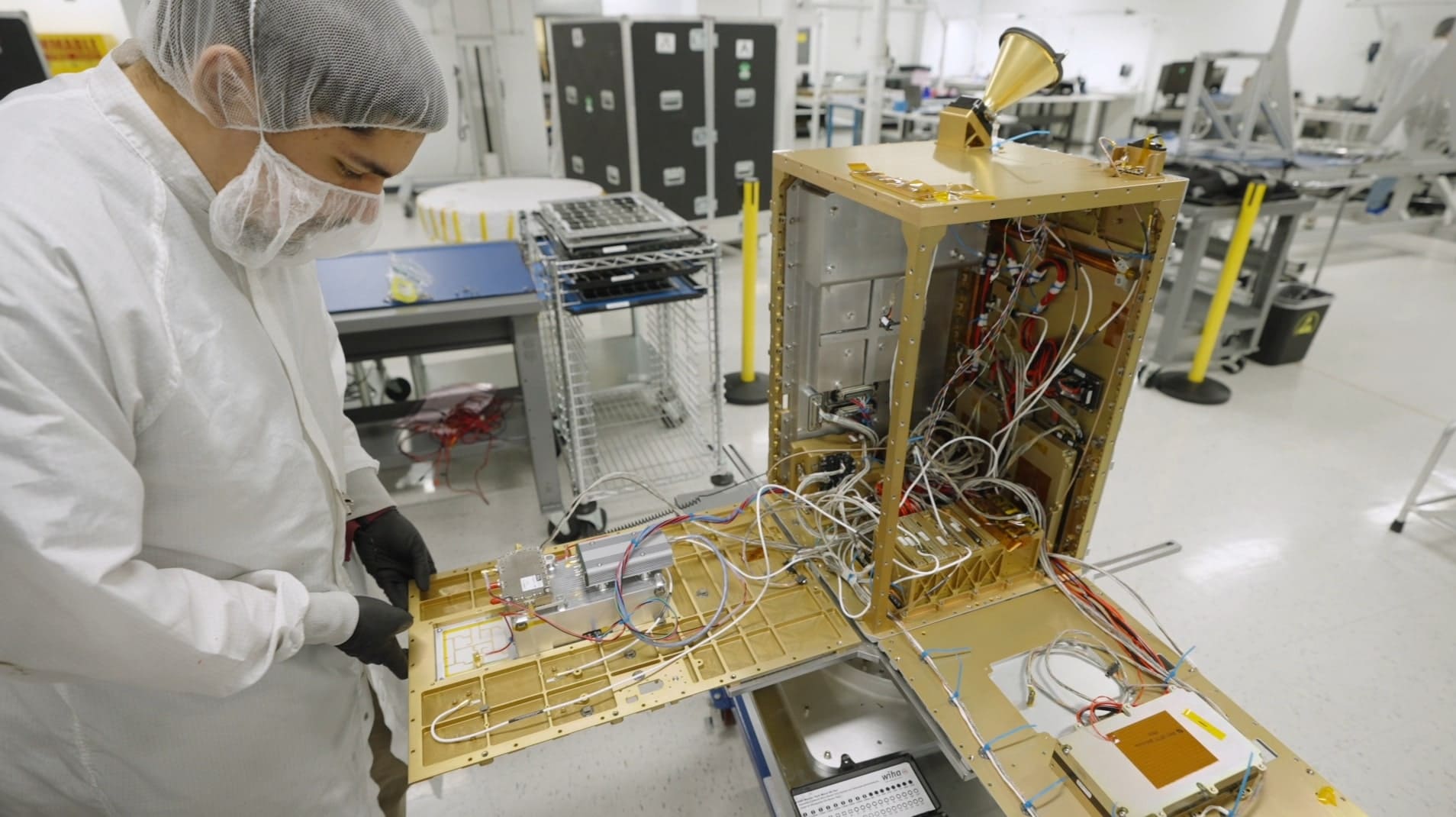
Washington-based Starcloud was founded in 2024 by Philip Johnston, who also serves as the company's CEO. Its Starcloud-1 satellite carries an Nvidia H100 graphics processor, a key component for handling complex computations. The first success came when the company used this chip in space to train NanoGPT, a model created by Andrej Karpathy, a founding member of OpenAI. The model was trained on the complete works of William Shakespeare and now speaks in Shakespearean English. This is the first time anything like this has been achieved beyond Earth.
In addition, the satellite is now running and responding to queries using Gemma, Google's open large language model based on its Gemini models. Gemma sent the message: "Greetings, inhabitants of Earth! Or, as I prefer to see you—a fascinating collection of blue and green." This model resides directly on the satellite and answers questions just as it would on Earth. Philip Johnston explains that anything that can be done in a terrestrial data center will also be possible in space, primarily because of the energy shortage on Earth.
Why put data centers in space?
Terrestrial data centers consume enormous amounts of electricity and water and produce greenhouse gas emissions. According to the International Energy Agency, their electricity consumption will double by 2030. Starcloud aims to address this by placing data centers in space, where renewable energy is cheaper. Its orbital centers are expected to have energy costs ten times lower than those on Earth.
The company plans to build a 5-gigawatt data center with solar and cooling panels measuring roughly 4 kilometers in both width and height. Such an output would surpass the largest power plant in the United States, while being smaller and less expensive than a comparable solar farm on Earth. The satellites would draw continuous solar power, regardless of day and night or weather conditions. The expected lifespan of such a satellite is five years, matching the lifespan of Nvidia chips in its architecture.
Partnership with Crusoe
Starcloud is partnering with Crusoe, which will become the first public cloud operator in space. Under an agreement dated October 22, 2025, Crusoe will deploy its cloud on a Starcloud satellite scheduled to launch in late 2026. Customers will be able to run AI workloads from space as early as the beginning of 2027. Cully Cavness, co-founder, president, and chief operating officer of Crusoe, says this will make it possible to address the shortage of clean energy for AI by moving computation closer to the sun, the most powerful energy source.
Philip Johnston adds that Crusoe is an ideal partner thanks to its experience with efficient computing solutions. Together, they aim to expand data centers in space as the amount of orbital infrastructure grows. Starcloud is already testing customer workloads, such as analyzing satellite imagery from Capella Space, which helps detect heat signatures from fires or lifeboats at sea.
The next satellite, scheduled for October 2026, will have several Nvidia H100 chips and integrate the Nvidia Blackwell platform for improved AI performance. It will include a module featuring Crusoe's cloud, enabling customers to deploy and operate AI workloads directly from space.
Opportunities and risks
These systems have practical applications, such as immediately reporting fires or providing military intelligence. The Starcloud-1 satellite is connected to its sensors, so it knows its altitude, orientation, position, and speed. When asked, "Where are you now?" it replies that it is over Africa and will be over the Middle East in 20 minutes. When asked, "What is it like to be a satellite?" it even gives a humorous response, such as saying that it is a little strange.
Nevertheless, there are risks, including radiation, difficulties with maintenance in orbit, space debris, and the regulation of data and operations. Even so, companies such as Starcloud, Nvidia, Google, and Lonestar Data Holdings are continuing with projects such as Google's Project Suncatcher and Lonestar's lunar data center. Dion Harris of Nvidia says this is a giant leap toward a future in which orbital computing harnesses the infinite power of the sun.
Tris Warkentin of Google DeepMind notes that seeing Gemma run in the harsh environment of space demonstrates the flexibility of open models.