

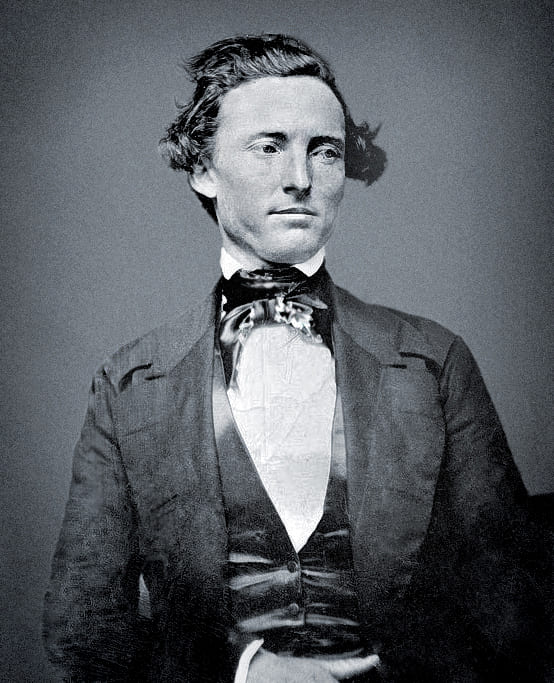
Great Texans: Samuel Walker - The Real "Walker, Texas Ranger"
One of the most fascinating Texas Rangers of all time was Samuel Hamilton Walker—and let us begin by saying that he has no connection to the fictional character Cordell Walker, portrayed by Chuck Norris. Many Ranger historians consider Sam Walker the second most important Texas Ranger of all time, surpassed only by Jack Coffee Hays, with whom he served. They truly were a dream team.
Samuel Walker arrived in Texas six years after Texas gained independence. Five years later, in 1847, he was dead. During those five years, however, he defended San Antonio against Mexican forces, invaded Mexico four times, escaped from a Mexican prison, and helped design one of the most famous weapons in history—the six-shot Colt Walker revolver. He died while trying to secure Texas's permanent freedom from Mexico.
Walker was born in Maryland in 1817. Before appearing in Galveston in 1842, he worked as a carpenter, served in the U.S. Army, and worked as a scout in Florida. He joined the Texas militia and fought Mexican soldiers in South Texas under the command of Captain Jesse Billingsley and Alexander Somervell.
As a scout under Billingsley, he fought Mexican soldiers in San Antonio. Later in 1842, he took part in the Somervell Expedition, during which he helped capture Laredo and continued toward Guerrero, where they learned that the Mexican army was approaching. Somervell ordered the soldiers to return to San Antonio. Most of the Texas Rangers in the unit, including Jack Coffee Hays, obeyed the order, but about two-thirds of the men, including Walker, ignored it and decided to continue their raid across the Rio Grande.
Their objective was the Mexican town of Mier. When they were attacked by a much larger Mexican army defending the town, the outnumbered Texans fought but eventually surrendered, and 180 of them were taken prisoner. They were marched to Salado and then toward Mexico City; along the way, they managed to escape, but nearly all the Texans were recaptured. As punishment for the escape, Santa Anna ordered their execution, but cooler heads in the Mexican government decided on decimation: only one in ten would die. The Texans had to draw beans from a pot. Among the white beans were 17 black ones. Anyone who drew a black bean was executed on the spot; anyone who drew a white one survived. Sam Walker drew a white bean.
The surviving prisoners were forced to march 800 miles across the harsh Mexican deserts. In his journal about the Mier Expedition, Walker remarked that he would not trade Texas for a hundred Mexicos. He was, however, impressed by the beautiful church architecture in San Miguel de Allende, as are many Texan expatriates who live there today.
Once they reached the capital, some of the prisoners, including Walker, were imprisoned in Tacubaya, a suburb of Mexico City, while others were marched another 100 miles to the infamous Perote Prison.
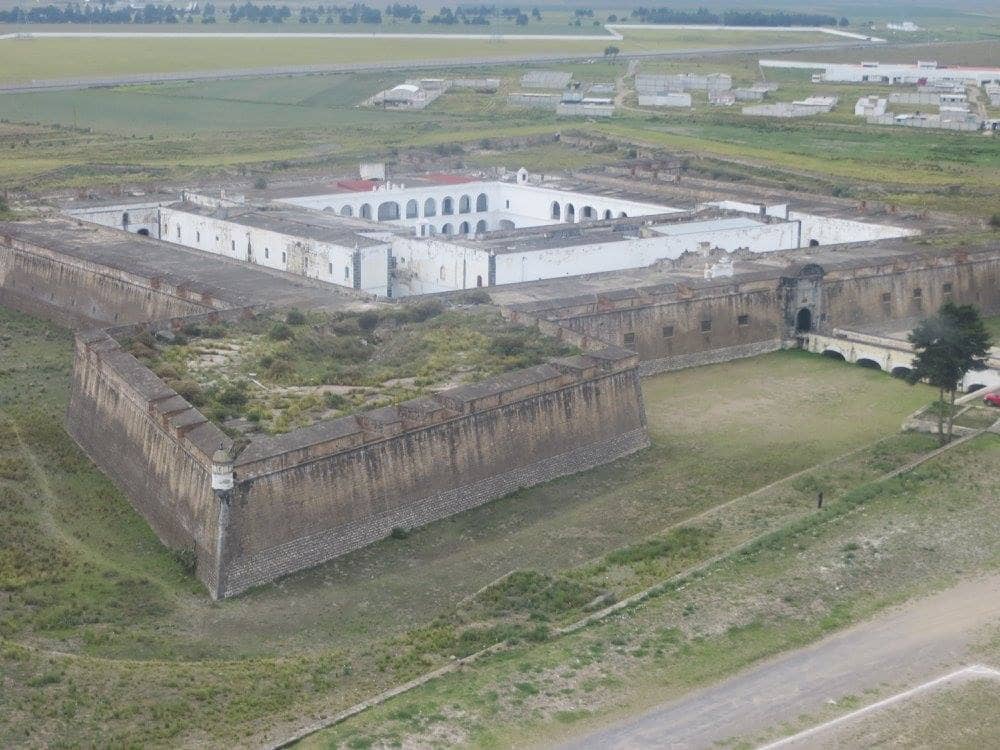
Walker's group was forced to work on road construction, including the road from Mexico City to Santa Anna's summer villa, which enraged Walker even further. It was like rubbing salt into an open wound, and for the rest of his life he harbored a hatred of Santa Anna—in fact, of all Mexicans—so intense that his friends called him “Mad Walker.”
There is a frequently repeated myth about Walker's imprisonment in Mexico. According to the story, he was ordered to dig a hole for a flagpole and was forced to raise the Mexican flag over the prison. In one version of the legend, he supposedly placed a dime in the hole before raising the pole and vowed that one day he would return to retrieve it. Several years later, when he returned with American forces to occupy Mexico, he supposedly took down the flagpole, retrieved the coin, put the pole back up, and raised the American flag. It is a romantic story that I wish were true, but it is almost certainly fabricated. First, Walker did not mention it in his journals; second, in the various versions of the myth, the flagpole is always at Perote Prison in the state of Veracruz, and Walker was never imprisoned there. He was, however, part of Winfield Scott's invasion force that captured the prison in 1847, and that may have been the origin of the legend.
Walker eventually escaped from the prison in Tacubaya—a story that would make a good novel in its own right—and returned to Texas. In 1844, he joined Jack Hays and the Texas Rangers and fought in many famous battles against Native Americans.
When General Zachary Taylor called for volunteers in 1845 to scout for his federal troops, Walker immediately enlisted. He carried messages through Mexican lines to keep Fort Texas (soon renamed Fort Brown) informed of Taylor's plans for the invasion of Mexico. Walker led the charge in the Battle of Monterrey.
After Taylor's forces captured Monterrey in 1846, Walker took a short leave and traveled east. There he gave Samuel Colt ideas for improving an earlier model of his revolver called the Paterson pistol. In return, Colt named a special, extremely heavy model of his new six-shot revolver after Walker.
Walker then joined General Winfield Scott's campaign against Mexico City. Although he was officially enlisted in the U.S. Army, everyone still regarded him as a Texas Ranger and called him Ranger Walker. Scott's army invaded Mexico at Vera Cruz and advanced toward Mexico City. Along the way, they captured Perote Prison, freed the prisoners, and converted it into a fortress for American forces.
Walker, however, did not return to Texas. He died several months later while fighting the army of his old enemy Santa Anna in the town of Huamantla, where Santa Anna had deployed his forces to stop the American advance to relieve the besieged American garrison at Puebla. Walker led his company, which was out in front of the main American force, into battle. His men fought fiercely until the main force arrived and defeated Santa Anna, but Walker did not live to see the victory. He lay dead with his prized Colt Walker revolvers at his side. He was 32 years old. In retaliation, his men went on a savage rampage, looting, robbing, and pillaging the town.
Walker's body was returned to San Antonio; it was eventually buried in Odd Fellows Cemetery beside the unidentified remains of the defenders of the Alamo.
It is said that Walker was not a man you would notice in everyday life. He was of average build and quiet. But in battle, he was like a lion. In Notes of the Mexican War 1846–1848, J. Jacob Oswandel wrote of Walker that “war was his element, the camp his delight, and the battlefield his playground.”
FOR FURTHER READING: Samuel L. Walker's Account of the Mier Expedition, by Marilyn McAdams Sibley.


