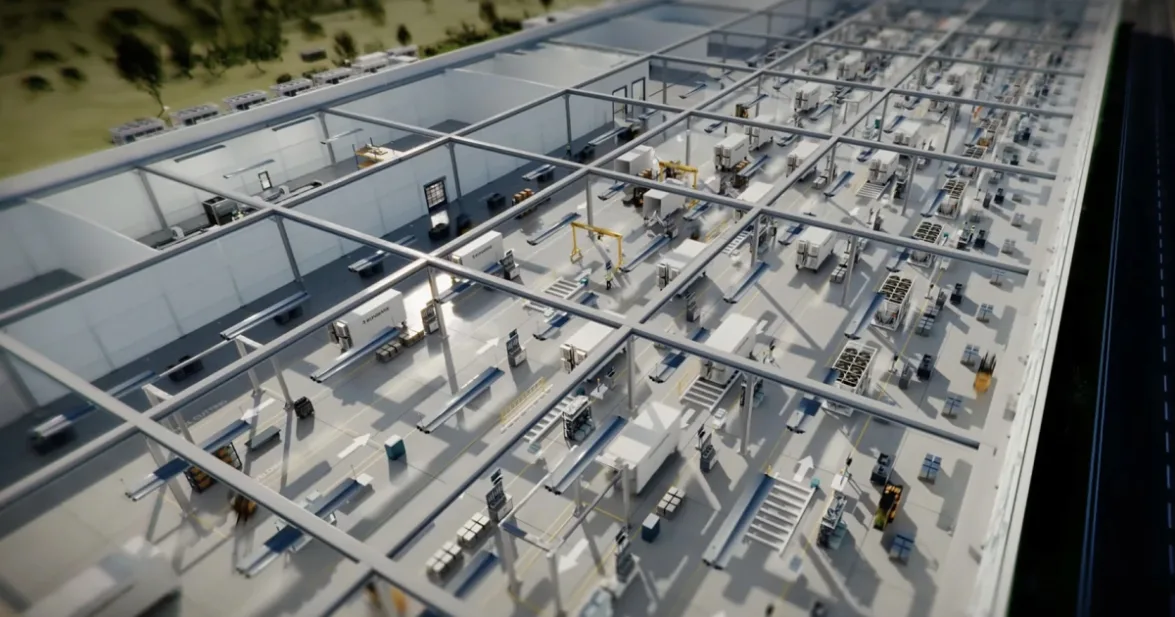
Building a data center for artificial intelligence usually takes years. The company Runware wants to shorten the entire process to just a few days and is looking to the automotive industry for inspiration. It is preparing a factory in Romania where ready-made data center modules will roll off the production line much like cars. The company then promises customers it can have them up and running within 48 hours.
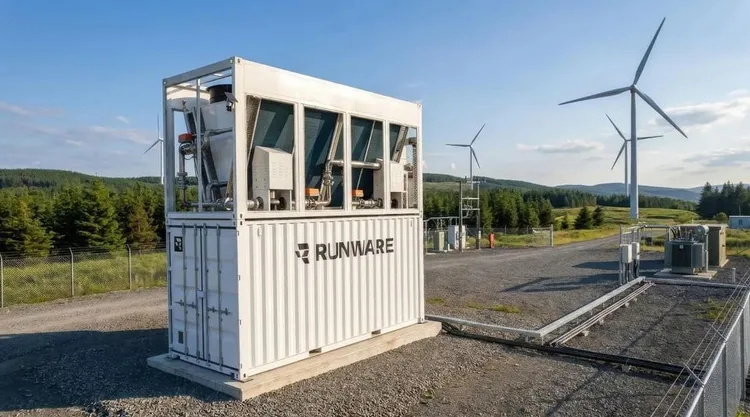
Runware first attracted attention in the summer, when it unveiled the Sonic Inference Pod. It is a modular data center built on a factory production line and delivered to the customer ready for installation. Now the company wants to take the next step and mass-produce these modules on an assembly line. The idea itself is not entirely new, as companies such as Crusoe and Schneider Electric also sell ready-made modules. However, Runware claims it can deliver them faster than its competitors.
The ambitions are substantial. Co-founder and CEO Flaviu Radulescu told TechCrunch that by 2028, the Romanian factory aims to produce data centers with a capacity of 30 megawatts per day. That means nearly one gigawatt per month. Over an entire year, Runware would thus produce roughly as much capacity as all data centers across the United States were expected to add this year, or about 10 gigawatts.
But Runware is not the only company looking for a faster route to computing power. This year, Nvidia introduced its so-called Vera Rubin AI factories and the DSX POD system, which are intended to make it easier for companies to build their own data centers. Runware, however, emphasizes the difference. It says it has actually built a factory rather than merely designing infrastructure that others can build. It already operates two factories. It has been producing modules at the first for several years, while construction of the second began this year and it is expected to start operating early next year. From that point onward, the company plans to gradually increase production.
Customers can secure their own site where the modules will be assembled, or Runware can find a suitable location for them. The promised 48 hours applies to installation and commissioning, not to the manufacturing itself. Producing a single module used to take three weeks, but once the line is up and running, that should fall to just one day. If a component fails, Runware will supply replacement parts. Customers can rent computing power from the company, or install their own graphics chips in the modules and pay a monthly fee for the modules and their operation. The company charges separately for electricity and internet connectivity.
The modules have a standardized basic design that can be adapted to customer requirements and the latest chips. One factor works in the company's favor. Graphics chips often have long lead times, and Runware can deliver a module faster than the chips arrive. This gives it enough time to tailor the infrastructure to specific hardware. For new generations of chips, Radulescu says the company's own hardware team designs, manufactures, and tests the necessary components.
For now, however, these are mainly plans, and the real test will be their execution. The factory needs a large workforce, inventory, well-managed supply logistics, and above all, money. History shows that attempts to reinvent industrial manufacturing do not always end well. One cautionary example is Arrival, a startup that manufactured electric vehicles and was valued at more than $13 billion at its peak. Ultimately, however, it was unable to mass-produce cars as cheaply as traditional automakers.
Radulescu claims that Runware has a completely different cost structure. Although the company pays for employees and materials, he says factory workers are inexpensive compared with the value of rapidly deploying computing power for artificial intelligence. Costs are also kept low because Runware designs its own systems and purchases readily available, affordable parts. To make production work, the company hired an experienced plant manager from the automotive industry, who will work with the head of its hardware division.
Sourcing components could also cause problems. Runware builds the modules' cooling and other systems itself from standard parts, although some components, such as pumps and fans, come from Germany. For networking components, the company continues to rely on Nvidia. Nevertheless, demand for the modules remains strong, according to the company. Since it began offering them to external customers a month ago, it has recorded preliminary orders worth one billion dollars. According to Radulescu, these represent more than 20 megawatts of capacity, and the company is now working to fulfill them.
Data centers in the United States and elsewhere face criticism over their enormous energy consumption and their impact on the power grid and other resources. Radulescu responds that the modules require only electricity and an internet connection. They are cooled by a closed-loop liquid system, with heat dissipated through air-cooled radiators, so they essentially do not require a water connection.
According to Radulescu, Runware is negotiating with energy suppliers over sites with a combined capacity of 397 megawatts, which can be expanded to as much as 1.2 gigawatts. At the same time, the company builds on much smaller sites than those used by cloud giants such as Amazon, Microsoft, or Google. The selected sites generally already have an electricity supply, so the modules should not place additional strain on the grid or disturb nearby communities. According to the company, they run completely silently at temperatures of up to around 30 degrees Celsius. Whenever possible, Runware uses renewable energy and wants it to become its primary energy source.
After launching the new factory early next year, the company plans to expand into the United States and other parts of the world. Radulescu is convinced that modular systems will soon become the standard for large-scale artificial intelligence deployments. In his view, customers should design even enormous data centers around factory-built modules from the outset and complete them in months rather than years.
To date, the company has raised more than $60 million from investors. It is now using the $50 million it raised last December in a Series A funding round to complete and launch the factory. Another funding round is already on the horizon.